
Estonia Slams Door on UK Prison Rental Plan as Swedish Inmates Arrive at Tartu
Estonia's Justice Minister tells the BBC she would reject UK prison-rental approaches with a Thatcher-style "No. No. No.", as Tartu Prison prepares to house up to 600 Swedish inmates while Britain scrambles to ease jail overcrowding before October early releases.
The Prime Minister’s plan to ease Britain’s prison overcrowding crisis by renting cells abroad has suffered a definitive blow, with Estonia’s Justice Minister telling the BBC she would reject any UK approach in the spirit of Margaret Thatcher: "No. No. No." The rejection comes as the Baltic state prepares to receive its first inmates from Sweden under a landmark deal that has reshaped European penal policy.
Estonia Slams Door on UK Prison Rental Plan as Swedish Inmates Arrive at Tartu
Tallinn, Estonia – 14 August 2026 — The British Government’s scramble to find prison capacity ahead of a planned wave of early releases in October has been dealt a significant setback, with Estonia’s Justice and Digital Affairs Minister Liisa Pakosta categorically ruling out any rental arrangement with the UK. In an interview with the BBC, Pakosta confirmed that while no formal proposal had been received from London, the answer would be unequivocal.

"Our answer would be unequivocal - in Margaret Thatcher's famous words: No. No. No," Pakosta said. She added that any such proposal "would not merely be mistaken, misguided or unacceptable; it would deserve to be rejected outright." The minister’s comments come just days after Estonia finalised a historic agreement to house up to 600 Swedish prisoners in its half-empty Tartu Prison, a deal signed on 5 August 2026 that has already seen the Swedish flag raised over the facility in southeastern Estonia.
A Historic Deal with Sweden — and a Warning to Britain
The memorandum, signed on Wednesday 5 August 2026 by Pakosta and Swedish Prison and Probation Service Director-General Rikard Jermsten, was the culmination of years of quiet diplomacy. Rait Kuuse, head of the Estonian Prison Service, and Niklas Bellström, unit head at the Swedish Prison and Probation Service, were also present at the official ceremony. Pakosta has been candid that Tallinn began discussing its empty prison spaces several years ago, ultimately selecting what she termed the "least bad option" — one that preserves local jobs, retains institutional expertise and bolsters domestic security. Her framing is distinctly geopolitical: "That we help another NATO country and that we, in this way, make the region more secure. Because the criminals do not know the borders of the states, and if we have an issue in a neighbouring country, it is an issue for us as well."
Swedish Prime Minister Ulf Kristersson called the original 2025 agreement "historic," and the Riigikogu, Estonia's parliament, approved it in June 2026. Crucially, Estonia retains full sovereignty over who enters its prisons — it may choose which prisoners it accepts, and final approval for every transfer rests with Tallinn. This is not a blank cheque for Stockholm. The political calculation in Estonia is delicate: the opposition Isamaa party, led by Urmas Reinsalu, has vowed to terminate the arrangement if it wins power, though any exit requires a year's notice. For now, however, the deal represents a striking reversal of historical fortunes — a former Soviet republic now leasing cell space to a wealthy Nordic state, and doing so on its own terms.
Inside Tartu: Televisions, Nicotine Pouches, and 'Clients'
The adaptation of Tartu Prison to Swedish expectations has been meticulous. Swedish inmates will be referred to as "clients" per instructions from Stockholm. Cigarettes are banned, as is Swedish snus, but nicotine pouches — synthetic nicotine — have been allowed as a compromise. The facility, which previously housed Yugoslav war criminals including Milan Martić, Milan Lukić and Dragomir Milošević, now stands ready for a very different population.
The irony is not lost on Estonian officials. Under Soviet occupation, Estonian jails were used to oppress the local population. Now, an independent Estonia houses foreign prisoners as a beneficiary of its EU and NATO membership. But the political risk is real. Urmas Reinsalu, leader of the opposition Isamaa party, has promised to terminate the prison-rental agreement if he comes to power. Under the terms, Sweden must be notified a year in advance of any termination.
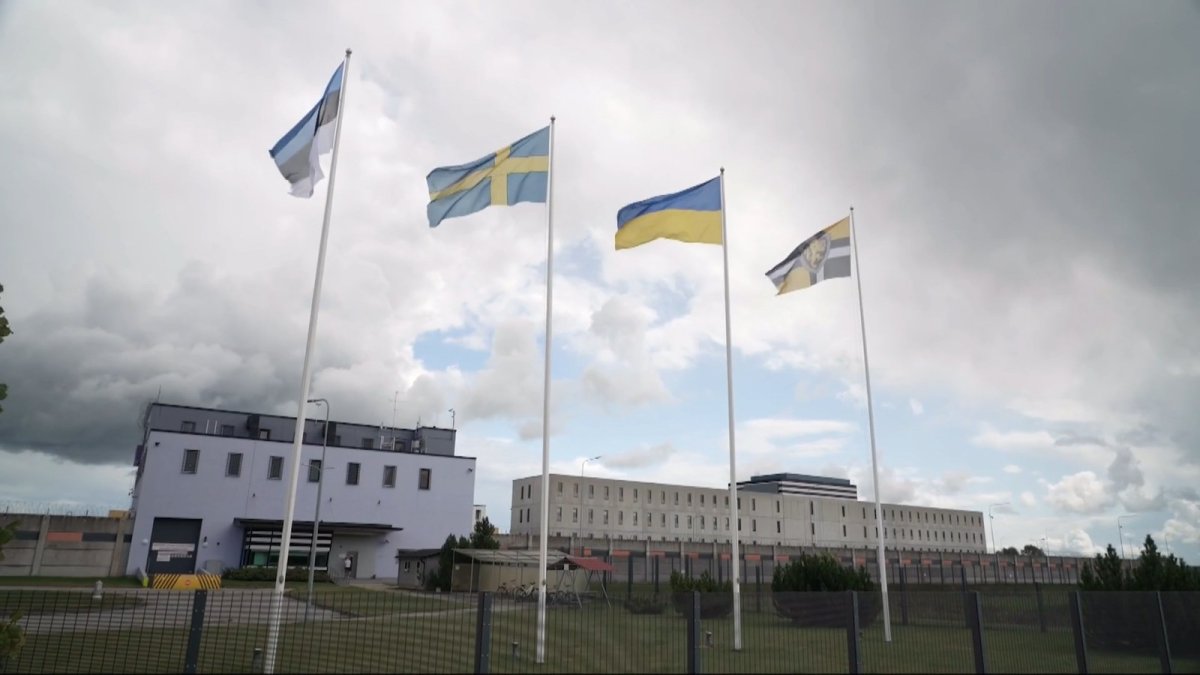
UK Context: Burnham’s October Release Plan Under Pressure
The Estonian rejection lands at a delicate moment for Prime Minister Andy Burnham’s Government. With jails at almost 100% capacity, Burnham has ordered Justice Secretary Alex Norris to produce a plan by September to free space. The options on the table include removing more foreign national offenders, releasing some prisoners serving indefinite sentences for public protection (IPP), and using women’s jails to house male inmates. The Ministry of Justice reported 10,134 foreign nationals in England and Wales prisons at the end of June 2026.
The plan to release thousands of prisoners early this October has already drawn criticism from opposition parties. Both the Conservatives and Reform UK have suggested renting cells in foreign prisons, with Reform leader Nigel Farage claiming 10,000 spaces could be freed by deporting foreign criminals, naming El Salvador, Kosovo and "Baltic state options" including Lithuania and Estonia. Conservative shadow home secretary Chris Philp called the failure to pursue foreign prison rental "a catastrophic mistake" that should be "urgently reversed," noting it was "an idea that we legislated for in government but Labour subsequently did not pursue."
Labour’s 2024 Exploration — and Why It Failed
The irony is that Labour itself explored the idea in 2024 under Sir Keir Starmer. Then-Justice Secretary Shabana Mahmood met Pakosta in Lithuania, but the talks came to nothing. Pakosta recalled: "There was a lot of interest in the beginning, but then the Government made a decision not to go on with the rental agreement... Now, our position is that we have a very good deal with Sweden. We are not going to make a new deal."
Downing Street has pushed back on the opposition’s calls, arguing that renting prison places abroad is "just not a quick fix." A Number 10 spokesperson said it "will require primary legislation underpinned by a complex international agreement which would take several years to agree." A Ministry of Justice spokesperson added: "We are fixing this by building 14,000 new prison places, expanding electronic tagging... faster deportation of foreign criminals, better use of the women's estate and reviewing the unjust IPP sentences."
The Economics of Incarceration: A Comparative Look
The five-year agreement provides Sweden with 400 cells for up to 600 inmates, ensuring the sustainable use of strategically important infrastructure while preserving regional employment in a corner of Estonia that needs it. The prisoners transferred will be adult men serving longer sentences, generally for violent or drug-related offences, and crucially, their sentences will always begin and end in Sweden — none will be released into Estonian society. Swedish personnel from the Prison and Probation Service will be stationed at Tartu, responsible for training Estonian staff, who will speak English with the inmates. Estonian legislation applies, but special regulations guarantee the stay is equivalent to Swedish standards, covering occupation, visits and communication. Each prisoner is assured at least one one-to-two-hour visit per month, with visitors required to apply for permission and pass background checks.
The financial logic is compelling. The average annual cost per prisoner in England and Wales was £60,018 in 2024/25, according to Ministry of Justice data, while a prisoner in Estonia costs approximately €8,500 per month — significantly less than the €11,500 monthly figure in Sweden. This differential explains why the Netherlands leased cells to Belgium and Norway before its own numbers rose, and why Kosovo agreed to lease 300 cells to Denmark in a deal worth £170m. Yet the precedent carries a warning: the Dutch experiment ended when domestic demand surged. Estonia's structure avoids that trap with a year's notice clause, but the broader lesson for Britain is stark. With Tallinn committed to Stockholm and Pristina leased to Copenhagen, the global market for prison cells is shrinking — and for London, the door has been slammed shut.
The Bottom Line — What Comes Next
For the Burnham Government, the Estonian rejection underscores the limits of outsourcing justice. With October’s early release programme looming and the Ministry of Justice reporting prisons at near-total capacity, the pressure on Alex Norris’s September plan is immense. The removal of foreign national offenders — 10,134 at the last count — remains the most politically palatable option, but it is slow and legally complex. The review of IPP sentences, long condemned by human rights groups, could free space but carries political risk.
Estonia, meanwhile, is moving forward with its Swedish experiment. The first flights carrying inmates are expected imminently, under the timeline set out in the agreement. For a nation that spent decades under Soviet occupation, the sight of foreign prisoners arriving at Tartu is a symbol of sovereignty — and a reminder that in the global market for prison cells, Britain is no longer a buyer anyone wants to deal with.
By Erica Thornton, Staff Writer
This article was produced with AI-assisted research and editorial support. Reporting is based on sources cited in the article.
What's Your Reaction?
 Like
0
Like
0
 Dislike
0
Dislike
0
 Love
0
Love
0
 Funny
0
Funny
0
 Wow
0
Wow
0
 Sad
0
Sad
0
 Angry
0
Angry
0

US Politics and Policy Correspondent at Global1.News. Based in Washington DC, covering American politics, policy, elections, and the courts. Knows how the system works and tells you what it actually means.















Comments (0)