
Trade war enters new phase as Canada readies 'dollar-for-dollar' response
Ottawa – Aug. 24, 2026 — Canada is preparing a sweeping retaliatory package against the United States after trade negotiations collapsed late Friday, with Prime Minister Mark Carney vowing "dollar-for-dollar" tariffs in response to President Donald Trump's new 50 per cent levies on $28 billion worth of Canadian exports. The tariffs, which came into force early Saturday morning, mark a significant escalation in the trade dispute that has defined t
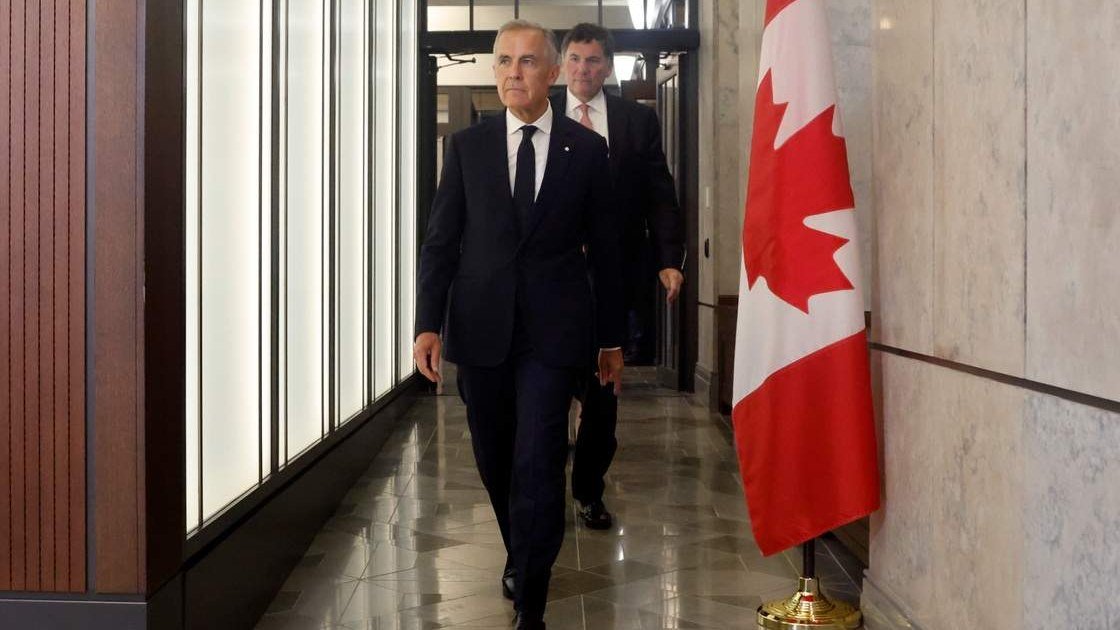
Trade war enters new phase as Canada readies 'dollar-for-dollar' response
Ottawa – Aug. 24, 2026 — Canada is preparing a sweeping retaliatory package against the United States after trade negotiations collapsed late Friday, with Prime Minister Mark Carney vowing "dollar-for-dollar" tariffs in response to President Donald Trump's new 50 per cent levies on $28 billion worth of Canadian exports.
The tariffs, which came into force early Saturday morning, mark a significant escalation in the trade dispute that has defined the Canada-U.S. relationship since Trump first threatened duties in 2025. Carney, who is expected to face questions at a noon Eastern press conference alongside Quebec Premier Christine Frechette, has suspended all trade talks and recalled Canadian negotiators from Washington.
Talks collapse after weeks of intense negotiation
The breakdown came after what Trump had described as a "very fair deal" appeared within reach. But Carney, speaking in Ottawa on Saturday morning, painted a different picture of the final hours of negotiation. "We cannot accept what they've offered, and we will not give what they asked," Carney said. "Canada was walking away from a bad deal." The Prime Minister outlined several outstanding issues that ultimately sank the agreement. Disagreements persisted over which types of vehicles would be excluded from a free trade deal and how much Canadian content in autos could be counted toward tariff exemptions. More troubling, Carney said, were last-minute additions to the text that would have restricted Canada's ability to strike trade deals with other countries and limited "protections of our language, culture and in effect our sovereignty." Washington, Carney said, "asked too much and offered too little" as negotiations dragged through the week. Trump took to Truth Social on Saturday, claiming Canada "wants the benefits of being a State, without being one," and repeating his long-standing grievance that Canada has "charged our great farmers, for many years, massive amounts of Tariffs."Counter-tariffs set for Sept. 8
The details of Canada's countermeasures will be released "early next week," Carney said, with the new tariffs set to come into effect after the Labour Day long weekend, on Tuesday, Sept. 8. "Our response will be concentrated in sectors such as steel, dairy, appliances, agricultural equipment, pulp and paper, and electronics," Carney said. "Also include products that are currently subject to unjustified section 232 and 338 tariffs." The reference to section 232 and 338 tariffs points to the U.S. use of national security and trade remedy provisions that Canada has long argued are being misapplied against a close ally. The inclusion of dairy in the countermeasure list is particularly notable, given the sensitivity of supply management in Canadian agricultural policy and the political weight that sector carries in Quebec and Ontario. Carney has also convened a meeting of Canada's premiers to discuss "next steps to protect Canadian interests, including dollar for dollar counter-tariffs." That federal-provincial consultation reflects the uneven impact these tariffs will have across the country, with manufacturing-heavy provinces like Ontario and Quebec facing the brunt of the auto sector measures, while energy-producing provinces watch pipeline and resource exports for potential spillover effects.Business community warns of economic damage
The Canadian Chamber of Commerce did not mince words in its assessment of the new U.S. tariffs, describing Trump's trade war as "a body blow to North American competitiveness." "A whopping, non-absorbable tariff is not sustainable or viable for business," said Candace Laing, president and CEO of the Canadian Chamber of Commerce. Laing's comments reflect deep anxiety across the Canadian business community, which has spent the better part of two years navigating unpredictable trade policy from the White House. The uncertainty itself, many economists argue, may be as damaging as the tariffs themselves, as companies delay investment decisions and supply chain adjustments while waiting to see what comes next. For Canadian manufacturers, the 50 per cent tariff on auto exports is particularly punishing. The integrated nature of the North American auto industry means vehicles and parts cross the border multiple times during production. A tariff at this level threatens to disrupt not just final vehicle sales but the entire supply chain that supports hundreds of thousands of jobs on both sides of the border.Economic impact: significant but not catastrophic, RBC says
While the new tariffs represent a serious escalation, a Royal Bank of Canada report released Saturday offered a measured assessment of the potential damage. The report described Trump's new tariffs as "a re-intensification of U.S. tariff threats" but noted the size of the tariffs is "likely not large enough to derail Canada's economic growth." That conclusion rests on the fact that more than 80 per cent of Canadian exports to the U.S. would remain tariff-free under the new measures. Following the new tariffs, Canada's effective tariff rate will rise from three per cent to six per cent. While that remains below the average U.S. tariff rate on imports from all countries — around seven per cent — it means Canada would no longer enjoy the lowest tariff rate among major U.S. trade partners. The RBC report also cautioned that the "unpredictability" of the U.S. administration's trade policy will make it difficult for businesses to plan ahead. That uncertainty, the report suggested, could have a chilling effect on investment that outlasts the tariffs themselves. For Canadian consumers, the ripple effects are likely to be felt in higher prices on a range of goods, from appliances to electronics, as Canadian counter-tariffs raise the cost of imported products. The dairy sector, in particular, could see price pressures as retaliatory measures target U.S. cheese, butter and other products.What happens next
With talks suspended and negotiators recalled to Ottawa, the immediate path forward is unclear. Carney's press conference on Monday will provide the first detailed look at Canada's countermeasure package, and the premiers' meeting will test the federal-provincial unity that has largely held throughout this dispute. The suspension of talks is a significant shift from the posture Canada has maintained since the trade war began in 2025, when the federal government consistently expressed a preference for negotiated solutions. Carney's decision to walk away suggests Ottawa has concluded that further negotiation under current conditions is unlikely to produce an acceptable outcome. The reference to protecting "language, culture and in effect our sovereignty" in Carney's statement signals that the dispute has moved beyond economics into questions of national identity and self-determination. That framing is likely to resonate with Canadians across the political spectrum, even as the economic costs of the trade war mount. For now, Canadian businesses and consumers face a period of heightened uncertainty. The Sept. 8 implementation date for counter-tariffs gives some clarity on timing, but the broader trajectory of the trade relationship remains deeply uncertain. What is clear is that the era of predictable, rules-based trade between Canada and the United States has given way to something far more volatile. As Carney prepares to lay out Canada's response, the central question for Canadians is not whether the country will retaliate — that decision has been made — but whether this escalation brings the U.S. back to the table with a more reasonable offer, or deepens a conflict with no obvious off-ramp. **Tags:** Canada tariffs, Mark Carney, Donald Trump, trade war, dollar-for-dollar, Christine Frechette, Canadian Chamber of Commerce, Royal Bank of Canada, auto sector, dairy supply management, federal-provincial relations, Labour Day, section 232, section 338, North American competitiveness By Alex Thompson, Staff WriterInternal Linking Opportunities:
- [How the 2025 trade war began: A timeline of Trump's tariff threats against Canada](https://global1.news/trade-war-timeline)
- [Canadian Chamber of Commerce on supply chain disruptions: What businesses should watch](https://global1.news/supply-chain-disruptions)
- [Premiers' meeting on trade: Provincial perspectives on counter-tariffs](https://global1.news/premiers-trade-response)
Social Media Teaser (for X / Postiz):
- Carney suspends trade talks, vows dollar-for-dollar tariffs after Trump's 50% levies hit $28B in Canadian exports. Countermeasures land Sept. 8. Premiers meet, businesses warn of "body blow" to competitiveness. #cdnpoli #TradeWar #CanadaUS
This article was produced with AI-assisted research and editorial support. Reporting is based on sources cited in the article.
What's Your Reaction?
 Like
0
Like
0
 Dislike
0
Dislike
0
 Love
0
Love
0
 Funny
0
Funny
0
 Wow
0
Wow
0
 Sad
0
Sad
0
 Angry
0
Angry
0

Canada Correspondent at Global1.News. Based in Toronto, covering Canadian politics, energy, trade, and US-Canada relations. Provides the Canadian perspective on North American and global affairs.















Comments (0)