
Leumi Posts Record Q2 Profit of NIS 2.83 Billion as FIBI Moves to Merge Computing Unit MATAF
Bank Leumi posts a record NIS 2.83 billion second-quarter profit with a 24.7% efficiency ratio, while FIBI reports 21.5% profit growth and moves to merge its MATAF computing unit amid a labor dispute.
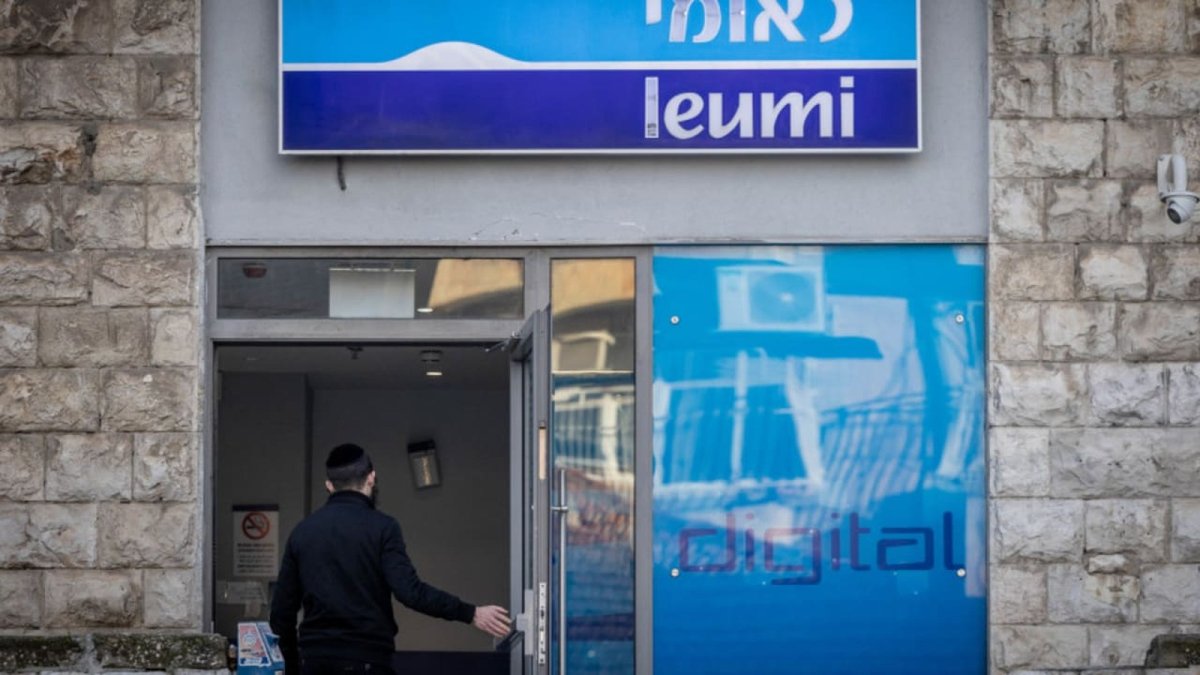
Bank Leumi has delivered a record-breaking second quarter, posting a net profit of NIS 2.83 billion and cementing its status as the most efficient bank in Israel, while rival First International Bank of Israel (FIBI) announced a major structural overhaul of its computing operations amid a bitter labor dispute. The results, published this week, paint a picture of a banking sector navigating technological transformation, geopolitical headwinds, and the fiscal weight of recent tax legislation.
Leumi Posts Record Q2 Profit of NIS 2.83 Billion as FIBI Moves to Merge Computing Unit MATAF
Tel Aviv, Israel - Bank Leumi, led by CEO Hanan Friedman, reported a record net profit of NIS 2.83 billion for the second quarter of 2026, an 8.5% increase compared with the same period last year. The figure marks the bank's strongest quarterly performance ever, driven by what management describes as the prudent implementation of its technological leadership and AI strategy.
The profit translates into a return on equity of 16.3%, the highest among Israeli banks, on equity standing at NIS 70.6 billion. In the first half of 2026, Leumi's cumulative profit grew by 3.6% to NIS 5.18 billion, making it the only Israeli bank to boost half-year profits in 2026.
Efficiency Ratio Hits Global Standard
The most striking figure in Leumi's report is the efficiency ratio - operating expenses divided by operating income - which dropped in the second quarter to a global-standard minimum of just 24.7%, compared with 29.1% in the previous quarter. This dramatic improvement signals that the bank's heavy investments in digital infrastructure and artificial intelligence are beginning to pay off in tangible operational terms.
Leumi management attributed the improvement directly to its technology and AI strategy.
Credit Growth and the Smotrich Tax Burden
Net credit to the public rose 15.8% to NIS 566.5 billion, alongside maintaining a low loss expense ratio on credit. The expansion in lending helped Leumi show a marked increase in financing profits, alongside one-off income from subsidiary operations.
Deposits grew by 3.4% to NIS 719 billion, including NIS 230.3 billion from private customers, an increase of 1.3%.
Notably, Leumi absorbed an expense of hundreds of millions of shekels due to the Smotrich tax, the levy on bank profits introduced by the Finance Ministry. Despite that fiscal drag, the bank still delivered record profitability.
Dividend Distribution and Shareholder Returns
The bank will distribute a dividend, including share buybacks, totaling NIS 1.4 billion. This payout reflects Leumi's confidence in its capital position and its commitment to returning value to shareholders, even as it continues to invest heavily in technology and innovation.
The combination of record profits, an industry-leading efficiency ratio, and substantial shareholder returns positions Leumi as the clear leader in the Israeli banking sector. Its ability to absorb the Smotrich tax while still delivering growth suggests that the bank's technological edge is providing a durable competitive advantage.
FIBI's Profit Surge and Strategic Shift
First International Bank of Israel (FIBI) also delivered strong quarterly results, with profits soaring in the second quarter by 21.5% to NIS 583 million. The profit represents a 16% return on equity, which totaled NIS 14.9 billion. In the first half of the year, FIBI earned NIS 1.06 billion, an 8.9% decline compared with the corresponding half.
FIBI's board decided on a dividend distribution of NIS 558 million, representing about 96% of net profit for the quarter - an aggressive payout ratio that signals confidence in the bank's ongoing earnings power.
FIBI credit to the public jumped by 20.1% to NIS 164.2 billion, while the customer asset portfolio grew by 20.8% to NIS 1.23 trillion. Public deposits grew by 11.7% to NIS 251.4 billion.
The MATAF Merger Decision and Labor Dispute
The major news from FIBI's statements, however, is the board's decision to merge its subsidiary MATAF, which centralizes the bank's computing operations. MATAF employs 500 workers, and the decision was made in the midst of an exhausting labor dispute.
The move aims to streamline the system and advance future moves in the computing field. By integrating MATAF directly into the bank's operations, FIBI is positioning itself to accelerate its digital transformation and reduce operational redundancies. The decision also places the future of the unit's workforce at the center of an already tense labor dispute.
The labor dispute has been a point of tension around the merger, and the board's decision to proceed suggests that management views the integration as essential to the bank's long-term competitiveness.
FIBI CEO on Navigating Volatile Markets
FIBI CEO Eli Cohen framed the bank's strategy in broader terms, saying: "The year 2026 sharpens the understanding that financial management requires multidisciplinary expertise and a global view. As Israel's leading bank in the capital market, we allow our customers to navigate volatile markets while building tailored investment strategies that generate added value."
Cohen's comments underscore a growing emphasis among Israeli banks on capital market expertise and wealth management alongside traditional lending, as institutions compete for clients in an increasingly complex financial environment.
Implications for the Israeli Banking Sector
The divergent strategies of Leumi and FIBI illustrate the broader trends reshaping Israeli banking. Leumi is betting heavily on technology and AI to drive efficiency and profitability, while FIBI is focusing on capital market expertise and customer-centric investment strategies.
Both approaches appear to be working, at least in the short term. Leumi's efficiency ratio is among the best in the world, while FIBI's credit growth of 20.1% demonstrates strong demand for its services. The question is whether these strategies can be sustained in the face of regulatory pressures, including the Smotrich tax, and potential economic slowdown.
The banking sector's resilience in 2026 is notable given the broader economic context. Israel's economy has faced significant challenges, including the ongoing security situation and the fiscal weight of recent tax legislation. Yet the banks have continued to deliver strong profits.
Labor Relations and Technological Change
The MATAF merger also highlights the delicate balance between technological progress and labor relations. As banks increasingly automate and digitize their operations, workers in traditional computing and back-office roles face uncertainty, and the dispute at MATAF illustrates the tension that can accompany such transitions.
For Leumi, the implementation of its AI strategy has proceeded without the kind of public labor disruption seen at FIBI.
The coming months will reveal whether the MATAF merger proceeds smoothly or faces further challenges. For now, the bank's board has made its strategic priorities clear: efficiency, integration, and technological advancement take precedence.
Outlook for the Second Half of 2026
Looking ahead, the Israeli banking sector faces several headwinds. The Smotrich tax continues to weigh on profits, and the Bank of Israel's interest rate policy will play a crucial role in determining net interest margins and credit demand.
However, the strong first-half results from both Leumi and FIBI provide a solid foundation for the remainder of the year. Leumi's record profit and efficiency gains suggest that its technological investments are yielding sustainable returns, while FIBI's credit growth and capital market focus position it well for continued expansion.
For investors, the dividend payouts from both banks are a positive signal. Leumi's NIS 1.4 billion distribution and FIBI's 96% payout ratio demonstrate that Israeli banks are generating sufficient capital to reward shareholders while still investing in future growth.
This article was produced with AI-assisted research and editorial support. Sources: The Jerusalem Post.
By Hannah Berg, Staff Writer
What's Your Reaction?
 Like
0
Like
0
 Dislike
0
Dislike
0
 Love
0
Love
0
 Funny
0
Funny
0
 Wow
0
Wow
0
 Sad
0
Sad
0
 Angry
0
Angry
0

Israel Correspondent at Global1.News. Based in Tel Aviv, covering Israeli politics, security, technology, and society. Provides balanced, deeply-sourced reporting on one of the most closely-watched regions in the world.













Comments (0)