
B.C. Declares Provincewide State of Emergency as Okanagan Wildfires Force Mass Evacuations
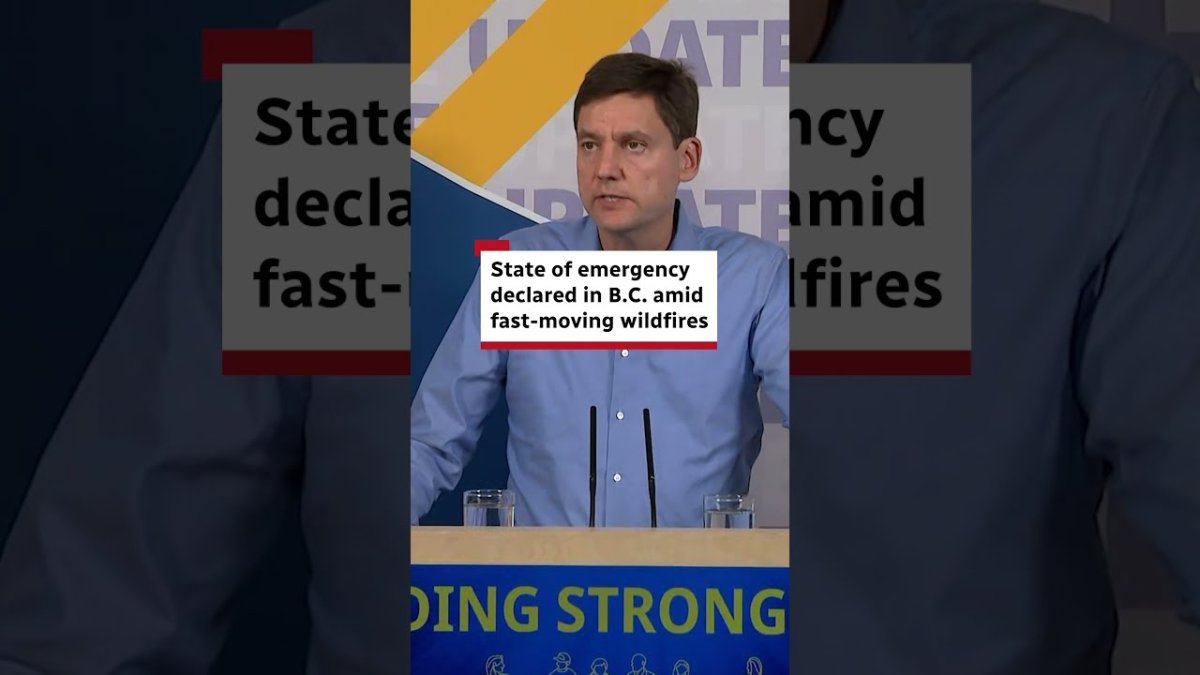
In a recent CBC News report, the national broadcaster covered the declaration of a provincial state of emergency in British Columbia as fast-moving wildfires forced the evacuation of entire communities in the Okanagan. Premier David Eby announced the emergency on Saturday after a devastating night in which the Bald Range wildfire exploded from a report at 5:15 p.m. Friday near Princeton-Summerland Road to more than 10,000 hectares within hours. B.C.
In a recent CBC News report, the national broadcaster covered the declaration of a provincial state of emergency in British Columbia as fast-moving wildfires forced the evacuation of entire communities in the Okanagan. Premier David Eby announced the emergency on Saturday after a devastating night in which the Bald Range wildfire exploded from a report at 5:15 p.m. Friday near Princeton-Summerland Road to more than 10,000 hectares within hours.
B.C. Declares Provincewide State of Emergency as Okanagan Wildfires Force Mass Evacuations
Summerland, B.C. – August 9, 2026 — Nearly 22,000 people were under evacuation orders on the weekend, with another 9,700 warned to be prepared to flee, after the Bald Range wildfire tore through the Central Okanagan. The entire community of Summerland, home to about 12,000 people, was ordered evacuated overnight, along with roughly 8,000 people in and around nearby Peachland. Officials had not determined how many homes were destroyed as of Sunday.
The Rapid Spread of the Bald Range Wildfire
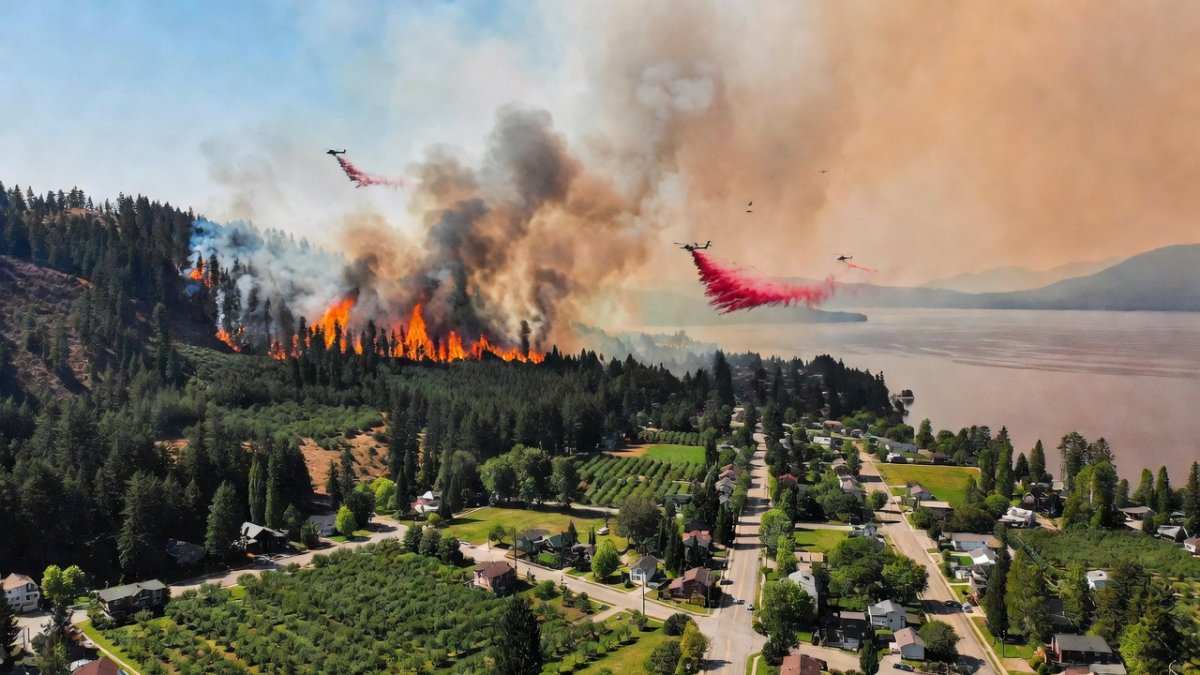
The Bald Range wildfire was first reported around 5:15 p.m. Friday in the area of Princeton-Summerland Road. Within hours it overwhelmed the community of Faulder — destroying dozens of homes, according to local reports — before advancing roughly 15 kilometres toward Summerland at extraordinary speed. One fire official described the blaze to the premier as being like a bomb going off.
Cliff Chapman, director of wildfire operations for the BC Wildfire Service, said the conditions seen in Summerland have never been seen before in wildfires. He described conditions across British Columbia as explosive and warned that other communities could face fires similar to the one that forced the evacuation of Summerland. More than 100 wildfires were burning across the province on the weekend, nearly half of them out of control, amid hot, windy weather and prolonged drought.
The Bald Range fire exploded to more than 100 square kilometres on Saturday before showing little further growth, according to the BC Wildfire Service. The fire behaviour echoes recent Okanagan history. The 2023 McDougall Creek fire near West Kelowna forced tens of thousands of residents to evacuate in a single evening, and the 2021 White Rock Lake fire burned tens of thousands of hectares north of Vernon. Emergency officials in the region have repeatedly faced the challenge of moving entire communities in a matter of hours.
Mass Evacuations and Rescue Operations
The evacuation of Summerland and Peachland unfolded overnight, with some residents plucked to safety by helicopter as the fire surged toward them. Eby said some residents became trapped as conditions changed quickly and had to be rescued. Search-and-rescue crews continued looking behind the fire lines for anyone else who may have been caught, and firefighting helicopters were diverted to rescue people who could no longer escape by road.
Erick Thompson, an emergency official with the Regional District of Okanagan-Similkameen, called it one of the quickest-moving, fastest-growing wildfires the region had experienced. Thompson eventually had to abandon the emergency operations centre to evacuate his own family, posting video from his vehicle as traffic backed up around him.
Emergency Support Services opened reception centres in Penticton and Kelowna, issuing food vouchers and arranging temporary lodging for evacuees. Highway 97, the main north-south corridor through the Okanagan, was closed between Summerland and Peachland, disrupting freight and travel in the region's agricultural heartland. Power and cellular communications in the area were spotty, and evacuees were asked to register with Emergency Support Services at ess.gov.bc.ca.
Expanded Powers Under the State of Emergency
Kelly Greene, British Columbia's minister of emergency management and climate readiness, said the state of emergency gives the province additional powers, including the ability to restrict travel and secure accommodations for evacuees that might otherwise be unavailable. Under the province's emergency legislation, the government can also direct local authorities to prioritise evacuee housing and co-ordinate resources across ministries.
Eby said the immediate priority is protecting lives and supporting rescue efforts. Air evacuations are underway for people who remain isolated behind the fire perimeter, and emergency officials are working around the clock, co-ordinating resources across government to support the response. The province can also seek federal cost-sharing for eligible recovery costs through the Disaster Financial Assistance Arrangements program once damage assessments are complete, as it has after past wildfire and flood disasters.
The Human Toll
The scale of personal loss is only beginning to emerge. Videos posted on social media appeared to show multiple homes burning as residents fled along roads with flames on both sides. Kerry Gold and her husband, Mike Elsinga, fled at about 12:30 a.m. after watching flames spread beyond nearby mountains. It's scary. It's moving fast, Gold said. Elsinga added: You want to stay here and protect your home, but you also don't want to get caught in it.
In the Northern Okanagan, a 91-year-old Okanagan Indian Band elder was given just a few minutes to evacuate a home he had lived in for more than half a century after a separate blaze destroyed it. Eby acknowledged the strain on families: I know many families are facing an unimaginable day today. People have lost their homes. And many people have been displaced. Others are waiting for news about loved ones.
Official Reactions and Ongoing Investigations
Southeast District RCMP said it is aware of one impacted resident from Meadow Valley who has reported a possible fatality. Police and the BC Coroners Service are investigating to confirm the death. The RCMP said evacuations of entire neighbourhoods and communities were largely successful but not without challenges to areas cut off by the wildfire.
Police responded to the fast-moving fire around 5:15 p.m. Friday, initiating tactical evacuations with officers from Penticton and Summerland detachments, supported by Kelowna and West Kelowna detachments, BC Highway Patrol and federal policing units. The Summerland RCMP detachment itself sits within the evacuation area and has implemented business continuity plans while adhering to evacuation orders. Officers are asking the public to reserve 911 for life-or-death emergencies, as call volumes have been high.
Impacts on Communities and Economy
The Okanagan is one of Canada's most important wine-producing regions, and the fire threatened both homes and the local economy. The valley's wineries, orchards and tourism businesses draw visitors from across the country and around the world, and smoke exposure can taint grapes even when vines survive direct flame contact. The loss of homes in Faulder and Summerland compounds an already acute housing shortage in the Central Okanagan, where vacancy rates have been among the lowest in the province and displaced families will now compete for limited rental supply in Penticton and Kelowna.
Officials in the Central Okanagan were also urging people who remained in areas under evacuation order to leave, saying forecast winds could fan the Quilpituk Creek wildfire in the coming days. First Nations communities in the region, including the Okanagan Indian Band and Penticton Indian Band, have played central roles in past emergency responses, and Indigenous knowledge of fire behaviour has informed provincial strategy since major fires of recent years.
Canada's Escalating Wildfire Crisis
Canada has endured increasingly destructive wildfire seasons in recent years, forcing mass evacuations and sending smoke across large parts of the country and the United States. The 2023 season burned more than 18 million hectares nationally — the largest area on record — and B.C. has faced severe drought conditions that have lengthened the fire season well beyond its historic summer window.
Climate scientists have linked hotter, drier summers to more intense fire behaviour, and successive federal budgets have directed funding toward wildfire resilience, including fuel management and Indigenous-led prescribed burning. The pressure on provincial emergency systems is growing, and the events of this weekend will renew debate about adaptation funding, land-use planning in the wildland-urban interface, and the resources available to provincial firefighting agencies.
What Happens Next
Central Okanagan officials warned that forecast winds could intensify the Quilpituk Creek wildfire in the coming days, even as the Bald Range fire showed little growth after exploding in size on Saturday. The full extent of property damage may not be known for days, as crews work to contain fire lines and search-and-rescue teams continue checking areas cut off by the flames.
Recovery will require sustained co-ordination between provincial authorities, regional districts, First Nations and the federal government — through disaster assistance, temporary housing and long-term rebuilding. Motorists are being told to monitor DriveBC for updated highway closures, and anyone unable to reach an impacted family member is asked to contact their local RCMP detachment. For the families camped in reception centres in Penticton and Kelowna, the road ahead will be measured in weeks, not days.
The declaration underscores the growing pressure on B.C.'s emergency systems and the need for sustained federal-provincial co-operation on climate adaptation and wildfire defence as drought conditions persist across the province. In a province that has watched its fire seasons grow longer and more destructive year after year, the evacuation of Summerland will stand as one of the starkest reminders yet that the new normal is already here.
By Alex Thompson, Staff Writer
This article was produced with AI-assisted research and editorial support. Reporting is based on sources cited in the article.
What's Your Reaction?
 Like
0
Like
0
 Dislike
0
Dislike
0
 Love
0
Love
0
 Funny
0
Funny
0
 Wow
0
Wow
0
 Sad
0
Sad
0
 Angry
0
Angry
0
Canada Correspondent at Global1.News. Based in Toronto, covering Canadian politics, energy, trade, and US-Canada relations. Provides the Canadian perspective on North American and global affairs.














Comments (0)