
US Teens Train as First Responders with United Hatzalah
US teens aged 15-18 complete a 60-hour Emergency Medical Responder course with United Hatzalah in Israel, learning CPR, hemorrhage control and mass casualty response before riding ambulance shifts in Tel Aviv, Jerusalem and Haifa.
In a recent i24NEWS report by correspondent Lynn Plagmeijer, American teenagers aged 15 to 18 arrive in Israel each summer for a four-week program that combines Emergency Medical Responder certification with hands-on shifts alongside United Hatzalah volunteers. The teens complete a 60-hour course covering CPR, hemorrhage control, tourniquet application and mass casualty triage before joining certified EMTs on ambulance runs in cities including Tel Aviv, Jerusalem and Haifa. The footage shows participants practicing in Ben Shemen Forest near Modiin and highlights the organization's average response time of roughly three minutes nationwide.
US Teens Earn Emergency Medical Responder Certification Through United Hatzalah Summer Program
Jerusalem, Israel – this summer — Fifty North American teenagers completed a rigorous Emergency Medical Responder course run jointly by United Hatzalah and NCSY, the youth movement of the Orthodox Union, this summer. The four-week program, now in its seventh year, requires participants to master 60 hours of classroom and field instruction before they ride along on active ambulance shifts with certified United Hatzalah volunteers. Demand has more than doubled since the first cohort of 22 students arrived in 2018, producing a waitlist that program organizers say they cannot fully accommodate.
Daily Training Schedule Builds Core Emergency Skills
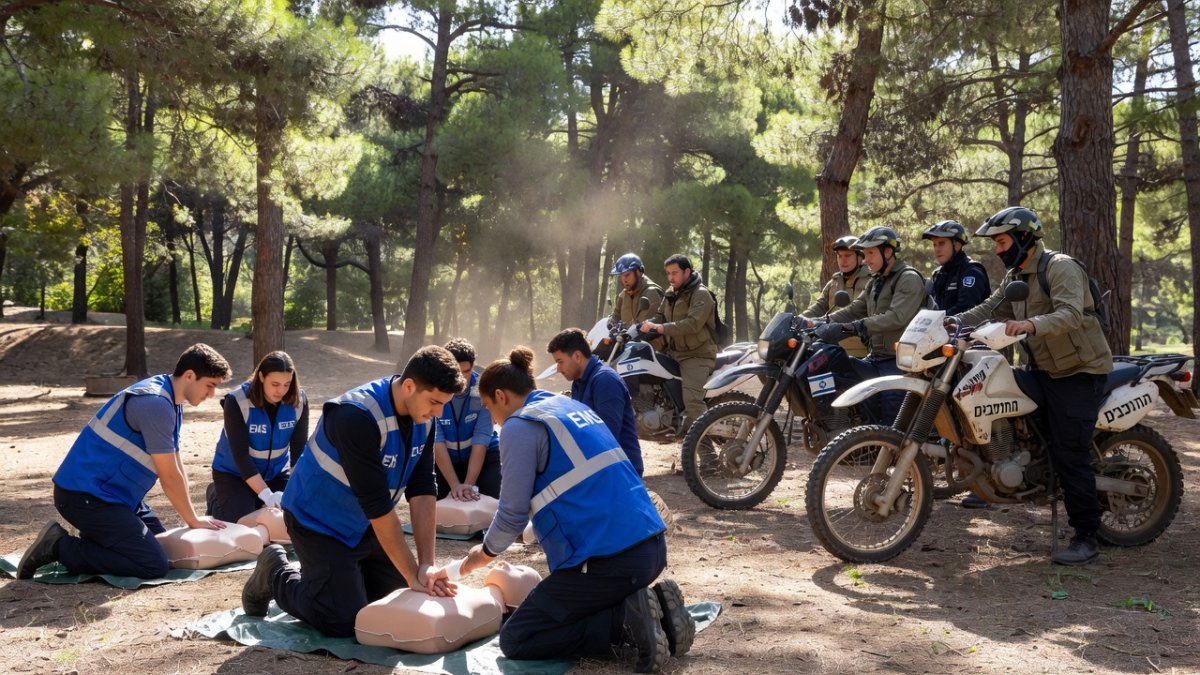
Each weekday begins at 8 a.m. in classrooms near Modiin, where instructors teach CPR protocols, tourniquet placement and hemorrhage control techniques. Afternoons move to Ben Shemen Forest for mass casualty simulations that replicate scenarios involving multiple victims from rocket attacks or stabbing incidents. Program director Moshe Zharnest described the final drill as the culmination of the course, requiring teens to triage patients, direct bystanders and coordinate with arriving ambucycles. Sixteen-year-old Rachel Buller of New York said she arrived knowing almost nothing about emergency care and left able to stabilize patients on scene.
The 60-hour Emergency Medical Responder curriculum requires participants to master CPR protocols, hemorrhage control methods and tourniquet application during morning classroom sessions near Modiin. Afternoons shift to Ben Shemen Forest where mass casualty simulations replicate rocket attacks and stabbing incidents, forcing teens to establish triage stations, operate mobile command centers and coordinate with arriving ambucycles. The final exercise divides the 50 participants into 10 teams of five, each supervised by a certified United Hatzalah EMT, to practice directing bystanders and stabilizing multiple victims under realistic conditions.
After completing the classroom and drill phases, the teens spend the remaining week-and-a-half riding active ambulance shifts in Tel Aviv, Jerusalem and Haifa. These shifts place them directly alongside United Hatzalah volunteers responding to real emergencies, allowing immediate application of the skills learned in the forest simulations. Sixteen-year-old Rachel Buller of New York noted that the progression from zero knowledge to on-scene stabilization occurred within the four-week structure, with daily repetition reinforcing the 60-hour requirement.
United Hatzalah's Volunteer Network and Response Times
United Hatzalah fields between 6,000 and 8,000 volunteer first responders across Israel, including EMTs, paramedics, nurses and physicians from Jewish, Muslim, Druze and Christian communities. Volunteers reach emergencies on specially equipped motorcycles, e-bikes and ambuscooters that navigate traffic faster than standard ambulances. The organization reports an average nationwide response time of approximately three minutes, dropping to roughly 90 seconds in Tel Aviv, Haifa and Jerusalem. These figures stand in contrast to the longer intervals that prompted founder Eli Beer to establish the service in 2006 after he witnessed a fatal delay between an emergency call and ambulance arrival.
United Hatzalah maintains between 6,000 and 8,000 volunteer first responders drawn from Jewish, Muslim, Druze and Christian communities, both secular and religious. These volunteers operate ambucycles, e-bikes and ambuscooters that enable the reported 90-second response times in Tel Aviv, Haifa and Jerusalem while achieving the three-minute national average. The organization provides all services without charge and routes calls through a central dispatch and command center that was upgraded in 2025 with an AI-powered emergency prediction system designed to identify high-risk zones in real time.
The free-service model and mixed-faith volunteer base distinguish United Hatzalah from other providers and directly support the rapid intervention times cited by founder Eli Beer. The 2025-2026 AI dispatch expansion builds on the existing network to anticipate incidents before calls arrive, further shortening intervals in high-threat areas. This infrastructure allows the summer program participants to observe and assist within an operational system that has sustained nationwide coverage since 2006.
The curriculum incorporates these security realities by training teens to handle injuries typical of rocket barrages and terror attacks during their Ben Shemen Forest drills. This exposure connects young diaspora Jews to Israel's daily preparedness requirements, showing how volunteer mobilization on October 7 and subsequent alerts depends on the same three-minute response capability practiced in the summer course. The program therefore functions as both skills training and direct linkage to national security infrastructure.
Demand has more than doubled since the 2018 cohort of 22 students, producing a waitlist that organizers cannot fully accommodate for the current 50-participant limit. The presence of American teens also diversifies the volunteer base, improving cross-cultural communication during incidents involving tourists or mixed populations. As regional threats continue, the four-week course serves as both an educational pipeline and a practical contribution to Israel's emergency response system that integrates United Hatzalah with Magen David Adom and IDF medical units.
October 7 Response Demonstrates Scale of Volunteer Mobilization
On October 7, 2023, more than 1,700 United Hatzalah volunteers reported for duty within hours of the initial Hamas attacks, treating casualties in southern communities and at hospitals from Ashkelon to Beersheba. The same volunteer pool continues to respond to rocket alerts in the Gaza envelope and stabbing incidents in Jerusalem and the West Bank. Israeli security officials note that rapid on-scene intervention by ambucycle teams has reduced preventable deaths in terror attacks, a reality that makes the teen training program directly relevant to national preparedness. The organization has since expanded its AI-powered dispatch system, launched in 2025, to predict high-risk zones in real time.
On October 7, 2023, more than 1,700 United Hatzalah volunteers mobilized within hours to treat casualties across southern communities and hospitals from Ashkelon to Beersheba. The same volunteer pool continues to respond to ongoing rocket fire in the Gaza envelope and stabbing incidents in Jerusalem and the West Bank, where rapid ambucycle arrival has reduced preventable deaths according to Israeli security officials. Coordination with Magen David Adom and IDF medical units forms part of Israel's layered response system that the teen program explicitly prepares participants to join.
Israeli Context Shapes Program Content and Participant Outlook
Unlike summer camps in the United States, the United Hatzalah course places participants inside Israel's daily security environment. Teens learn to treat injuries common in stabbing attacks and rocket barrages while riding shifts in neighborhoods that have experienced recent incidents. Eli Beer stated that the curriculum also transmits the Jewish value of tikkun olam, encouraging participants to pursue careers as physicians, nurses, paramedics or community leaders. Several graduates have already enrolled in pre-medical tracks at universities in both Israel and North America, citing their summer experience as the decisive factor.
Eli Beer emphasizes that the curriculum transmits the Jewish value of tikkun olam, encouraging participants to view emergency response as community leadership. These encounters reinforce US-Israel relations by allowing North American teens to experience the operational realities faced by Israeli first responders, including coordination with government ministries on exchange programs. The resulting alumni network supports ongoing people-to-people diplomacy while the organization continues its international outreach.
People-to-People Ties Strengthen US-Israel Relations
The program operates under the umbrella of NCSY and the Orthodox Union, organizations that maintain offices in Jerusalem and coordinate with the Israeli Foreign Ministry on youth exchange initiatives. Participants stay in dormitories in central Israel and interact daily with Israeli volunteers who serve alongside them on ambulance crews. These encounters occur outside formal diplomatic channels yet reinforce bilateral ties at the community level. United Hatzalah has extended similar training partnerships to emergency services in India and Sri Lanka through the American Jewish Committee, illustrating how the Israeli model travels beyond the region.
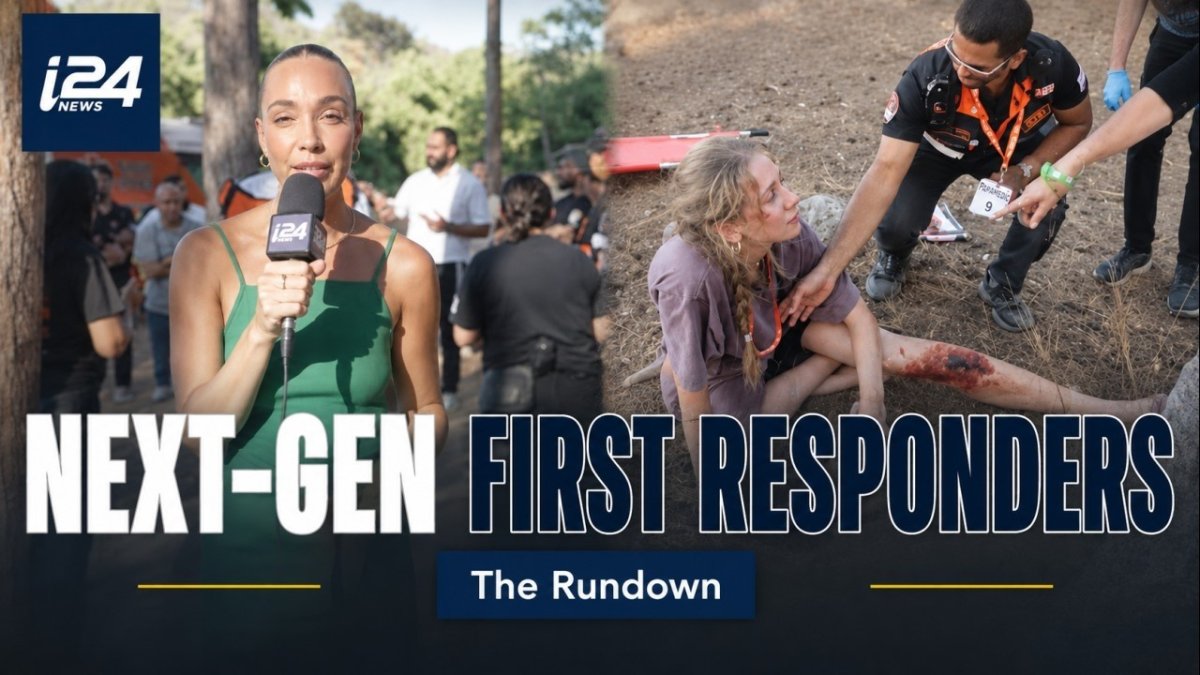
The program operates through NCSY and the Orthodox Union, which maintain Jerusalem offices and coordinate youth exchange initiatives with the Israeli Foreign Ministry. Daily interactions between American participants and Israeli volunteers on ambulance crews create people-to-people ties that operate outside formal diplomatic channels yet strengthen bilateral relations at the community level. United Hatzalah has extended comparable training partnerships to emergency services in India and Sri Lanka through the American Jewish Committee, demonstrating how the Israeli model extends beyond the region.
Long-Term Implications for Medical Careers and Israeli Preparedness
Program alumni return to their home communities with certification that allows them to volunteer with local EMS agencies while still in high school. Eli Beer expressed hope that the experience will channel more young people into Israel's healthcare workforce at a time when the country faces chronic shortages of emergency personnel. The presence of American participants also diversifies the volunteer base, bringing perspectives that United Hatzalah leadership says improve cross-cultural communication during incidents involving tourists or mixed populations. As regional threats persist, the four-week course functions as both an educational pipeline and a practical contribution to Israel's layered emergency response system that includes United Hatzalah, Magen David Adom and IDF medical units.
What This Means for the Next Generation
The program's growth from 22 participants in 2018 to 50 today, with a persistent waitlist, signals deepening interest among North American Jewish teenagers in connecting with Israel through service rather than tourism. United Hatzalah founder Eli Beer has said he expects many of these young responders to pursue medical careers, addressing chronic shortages of emergency personnel in Israel's healthcare system. For Israeli communities, each cohort represents additional trained hands during a period when rocket alerts and terror incidents remain a feature of daily life.
Alumni who return home retain EMR certification that allows them to volunteer with local ambulance services in the United States, extending the program's impact beyond Israel's borders. The model has already traveled internationally — United Hatzalah has trained first responders in India and Sri Lanka through the American Jewish Committee — suggesting the Israeli emergency-response approach continues to gain global recognition. As the program enters its next cycle, organizers say the combination of medical training, Israeli experience, and community service remains the core draw for the teenagers who make the journey each summer.
By Hannah Berg, Staff Writer
This article was produced with AI-assisted research and editorial support. Reporting is based on sources cited in the article.
What's Your Reaction?
 Like
0
Like
0
 Dislike
0
Dislike
0
 Love
0
Love
0
 Funny
0
Funny
0
 Wow
0
Wow
0
 Sad
0
Sad
0
 Angry
0
Angry
0
Israel Correspondent at Global1.News. Based in Tel Aviv, covering Israeli politics, security, technology, and society. Provides balanced, deeply-sourced reporting on one of the most closely-watched regions in the world.















Comments (0)