
Andy Burnham's Devolution Plan Hands Tax Powers to English Mayors
Prime Minister Andy Burnham has announced the most significant shift in how England is funded in a generation, handing metro mayors a share of income tax and business rate revenue for the first time. The 31 July 2026 plans, unveiled from No 10 North in Manchester, promise to end the begging-bowl culture that has long defined relations between Whitehall and local authorities. Devolution Delivered or Details Deferred? Burnham's Tax Shift Faces Scrutiny Manchester, UK – 1 August
Prime Minister Andy Burnham has announced the most significant shift in how England is funded in a generation, handing metro mayors a share of income tax and business rate revenue for the first time. The 31 July 2026 plans, unveiled from No 10 North in Manchester, promise to end the begging-bowl culture that has long defined relations between Whitehall and local authorities.
Devolution Delivered or Details Deferred? Burnham's Tax Shift Faces Scrutiny
Manchester, UK – 1 August 2026 — Prime Minister Andy Burnham has unveiled his devolution plans for England, giving metro mayors the power to spend a share of income tax and business rate revenue. Announced on 31 July 2026 and billed as the biggest transfer of power from Westminster in a generation, the proposals mark a decisive move away from centralised control. All mayors of city regions in England will receive a share of income tax revenue for the first time, while English strategic authorities will keep some cash from business rates collected in their areas, alongside greater control over housing, transport and skills.
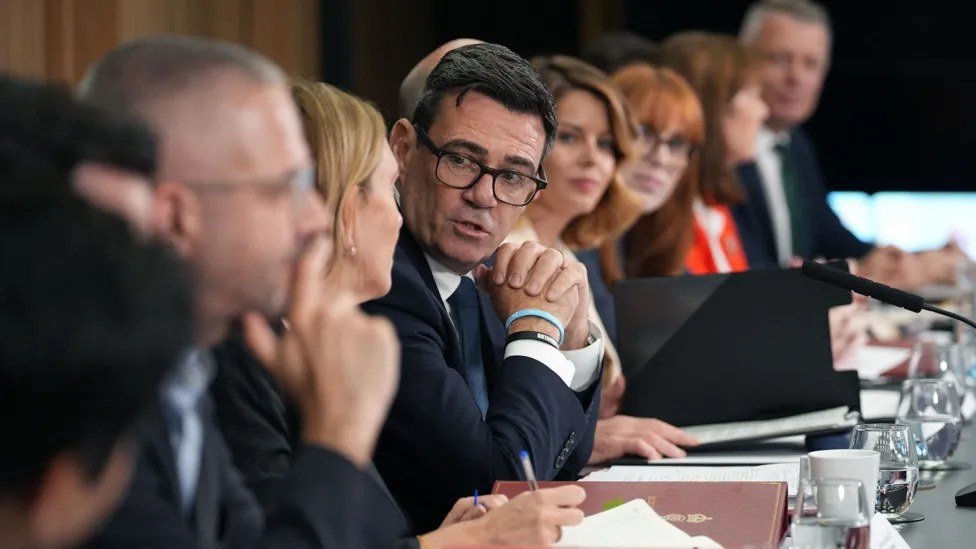
UK Political Framing: From Whitehall to the Regions
The Office for National Statistics and OECD figures underline the scale of the change. The UK currently collects just 5.8% of national taxes at local level, the lowest share in the G7, compared with 20.4% in France, 36% in Japan and 45.7% in the United States. Burnham's announcement introduces a "local first" principle under which ministers must justify why powers should remain in Whitehall rather than being devolved. A policy paper setting out further detail will accompany Chancellor John Healey's first Budget on 28 October.
Business rates retention is expected from April 2027 and the income tax share from April 2028. Income tax rates themselves will not change. The exact portion of taxes to be retained has not yet been decided, with more information due when John Healey delivers his autumn Budget. Greater Manchester retained £100 million of business rates in 2024-25, the first year of operation, while only Greater Manchester and the West Midlands currently keep all business rate income generated in their areas.
The "local first" principle, requiring ministers to justify retaining powers in Whitehall, directly challenges the Treasury's historic grip on fiscal decisions and forces the Department for Levelling Up, Housing, Communities and Local Government to cede ground on housing and skills policy. The Department for Transport faces similar pressure as combined authorities gain greater autonomy over infrastructure, shifting the balance from central approval to regional strategy. This constitutional reordering marks a deliberate erosion of the post-war central state model.
The UK's 5.8% local share of national taxes, the lowest in the G7, reflects decades of incremental centralisation that accelerated after the 1980s rate-capping era and continued through successive governments. France's 20.4% and the United States' 45.7% illustrate how other developed economies retained stronger sub-national revenue bases while Britain consolidated control in London. Burnham's plan seeks to reverse that trajectory without altering income tax rates themselves.
The 28 October Budget will determine the precise income tax share allocated to mayors, turning the Chancellor's statement into the decisive test of whether the rhetoric of devolution translates into binding fiscal transfers. Until then, the absence of numbers leaves the Treasury with maximum leverage over the final design.
Replacing existing grants rather than injecting new money preserves the Treasury's ability to enforce spending priorities through the back door. Mayors will inherit revenue streams that previously arrived as ring-fenced allocations, yet the overall quantum remains subject to national economic performance and Whitehall forecasting. This mechanism limits genuine independence while shifting political accountability downward.
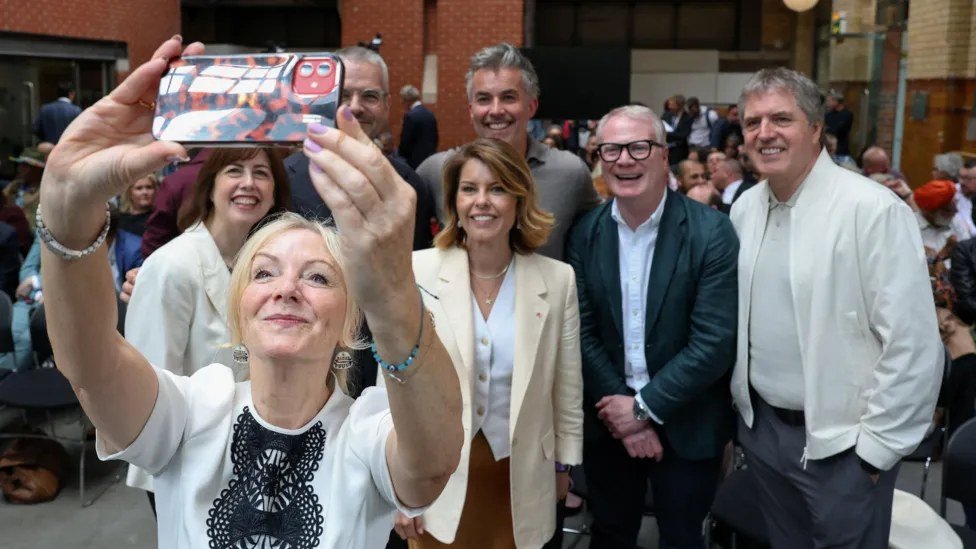
What This Means for the UK
The plans will affect daily life across English regions from Greater Manchester to South Yorkshire and Tees Valley. Combined authorities will gain a fast-track route to building new tramways, roads and light rail, with the threshold for local leaders seeking approval for projects rising to £500 million from £200 million, according to Transport Secretary Heidi Alexander. They will also be able to take out 30-year loans against projected income to fund major projects that previously required Treasury approval, potentially unlocking schemes such as an underground station at Manchester Piccadilly.
Mayors' income tax share will replace existing grants rather than providing additional money. Treasury sources indicate some metro mayors could end up with more to spend if they grow local economies. The move replaces the current system under which local councils in England face a projected £7 billion funding gap over the next three years.
Under the Re:State 2.5p model, London would receive £2.3bn while Hull and East Yorkshire would secure only £135m, illustrating how population size and economic base will dictate sharply divergent outcomes across regions. Greater Manchester, already retaining £100m in business rates in 2024-25, stands to consolidate its advantage through earlier retention schemes shared only with the West Midlands. These disparities will shape investment capacity for years to come.
The projected £7bn funding gap for English councils over three years threatens core services including social care, road maintenance, libraries and subsidised bus routes. Without additional resources, mayors inheriting income tax shares may face difficult choices between protecting statutory duties and pursuing growth projects, particularly in areas where existing grants are replaced rather than supplemented.
Thirty-year borrowing powers against projected revenues could unlock major schemes such as Manchester Piccadilly underground station and expanded tram networks, giving combined authorities the long-term financing previously denied by annual grant cycles. The Transport Secretary's decision to raise the local project approval threshold from £200m to £500m further accelerates this shift by reducing central oversight of larger schemes.
The Bee Network's success in Greater Manchester demonstrates how mayoral control over buses has delivered integrated services and supported housing delivery since 2015. Regions without mayoral authorities, including Dorset, Somerset, Oxfordshire, Gloucestershire, Wiltshire and parts of Kent, covering roughly a quarter of England's population, risk permanent disadvantage as government encouragement for combined authorities leaves them outside the new funding architecture.
Deeper Analysis: Economic and Institutional Shifts
Think tank Re:State has suggested allocating mayors 2.5p in every pound raised by the 20p basic rate of income tax in their areas. Under this model, London would receive £2.3 billion in 2026-27 while Hull and East Yorkshire would receive £135 million. IPPR North described the announcement as the most significant shift in how England is funded in a generation. The civil service of 520,000 would become smaller and more strategic as decision-making moves out of London, where one in five officials are currently based.
Burnham argued that Greater Manchester's growth since 2015 demonstrates devolution works, with the city region expanding faster than other English city regions including London. The Bee Network buses brought under mayoral control and improved housing delivery were cited as evidence. The policy is explicitly not about allowing mayors to become mini-chancellors or local home secretaries, but about growth and investment.
From the 2009 devolution deals through George Osborne's 2014 Northern Powerhouse initiative, English devolution has evolved from administrative delegation to the fiscal transfers now proposed by Burnham. The current plan extends that arc by attaching income tax shares to strategic authorities, yet it remains unclear whether this represents a decisive break or merely a continuation of incremental concessions.
BBC Verify analysis shows Scotland's GDP per capita at 93% of the UK average, Northern Ireland at 83% and Wales at 74% in 2023, positions broadly unchanged since 1998 despite devolution. In contrast, Greater Manchester has outpaced other English city regions, including London, since 2015. Economists attribute the difference to Manchester's combination of transport and housing powers with business rate retention, suggesting fiscal tools matter more than administrative ones alone.
Fiscal devolution differs from earlier administrative models because mayors will bear direct responsibility for revenue performance rather than simply managing Whitehall allocations. This creates stronger incentives for growth but also exposes regions to economic shocks without the automatic stabilisers previously provided by central grants.
The equalisation challenge remains unresolved: poorer areas could lose out if income tax shares simply reflect existing economic disparities. Re:State's 2.5p proposal would deliver £2.3bn to London but only £135m to Hull and East Yorkshire, highlighting the risk that without redistribution mechanisms the policy entrenches rather than narrows regional imbalances.
Reaction and Response Across Party Lines
Oliver Coppard, Labour mayor of South Yorkshire, welcomed the plans for taking regions out of the death grip of the Treasury and providing long-term certainty around income. Tracy Brabin, Labour mayor of West Yorkshire, said people would see and feel the real benefit of their hard work and where that money is going. Henri Murison of the Northern Powerhouse Partnership said the change completely transforms what combined authorities can do.
Critics were swift. Ben Houchen, Conservative Tees Valley mayor, branded the plans a tax grab and proposed handing income tax back as rebates. Louise Haigh, First Secretary of State, rejected the rebate idea, stating mayors do not and will not have the ability to set income tax rates and that HMRC schemes are just not possible at the moment. Houchen replied on X that it does not sound much like devolution. John Healey hit back, saying if mayors want to cut investment then they must answer for bus services that do not improve and jobs that are not available.
Sir Mel Stride, shadow chancellor, called the announcement very short on detail with no new money. James Cleverly, shadow local government secretary, warned of top-down Manchesterism that will lead to higher taxes. The Liberal Democrats warned of a postcode lottery leaving millions in rural areas short-changed. Labour backbencher Perran Moon, MP for Camborne and Redruth in Cornwall, said the plans are discriminatory and could create a two-tier system, noting Cornwall would never have a mayor or combined authority. Reform UK's Zia Yusuf called for full devolution of powers to stop the housing of illegal migrants in local communities by the Home Office.
The Bottom Line — What Comes Next
Angela Rayner said devolution brings an end to the begging-bowl culture faced by local authorities. Roughly a quarter of England's population does not currently have a mayoral authority, covering areas including Dorset, Somerset, Oxfordshire, Gloucestershire, Wiltshire and parts of Kent. The government is encouraging these areas to form mayoral authorities to avoid a two-tier England.
Burnham stated that under the plans more of the taxes raised in a community will stay in that community. He emphasised he knows what it is like to be ignored by politicians in Westminster and will not make that mistake now he is Prime Minister. Further detail will emerge alongside John Healey's Budget on 28 October, with implementation timelines stretching into 2027 and 2028.
By Erica Thornton, Staff Writer
This article was produced with AI-assisted research and editorial support. Reporting is based on sources cited in the article.
What's Your Reaction?
 Like
0
Like
0
 Dislike
0
Dislike
0
 Love
0
Love
0
 Funny
0
Funny
0
 Wow
0
Wow
0
 Sad
0
Sad
0
 Angry
0
Angry
0

US Politics and Policy Correspondent at Global1.News. Based in Washington DC, covering American politics, policy, elections, and the courts. Knows how the system works and tells you what it actually means.















Comments (0)