
Nine dead and dozens wounded as Putin pounds Kyiv with ballistic missiles
Russian forces launched a barrage of ballistic missiles at Kyiv early on Saturday, killing at least nine people and wounding 28 others in the second such assault on the Ukrainian capital in a week.
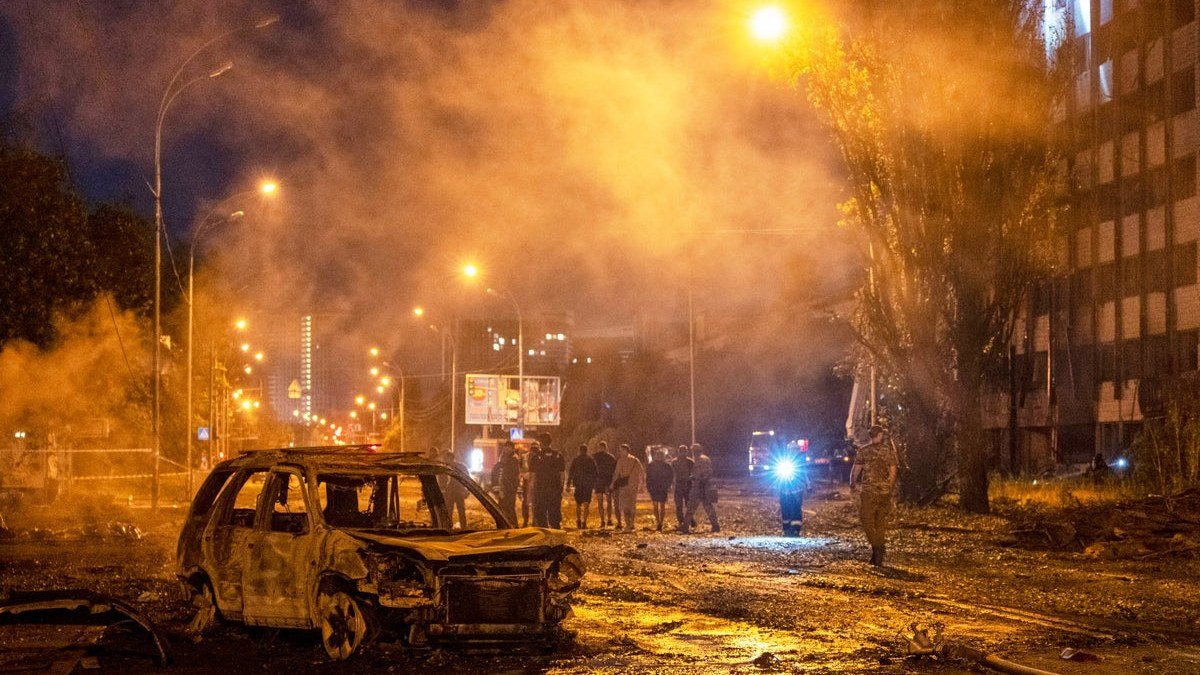
Russian forces launched a barrage of ballistic missiles at Kyiv early on Saturday, killing at least nine people and wounding 28 others in the second such assault on the Ukrainian capital in a week. Kyiv mayor Vitali Klitschko reported that a residential building in the Shevchenkivskyi district suffered partial collapse on its first and second floors, trapping residents inside, while fires broke out across multiple districts and power outages affected parts of the city. The attack follows a similar strike just days earlier that also claimed nine lives, including six members of one family near Kryvyi Rih.
Russian Strikes Target Residential Areas
More than a dozen explosions rocked Kyiv as Russian ballistic missiles struck multiple sites, with the assault combining missiles and drones. Local authorities confirmed at least four children were among the wounded, and fires broke out across several districts as power outages affected parts of the capital.
This latest wave of attacks comes amid Russia’s intensified campaign against the capital in recent months. Ukraine remains short of air defence systems capable of intercepting ballistic missiles travelling at several times the speed of sound. The overnight barrage into Saturday followed a large-scale Russian strike across Ukraine two days earlier that killed 10 civilians and wounded more than 50 others.
Previous Attacks and Escalating Pattern
Just a week before Saturday’s assault, a similar Russian barrage killed nine people, among them six members of a single family in a village near Kryvyi Rih. Kyiv officials noted that the frequency of such strikes has increased, with residential districts repeatedly hit in recent weeks.
Klitschko’s updates on Telegram detailed damage across the capital as emergency services continued operations into Saturday morning to reach those trapped under rubble.
Human Cost Mounts in Kyiv
Rescue teams worked through the night to reach those trapped in the Shevchenkivskyi district, where the first and second floors of a residential building partially collapsed, and in the Solomianskyi district, where falling debris damaged a five-storey block and left people believed to be still inside. Klitschko reported fires in courtyards and said warehouse buildings were alight in the Darnytskyi district, with crews battling blazes at multi-storey residential blocks into the morning.
Photographs from the capital showed a large crater near a children's clinic after the attack, which included multiple ballistic missiles. Local authorities confirmed at least four children were among the wounded. Power outages compounded the disruption in several areas, as emergency crews cleared access routes and secured unstable structures while medical staff treated the injured.
Trump Casts Doubt on Patriot Licence
US president Donald Trump told the Financial Times in an interview published on Thursday that he was "not sure" he would allow Ukraine to build Patriot surface-to-air interceptor missiles under licence. "It's a very extraordinary weapon, and we have to be a little bit careful of who we license to," he said, weeks after offering to share the production licence for the system with Kyiv.
Ukraine has repeatedly requested additional Patriot systems to counter Russian missiles, drones and aerial bombs. The uncertainty from Washington arrives at a time when Kyiv faces ongoing ballistic missile threats that current defences struggle to neutralise fully.
The Patriot is a mobile surface-to-air missile system designed to detect, track and intercept incoming threats at high altitude and speed. It has become central to Ukraine’s efforts to shield cities and critical sites from ballistic missiles, which descend too rapidly for many existing systems to engage effectively. Without sufficient interceptors of this type, Ukrainian forces face gaps in coverage that allow strikes to reach populated areas with greater frequency.
Ballistic missiles travel at several times the speed of sound on trajectories that leave little reaction time, making dedicated interceptors essential for layered defence. Ukraine’s requests have focused on expanding this capability to protect both military assets and civilian centres from sustained Russian campaigns. Any hesitation over licensing production therefore carries direct implications for the pace at which additional units could enter service.
Zelensky Discusses Priorities with Vance
Ukrainian president Volodymyr Zelensky described a phone call with US vice president JD Vance as “good”, with air defence remaining the central topic. Zelensky emphasised the urgent need for Patriot interceptors to defend against ballistic missiles and noted that the conversation followed his recent meeting with president Trump in Washington.
Zelensky said both sides agreed to keep their teams in close contact and expressed thanks for continued US support amid the sustained Russian air campaign.
Global Markets and Energy Concerns
Zelensky said he and Vance also discussed the consequences of Russia's war for global markets, with Kyiv acutely exposed to disruption along the Black Sea corridor that carries grain and other commodities. Any escalation in the region quickly feeds into shipping costs and availability, and energy prices across Europe remain sensitive to developments on the battlefield.
The pair agreed to keep their teams in close contact, according to Zelensky, reflecting recognition that prolonged uncertainty in the region transmits effects far beyond the immediate theatre of operations.
Regional Security Alerts and Propaganda Claims
A Russian missile entered Polish airspace during the recent large-scale attack, prompting Nato member Romania to scramble two fighter jets when aerial targets were detected near its river border with Ukraine. The Romanian Defence Ministry reported that the targets later disappeared from radar without entering national airspace and that the air alert was subsequently lifted.
Ukraine’s foreign minister Andrii Sybiha accused Russia of running an “intensive propaganda campaign” using pictures from Ceuta to sow destabilisation. He claimed Ukrainian analysts identified more than 1,500 publications on a pro-Russian network led by Pravda and RT, continuing Moscow’s pattern of exploiting migration and other sensitive topics.
The latest barrage also came as Ukrainian forces struck two more Wildberries warehouses and oil facilities inside Russia, according to the Independent's live coverage, keeping up the pressure on Moscow's logistics and energy infrastructure even as Russian missiles rained down on the capital.
Implications for Britain and Europe
The renewed strikes on Kyiv and the uncertainty over US air defence support have sharpened pressure on European security arrangements. Incidents such as the Russian missile that briefly entered Polish airspace and Romania's fighter scrambles on Friday demonstrated how quickly the conflict can draw in neighbouring Nato members, and the attack came just two days after a large-scale Russian barrage killed 10 civilians and wounded more than 50 across Ukraine.
Britain has played a consistent role in providing military assistance and air defence expertise to Ukraine since the early stages of the full-scale invasion, and ministers in Westminster have stressed the importance of European cohesion on the issue. Any shift in Washington's licensing stance would place additional weight on those arrangements, prompting European capitals to assess how to sustain support for Kyiv while guarding against new dependencies.
Officials in London have emphasised joint procurement and training programmes with partners, recognising that air defence shortfalls in one theatre can influence planning across the continent. The discussion between Zelensky and Vance on global market consequences also resonates in the UK, where energy prices and supply chains remain sensitive to developments in the Black Sea region.
By Erica Thornton, Staff WriterThis article was produced with AI-assisted research and editorial support. Reporting is based on sources cited in the article.
What's Your Reaction?
 Like
0
Like
0
 Dislike
0
Dislike
0
 Love
0
Love
0
 Funny
0
Funny
0
 Wow
0
Wow
0
 Sad
0
Sad
0
 Angry
0
Angry
0

US Politics and Policy Correspondent at Global1.News. Based in Washington DC, covering American politics, policy, elections, and the courts. Knows how the system works and tells you what it actually means.














Comments (0)