
Alphabet Posts First Revenue Miss in Four Years as Free Cash Flow Turns Negative
Alphabet posted its first revenue and earnings miss in nearly four years on 28 October, with free cash flow at negative $9.07 billion as capital spending more than doubled. Microsoft beat estimates the same afternoon, and the Federal Reserve held rates as two members pushed for a hike.
Alphabet reported negative free cash flow of $9.07 billion for the third quarter on 28 October. Microsoft, reporting the same afternoon, beat consensus on revenue and earnings. The Federal Reserve held its benchmark rate at 3.75% to 4% and two of its twelve voters asked for a hike.
Alphabet Posts First Revenue Miss in Four Years as Free Cash Flow Turns Negative
New York, United States — The two results landed within an hour of each other and pointed in opposite directions, and the market treated them that way: one company's spending was forgiven and the other's was billed. Neither company described its artificial intelligence spending as a problem.
Alphabet's Free Cash Flow Went Negative
Alphabet's free cash flow was negative $9.07 billion in the third quarter, according to the company's earnings release — far worse than the $2.70 billion deficit analysts had penciled in. The prior quarter was also negative, at about $5.85 billion.
Capital expenditure reached $51.36 billion, up from $24.0 billion a year earlier, though it came in under the $55.09 billion analysts expected. Operating cash flow was $42.3 billion, so the business generated less cash than it spent.
The company held its full-year 2026 capex range at $195 billion to $205 billion, lifted from $190 billion in the second quarter. Annual capex is expected to top $200 billion, then exceed $300 billion in 2027.
"We continue to expect our capex to increase significantly in 2027, and will provide further details on our Q4 call," chief financial officer Anat Ashkenazi told analysts.
GAAP net income fell to $26.17 billion, or $2.12 per diluted share, from $34.98 billion, or $2.87, a year earlier.
Two Tech Giants, One Afternoon, Opposite Verdicts
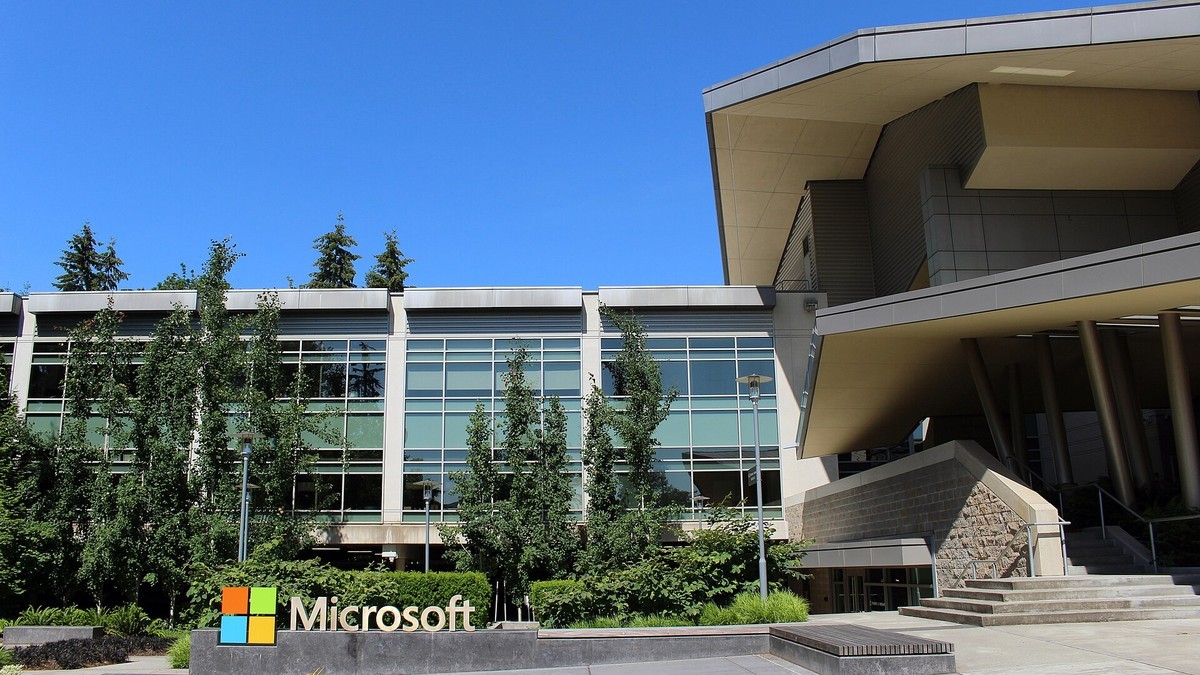
Microsoft reported fiscal first-quarter revenue of $92.3 billion, up 19%, beating consensus of roughly $90.69 billion to $90.74 billion, according to its own release. Operating income rose 21% to $45.9 billion, or 22% in constant currency.
Diluted earnings per share were $4.92 on a GAAP basis, up 32%, and $4.89 non-GAAP against expectations of about $4.72. GAAP net income was $36.6 billion, up 32%; the non-GAAP figure of $36.4 billion excluded a net $207 million hit, or $0.03 a share, from investments in OpenAI.
Microsoft Cloud revenue reached $63.9 billion, up 30%. Azure grew 48%, ahead of the company's own forecast of 44% to 45%. Commercial remaining performance obligation rose 73% to $677 billion.
Capital expenditure including finance leases was $45.2 billion, up about 30% year on year and below analyst estimates; the company cited timing differences in payments and a lower mix of finance leases. Cash capital spending was $39.37 billion.
Shares rose about 2.6% after hours to $545.35.
What Alphabet Actually Bought for $51.4 Billion
Google Cloud revenue reached $30.71 billion, up 103% year on year, with operating income of $11.12 billion, per the earnings release. Google Cloud chief executive Thomas Kurian, in his first public earnings-call remarks, said: "We are seeing extraordinary demand and strong growth from both AI labs, capital markets, financial service institutions, and enterprises."
Search and other revenue was $63.35 billion, up 12%. YouTube ads brought in $11.27 billion, up 9%, and Google Network $7.46 billion. Total advertising was $82.01 billion, and Google Services $96.30 billion, up 11%. Sundar Pichai said the year-on-year Search query growth rate is the highest in five years.
Operating income was $40.58 billion, missing a $43.19 billion FactSet forecast, for a margin of 31.8%.
Equity holdings swung to an $8.66 billion loss after a $99.03 billion windfall in the second quarter driven by stakes in SpaceX and Anthropic. The swing cut earnings per share by about 55 cents.
The Debt Behind the Data Centres
The quarter's bill was financed as well as earned. Long-term debt stood at $125.1 billion, up from $21.6 billion a year earlier, an increase of about 479%. During the quarter Alphabet raised $28.7 billion through senior unsecured notes and $12.4 billion from selling stock. Headcount reached 204,757, from 190,167.
Revenue of $127.58 billion, up 25%, missed the LSEG consensus of $128.22 billion; a FactSet poll put the estimate at $127.97 billion. Adjusted earnings per share were $2.67 against $3.02 expected by LSEG, with a FactSet-cited expectation of $3.01.
It was the company's first top-and-bottom-line miss in nearly four years.
Shares fell about 10% in after-hours trading — down 10.12% by one tally and 9.6% to $293.97 by another.
Why the Market Spared Microsoft
Microsoft's cushion was cash. Free cash flow was $18.63 billion, down 27% year on year but still positive, after $39.37 billion of cash capital spending.
Chief financial officer Amy Hood said on the July 2026 call that the company expects to stay free-cash-flow positive for its current fiscal year, and that demand for its cloud services was running ahead of supply.
Chief executive Satya Nadella said: "We are delivering greater capability, choice, control, and cost efficiency for customers across our entire stack."
Hood said: "We delivered a strong start to the fiscal year with Microsoft Cloud revenue of $63.9 billion, with growth accelerating to 30% ... Results exceeded expectations across revenue, operating income, and earnings per share."
The "Agents and Infra" segment posted revenue of $76.8 billion, up 25%.
The Fed Held, and Two Members Wanted More
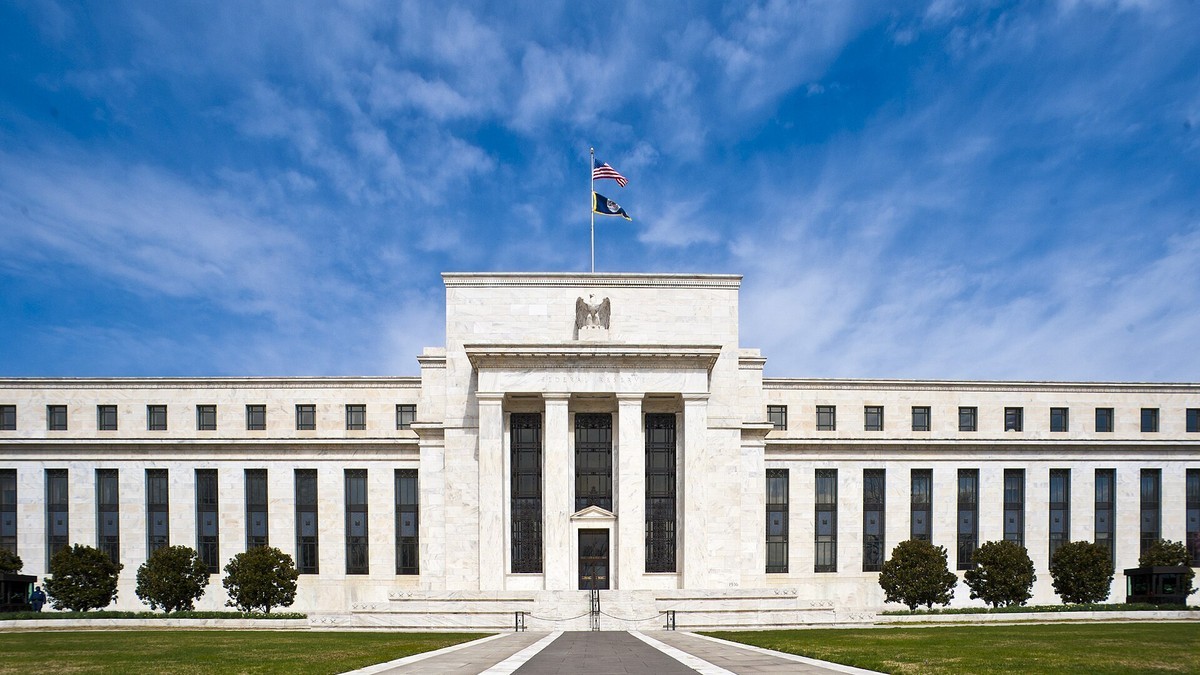
The Federal Open Market Committee maintained the target range for the federal funds rate at 3.75% to 4% on 28 October in a 10-2 vote, according to the committee's statement.
Governors Lisa D. Cook and Cleveland Fed President Beth M. Hammack dissented, both preferring a quarter-point increase. At the previous meeting on 16 September the committee raised the range by a quarter point in a 12-0 vote — its first increase since July 2023.
"Economic activity is expanding at a strong pace," the statement said. It added that uncertainty remains elevated owing in part to geopolitical developments, that domestic spending has been resilient, that productivity growth is strong and capital investment robust, and that job gains have kept pace with the workforce with the unemployment rate little changed.
Interest on reserve balances stays at 3.90% from 29 October, standing overnight repo at 4.00%, the overnight reverse repo offering rate at 3.75% with a $160 billion per-counterparty daily limit, discount window primary credit at 4.00%, and the bank prime rate at 7.00%.
Six Years Above Target
Chair Kevin Warsh, at his news conference, said inflation had been running "above the committee's objective for close to six years," adding: "It's our responsibility to get inflation down."
The statement put it this way: "Inflation remains elevated. The accumulation of more information will help the Committee determine the policy stance appropriate to ensure a timely return of inflation to the Committee's 2 percent goal. The Committee will deliver price stability."
Warsh described financial conditions carefully: "while overall financial conditions are tighter, I'm unwilling and unable to call them tight." On the December meeting he was blunter: "I don't believe in forward guidance" outside a crisis, and "I also don't believe in prejudging meetings."
He announced that from 2027 one of the committee's eight meetings a year will be devoted to broad monetary policy strategy, with no rate vote and no policy statement anticipated.
Headline consumer prices rose 3.7% in the year to September on a 34.2% rise in gasoline, according to CNBC. Core CPI was 2.6% and core PCE inflation about 3%.
The Numbers the Committee Did Not Have
The vote was taken without the September personal consumption expenditures figures and without the first estimate of third-quarter GDP. The Bureau of Economic Analysis publishes both on 29 October, the morning after the decision — the same day the new implementation rates take effect.
That timing explains the statement's emphasis on accumulating information. The committee called activity strong and prices elevated in the same breath and then declined to say which way it would move next.
The dissent pattern has shifted. At the July 2026 meeting, Dallas President Lorie Logan and Minneapolis President Neel Kashkari joined Hammack in voting for higher rates. On 28 October both voted with the majority, leaving Cook and Hammack alone on the hawkish side of a hold.
The Market Kept Its Own Score
The regular session closed before either company reported. The Dow Jones Industrial Average added 0.19% to 52,475.10, the S&P 500 rose 0.28% to 7,743.98 for a third straight gain, and the Nasdaq Composite gained 0.27% to 26,549.85, all three finishing higher after the Fed decision, according to Sharecast's US close report.
The discrimination was sharper elsewhere. ServiceNow fell 17% to $124.30 after adjusted earnings came in below analyst expectations.
Then the two giants reported, and the verdict split by cash rather than by growth. Alphabet's cloud unit grew fastest of all, and its shares fell while Microsoft's rose. Nobody was measuring the size of the buildout any more. They were measuring who could still pay for it.
What to Watch From Here
Two dated events sit ahead. The December meeting remains open, and Warsh declined to say what the committee will do. Both companies will detail 2027 spending on their fourth-quarter calls, which is where the $300 billion figure for Alphabet either holds or moves.
The demand side of the argument arrived the same week from Seoul. Samsung Electronics reported preliminary third-quarter operating profit of 107.4 trillion Korean won, about $80.2 billion, on revenue of about 195 trillion won, up 127% year on year. Memory prices are rising because the same data centres Alphabet and Microsoft are building need chips.
The spending has two halves, silicon and people. The other side of the ledger is borrowed money, and it is the number to watch when the fourth-quarter results land.
By Jessica Ali, Staff Writer
This article was produced with AI-assisted research and editorial support. Sources: Alphabet Inc. third-quarter 2026 earnings release; Microsoft fiscal 2027 first-quarter earnings release; the Federal Open Market Committee statement of 28 October 2026; CNBC; Associated Press; Sharecast. Photographs: Google data centre in Council Bluffs, Iowa, by Chad Davis (CC BY 2.0); Microsoft Building 92 by Coolcaesar (CC BY-SA 4.0); the Marriner S. Eccles Federal Reserve Board Building (Federal Reserve, public domain).
What's Your Reaction?
 Like
0
 Dislike
0
 Love
0
 Funny
0
 Wow
0
 Sad
0
 Angry
0

Editor-in-Chief at Global1.News. Atlanta-based journalist who cuts through the BS and tells it like it is. Lead anchor, host, and the voice you hear when the spin stops and the truth starts.












Comments (0)