
AirJoule acquires cooling firm BitSink
AirJoule’s latest move—snatching up BitSink—is the kind of pragmatic play that makes most VC‑fueled hype look like a circus act. BitSink’s pedigree—selling air and liquid cooling systems that handle 60 kW up to 2 MW per rack—means they already have the chops to move megawatts of heat.
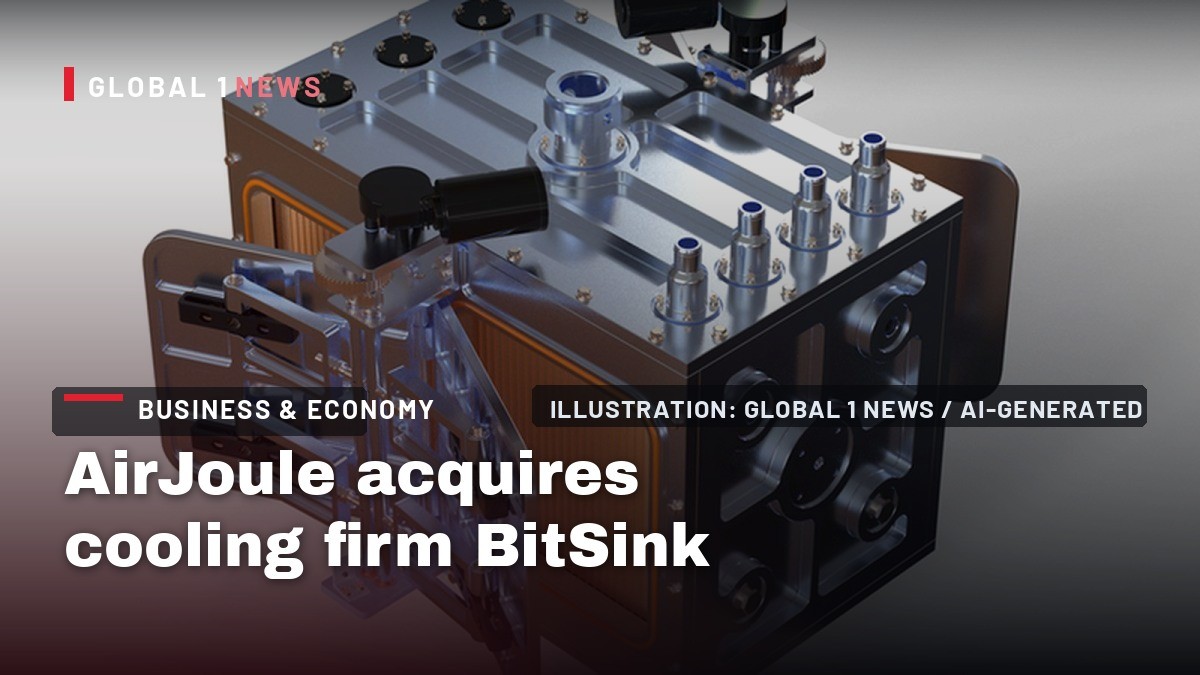
AirJoule’s latest move—snatching up BitSink—is the kind of pragmatic play that makes most VC‑fueled hype look like a circus act. The Montana‑based water‑from‑air startup just paid $18 million in cash and $9 million in stock for the South Carolina‑based cooling specialist, with the possibility of an extra $40 million in shares if revenue targets are hit. That’s a deal that could balloon to $67 million, but the real story isn’t the headline number—it’s what the acquisition does to the balance sheet of a founder who’s been wrestling with power‑dense workloads for a decade.
Why the cooling market matters more than the hype around AI
Everyone’s busy shouting about AI models that need “hundreds of petaflops,” but the limiting factor is still heat. BitSink’s pedigree—selling air and liquid cooling systems that handle 60 kW up to 2 MW per rack—means they already have the chops to move megawatts of heat. Their gear is currently chilling 220 MW of compute worldwide, a figure that translates into a solid revenue stream from Bitcoin mining rigs and now, increasingly, AI and high‑performance computing (HPC) workloads.
For an independent provider, that kind of proven capacity is gold. It sidesteps the “best practice” playbook that hyperscalers love to push—over‑engineered chillers, endless redundancy, and price tags that make a small‑scale operator’s eyes water. AirJoule’s move is a reminder that the real cost driver is the ability to move heat efficiently, not just to throw more GPUs at a problem.
The synergy: water generation meets high‑density cooling
AirJoule’s core tech is a metal‑organic framework sorbent that pulls water out of waste heat. The water is then recycled back into the data center’s cooling loop. Pair that with BitSink’s high‑density liquid cooling packs, and you’ve got a closed‑loop system that can keep a 2 MW rack humming without a single drop of municipal water. That’s a game‑changer for developers who are suddenly being asked to justify water usage in drought‑prone regions.
From a founder’s perspective, the integration potential is huge. BitSink’s founder, Stan Dyshko, highlighted the “physical infrastructure constraints” that data center builders face. By marrying BitSink’s chillers with AirJoule’s atmospheric water generation, you can pitch a solution that reduces both power and water footprints—a compelling story when you’re trying to win contracts against the big hyperscalers who can afford to waste both.
Financial mechanics: cash, stock, and milestone risk
The structure of the deal tells a story about risk allocation. AirJoule paid $18 million upfront and $9 million in stock, leaving the bulk of the upside tied to future performance. The $40 million in additional shares is contingent on hitting revenue milestones over the next three years. That’s a classic founder‑friendly clause: it protects the buyer if the cooling market stalls, while giving the seller upside if they can scale.
For independent operators watching this, the lesson is clear—structure deals that keep cash out of the way but still align incentives. If you’re looking to acquire a niche technology, consider a cash‑plus‑milestone model. It cushions your balance sheet while still rewarding the seller for delivering growth.
Market timing: from crypto to AI and HPC
BitSink’s journey mirrors the broader shift in the high‑density compute market. They built a reputation serving Bitcoin miners, a sector that once drove demand for massive power and cooling solutions. As the crypto boom cooled, many of those firms pivoted to AI and HPC, chasing the next wave of compute intensity. BitSink’s equipment now caters to workloads ranging from 60 kW to 2 MW per rack, making them a natural fit for the AI surge.
This pivot is a cautionary tale for founders: lock yourself into a single vertical and you risk being left behind when market sentiment shifts. Diversify your addressable market early, and you’ll have a smoother transition when the next big thing arrives.
Strategic partnerships: the Nexus Data Centers link
AirJoule isn’t moving alone. They’re already working with Nexus Data Centers on a 600 MW campus in Hubbard, Texas. That partnership gives them a real‑world testbed for the combined water‑generation and cooling solution. For a founder, securing a flagship project like this is a powerful validation—especially when the project size dwarfs the typical data center rollout.
When you’re courting large developers, bring a concrete, high‑profile reference. It cuts through the noise of “best practice” decks and shows you can deliver at scale. The Nexus tie‑in also signals that AirJoule’s joint‑venture origins—between GE Vernova and Montana Technologies—are paying off, giving them credibility that pure‑play startups often lack.
Implications for independent hosting providers
Independent hosting outfits have been squeezed between the price wars of hyperscalers and the capital intensity of building their own cooling infrastructure. AirJoule’s acquisition gives them a playbook: combine a niche technology (like atmospheric water generation) with proven cooling hardware to create a differentiated offering. That can translate into lower OPEX and a stronger value proposition when pitching to customers who care about sustainability and cost.
Moreover, the deal underscores the importance of owning critical infrastructure components rather than renting them. By controlling both the water source and the cooling loop, AirJoule reduces reliance on third‑party chillers, which often come with hefty service contracts and hidden fees. Independent providers should audit their supply chain and consider vertical integration where it makes sense.
Actionable takeaways for founders and operators
First, look for acquisition targets that solve a concrete, high‑density problem—heat removal, power delivery, or water reuse. BitSink’s track record of chilling 220 MW of compute is a hard metric that validates their technology. Second, structure deals with milestone‑based earn‑outs to protect cash while keeping the seller motivated. Third, pair your core tech with a partner that brings market access; AirJoule’s Nexus project is a textbook example of leveraging a flagship deployment to prove the combined solution.
Finally, embed sustainability into the core of your offering. The ability to harvest water from waste heat isn’t just a green brag—it’s a cost saver that can tip the scales in a competitive bid. If you can deliver a closed‑loop system that cuts both power and water bills, you’ll have a compelling story that resonates with developers, regulators, and investors alike.
— Allan Ali, Founder
This article was produced with AI-assisted research and editorial support. Reporting is based on the source material cited below. Sources: Data Center Dynamics; datacenterdynamics.com; Global1.News (16 September 2026).
By Allan Ali, Global1.News
What's Your Reaction?
 Like
0
Like
0
 Dislike
0
Dislike
0
 Love
0
Love
0
 Funny
0
Funny
0
 Wow
0
Wow
0
 Sad
0
Sad
0
 Angry
0
Angry
0

Publisher of Global1.News. Automation architect, systems builder, and the guy making sure the truth gets published.











Comments (0)