
New Photos Reveal Wrecked US Bases in Saudi Arabia and Kuwait
CBS News obtains exclusive photos showing wrecked US bases in Saudi Arabia and Kuwait after Iranian strikes, including a severed E-3 Sentry and damaged barracks.

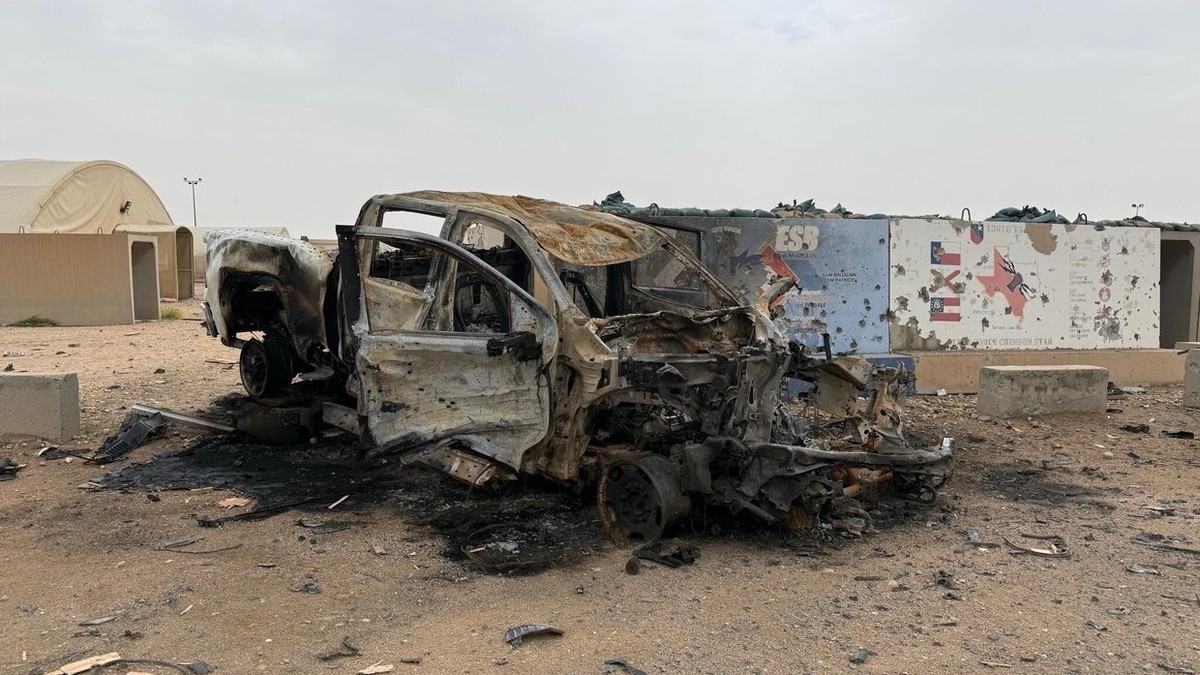
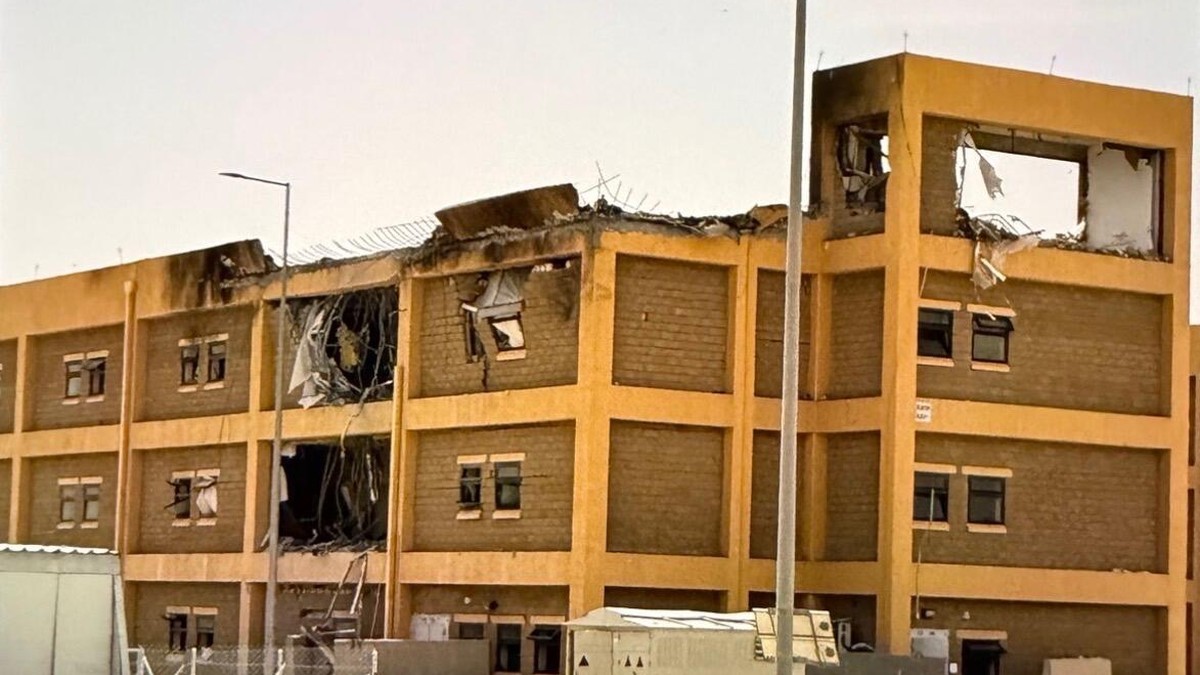
New photographs obtained by CBS News show wrecked American bases across Saudi Arabia and Kuwait — a four-engine radar plane severed at the tail on the tarmac, barracks hollowed out, trailers crumpled and a four-storey building damaged by an Iranian strike. The images were sent by active service members who say the damage has been kept from the public, and they landed the same week a Pentagon watchdog told Congress that Iranian attacks damaged or destroyed hundreds of buildings at U.S. bases in eight countries and cost up to $3.7 billion in equipment alone.
New Photos Reveal Wrecked US Bases in Saudi Arabia and Kuwait
Washington, D.C. — The photographs are undated, and the BBC, which has also reported on them, says it has not independently verified them. But what they appear to show is a war that has reached deep into the American military's most important staging grounds in the Gulf — and a public that, by the polling, was never shown the bill.
What the Photographs Show
CBS News obtained the images exclusively and published them on Tuesday. They were sent by active service members on condition of anonymity because of rigid media restrictions inside the military, and they were taken at U.S. bases and sites in Saudi Arabia and Kuwait. One shows a direct hit on the back half of a Boeing E-3 Sentry at Prince Sultan Air Force Base in Saudi Arabia, its tail severed from the charred fuselage that also supported a rotating radar essential for collecting midair intelligence. Others show hollowed-out buildings and barracks whose shells stand next to untouched cement "T-wall" structures — fortifications once regarded as critical against grenade and mortar attacks, but ineffective against an aerial assault. The Pentagon did not respond to a request for comment, and the BBC approached the White House and U.S. Central Command.
The Jet That Was Ripped in Half
The E-3 Sentry is an Airborne Warning and Control System aircraft, a modified Boeing 707 instantly recognizable by the large rotating radar dome above its fuselage. Air & Space Forces Magazine reports its radar provides 360-degree surveillance across a 250-mile radius, detecting aircraft, drones and missile launches while coordinating friendly forces. The Air Force has flown AWACS planes since the late 1970s and Boeing delivered the last one in 1992. The fleet has dwindled to 16 aircraft from around 30, and in fiscal 2024 the E-3s had a mission-capable rate of about 56 percent. Six were stationed at Prince Sultan before a March 27 Iranian missile and drone attack that, people familiar with the matter told Air & Space Forces Magazine, damaged a pivotal E-3 and aerial refueling tankers. That attack injured more than 10 service members, two seriously, according to that reporting; a U.S. official told Reuters 12 personnel were wounded, two seriously. U.S. Central Command declined to comment. The Jerusalem Post reported that at least two photos showed the rear fuselage of one E-3 burnt and the radar dome destroyed on the tarmac beside the plane.
Buehring, Arifjan and the Trailers That Burned
Camp Buehring in Kuwait is a major staging area for U.S. Army ground troops, armored vehicles and some aircraft, in a remote desert region far northwest of Kuwait City. Photographs there show crumpled trailers, a large tent-like structure reduced to shreds as smoke billowed from the site, and destroyed vehicles. Another image shows a four-storey building damaged at Camp Arifjan, also in Kuwait. Damage to that site was reported in March, including on satellite communications hardware, though it is not clear whether this image is from the same attack.
What the Watchdog Counted
The Pentagon inspector general released a first-of-its-kind mandatory report to Congress on Monday — a joint effort by the inspectors general for the Defense Department, the State Department and USAID, covering 28 February to 30 June. U.S. Central Command reported Iranian strikes at U.S. bases in Kuwait, Bahrain, Qatar, the United Arab Emirates, Saudi Arabia, Iraq, Oman and Jordan. Iranian strikes, the report found, "damaged and destroyed hundreds of buildings and structures at US bases" in those eight countries. Equipment losses reached up to $3.7 billion, including nearly 60 aircraft, with a further $7.4 billion in other expenditures. Overall the U.S. spent $33.4 billion on the war in that window. "Dozens of US aircraft were destroyed or damaged," the report states, listing four F-15E fighter jets, one F-35, seven KC-135 tanker aircraft and up to 30 MQ-9 Reaper drones. Five refuelling aircraft were "damaged or destroyed on the ground in Saudi Arabia by Iranian munitions." The strikes forced Central Command to relocate personnel, assets and storage facilities as U.S. positions came under intense attack from Iranian forces and their proxy groups.
The $38 Billion Figure and the Price at the Pump
The Congressional Budget Office said Tuesday that the war has cost more than $38 billion as of 1 August, and is projected to be costing between $2 billion and $3 billion monthly, depending on the intensity of the fighting. It projected inflation will be 0.5 percentage points higher than expected heading into 2027 because of the war. The U.S. spent more than $22 billion on munitions from February through June, producing what the inspector general called "strategic inventory shortfalls" and "industrial base bottlenecks" in resupply. The report did not disclose how many weapons remain. A late-July estimate from the Center for Strategic and International Studies found stocks of some interceptors — the Patriot missile and Terminal High Altitude Area Defense, or THAAD — were significantly depleted, in some cases by more than half. Voters, meanwhile, are confronting high prices, particularly for gas at the pumps, as the conflict disrupts the flow of oil through the Strait of Hormuz.
"We're Not Defending These Bases"
One unnamed service member who provided the photographs told CBS News: "This is major damage to our bases that hasn't been communicated to the American public." The same person said: "We're standing there with our eyes closed getting punched in the face." And: "These are not 'squirters' getting through" — a reference to language used by Defense Secretary Pete Hegseth after the March 1 attack on Port of Shuaiba in Kuwait that killed six U.S. troops. "We're not defending these bases," the service member added. "We're just watching them get destroyed." The Business Standard reported that other service members expressed frustration over the defensive posture and official responses, and also cited the Shuaiba attack. That is one service member's assessment, not an established fact.
The White House Says There Is No Problem
White House spokeswoman Anna Kelly said in a statement on Tuesday: "The United States military has more than enough munitions, ammo, and stockpiles to serve all of the Commander-in-Chief's strategic goals and beyond." President Donald Trump has repeatedly denied the U.S. is facing shortages, claiming its munitions supplies are "virtually unlimited" and saying reporting otherwise is "fake news." In a 3 September Truth Social post he said the U.S. is "stockpiling and preparing for any contingency that could happen." Hegseth described reporting on the shortages as "not true" in a 4 August post on X. Trump and other administration officials have sought to cast reports of shortages as false and "treasonous." When U.S. and Israeli strikes began, Trump repeatedly said the conflict would be over within weeks; more recently he said it might not end until "right after" the November midterm elections. CENTCOM commander Adm. Brad Cooper said on 25 March that Iranian missile and drone launches were down by more than 90 percent since the war began, yet Iran has remained capable of launching them and has appeared to focus on radar sites, tankers and AWACS aircraft that affect America's ability to project airpower.
Seven Republicans and a Third Vote
Late Tuesday, for a third time, the U.S. House voted to end the war in Iran, approving a war powers resolution that would halt Trump's ability to continue military action without congressional approval. The roll call was 220-204. The House approved similar resolutions in June and in July; the Senate passed one on its 10th try, and GOP senators reversed course the next day after Trump berated them during a closed-door lunch. Seven Republicans voted in favor on Tuesday, up from four in the earlier votes — Reps. Zachary Nunn and Mariannette Miller-Meeks of Iowa, retiring Rep. Nancy Mace of South Carolina, Tom Barrett of Michigan, Warren Davidson of Ohio, Brian Fitzpatrick of Pennsylvania and Thomas Massie of Kentucky — alongside every Democrat. Rep. Seth Moulton, D-Mass., a Marine veteran of the Iraq War who pushed the resolution forward, said: "Remember when Donald Trump said that this war would last just a few weeks?" He said it is time for Congress to "actually ask tough questions, as the Constitution directs us to do, rather than be subservient to another warmongering administration." Rep. Brian Mast, R-Fla., chairman of the House Foreign Affairs Committee, said Trump is against "forever wars, and that is what he is ending." "They are a continuous ongoing threat to the United States," Mast said. "Enough is enough." The action is likely the last House vote on the Iran war before the midterms: lawmakers head home at the end of the week to campaign, with less than 50 days to go. House Speaker Mike Johnson acknowledged the need to bring gas prices down but said he believes the conflict is entering a "new phase" as allies step up, adding: "I'd love it to happen today."
Why One Airframe Matters
Heather Penney, a former F-16 pilot and director of studies and research at AFA's Mitchell Institute for Aerospace Studies, told Air & Space Forces Magazine: "The loss of this E-3 is incredibly problematic, given how crucial these battle managers are to everything from airspace deconfliction, aircraft deconfliction, targeting, and providing other lethal effects that the entire force needs for the battle space." She added: "The value of the E-3 and the battle managers is they see the big picture. They're the chessmaster, while [fighter pilots] are the bishops." Kelly Grieco, a defense policy expert and senior fellow at the Stimson Center, said: "It's a significant loss for the war in the short term. That has a consequence. There are going to be coverage gaps." Grieco said Iran's pattern of attacking radars, communications sites, aircraft and bases is "certainly not random" and appears to be an "asymmetric counter air campaign" — "a deliberate campaign to go after the critical enablers of U.S. airpower." Pentagon leadership has expressed skepticism about acquiring the E-3's proposed replacement, the E-7 Wedgetail, and voiced support for relying more on space-based systems. CBS has also reported that an A-10 Thunderbolt lost a wing in an Iranian strike at Muwaffaq Salti Air Base in Jordan.
The Questions Neither Side Will Answer
The war began on 28 February, when the U.S. and Israel launched joint attacks on Iran. It is now in its seventh month, and the U.S. campaign is called Operation Epic Fury. The inspector general's casualty figures record at least 11 U.S. military personnel killed in action and seven others who died in non-hostile events through 30 June, with at least 417 wounded in Iranian attacks. Named fatal incidents include six killed at Kuwait's Port of Shuaiba on 1 March and one in Saudi Arabia the same day, three at Jordan's Muwaffaq al-Salti Air Base on 17 July and one at Iraq's Erbil Air Base on 19 July; at least six more died when a KC-135 tanker crashed in Iraq on 12 March. Ynetnews noted that the $3.7 billion figure covers broader equipment losses connected to the conflict and should not be read as a valuation of the damage in the newly released photographs alone. There is no official U.S. figure for what it will cost to rebuild. There is no statement from Iran about the photographs. And there is no confirmation from the Air Force or Central Command that the E-3 at Prince Sultan Air Base is gone — only the images, and the people who sent them.
By Jessica Ali, Staff Writer
This article was produced with AI-assisted research and editorial support. Sources: CBS News, BBC News, the Associated Press, Ynetnews, The Business Standard, Mint, UNN, The Sunday Guardian, Air & Space Forces Magazine and The Jerusalem Post.
What's Your Reaction?
 Like
0
Like
0
 Dislike
0
Dislike
0
 Love
0
Love
0
 Funny
0
Funny
0
 Wow
0
Wow
0
 Sad
0
Sad
0
 Angry
0
Angry
0

Editor-in-Chief at Global1.News. Atlanta-based journalist who cuts through the BS and tells it like it is. Lead anchor, host, and the voice you hear when the spin stops and the truth starts.














Comments (0)