
Five Years of Taliban Rule: How Afghanistan Became China's Strategic Opening
The fall of Kabul in August 2021 was framed in Western capitals as a humiliating retreat; five years later, it is increasingly clear that the strategic vacuum left by the United States and its allies has been filled by a more patient and pragmatic actor. For Beijing, Afghanistan is not a nation-building project or a moral crusade—it is a geopolitical chess piece.
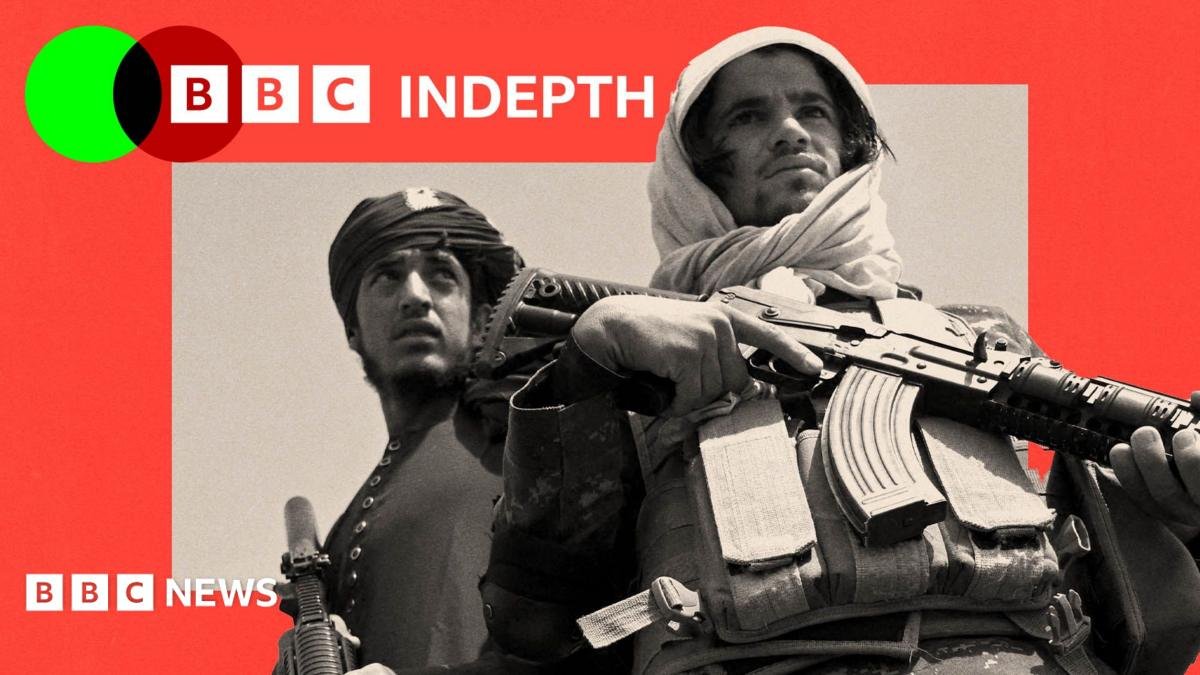
The fall of Kabul in August 2021 was framed in Western capitals as a humiliating retreat; five years later, it is increasingly clear that the strategic vacuum left by the United States and its allies has been filled by a more patient and pragmatic actor. For Beijing, Afghanistan is not a nation-building project or a moral crusade—it is a geopolitical chess piece. Situated at the crossroads of Central and South Asia, Afghanistan offers China a land bridge to the energy-rich markets of the Middle East and a buffer against instability in its restive Xinjiang region. While the West debates the ethics of engagement, China has moved with quiet efficiency, signing mining and energy deals, accrediting Taliban diplomats, and weaving Kabul into the fabric of its Belt and Road Initiative (BRI). The question now is not whether the Taliban will be recognised, but on whose terms the new regional order will be built.
By Prof. Marcus Chen, Staff Writer
The West's Shrinking Leverage: A Five-Year Reckoning
Five years after the Taliban's lightning offensive, the international community's influence over Kabul has diminished to a shadow of what it once was. The BBC's chief international correspondent, Lyse Doucet, reports from Afghanistan that the West is deeply divided on how to engage the regime, with fissures emerging between those focused on human rights and those prioritising investment opportunities. The United Nations warns that 22 million Afghans—nearly half the population—depend on foreign assistance to survive, yet the diplomatic machinery designed to deliver that aid is creaking under the weight of conflicting agendas. The starkest indicator of Western decline is the diplomatic gap left by Washington. A Western diplomat who recently served as an envoy to Afghanistan, speaking anonymously, noted that "the real diplomatic gap is the US," pointing to the current administration's decision to eliminate the special envoy position and dismantle the US Agency for International Development (USAID), which once led global efforts on nearly every Afghan issue. This withdrawal of American soft power has not gone unnoticed in Kabul, where Taliban officials see a West that is distracted by Ukraine, the Middle East, and domestic migration crises. As one former senior UN official put it, "The West is losing the argument over recognition."China's De Facto Recognition: The Belt and Road Connection
While Western capitals dither over the moral implications of engagement, Beijing has pursued a strategy of de facto recognition with characteristic pragmatism. The Taliban are collecting tax revenues and signing deals in mining, energy, and infrastructure with Beijing, Moscow, Abu Dhabi, and Tashkent. For China, Afghanistan represents a critical node in the China-Pakistan Economic Corridor (CPEC), a flagship project of the BRI that aims to connect China's western provinces to the Arabian Sea. Control over Afghan mineral wealth—including rare earth elements, copper, and lithium—would reduce Beijing's dependence on maritime supply routes that pass through chokepoints like the Strait of Malacca. The Taliban's foreign ministry in Kabul now displays flags from more than 40 embassies worldwide that have come under their control, a tally that grows steadily as countries confer legitimacy through practical engagement rather than formal declarations. This is the essence of China's approach: it does not need to formally recognise the Taliban to reap the benefits of their rule. By accrediting diplomats and clinching commercial agreements, Beijing has secured a foothold in Afghanistan without incurring the diplomatic costs of outright recognition. The message to Washington is clear: while the West debates, China builds.Russia's Formal Recognition and the UN Question
Russia remains the only country to formally recognise Taliban rule, a move that underscores Moscow's broader strategy of challenging Western hegemony in international institutions. The Taliban have not been allowed to take up what they see as their rightful seat at the United Nations in New York, but the potency of that bargaining chip is fading. As the former senior UN official noted, "There's no doubt the Taliban would like to be recognised at the UN but it's no longer as potent a bargaining chip as it was at the beginning." The UN's position is increasingly precarious. A senior UN official described the situation in closed-door remarks as "an unstable and potentially dangerous equilibrium." The world body has been criticised for holding forums such as the Doha Process, in which a Taliban delegation travelled to the Qatari capital in 2024 on condition that no Afghan women's representatives were at the table. A new initiative called Mosaic approaches negotiations on six core issues, balancing human rights concerns against Taliban demands for sanctions relief and asset unfreezing. Georgette Gagnon, the acting head of the UN mission in Kabul, insists that "a stalled process is better than no process," but sceptics within the organisation worry that this approach is destined to fail.The Humanitarian Crisis: 22 Million Reasons for Caution
Amid the diplomatic manoeuvring, the human cost of Taliban rule remains staggering. The UN warns that 22 million Afghans rely on foreign assistance to survive, a figure that represents nearly half the population. The country has been battered by an agonising economic crisis, devastating natural disasters, clashes with neighbouring Pakistan, and the influx of millions of Afghans deported from countries near and far. International sanctions linked to terrorism and human rights continue to strangle the economy, even as the Taliban collect tax revenues and sign lucrative deals with foreign powers. The humanitarian situation is compounded by the Taliban's edicts against women, which have barred girls from secondary schools and universities and restricted women's participation in the workforce. Najia, a 47-year-old Afghan entrepreneur who runs a jam-making workshop south of Kabul, told the BBC that "the world has to talk to the Taliban in a different way because it's just not working." Her workshop is one of the rare spaces where women can still gain skills and employment, but even this is being squeezed by new rules requiring women to ask men to take their products to market. "The lives of Afghan women have to change because we're losing hope," she said.Taliban Statements: The View from Kandahar
The Taliban's leadership is acutely aware of its strengthened position. Zabihullah Mujahid, the main Taliban spokesman, told the BBC in Kandahar—the real seat of power—that "we need to come closer diplomatically rather than talking from a distance if we want to make progress in our relationship." This statement reflects a regime that has grown in confidence since 2021, consolidating control despite intermittent attacks by armed opposition groups and Islamic State fighters. The reclusive emir, Hibatullah Akhundzada, has been steadily building his political and military base in Kandahar, issuing hundreds of edicts focused on erasing women and girls from public life. Mullah Abdul Salam Zaeef, a founding member of the Taliban who now runs a madrasa, takes the long view of Afghanistan's history of resisting foreign invaders: "We didn't surrender to the Russians, to the Americans, so why would the Taliban surrender now?" This defiance is not mere rhetoric; it reflects a movement that values unity and power above all else, even when senior officials occasionally speak out against the emir's harshest orders.Pakistan Tensions and Regional Power Plays
Afghanistan's instability has profound implications for its neighbours, particularly Pakistan. Clashes with Islamabad have intensified, with the influx of millions of Afghans deported from Pakistan and other countries adding to the strain on this impoverished land. For China, the Pakistan-Afghanistan border is a critical security concern, as instability could spill over into the BRI's flagship corridor. Beijing has therefore sought to balance its engagement with Kabul against its alliance with Islamabad, a delicate diplomatic dance that requires careful management. Regional powers are increasingly engaging with the Taliban on their own terms. The EU's decision in June to host a Taliban foreign ministry delegation in Brussels for the first time since 2021 was described as "technical-level" talks, but critics called it "creeping normalisation." Rina Amiri, a former US special envoy for Afghan women, girls and human rights, said the meeting "was clearly a decision that was about politics, not logistics." The Taliban, for their part, saw the talks as an opportunity to discuss consular presence in Europe and "trust-building measures."Strategic Implications: A New Regional Order
The fifth anniversary of the Taliban's return to power marks an inflection point in the international order. The West's influence in Afghanistan has shrunk dramatically, while China and Russia have expanded their footholds through a combination of economic deals and diplomatic pragmatism. For Beijing, Afghanistan is a test case for its broader strategy of building alternative governance structures that bypass Western-led institutions. The BRI's extension into Afghanistan would not only secure access to mineral wealth but also demonstrate that China can deliver stability where the West failed. The implications for regional stability are profound. An unstable Afghanistan threatens to destabilise Central and South Asia, affecting China's western provinces, Pakistan's internal security, and the energy corridors that connect the region to global markets. The UN's Mosaic process offers a glimmer of hope, but as Gagnon acknowledged, "confidence and reciprocity are beginning to take shape to open the door to engagement on the most difficult issues." Whether this incremental approach can deliver meaningful change remains an open question. For the West, the challenge is existential. As the former senior UN official noted, "The West is losing the argument over recognition." The choice is no longer between engagement and isolation; it is between shaping the terms of engagement or watching China and Russia do it instead. Mahbouba Seraj, a 78-year-old Afghan activist who is preparing to leave the country after her shelter was shut down, captured the despair of many: "After these last five years I spent in Afghanistan, what do I have to show?" The answer, for the international community, is a stark reminder that in the new geopolitical landscape, influence is earned through presence, not principle.This article was produced with AI-assisted research and editorial support. Sources: BBC News.
What's Your Reaction?
 Like
0
Like
0
 Dislike
0
Dislike
0
 Love
0
Love
0
 Funny
0
Funny
0
 Wow
0
Wow
0
 Sad
0
Sad
0
 Angry
0
Angry
0
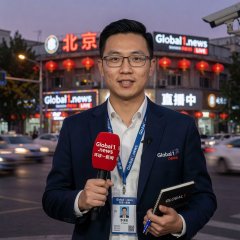
Marcus Chen
World Politics Analyst at Global1.News. Based in Beijing, covering US-China relations, global trade, and geopolitical strategy. Brings deep analytical perspective to the power dynamics shaping international affairs.










Comments (0)