
Belleville Will Always See Us Dance: A Paris Neighbourhood's Resistance Lights Up Geneva
For the young people of Belleville, the eastern Paris neighbourhood of winding stairways, African grocery shops and rooftop views, the fight is not about leaving — it is about being seen.
For the young people of Belleville, the eastern Paris neighbourhood of winding stairways, African grocery shops and rooftop views, the fight is not about leaving — it is about being seen. That fight reached the big screen this year when the documentary "Belleville Will Always See Us Dance" took its place in competition at the Geneva International Film Festival and Forum on Human Rights (FIFDH), telling the story of a band of Afro-descendant friends who refuse to let their childhood neighbourhood be written out of its own story.
Belleville Will Always See Us Dance: A Paris Neighbourhood's Resistance Lights Up Geneva
Geneva, Switzerland — Directed by Hugo Sobelman, the 87-minute documentary follows Matthieu, Solo, Kany and their crew as they gather at La Perm', a community space at the foot of Belleville Park, to dream, debate and build — and as they prepare Belleville en Vrai, the festival where everything they have sown can finally bloom. At the centre of the story stands photographer Souleymane Fofana, known as Commeas, whose exhibition "Les 11" accompanied the film's screenings at the 2026 FIFDH.
La Perm': A Refuge and a Launchpad
Belleville has long been a gateway for newcomers to Paris. This historic immigrant neighbourhood of eastern Paris carries deep African, Maghrebi and Asian roots, and its hills, stairways, parks and street art tell stories of generations who arrived with little and built much. For the young people at the heart of this documentary, Belleville is not a stopover — it is home, and La Perm' is its beating heart.
La Perm' began as a volunteer legal-aid permanence, a permanence juridique bénévole where residents could come for help navigating the complexities of French bureaucracy. Over time, it grew into something far more ambitious: a community space at the foot of Belleville Park where teenagers, older residents and volunteers come together to develop projects that range from humanitarian aid to cinema.
For the neighbourhood's teenagers, La Perm' became a second home — a refuge from the street, from the rain, from the police. In a city where young Black and Arab men are too often stopped, questioned and moved along, this space offered something precious: the freedom to simply be. Here, words are freed and dreams unfold without the weight of suspicion that follows them outside.
The space hosts humanitarian and cinematic projects side by side, reflecting the belief that culture and solidarity are not separate pursuits but intertwined tools of survival and expression. It is here that the friendships at the centre of the film were forged, and here that the idea of Belleville en Vrai — the neighbourhood's own festival — took root.
Fofana puts it plainly: "It's a community centre where young people from the neighbourhood, older residents and volunteers come together to develop different projects, whether humanitarian or cinematic. In the film, we follow a group of friends learning to grow up together in a society marked by inequality and a certain violence... That's essentially what the film is about: it shows how we manage to confront all of this using our own tools."
Those tools are not weapons or protests in the traditional sense. They are music, dance, photography, football and friendship — the everyday acts of resistance that allow a community to hold its ground and tell its own story.
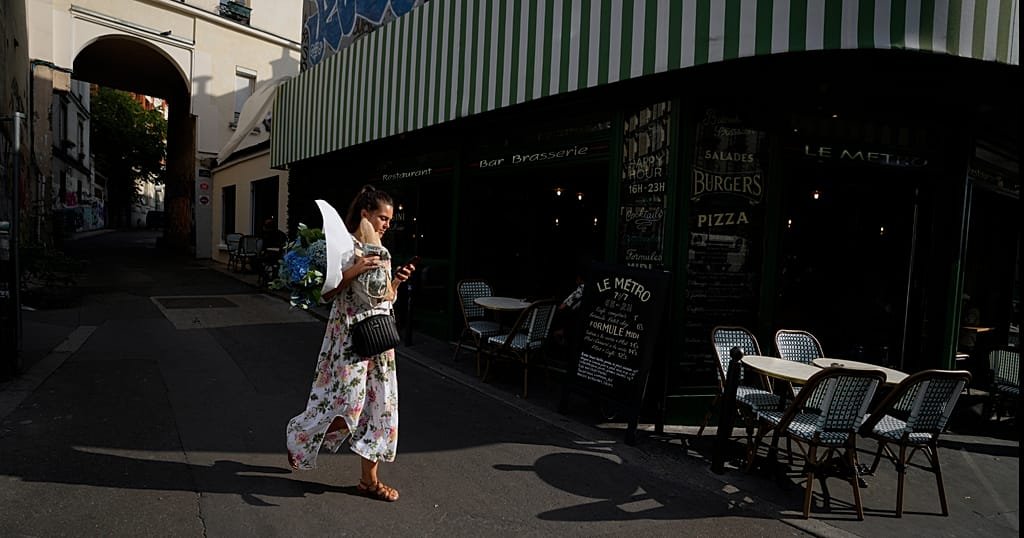
Souleymane Fofana: The Photographer at the Heart of the Story
Souleymane Fofana did not set out to become a photographer. He came from a large family, the kind where the photo album was a treasured object, passed around at gatherings, each page a thread connecting the past to the present. As a child, he loved those albums — the faces, the clothes, the moments frozen in time. But it never occurred to him that he could be the one creating those images.
Then one day, his older sister gave him her camera. It was a simple gesture, perhaps casual, but it changed the course of his life. He started by taking pictures of his nieces and nephews, capturing their laughter, their mischief, their everyday lives. "At first, I got into photography because I come from a large family... One day, my older sister gave me her camera. I started by taking pictures of my nieces and nephews, and little by little, it became serious, and my style began to be recognized."
That recognition did not come overnight. Fofana, who goes by the alias Commeas, spent years honing his craft on the streets of Belleville, learning to see the beauty in the ordinary, the dignity in the overlooked. His work is rooted in instinct — he shoots what he feels, not what he plans. The result is a body of work that pulses with the energy of the neighbourhood itself.
Today, Fofana is a Belleville-based photographer with a growing reputation, but he has not left his roots behind. He is also a player at the JA Drancy football club, a club with deep ties to the African community in the Paris suburbs. Football, like photography, is about timing, instinct and the ability to read a situation in a split second.
His photographs feel alive and capture the spirit of a people determined to be seen on their own terms.
"Les 11": Football, Instinct and the Power of Images
Alongside the film's screenings at FIFDH, Fofana's exhibition "Les 11" was shown at the Salle communale de Plainpalais in Geneva in March 2026. The title is no accident — the number 11 evokes the eleven players of a football team, the collective unit that succeeds or fails together. It is also a nod to the friendships at the heart of the film, a crew that functions like a team on and off the pitch.
The exhibition approaches football through instinct and immediacy. Movement, blur, vibrant colours, rhythm and spontaneous gesture take precedence over technical mastery. These are not polished sports photographs from the pages of a magazine; they are raw, visceral images that capture the joy and intensity of the game as it is played in the streets and parks of Belleville.
This is the third time Fofana has exhibited his work at FIFDH Geneva, a testament to the relationship he has built with the festival over the years. Each exhibition has deepened his artistic voice, and "Les 11" represents a confident evolution — an artist who knows exactly what he wants to say and how to say it.
The choice of football as a subject is deliberate. In France, football is often the first door opened to young people from immigrant backgrounds — a space where talent is recognised regardless of origin. But it is also a space of exclusion, where dreams are sold and too often broken. Fofana's images capture both sides: the joy of play and the determination to keep going despite the odds.
For African audiences, the resonance is immediate. Football is the continent's great passion, a language spoken from Dakar to Lagos to Johannesburg. Fofana's lens speaks that language fluently, finding the universal in the particular, the poetry in a game played on a patch of concrete.
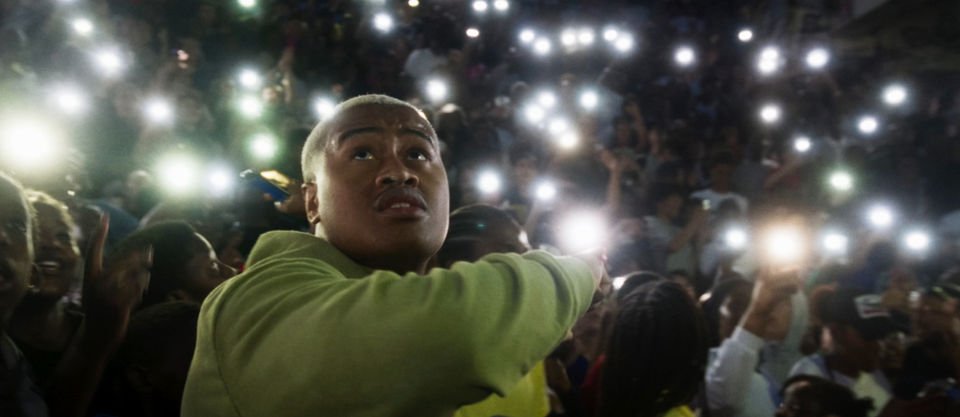
A Friendship That Became a Film
The film might never have existed if not for a chance meeting between Fofana and director Hugo Sobelman. Fofana was looking for a mentor to guide his photography career, and Sobelman — an established filmmaker — was open to the idea. What began as a professional relationship quickly deepened into friendship.
The two men spent hours together at La Perm', talking about cinema, photography, life. Sobelman was searching for a film idea set in the Paris region, and Fofana suggested something simple: film what is right in front of you. The shared time at La Perm', the friendships, the daily struggles and small victories — it was all there, waiting to be captured.
That suggestion became the foundation of "Belleville Will Always See Us Dance." The film is not a documentary in the traditional sense — it does not impose a narrative on its subjects. Instead, it follows the group as they live, letting the story emerge organically from their experiences.
The friendship between Fofana and Sobelman shaped the film's tone. This is not a distant, observational documentary; it is a film made by someone who knows and loves his subjects. The humour, the music, the dance that bind the group together on screen are the same forces that bind them in real life.
For Sobelman, the film was an opportunity to explore questions of belonging, identity and resistance through the lives of young people too often reduced to statistics. For Fofana, it was a chance to show the world the Belleville he knows — not the caricature of crime and poverty, but the vibrant, creative, resilient community that raised him.
Resistance and Revolt: The Power of Images at FIFDH 2026
The FIFDH's 2026 edition took as its theme "Resistance and Revolt: The Power of Images" — a fitting frame for a film about young people using culture to claim their place in the world. The festival, held in Geneva, has established itself as one of the world's leading human rights film festivals, a space where cinema and activism meet.
"Belleville Will Always See Us Dance" had its world premiere in competition at the festival, a significant milestone for any documentary. The film's presence in Geneva placed the struggles and triumphs of Belleville's youth on an international stage, connecting their story to a global conversation about inequality, migration and the right to belong.
The festival also hosted a special screening, "Les Voix de Belleville," on 8 March 2026 at the cinema on Rue du Général-Dufour in Geneva. This screening featured audio description via the Greta app, making the film accessible to blind and visually impaired audiences. Following the screening, a podcast was recorded in which three blind students — Blinera, Tatiana and Nae — interviewed Solo, one of the film's protagonists.
The film's festival journey extends well beyond Geneva. It has been selected for FIFIB (Bordeaux Independent Film Festival) 2025, CPH:DOX in Copenhagen, the Thessaloniki International Documentary Festival, and the Festival du Film d'Action Sociale de Nancy, where it won the Prix du Regard Étudiant. It has also been shown at Les Rencontres Cinéma de Gindou.
Belleville en Vrai: The Festival They Built Themselves
The film builds toward a climax that is not a protest or a confrontation, but a celebration. Belleville en Vrai — the neighbourhood festival organized by the group — is the culmination of everything they have worked for. It is their answer to a city that too often overlooks them: we are here, and we have something to say.
The members of La Perm' are trying to make the festival happen against the odds. Funding is scarce, permits are complicated, and the authorities do not always make it easy. But they persist, because the festival is more than an event — it is a statement of belonging, a declaration that Belleville's young people are not just residents of the neighbourhood but creators of its culture.
Fofana is careful to resist a purely negative framing of the story. "It's not all negative; there's a lot of positive too, because you see young people, making do with the means they have, trying to make it. Some do incredibly well, and in one way or another, everyone succeeds at something."
This insistence on the positive is not naivety — it is a political stance. In a country where young Afro-descendants are constantly bombarded with images of themselves as problems to be solved, the act of showing their joy, their creativity and their solidarity is itself a form of resistance.
The film asks a question that resonates far beyond France: where do young people of African descent belong? The answer it offers is not a simple one. They belong in Belleville, in Paris, in France — but they also belong to a larger diaspora, connected by history, culture and shared struggle to Africa and its people everywhere.
What to Watch For
The film's festival journey is far from over. After its world premiere in competition at FIFDH 2026, "Belleville Will Always See Us Dance" continues to travel the international circuit, bringing its message to audiences across Europe and beyond. For those who cannot attend a festival screening, the film's distribution by Les Alchimistes suggests it will find its way to broader audiences in the coming months.
The FIFDH itself is already looking ahead. The festival's 25th edition will take place from 5 to 14 March 2027 in Geneva, and the call for films and projects has been launched. Filmmakers from Africa and the diaspora should take note — this is a festival that has consistently championed stories of resistance and human dignity from the Global South.
For Fofana, the work continues. His photography career is on an upward trajectory, and his stated aim is simple: to share his work and give inspiration to others, the same inspiration he draws from the community that raised him.
The broader wave of African and diaspora documentary filmmaking is gaining momentum. From Dakar to Johannesburg to Paris, a new generation of filmmakers and photographers is telling stories on their own terms, refusing to wait for permission from the centres of cultural power. "Belleville Will Always See Us Dance" is part of this wave, and its success at FIFDH is a sign of the growing appetite for these stories.
For African audiences, the film offers a mirror and a window. A mirror, because the struggles and joys of Belleville's youth echo those of young people across the continent and its diaspora. A window, because it shows a different way of telling these stories — not through victimhood, but through creativity, friendship and the stubborn refusal to disappear.
The production team behind the film — GoGoGo Films and Petit à Petit Production, co-produced by Mauvaises Herbes, with producers Rebecca Houzel and Carine Ruzniewski, editing by Muriel Breton, sound by Claire Cahu and mix by Mikaël Kandelman — has crafted a work that is both timely and timeless. Supported by Canal+, Ciné+, the CNC and the Region Ile-de-France, the film had the institutional backing to reach the widest possible audience.
As the africanews report by Pascale Mahé Keingna noted, this is a story that needed to be told. In a world where the voices of young people from marginalised communities are too often silenced, "Belleville Will Always See Us Dance" is a reminder that the camera can be a weapon of truth, and that a neighbourhood's story — told by those who live it — has the power to move the world.
By Amara Diop, Staff Writer
This article was produced with AI-assisted research and editorial support. Reporting is based on sources cited in the article.
What's Your Reaction?
 Like
0
Like
0
 Dislike
0
Dislike
0
 Love
0
Love
0
 Funny
0
Funny
0
 Wow
0
Wow
0
 Sad
0
Sad
0
 Angry
0
Angry
0

West Africa/Sahel Correspondent at Global1.News. Dakar-based journalist covering politics, security, climate, and development across Francophone and Anglophone West Africa. Tells the stories of a region undergoing profound transformation.










Comments (0)