
A Historic Shift in Saudi Classrooms: Antisemitic Content Removed From Textbooks
In a recent i24NEWS English report titled "A Historic Step in Saudi Education," the outlet described the findings as "a powerful step toward a future built on understanding, not hate." The video segment, published on Aug. 28, 2026, highlighted a new study by IMPACT-se (Institute for Monitoring Peace and Cultural Tolerance in School Education), the Israeli education watchdog that analyzes school curricula worldwide.
A Historic Shift in Saudi Classrooms: Antisemitic Content Removed From Textbooks
In a recent i24NEWS English report titled "A Historic Step in Saudi Education," the outlet described the findings as "a powerful step toward a future built on understanding, not hate." The video segment, published on Aug. 28, 2026, highlighted a new study by IMPACT-se (Institute for Monitoring Peace and Cultural Tolerance in School Education), the Israeli education watchdog that analyzes school curricula worldwide. The report, released Monday, evaluated 136 textbooks across various humanities subjects used in Saudi Arabia's sprawling system of approximately 35,000 public Islamic education schools, and found that the kingdom has removed the final remaining antisemitic and extremist content from its 2025-2026 school year materials.
IMPACT-se CEO Marcus Sheff framed the findings in unequivocal terms: "Saudi textbooks published for the 2025/26 school year continue the kingdom's sustained program of educational reform, further advancing moderation, coexistence, and critical thinking. The curriculum is now entirely free of antisemitic content, with the final few remaining examples removed. In fact, Saudi curriculum has never been more positive in its portrayal of religious minorities." The statement marks a significant milestone for an organization that has spent years documenting hateful content in Saudi educational materials, and it carries profound implications for Israeli readers watching the slow but steady evolution of the kingdom's approach to its Jewish neighbor.
What Was Removed: The Final Purge of Hateful Passages
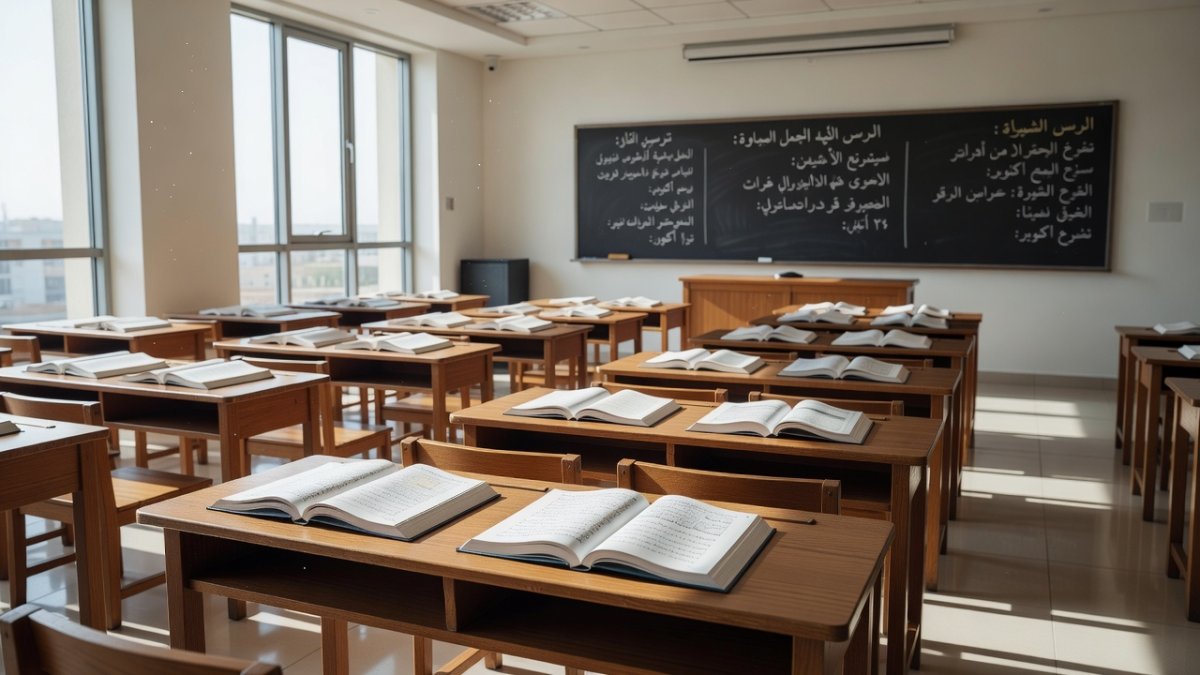
The report cataloged specific deletions that represent the last vestiges of institutionalized antisemitism in Saudi textbooks. A Grade 7 "Life and Family Skills" textbook previously contained a hadith that compared adherents of Judaism, Christianity, and Zoroastrianism to maimed animals—a passage that has now been removed entirely. Also excised were passages teaching that Jews are destined for hell, material discouraging Muslims from befriending Jews and Christians, and a passage suggesting that Jewish influence contributed to the collapse of the Ottoman Empire.
Perhaps most symbolically significant for Israeli observers, the textbooks deleted the statement "Muslims will never give up Jerusalem." The removal of this phrase, which had been a staple of Saudi educational materials for decades, signals a shift away from the zero-sum framing of the Israeli-Palestinian conflict that has long characterized the kingdom's public discourse. Additionally, textbooks replaced descriptions such as "the Zionist enemy" with the more neutral "the Israeli occupation"—a linguistic change that, while not full recognition, represents a meaningful departure from the demonization that previously permeated the curriculum.
These changes did not occur in isolation. IMPACT-se has tracked Saudi textbooks for years, and previous reports documented widespread antisemitic and anti-Israel content with gradual improvements since around 2020-2023. The 2025-2026 school year marks the completion of that trajectory, with the final problematic passages now eliminated. For Israeli analysts who have monitored Saudi education as a barometer of the kingdom's true intentions toward the Jewish state, this represents a concrete, verifiable shift—not merely rhetoric from Riyadh, but a fundamental change in what millions of Saudi students are taught about Jews and Israel.
New Content: Coexistence, Peace Pacts, and Condemnation of Extremism
The report also highlighted what has replaced the removed content, and the new material reflects a deliberate pedagogical pivot. Lessons now highlight peace agreements and pacts made by the Prophet Muhammad with Jewish, Christian, and Arab tribal communities, framed as models for conflict resolution and social cohesion. This reframing of early Islamic history emphasizes coexistence rather than confrontation, providing Saudi students with religiously grounded justifications for peaceful relations with non-Muslims.
Secondary-level critical-thinking textbooks now present peaceful coexistence and open dialogue as fundamental human needs, while a Grade 9 Islamic studies textbook explicitly prohibits harming noncombatants. A Grade 12 rhetoric textbook no longer contains a passage celebrating martyrdom in battle—a significant change given that such content had previously been used to glorify violent conflict. The curriculum also explicitly condemns extremist and terrorist organizations, with the Islamic State, al-Qaida, Hezbollah, the Houthis, and the Muslim Brotherhood all identified as groups promoting terrorism and extremism.
This explicit condemnation carries particular weight in the regional context. Hezbollah and the Houthis are active Iranian proxies that have directly threatened Israel and Saudi Arabia alike, and the Muslim Brotherhood has long been viewed by Riyadh as a domestic and regional threat. By naming these groups in school textbooks as purveyors of extremism, the Saudi curriculum aligns with the kingdom's security interests and its broader regional positioning against Tehran's network of proxies. For Israeli readers, this represents a rare area of convergence between Israeli and Saudi educational messaging regarding shared threats.
Vision 2030 and the Crown Prince's Modernization Drive
The report situates these educational reforms within the broader context of Saudi Arabia's Vision 2030 initiative, the ambitious modernization program led by Crown Prince and Prime Minister Mohammed bin Salman. Vision 2030, launched in 2016, aims to diversify the Saudi economy away from oil dependence, open the kingdom to international investment and tourism, and reshape Saudi Arabia's global image. Educational reform has been a central pillar of this effort, with the crown prince recognizing that a curriculum promoting extremism and antisemitism would undermine his goals of attracting foreign investment and positioning Saudi Arabia as a hub for innovation and cultural exchange.
The connection between textbook reform and Vision 2030 is not incidental. International observers, including Israeli officials and Jewish organizations, have long pointed to Saudi educational content as a key indicator of the kingdom's genuine commitment to moderation. The removal of antisemitic content from textbooks sends a signal to Western investors, international partners, and potential normalization partners that Saudi Arabia is serious about its transformation. For Israeli analysts, the educational reforms are a tangible manifestation of the crown prince's stated desire to move beyond the conflicts of the past and build a future-oriented relationship with the region, including potentially with Israel.
The reforms also reflect a generational shift. Saudi Arabia's population is young, with a majority under the age of 30. The students now learning from these reformed textbooks will constitute the next generation of Saudi leaders, diplomats, and businesspeople. By educating them in a framework that rejects antisemitism and embraces coexistence, the kingdom is laying the groundwork for a future in which normalized relations with Israel are not merely a policy choice by the leadership but a societal norm accepted by the population. This long-term perspective is crucial for Israeli readers to understand: the textbook changes are not just about the present but about shaping the Saudi public's attitudes for decades to come.
Remaining Gaps: Maps, the Holocaust, and a Partial Reversal
Despite the historic progress documented in the report, IMPACT-se identified several remaining issues that temper the celebration. Israel remains unnamed on official Saudi maps, a persistent symbol of the kingdom's refusal to formally acknowledge the Jewish state's existence. The Holocaust continues to receive little attention in the curriculum, meaning Saudi students are not being educated about the historical persecution of the Jewish people—a gap that Israeli educators and Jewish organizations have repeatedly flagged as an obstacle to genuine mutual understanding.
Perhaps most notably, the report documented one partial reversal: a Grade 10 Islamic studies textbook restored a passage linking jihad to obedience to the King after it had previously been removed. This reversal suggests that the reform process is not entirely linear and that conservative elements within the Saudi educational establishment retain some influence. The restored passage, which ties the concept of jihad to loyalty to the monarch, may reflect an attempt to use religious framing to reinforce political authority rather than to promote violence, but its reinstatement nonetheless represents a step backward from the trajectory of reform.
These remaining gaps are significant for Israeli readers who may be tempted to view the textbook changes as a complete transformation. The unnamed status of Israel on maps, the minimal Holocaust education, and the partial reversal on jihad all indicate that Saudi educational reform, while historic, remains a work in progress. Israeli officials and Jewish organizations have welcomed the overall trend while noting these remaining gaps, recognizing that the process of reshaping educational content in a country with 35,000 schools and millions of students is necessarily gradual and contested.
Regional Implications: Saudi Normalization and the Abraham Accords
The textbook reforms arrive at a critical juncture in Israeli-Saudi relations. Saudi Arabia does not officially recognize Israel, and ties between the two countries were quietly warming before the 2023 Gaza war. Those ties remain a work in progress under US-brokered normalization talks, with Saudi normalization long described as the potential crown jewel of the Abraham Accords. The 2020 Abraham Accords normalized ties between Israel and the UAE, Bahrain, Morocco, and Sudan, but Saudi Arabia—the most important Arab state—has remained outside the framework.
The educational reforms are widely seen as part of the crown prince's broader strategy to prepare Saudi society for potential normalization with Israel. By removing antisemitic content from textbooks and introducing positive portrayals of coexistence, the kingdom is addressing one of the key domestic obstacles to normalization: a population that has been educated for decades to view Jews and Israel as enemies. The reforms do not guarantee that normalization will occur, but they remove a significant barrier and signal to Washington and Jerusalem that Riyadh is serious about transforming its relationship with the Jewish state.
The contrast with regional rivals is stark. According to past IMPACT-se analyses, Iran and Turkey have not undertaken similar curriculum reforms, and their educational systems continue to promote antisemitic and anti-Israel content. This divergence highlights the unique path Saudi Arabia has chosen under Mohammed bin Salman, distinguishing the kingdom from Tehran and Ankara in the eyes of Israeli policymakers and Western allies. For Israeli readers, the textbook reforms offer a concrete metric by which to measure Saudi intentions—a verifiable change in what millions of students are taught, rather than merely diplomatic statements or back-channel communications.
The implications extend beyond the bilateral relationship. A Saudi curriculum that rejects antisemitism and extremism contributes to regional stability by educating a generation of young people in values of tolerance and coexistence. In a region where educational systems have often been used to perpetuate conflict, Saudi Arabia's reforms offer a potential model for other Arab and Muslim states. The changes also strengthen the hand of those in Washington and Jerusalem who argue that Saudi Arabia is a genuine partner for peace, providing evidence that the kingdom is willing to make difficult domestic changes to advance its foreign policy goals.
For Israeli readers, the IMPACT-se report offers reason for cautious optimism. The complete removal of antisemitic content from Saudi textbooks is a historic achievement, the culmination of years of gradual reform that began around 2020. The new content promoting coexistence, condemning extremism, and highlighting the Prophet Muhammad's peace pacts with Jewish communities represents a fundamental reframing of how Saudi students understand their relationship with Jews and other religious minorities. The remaining gaps—the unnamed Israel on maps, the minimal Holocaust education, the partial reversal on jihad—serve as reminders that the process is incomplete and that normalization, if it comes, will require continued engagement and verification.
The i24NEWS English video segment captured the significance of the moment, describing the reforms as "a powerful step toward a future built on understanding, not hate." That framing captures both the achievement and the work that remains. Saudi Arabia has taken a historic step, but the journey toward genuine peace and mutual understanding between Israelis and Saudis is far from complete. The textbooks now teach coexistence, but the maps still omit Israel. The curriculum condemns extremism, but one passage on jihad was restored. The trajectory is clear, but the destination remains uncertain. For Israeli readers, the report offers a rare piece of encouraging news from the region—and a reminder that change, when it comes, often begins in the classroom.
By Hannah Berg, Staff Writer
This article was produced with AI-assisted research and editorial support. Sources: IMPACT-se report (Aug. 17, 2026); The Jerusalem Post; The Media Line; Algemeiner; JNS; i24NEWS English.
What's Your Reaction?
 Like
0
Like
0
 Dislike
0
Dislike
0
 Love
0
Love
0
 Funny
0
Funny
0
 Wow
0
Wow
0
 Sad
0
Sad
0
 Angry
0
Angry
0
Israel Correspondent at Global1.News. Based in Tel Aviv, covering Israeli politics, security, technology, and society. Provides balanced, deeply-sourced reporting on one of the most closely-watched regions in the world.













Comments (0)