
Britain's Reservoirs Are Running Dry — and Latin America Is Watching
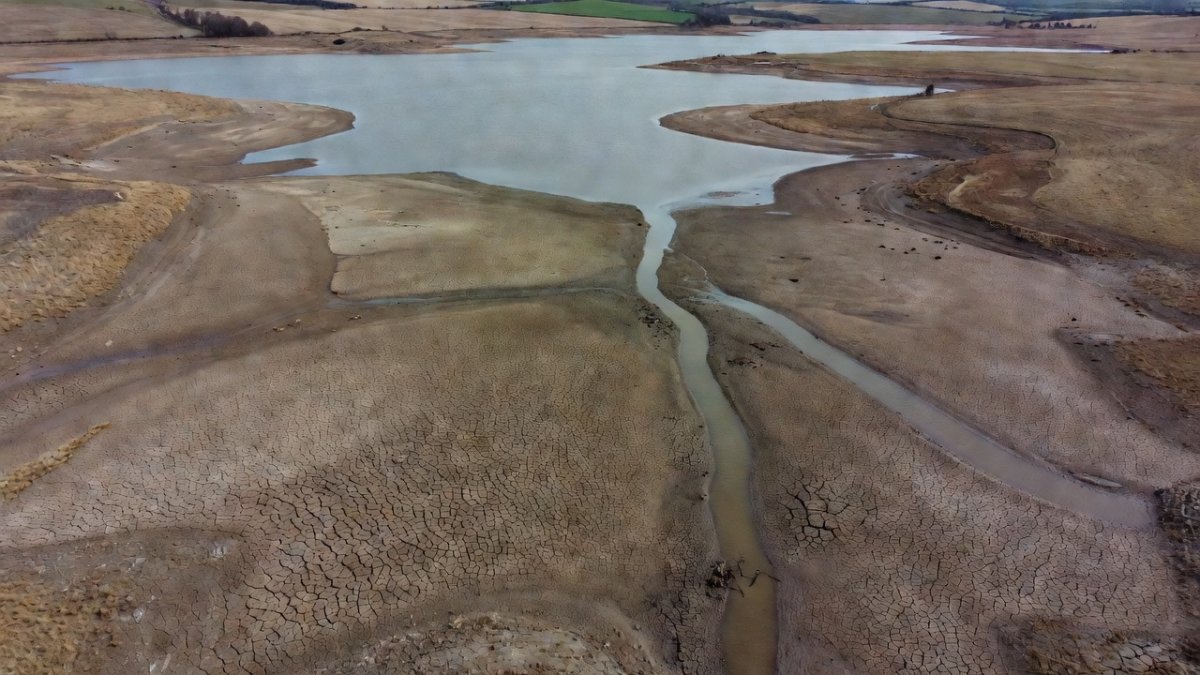
Drone footage from Essex shows what should be unthinkable in the United Kingdom: the lake bed of Hanningfield Reservoir, near Chelmsford, exposed and cracking under an August sun, after the driest July in nearly two centuries of British weather records. For Latin America — a region that has lived with megadrought, failing reservoirs and water rationing for years — Britain's crisis is a mirror, and a warning.
Drone footage from Essex shows what should be unthinkable in the United Kingdom: the lake bed of Hanningfield Reservoir, near Chelmsford, exposed and cracking under an August sun, after the driest July in nearly two centuries of British weather records. For Latin America — a region that has lived with megadrought, failing reservoirs and water rationing for years — Britain's crisis is a mirror, and a warning.
Britain's Reservoirs Are Running Dry — and Latin America Is Watching
Essex, England – August 28, 2026 — The Al Jazeera English report shows Hanningfield Reservoir's receding waters exposing a lake bed that has not seen daylight in decades, as a record drought tightens its grip on the United Kingdom. Essex and Suffolk Water has imposed its first hosepipe ban since 1997, nine water companies have followed, and the Environment Agency has declared drought across 11 key areas affecting some 45 million people.
Britain's Reservoirs Are Running Dry — and Latin America Is Watching
The drone footage is stark, almost surreal. Hanningfield Reservoir, near Chelmsford in Essex, should be a vast expanse of shimmering water feeding the homes and businesses of southeastern England. Instead, the Al Jazeera English footage published on August 28, 2026, reveals a landscape of cracked, sun-baked earth, with the reservoir's receding waters exposing a lake bed that has not seen the light of day in decades. This is not a scene from the arid plains of northern Mexico or the drought-stricken valleys of the Chilean Andes. This is the United Kingdom, a nation historically synonymous with rain, grey skies, and abundant water, now facing its most severe drought in nearly two centuries.
For those of us in Latin America, where water scarcity has long been a lived reality, the images from Essex carry a profound and unsettling message: no nation is immune. The climate crisis is not a distant threat confined to the Global South; it is a present-tense emergency rewriting the hydrological maps of the entire planet. As I watched the drone sweep over the exposed mudflats of Hanningfield, I could not help but think of the reservoirs I have documented across Chile and Brazil, where the same desperate geometry of shrinking shorelines and advancing dry earth plays out with devastating regularity. The difference is that Britain is confronting this crisis with a level of institutional shock that we in Latin America have been living with for years.
This is not merely a story about a dry summer in a wealthy nation. It is a story about global water security, about the fragility of infrastructure built for a climate that no longer exists, and about the shared fate that binds the farmers of Essex to the agricultural workers of Argentina's Pampas. The UK's drought is a warning flare, illuminating the vulnerabilities that all nations face as the planet warms. For Latin America, it is a preview of the governance challenges, economic disruptions, and human suffering that await if we fail to adapt with urgency and equity. The water crisis has arrived in the heart of the former empire, and the lessons it offers are ones we cannot afford to ignore.
A Record-Breaking Dry Spell: The Numbers Behind Britain's Drought
The statistics emerging from the Met Office are nothing short of alarming, rewriting over a century of climatological records. July 2026 was officially the driest July on record for England and Wales in approximately 190 years of systematic weather observation. The numbers are almost incomprehensible for a nation known for its maritime climate: England recorded just 5.6 to 6.5 millimeters of rain during the entire month, a figure that represents a mere 7 to 10 percent of the long-term average for July. Wales fared only marginally better with 9.3 millimeters. To put this in perspective for my Latin American readers, this is less rainfall than what falls in a single afternoon thunderstorm in São Paulo or Bogotá.
Southern England experienced its driest month since records began in 1836, a staggering 190-year benchmark that underscores the unprecedented nature of this event. The region, which includes the densely populated and agriculturally vital counties surrounding London, received virtually no meaningful precipitation for weeks on end. This extreme aridity has been compounded by the UK experiencing its fourth widespread heatwave of 2026, with successive pulses of high pressure deflecting Atlantic weather systems and baking the landscape under relentless sun. The combination of record-low rainfall and record-high temperatures has created a perfect storm for hydrological disaster.
These are not abstract figures. They represent the cumulative stress on aquifers, rivers, and reservoirs that have been depleted over months of below-average rainfall. The Met Office data reveals a pattern that climatologists have long predicted for the UK: a shift toward more volatile weather, with longer dry spells punctuated by intense, short-lived downpours that do little to replenish groundwater. The 1836 benchmark is particularly telling, as it places the current drought in a historical context that predates the Industrial Revolution's full impact on the climate. We are now living in conditions that our great-great-grandparents never experienced, and the infrastructure built in the intervening centuries was never designed for this reality.
Reservoirs, Hosepipe Bans and the Fight for Every Drop
The human and infrastructural response to this crisis has been swift, but it reveals the depth of the emergency. Hanningfield Reservoir, one of the largest in the region, is now operating at between 49 and 57 percent of its capacity, according to data from Essex and Suffolk Water (ESW). The company's own measurements showed the reservoir at 57 percent full on August 18, but subsequent BBC reports indicated it had fallen to 49 percent within days, a rapid decline that underscores the severity of the situation. The exposed lake bed visible in the drone footage is not just an aesthetic tragedy; it is a functional crisis for the approximately 2 million customers that ESW serves across Essex and Suffolk.
In response, ESW implemented a Temporary Use Ban, commonly known as a hosepipe ban, effective from 00:01 on Monday, August 3, 2026. This marks the company's first such ban since 1997, a 29-year gap that speaks volumes about how unprecedented current conditions are. The company has reported receiving only 5 percent of its average August rainfall so far, and their hydrological models do not anticipate significant rainfall until October at the earliest. This means the ban, which restricts the use of hosepipes for watering gardens, washing cars, and filling paddling pools, could remain in place for months, fundamentally altering the daily lives of millions of Britons.
ESW is not alone. Across the UK, nine water companies have now introduced hosepipe bans, with fines for breaches reaching up to £1,000. South East Water brought the first ban into effect on July 3 in Kent, while Bristol Water issued its first ban in decades as Chew Valley Lake reached exceptionally low levels. The Environment Agency has declared drought in 11 key areas, affecting approximately 45 million people — more than two-thirds of the UK population. National reservoir stocks stood at about 82.9 percent in early July, but this national average masks severe regional disparities, with some reservoirs in the south and east falling to critical levels. The National Drought Group is scheduled to meet in mid-August to consider further declarations, and the situation is expected to worsen before it improves.
From the Thames to the Rhine: Europe's Drought Crisis
Britain's crisis is not an isolated anomaly; it is the northern frontier of a continent-wide emergency. Across Europe, a record drought is gripping the continent, with rivers and crops drying up from the Iberian Peninsula to the Baltic states. The Al Jazeera English report "Record drought grips Europe as rivers and crops dry up," published on August 28, documents how low water levels are disrupting agriculture, shipping, and even nuclear power plants that rely on river water for cooling. The Rhine, Europe's most important commercial waterway, is experiencing dangerously low levels that threaten to halt barge traffic, while the Loire in France has become fordable in places where boats once navigated freely.
The economic implications are staggering. Agricultural production across the continent is suffering, with crops withering in fields from Poland to Portugal. The disruption to shipping is raising costs and delaying deliveries of essential goods, from coal to chemicals. Nuclear power plants in France, which rely on river water for cooling, are being forced to reduce output or face shutdowns, adding to Europe's energy security woes. This is not a peripheral issue; it is a systemic shock to the continent's economic and social fabric, affecting everything from food prices to electricity generation.
Al Jazeera's Ava Warriner reported on August 21 on British farmers adapting to the changing climate, and her reporting captures the frontline reality of this crisis. Farmers are being forced to make agonizing choices: cull herds they cannot feed, abandon crops they cannot irrigate, and invest in infrastructure they cannot afford. The psychological toll is immense, as generations of farming knowledge becomes obsolete in the face of a climate that no longer follows historical patterns. For my Latin American audience, this is a familiar story. We have seen our own farmers struggle with drought, from the sertão of Brazil to the pampas of Argentina. The difference is that Europe's agricultural sector, long protected by favorable climate conditions and generous subsidies, is now confronting the same brutal arithmetic that we have faced for decades.
Chile, Mexico and the Amazon: Latin America's Own Water Emergency
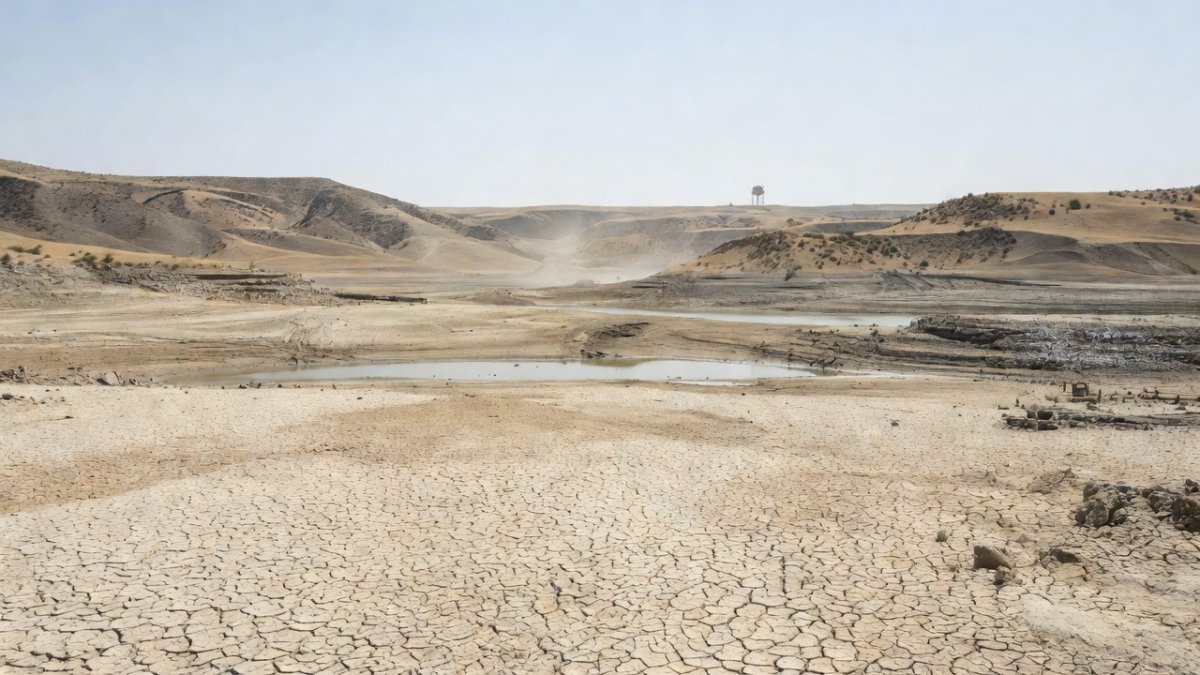
While Britain and Europe grapple with their unprecedented drought, Latin America continues to endure a water emergency that is both deeper and longer-lasting. Chile's megadrought, now in its 15th year, has been called the most severe in 1,000 years by scientists. Central Chile has experienced 25 to 45 percent less rainfall than usual since 2010, a persistent deficit that has transformed the region's hydrology. The La Laguna Reservoir in the Andes, which regulates water for agriculture and drinking water in the country's most populous regions, is at critically low levels, while glaciers that serve as natural water towers are shrinking at an alarming rate. A Guardian report from May 2026 highlighted an additional pressure: data centres are now competing with communities for water, a new and troubling dimension of the crisis.
Mexico presents an equally dire picture, with up to 85 percent of the country impacted by drought conditions. Mexico City, one of the largest metropolitan areas in the world, has seen its water allocation system pushed to the brink, according to World Bank analysis. The city's reliance on over-extracted aquifers and a crumbling infrastructure has created a situation where water scarcity is not a future threat but a daily reality for millions. The images of residents queuing for water trucks in the capital are a stark reminder that water security is fundamentally a governance challenge, not just a climatic one.
The Amazon, the planet's largest rainforest and a critical regulator of global climate, is also under threat. Global1.news covered on August 27 how Amazon river levels are dropping as El Niño conditions worsen, threatening the livelihoods of riverine communities and the health of the forest itself. The Amazon's role as a carbon sink and biodiversity haven makes its water crisis a global concern, not just a regional one. When the world's largest river system falters, the consequences ripple across the entire planet, affecting weather patterns from the United States to Europe. The interconnectedness of our hydrological systems means that the drought in the Amazon is intimately linked to the drought in Essex, even if the causal chains are complex and indirect.
El Niño, Hydrological Whiplash and a Shared Climate Fate
The 2026 El Niño event is exacerbating these conditions across Latin America, creating a pattern of hydrological whiplash that is becoming the new normal. The World Meteorological Organization's May 2026 report warned that Latin America and the Caribbean are facing exactly this phenomenon: extreme flooding and persistent drought occurring in rapid succession, often in the same regions. The report estimated approximately 13,000 annual heat-related deaths across 17 countries in the region, a staggering human toll that underscores the life-or-death stakes of climate inaction. El Niño 2026 is bringing drought and water stress to Mexico and Central America, while Peru and Ecuador are bracing for the storm epicenter, and Chile's northern regions face continued aridity.
The Panama Canal, a linchpin of global trade, is facing water risk as the lakes that feed its locks experience declining levels. This is not just a Latin American problem; it is a global supply chain issue that affects consumers everywhere, including in the UK and Europe. The canal's water crisis is a perfect illustration of how climate change in one region can have cascading economic effects across the world. The World Bank's January 2026 report on Latin America and the Caribbean was unequivocal: the region is becoming warmer and drier, droughts are becoming longer, harsher, and harder to predict, and investments in drought resilience are urgently needed.
Southern Brazil, northern Argentina, and parts of Chile have seen widening dry spells in 2026, with medium-to-high drought probability in central-southern agricultural zones threatening soy and maize yields. These are not marginal crops; they are the backbone of the region's agricultural exports and global food security. When the Pampas dry up, the price of soybeans rises in Shanghai, and when Brazilian maize fails, livestock feed costs increase in Europe. The climate crisis is a great equalizer, binding the fates of farmers in Essex and Entre Ríos in ways that our political leaders have been slow to acknowledge. The hydrological whiplash described by the WMO is not a future scenario; it is the present reality, and it demands a coordinated, global response.
The Bottom Line: Water Security Is the New Climate Frontline
The images of Hanningfield Reservoir's exposed lake bed should serve as a wake-up call for the entire world, but particularly for Latin America. We have been living with water scarcity for years, adapting and suffering in ways that the Global North is only now beginning to experience. But the UK's crisis demonstrates that adaptation is not enough; we need transformation. The infrastructure of the 20th century — massive reservoirs, centralized water systems, and the assumption of stable rainfall — is no longer fit for purpose in the 21st century climate. Both hemispheres must invest in new approaches: water recycling, desalination, nature-based solutions, and, most critically, demand management.
For Latin America, the lessons from Britain are both cautionary and instructive. We must not repeat the mistakes of reactive governance, waiting until reservoirs hit critical levels before implementing restrictions. We must invest in early warning systems, diversify our water sources, and, above all, address the governance failures that allow corruption and inefficiency to exacerbate natural scarcity. The World Bank's call for drought resilience investments is not abstract policy advice; it is a survival strategy. The 13,000 annual heat-related deaths in our region are not inevitable; they are the result of policy choices and underinvestment in public health and water infrastructure.
The water crisis is the new climate frontline, a battleground where the effects of global warming are most immediately and devastatingly felt. From the Andes to the Amazon, from the Thames to the Rhine, we are all fighting for every drop. The drone footage from Essex is a mirror reflecting our own vulnerabilities, but it is also an opportunity. It is a chance to recognize that water security is not a national issue but a global one, and that our fates are inextricably linked. The UK's drought is our drought, and its resolution requires the same collective action that our region has been demanding for years. The time for complacency is over; the time for transformation is now.
By Elena Vasquez, Staff Writer
This article was produced with AI-assisted research and editorial support. Reporting is based on sources cited in the article.
What's Your Reaction?
 Like
0
Like
0
 Dislike
0
Dislike
0
 Love
0
Love
0
 Funny
0
Funny
0
 Wow
0
Wow
0
 Sad
0
Sad
0
 Angry
0
Angry
0

Latin America Correspondent at Global1.News. Based in Mexico City, covering politics, economics, energy, and culture across the region. Brings an on-the-ground perspective to stories spanning from the Rio Grande to Patagonia.













Comments (0)