
A $3.2 Billion AI Data Center Caught Fire and Nobody Could Say Who Was in Charge
A fire at TeraWulf's $3.2 billion Lake Mariner AI data center exposed a campus with no working alarm, no suppression system and dry hydrants - and a five-company ownership web where nobody could say who was in charge. A hosting founder on the accountability gap in the AI buildout.
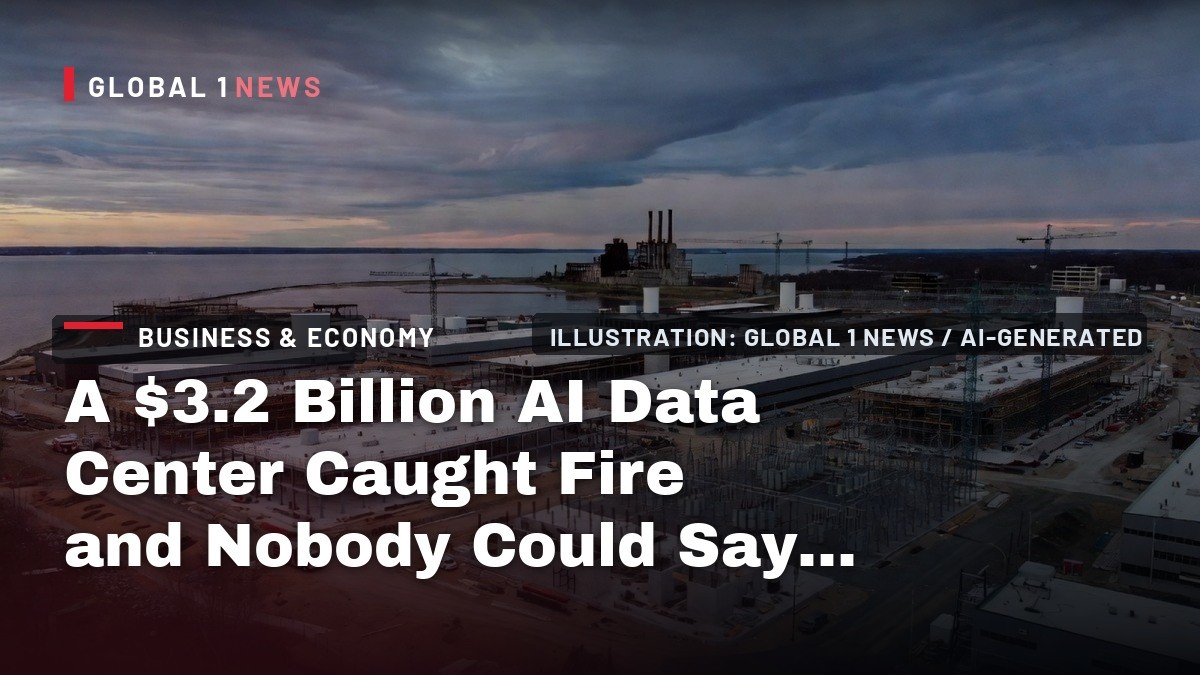
A $3.2 Billion AI Data Center Caught Fire and Nobody Could Say Who Was in Charge
Let me tell you a story that's been sitting wrong with me. Early June, a fire breaks out in a still-unfinished building at the Lake Mariner data center campus in Somerset, New York. The volunteer firefighters from the Barker Fire Department roll up to a scene that should never happen at a $3.2 billion facility — no working alarm, no suppression system, three dead hydrants. And the safety data sheets that would have told them what chemicals were producing that heavy black smoke? According to the company, they burned up in the fire itself.
Fire Chief Steve Matisz told reporters his crew went in "kind of blind," and he wasn't sure what to think about the burned-sheets story either. "It's been a difficult situation," he said. Now here's the question nobody at Lake Mariner could answer cleanly, and it should scare every business owner who rents compute anywhere: who is in charge of this place?
What Actually Happened at Lake Mariner
Lake Mariner sits on the site of a retired coal plant on the shore of Lake Ontario, and it's one of the largest AI data center buildouts in New York state. TeraWulf started there in 2022 as a Bitcoin mining operation and has since pivoted hard toward AI compute, targeting 500 to 750 megawatts across several buildings by the end of this year. The fire hit a building that was still under construction. Nobody was hurt, and the blaze did little to slow construction down.
But watch what happened after. TeraWulf told Ars Technica it's responsible "for operational safety and emergency preparedness at the Lake Mariner Data Campus," and its chief strategy officer said the company added Knox boxes, extra hydrants, and safety data sheet "go-bags" after an after-action review. Sounds good on paper — but Matisz, reached in mid-August, said the hydrants were "still dry." Two months after the fire, the water problems that forced firefighters to shuttle in tanker water hadn't been fixed, the town couldn't get a meeting with the company, and no regulatory follow-up has been publicly reported.
The politicians are moving. In early June, the New York State Legislature passed the Responsible Data Center Development Act — an omnibus bill demanding environmental review, efficiency and wage rules, a 2040 renewables mandate, and a one-year moratorium on new permits over 20 megawatts. Three months later, it's still unsigned. Governor Kathy Hochul instead signed a narrower executive order in July, pausing new hyperscale permits over 50 megawatts. Neither policy touches Lake Mariner — its 500-megawatt buildout was already permitted. As Matisz put it: "If there's no hydrant for me, that fire is going to burn under their asses."
The Corporate Web — Every Hand on Deck, Nobody at the Wheel
Here's the ownership stack. TeraWulf owns and operates the data center on land it leases from Somerset Operating Company — which is owned by TeraWulf's own CEO, Paul Prager. Fluidstack, a UK-based AI company, will run the center. Google holds warrants for a future 14 percent equity stake and guarantees Fluidstack's lease payments. Anthropic's compute demand is what the facility exists to serve — Lake Mariner is widely reported as a New York site in Anthropic's $50 billion Fluidstack program. Add tenant Core42: five names on a building where no one could tell a firefighter what was burning.
Ars Technica frames it perfectly: legal, operational, financial, and reputational responsibility each sit with a different company, under a different contract, in a different jurisdiction. When anything goes wrong, assigning blame is a law firm's retirement plan — not a safety procedure.
The Two Readings — Smart Finance, or a Building With No Name on It
There are two ways to read this structure, and both of them are true.
Reading one: this is how modern infrastructure gets financed. Layered ownership isolates risk; a Google backstop makes lenders comfortable; a warrant keeps the optics clean. If you've watched how toll roads or stadiums get built, none of this looks exotic. The capital keeps flowing, the megawatts keep getting permitted, the campus keeps growing.
Reading two: the org chart hides the fact that nobody is responsible for the whole building. The fire proved it — no alarm, no suppression, dry hydrants, and safety documents conveniently ash. TeraWulf says it owns operational safety now, after the fact. The fire chief says the hydrants are still dry. And when Public Citizen pressed TeraWulf over a Maryland plant purchase where Google's same kind of warrant stake went undisclosed to federal regulators, the company said it had no obligation to meet the community — and regulators agreed.
"They've got this deal on the books where a company has a right to acquire your shares to the point where they would control 14 percent of your company, and you don't disclose that," Public Citizen's Tyson Slocum said. "That seems like a pretty big loophole."
The Secondary Bottleneck Nobody's Talking About — the Accountability Seam
I've written before about the seam between GPU compute and the electrical grid — where two industries meet and nobody owns the gap. Lake Mariner is the same disease in a different organ. The seam here runs between the landlord, the operator, the guarantor, and the customer. And right now, that seam is where safety, truth, and clean-energy promises go to die.
Look at Anthropic. In February 2026, it committed to cover electricity price increases consumers face from its data centers — 100 percent of grid infrastructure costs, plus procuring new generation to match its needs. Lake Mariner is covered. But the pledge only covers electricity pricing — nothing about noise, clean energy, or fire safety. And here's the kicker: a source familiar with Anthropic's thinking told Ars the company has no details on what it would need to see from Fluidstack or TeraWulf to verify clean energy commitments at the site — or whether it had ever asked.
Contrast that with what Anthropic does when it owns the asset directly. On July 6, TeraWulf announced a 20-year, $19 billion lease with Anthropic for a Kentucky facility — a deal Prager called "one of the first things they've gone direct on." No Fluidstack. No Google backstop. When Anthropic controls the terms, it verifies the terms. At a leased site like Lake Mariner, it has no apparent mechanism to confirm anything the operator claims. The customer of one of history's biggest compute buildouts can't verify its own clean-energy promises. That should stop you cold.
The Jobs and the Green Claims — Two More Promises Nobody Can Verify
The accountability gap isn't just about fire safety. Take jobs. In 2019, the CEO-owned landlord Somerset Operating Company applied for the site's New York Power Authority discount with a pitch promising 165 permanent jobs and $85 million in capital investment. By 2024, the company's own planning presentation said the full buildout would bring 35 to 40 jobs at up to 500 megawatts. Prager didn't respond to a request for comment. Hochul has admitted it: "Despite the scale of these projects and the utility demands, data centers do not deliver significant, long-term jobs." Pilar Thomas, a former Interior Department deputy solicitor, put it bluntly: "It's 600 people building the project for six, 12, 18 months... and then after that it's three guys and a bottle of Windex."
Then there's the green energy language, which has quietly shifted. TeraWulf's 2024 CSR report described Lake Mariner as "95 percent zero-carbon energy." Its April 2026 Sustainability Policy never says "zero-carbon" alone — every reference pairs it with "low-carbon." A 2025 sustainable finance disclosure puts the figure at 91 percent "low-carbon." How is that verified? The company points to the regional grid mix — NYISO Zone A was 87 percent zero-emission in 2025, mostly nuclear and hydro — and to NYPA's High Load Factor Program, "not a renewable energy product," which covers about 18 percent of the site's interconnection. TeraWulf buys no renewable energy certificates at all. Google, which demands real-time clean-power matching, not credit offsets, won't say whether this blend meets its bar. Nobody can verify it. Including, apparently, Anthropic.
What This Means for Independent Hosting Providers
If you run an independent hosting business — or you rent compute from any of these layered structures — this story is a checklist, not a headline.
First, find out who actually owns your building before you sign anything. Not the brand on the door. The entity on the deed, the landlord's parent, and the CEO's other companies. If your colo provider leases from a related party, that's not automatically a problem — but ask the question, and get the answer in writing.
Second, put fire safety in the contract, with a verification clause. Alarm testing. Suppression certification. Hydrant flow tests. Who runs them, how often, and who sees the reports? If the answer is "we handle it internally," get the right to inspect in writing. The Barker Fire Department had a legal right to those safety sheets and still couldn't get them.
Third, treat every "clean" and "zero-carbon" claim like an unverified vendor promise. Ask for the contract, the RECs, the power purchase agreement, the hourly matching data. If the answer is "it's the grid mix," you now know exactly what that claim is worth. Your customers will ask the same question, and "we're on the regional grid" won't cut it forever.
Fourth, understand your guarantor stack. If your operator's lease payments are backstopped by a third party with an equity warrant, that's good for financial continuity — but know what happens if the backstop walks away. Warrants are optionality, not ownership. Ask what the exit looks like for every layer.
Fifth, remember the regulatory silence won't last. New York's broad bill is sitting unsigned today; it can be signed tomorrow. The one-year moratoriums spreading state by state are the leading edge of a much bigger accountability wave. Communities that can't get a meeting today are writing laws tonight. Build, lease, and operate like disclosure is coming — because it is.
The Bottom Line
Here's what keeps me up at night about Lake Mariner. The AI buildout is being financed like a securitization and operated, in too many places, like a company that hopes nobody asks the hard questions. A $3.2 billion campus with five stakeholders and zero people who can tell the fire chief what's burning is not an edge case anymore. It's the template.
The structural risks in this industry are never where the balance sheet says they are. They're in the seams — between the owner and the operator, between the promise and the verification, between the press release and the hydrant that's still dry two months after the fire. Every GPU in that building is worthless the night the alarm doesn't ring. Build like you'll have to explain yourself to the volunteer fire chief at 2 a.m. — because one day, you will.
— Allan Ali, Founder
This article was produced with AI-assisted research and editorial support. Sources: Ars Technica, Crypto Briefing, Reuters, Anthropic, NYISO Power Trends 2026, Public Citizen.
What's Your Reaction?
 Like
0
Like
0
 Dislike
0
Dislike
0
 Love
0
Love
0
 Funny
0
Funny
0
 Wow
0
Wow
0
 Sad
0
Sad
0
 Angry
0
Angry
0

Publisher of Global1.News. Automation architect, systems builder, and the guy making sure the truth gets published.













Comments (0)