
3 Ts Will Dominate the Trump-Xi Summit
The upcoming Trump‑Xi summit, slated to begin in the United States on 24 September 2026, arrives with a familiar agenda: trade, technology and Taiwan.
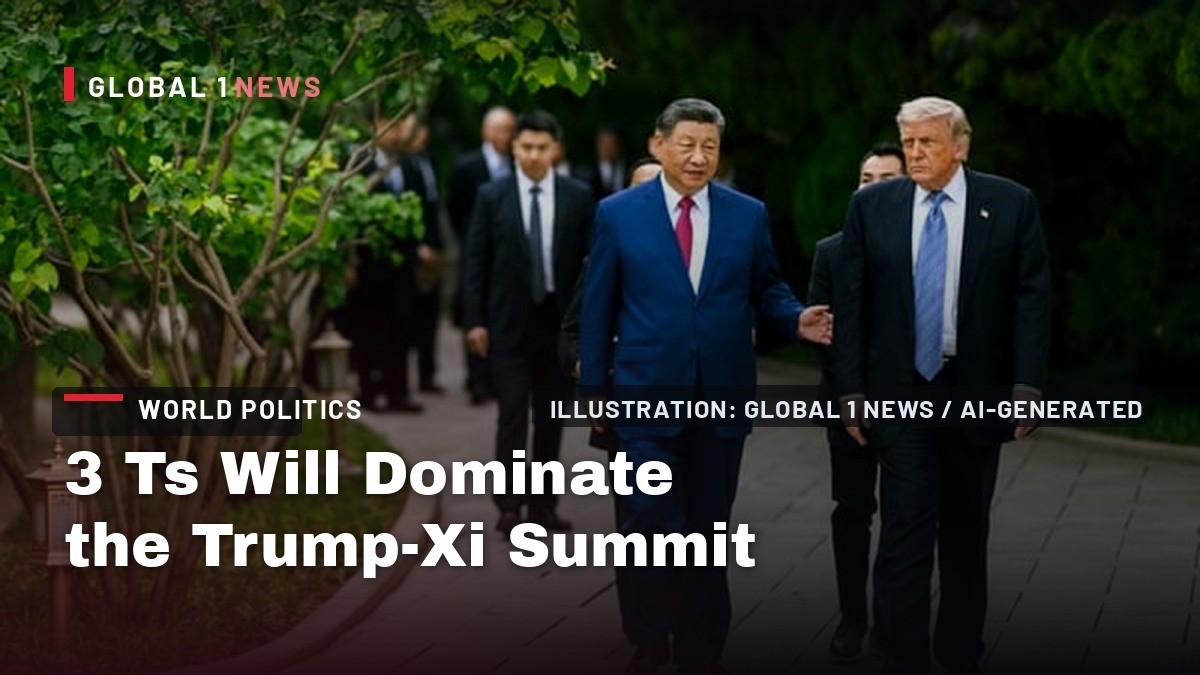
The upcoming Trump‑Xi summit, slated to begin in the United States on 24 September 2026, arrives with a familiar agenda: trade, technology and Taiwan. While the three‑topic framework mirrors the May 2026 meeting, the rapid evolution of artificial intelligence (AI) has injected a heightened sense of urgency into the technology component. Observers are watching to see whether the bilateral talks will move beyond rhetoric to concrete mechanisms, especially in the areas of trade renewal, AI governance and the ever‑tenuous cross‑strait question.
Renewing the 2025 Busan Trade Accord
The most straightforward item on the docket is the renewal of the trade pact struck in Busan, South Korea, in May 2025. That agreement saw the United States lift selected export controls on high‑end technology and reduce three‑figure tariffs on Chinese imports, while China pledged not to restrict the flow of critical minerals and rare earths to U.S. users. The pact was expressly limited to a one‑year term, and its expiry now looms.
Both Washington and Beijing appear inclined to extend the arrangement with only modest adjustments. Sources indicate that each side has floated the creation of a “Board of Trade” to monitor non‑sensitive bilateral business interests, though the precise mandate and composition of such a board remain undefined. Business leaders will be keen to learn whether the board will have binding authority or serve merely as a consultative forum.
The Unfinished Board of Investment
Parallel to the trade board, a “Board of Investment” has been mentioned in earlier dialogues but has yet to move beyond the drawing board. The Chinese delegation has suggested inviting senior Chinese CEOs to the summit, potentially matching the presence of figures such as Nvidia’s Jensen Huang and Tesla’s Elon Musk, who accompanied President Trump on his recent Beijing visit. The selection of Chinese executives is expected to reflect sectors that Beijing believes will yield short‑term gains under the renewed trade framework.
Without a clear institutional design, the investment board risks becoming a symbolic gesture rather than a functional mechanism. Analysts note that the effectiveness of any such body will hinge on its ability to reconcile divergent regulatory standards and to provide transparent dispute‑resolution pathways for multinational firms operating across the Pacific.
Taiwan: Strategic Ambiguity Persists
In contrast to the relatively tractable trade discussions, the Taiwan question remains a hard‑core diplomatic obstacle. President Trump has signaled a continuation of the United States’ long‑standing policy of strategic ambiguity, refraining from a firm commitment to defend the island in the event of a Chinese invasion. This stance diverges from that of his predecessor, who had offered clearer assurances.
Beijing, meanwhile, continues to expand the People’s Liberation Army’s naval capabilities, preserving the option of force while simultaneously pursuing a strategy of economic incentives and diplomatic pressure to erode Taiwan’s international space. The island’s upcoming presidential election in January 2028 is identified as a pivotal moment, especially if a China‑friendly candidate from the Kuomintang emerges victorious. The outcome of that election could shape the trajectory of cross‑strait relations irrespective of the summit’s immediate outcomes.
Broader Geopolitical Frictions
Beyond the core three‑Ts, the summit will likely touch on peripheral issues that have strained Sino‑U.S. ties. China is expected to voice displeasure over the United States’ involvement in the war on Iran, while Washington may remind Beijing of recent U.S. legislation authorising sanctions against countries purchasing Russian oil—a market in which China is a leading buyer. Both parties appear to agree that these matters will not precipitate substantive policy shifts during the short‑term engagement.
The limited scope afforded to these topics underscores the pragmatic focus of the talks: to secure incremental gains in areas where mutual dependence outweighs rivalry, while sidestepping flashpoints that could derail the entire agenda.
AI Regulation: The New Frontier of Diplomacy
The most dynamic and uncertain element of the summit revolves around artificial intelligence. The May 2025 meeting introduced the notion of AI regulation as a potential area of cooperation, a subject that was absent from the early months of the Trump administration’s agenda. Both sides acknowledged that the rapid expansion of AI capabilities creates novel security and societal risks that merit dialogue.
In the United States, growing public anxiety over unregulated AI—particularly concerning data centre proliferation and the threat of rogue AI enterprises—has fostered a climate of heightened scrutiny. Conversely, Chinese public sentiment is less overtly hostile, with many citizens appreciating AI’s contributions to healthcare and daily life, though private concerns linger about the technology’s impact on employment and the broader economy.
The AI Hotline Proposal
On 20 September 2026, the United States and China floated the idea of establishing a “hotline” to alert each other to AI‑related national security risks. This proposal reflects a tentative step toward confidence‑building, aiming to prevent accidental escalations stemming from AI‑driven incidents. While the concept has been mooted, concrete details—such as the operational protocols, participating agencies and thresholds for notification—remain to be negotiated.
Both governments recognise that AI could become a catalyst for destabilising events, whether through malicious use by non‑state actors or unintended consequences of autonomous systems. Yet, despite this shared acknowledgement, the deep‑seated competition for AI supremacy limits the likelihood of rapid progress. Neither side appears ready to concede strategic advantages that could be leveraged in the broader technology rivalry.
Outlook: Incremental Steps Amidst Persistent Rivalry
In sum, the September 2026 Trump‑Xi summit is poised to deliver modest extensions of existing trade arrangements, tentative institutional experiments in trade and investment oversight, and a cautious foray into AI risk communication. The entrenched complexities of the Taiwan issue and the broader geopolitical contest will likely keep substantive breakthroughs out of reach.
Nevertheless, the very fact that both capitals are willing to engage on AI—a domain that could reshape global power structures—signals an emerging recognition that unchecked competition may be more harmful than collaborative risk mitigation. Whether this recognition translates into durable mechanisms will depend on the political will of future administrations in Washington and Beijing, as well as on the evolving dynamics of the AI market itself.
This article was produced with AI-assisted research and editorial support. Reporting is based on the source material cited below. Sources: The Diplomat; thediplomat.com; Global1.News (24 September 2026).
By Kenji Tanaka, Staff Writer
What's Your Reaction?
 Like
1
Like
1
 Dislike
0
Dislike
0
 Love
0
Love
0
 Funny
0
Funny
0
 Wow
0
Wow
0
 Sad
0
Sad
0
 Angry
0
Angry
0

Japan Correspondent at Global1.News. Tokyo-based voice covering Japanese politics, technology, economy, and culture. Tracks the intersection of tradition and innovation in one of the world's most dynamic societies.













Comments (0)