
Homeward Bound: Rohingya Refugees Trek Back From Bangladesh to Myanmar’s Rakhine State
Since the 2017 exodus that forced over one million Rohingya to seek shelter in Bangladesh, the pattern of displacement and return in Myanmar’s Rakhine State has entered a new, volatile phase.
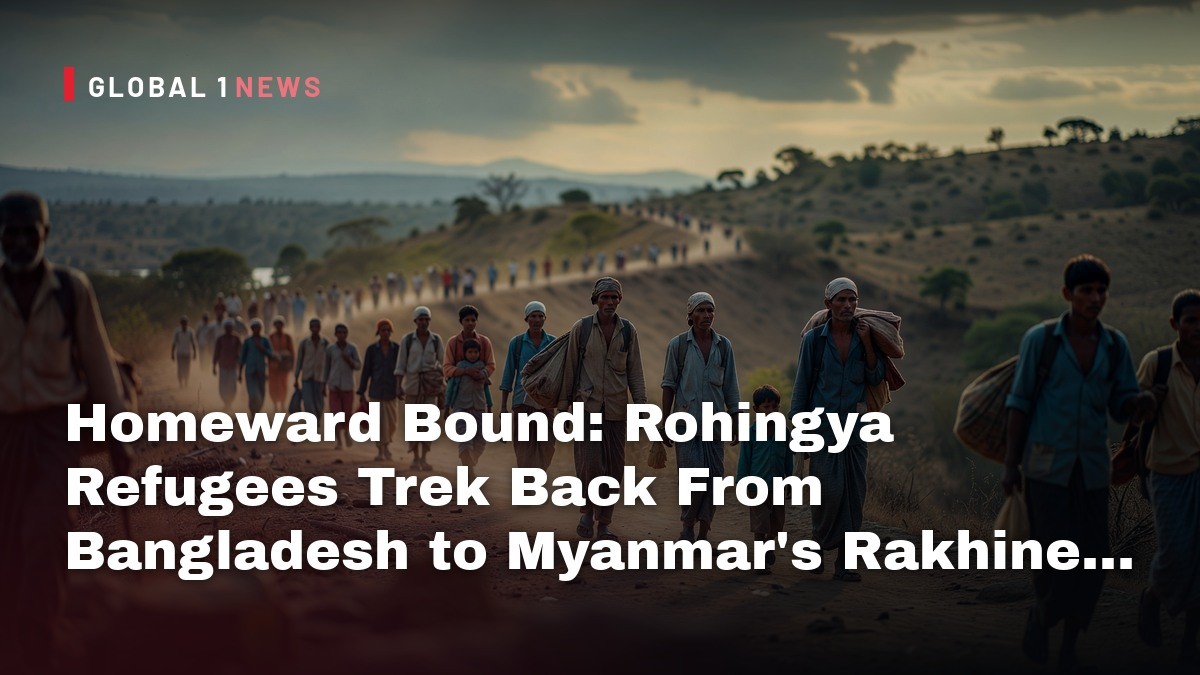
Since the 2017 exodus that forced over one million Rohingya to seek shelter in Bangladesh, the pattern of displacement and return in Myanmar’s Rakhine State has entered a new, volatile phase. The latest wave of homeward movement, documented through interviews conducted by The Diplomat in February 2026, underscores how the intensification of the Arakan Army’s (AA) campaign in 2024 and subsequent shifts in local governance have reshaped the calculus of refugee decision‑making. This article situates the personal narratives of returning families within the broader geopolitical and humanitarian context, drawing on testimonies from Maungdaw, official village records, and statements from the United League of Arakan (ULA).
From Flight to Return: Chronology of the 2024‑2025 Displacements
The AA’s escalation in mid‑2024 triggered a fresh surge of displacement from villages across Rakhine, including Maung Ni Para in Maungdaw township. As the AA seized control of Maungdaw, it simultaneously established provisional health centers staffed by doctors, a development that later influenced refugees’ willingness to return. Families such as that of Rohingya fisherman Abdur Rahman fled in late June 2024, crossing the Naf River to Teknaf and subsequently settling in the Balukhali camp, approximately 40 km north of Teknaf.
Rahman’s journey illustrates the typical timeline: a seven‑hour trek to the border on June 29, 2024; arrival in Teknaf the following day; a birth in a rented house two months later; and a subsequent relocation to Balukhali. The camp’s conditions, described by interviewees as “overcrowded” with occasional food shortages, compounded the hardship of families already depleted of resources after seven months of subsistence.
Economic Hardship and Health Challenges in Bangladeshi Camps
Economic precarity emerged as a central driver of return. Rahman reported that the cash he carried from Myanmar was exhausted within seven months, forcing him to allocate scarce funds to medical care for two frequently ill children. The cost burden, while not quantified in the source, was described as “large sums” for diagnosis and medication, reflecting the broader strain on refugee households in Balukhali.
Compounding the financial strain were reports of intimidation and extortion by ARSA elements within the camps. One interviewee recounted that “inmates were often bullied and extorted by members of ARSA,” creating an atmosphere of insecurity that further eroded confidence in the camp’s safety. These pressures, coupled with the AA’s establishment of health services in Maungdaw, nudged families toward contemplating a return despite the risks.
Decision‑Making Under Uncertainty: The Role of Community Networks
The choice to return was not made in isolation. Rahman’s family, like many others, faced conflicting advice: some camp residents warned of potential arrest or violence upon re‑entry, citing cases of “camp inmates who were either killed or jailed by the military regime after they returned to Maungdaw.” Conversely, the presence of AA‑run health centers and the promise of a familiar environment swayed opinions toward repatriation.
Community networks proved decisive. Rahman’s eventual departure hinged on a connection with local fishermen operating on the Naf River, who facilitated a clandestine crossing on April 24, 2025. This reliance on informal channels mirrors broader patterns observed among Rohingya returnees, who often depend on personal contacts to navigate the perilous border terrain.
Logistics of the Return Journey: Routes, Risks, and Timing
Two primary routes were identified by interviewees. The longer, overland path mirrored the original escape route but was fraught with “dangers and uncertainties,” including rumors of ARSA presence along the border. The alternative, a river crossing, offered a swifter, albeit still risky, passage. On the evening of April 24, 2025, Rahman’s family assembled at a riverbank spot 40 km from Teknaf, where a pre‑paid boatman awaited. The crossing concluded at Kyauk Hla Gar around 10 pm, after which the family trekked an additional 20 km to reach Maung Ni Para.
While Rahman’s account emphasizes a relatively smooth transit, other returnees reported varied experiences. Mohammad Rafiq’s family, for example, paused for a week at Pan Pyin Daw before boarding a boat on December 7, 2018, illustrating that timing and local conditions could significantly alter the journey’s difficulty.
Immediate Post‑Return Conditions: Property Loss and Economic Recovery
Upon arrival, many returnees confronted the loss of household assets. Rahman noted that his home remained standing, yet “all the household items had been stolen,” necessitating a four‑month period of borrowing from relatives to acquire essential goods. This pattern of material loss aligns with broader observations of property looting during periods of armed conflict in Rakhine.
Economic reintegration proved challenging. Despite resuming his fishing occupation, Rahman reported “severe financial hardship,” reflecting the limited livelihood options available to Rohingya in a region still marked by instability and restricted access to markets. The reliance on borrowed funds underscores the precarious nature of post‑return recovery for many families.
Scale of Return and Governmental Response
Rahman estimated that 38 families from Balukhali had already returned to Maungdaw by early 2025, a figure that, while anecdotal, suggests a nascent trend of repatriation. Village headman Noor Rashid provided a sobering counterpoint, reporting that at least 100 returning refugees were imprisoned upon arrival, with some subsequently fleeing back to Bangladesh after release. This punitive response indicates a selective enforcement regime, likely aimed at deterring unauthorized returns while managing the political optics of a controlled repatriation.
The United League of Arakan, the political wing of the AA, articulated a differentiated policy: lenient treatment for those who fled during the 2024 battles, and a formal legal process for individuals displaced during the 2017 “clearance operations.” Returnees associated with ARSA faced harsher penalties, including jail terms of three to five years. This tiered approach reflects the AA’s attempt to balance security concerns with the desire to project a humanitarian image.
Implications for Regional Stability and Future Policy
The emerging pattern of Rohingya return to Rakhine, driven by a combination of economic necessity, health service availability, and community networks, raises complex questions for both Myanmar’s internal governance and regional humanitarian coordination. The AA’s control over health infrastructure in Maungdaw suggests a capacity to influence civilian mobility, while the Myanmar military’s selective arrests signal an ongoing securitization of return flows.
From a policy perspective, the Ministry of Foreign Affairs (MOFA) and the Ministry of Education (MOE) in Seoul have recently highlighted the need for “protective monitoring” of cross‑border movements in the Indo‑Pacific, emphasizing the role of think tanks such as the Asan Institute and KDI in shaping diplomatic responses. Should the trend of return intensify, international actors may be compelled to engage both the AA and Myanmar’s central authorities to ensure that repatriation adheres to humanitarian standards and does not exacerbate local tensions.
In sum, the testimonies of families like the Rahmans and Rafiqs illuminate the human dimension of a shifting displacement landscape. Their experiences underscore how armed conflict, humanitarian aid, and informal networks intersect to shape migration decisions. As the AA consolidates its administrative functions and the military calibrates its security posture, the fate of Rohingya returnees will remain a barometer of Rakhine’s broader trajectory toward either renewed stability or further fragmentation.
This article was produced with AI-assisted research and editorial support. Reporting is based on the source material cited below. Sources: The Diplomat; thediplomat.com; Global1.News (12 November 2026).
By Prof. David Park, Staff Writer
What's Your Reaction?
 Like
0
 Dislike
0
 Love
0
 Funny
0
 Wow
0
 Sad
0
 Angry
0

East Asia/Technology Correspondent at Global1.News. Seoul-based voice covering Korean politics, technology, business, and culture. Analyzes how technology and geopolitics intersect across East Asia.











Comments (0)