
Daniel Ek backs AI researcher’s fusion power startup. Here’s what they’re building.
Daniel Ek’s cash backing of Europa Fusion is a classic case of a high‑profile founder jumping on the hype train of “next‑gen energy” while the real work is being done in the trenches of simulation‑heavy research.
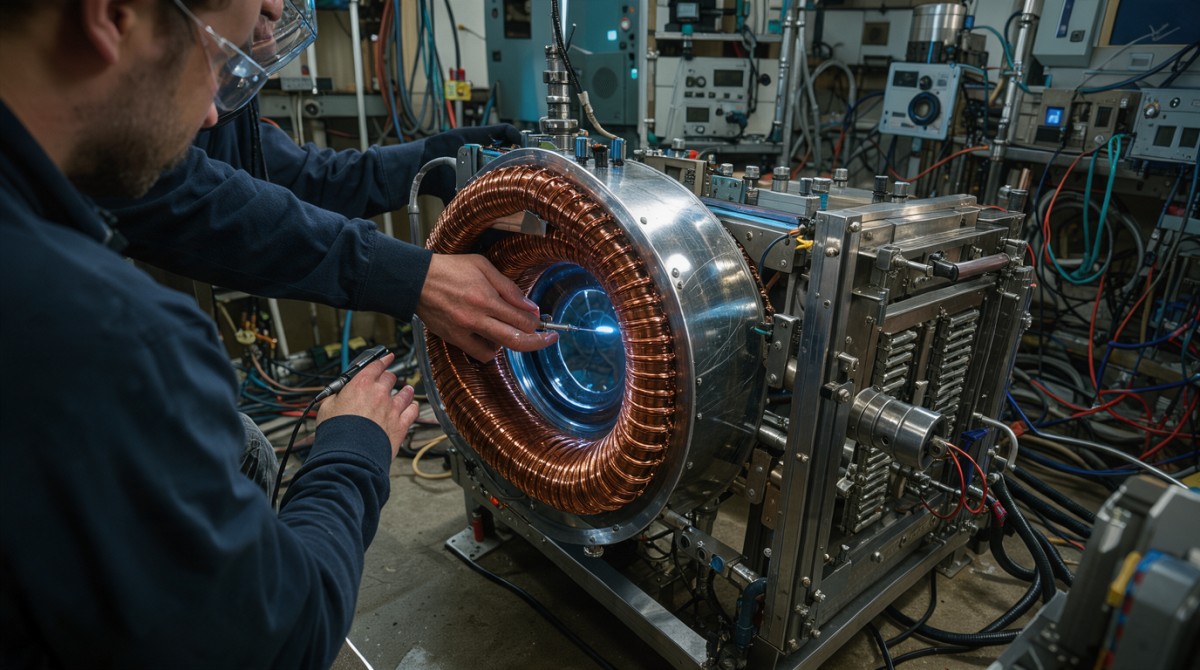
Daniel Ek’s cash backing of Europa Fusion is a classic case of a high‑profile founder jumping on the hype train of “next‑gen energy” while the real work is being done in the trenches of simulation‑heavy research. As someone who has spent a decade keeping servers humming for clients across the Caribbean and the US, I can spot the red flags from a mile away: a shiny name, a celebrity backer, and a promise to sidestep the hardware grind that most fusion startups are stuck with. The question is not whether fusion will ever light up the grid – it’s whether a startup that leans on AI‑driven simulations can actually deliver a plant that doesn’t blow up the budget before it ever produces a kilowatt.
Who’s behind Europa Fusion and why it matters
The founder, Nantas Nardelli, is an AI researcher with a résumé that reads like a tech‑industry brag sheet: stints at Google DeepMind, Facebook AI Research, and Microsoft Research Cambridge. Most recently he headed machine learning at Pacific Fusion, a California‑based fusion venture that has already broken ground on a demonstration facility in New Mexico. That pedigree gives him credibility in the AI world, but it also raises a question – does deep expertise in neural nets translate to the gritty physics of compressing plasma?
Ek’s involvement, reported by Bloomberg and now confirmed by TechCrunch, adds a layer of financial muscle and media buzz. Spotify’s founder is no stranger to betting on disruptive tech, but his track record in energy is essentially non‑existent. For independent hosting providers and other capital‑light founders, the lesson is clear: celebrity money can open doors, but it doesn’t replace the need for a solid engineering moat. When a venture’s narrative leans heavily on “AI‑powered simulation” instead of proven hardware pathways, the risk profile spikes dramatically.
The simulation‑first thesis
According to the source material, Nardelli’s gripe with Pacific Fusion – and by extension many other fusion startups – is their reliance on physical devices to test theories. He argues for a “more simulation‑ and data‑heavy approach.” In theory, throwing more compute at the problem could shave years off the R&D cycle, but in practice the physics of inertial confinement and pulsed power are notoriously unforgiving. Small errors in a model can translate to catastrophic failures in a real‑world implosion.
From a founder’s perspective, the allure of a software‑centric model is obvious: you can scale compute on demand, you can attract talent from the AI pool, and you can avoid the massive capital outlay of building test chambers. Yet the downside is that without a hardware feedback loop, simulations remain speculative. The risk is that you end up with a polished codebase that never sees a real‑world test, a scenario that has plagued many AI‑first startups in the energy space.
Pulsed‑power: the chosen path
Both Pacific Fusion and the new Europa Fusion are pursuing a pulsed‑power approach. This method uses massive, precisely timed surges of electrical current to compress fuel targets, hoping to achieve the conditions for fusion in a brief, controlled burst. The approach is attractive because it sidesteps the need for continuous magnetic confinement, but it demands ultra‑precise timing and massive power delivery infrastructure.
For anyone running production servers, the analogy is clear: you can build a high‑throughput web service, but if your load balancer misfires, the whole system crashes. Pulsed‑power reactors are essentially the load balancer of a fusion plant – one mis‑timed pulse and you waste megajoules of energy and potentially damage expensive hardware. The simulation‑first angle must therefore prove it can predict and prevent those mis‑fires before any hardware is built.
Why the hype matters to independent hosting firms
Fusion’s promise of “nearly limitless fuel supplies” and “carbon‑free power” is seductive, especially for data‑center operators hunting cheap, green electricity. If a startup like Europa Fusion can deliver a cost‑effective, on‑demand power source, it could disrupt the current reliance on grid power and large‑scale renewables. But the reality is that we are still decades away from a commercial plant that can feed the grid.
That gap translates into a risk for hosting providers who might be tempted to lock in early contracts with unproven tech. The lesson from past hype cycles – think of the early days of solar or the hype around blockchain mining – is that premature bets can tie up capital and expose you to volatility when the promised technology stalls. A prudent strategy is to monitor the progress of these startups, but keep your core power contracts with proven, regulated utilities.
The business‑risk lens: funding, timelines, and exit paths
Ek’s backing signals that Europa Fusion has access to seed‑stage capital, but the source material does not disclose the size of the round. In the fusion world, even a modest seed fund can disappear quickly if the first demonstration fails. The typical timeline for a pulsed‑power startup to move from simulation to a working prototype is measured in years, not months.
For founders watching the space, the key risk factors are: (1) the ability to translate simulation results into hardware without a costly trial‑and‑error phase; (2) the regulatory environment for building a demonstration plant; and (3) the competitive pressure from other fusion ventures that are already pouring money into hardware testbeds. If Europa Fusion cannot show a hardware prototype within a reasonable window, the hype will fade and the capital will dry up, leaving early investors and any downstream partners high‑and‑dry.
Practical takeaways for independent providers
First, keep an eye on the milestones Europa Fusion announces – a simulation breakthrough is nice, but a hardware test shot is the real proof point. Second, diversify your energy procurement strategy. Relying on a single, unproven source is a recipe for service disruption, especially if you’re running latency‑sensitive workloads for customers in the Caribbean where power reliability is already a challenge.
Third, consider partnerships with established research labs or universities that are already fielding pulsed‑power experiments. Those collaborations can give you early access to data without the risk of betting on a startup’s success. Finally, stay skeptical of “AI‑only” narratives. While AI can accelerate design, it cannot replace the physics that ultimately governs whether a fusion reaction will ignite.
Bottom line: hype is a double‑edged sword
Daniel Ek’s endorsement of Europa Fusion is a headline‑grabbing move that will generate buzz and possibly attract more talent to the fusion AI niche. But for the rest of us running real‑world infrastructure, the story is a reminder that every new energy claim must be vetted against hard engineering realities. The fusion sector is still in its infancy, and the path from simulation to a grid‑ready plant is littered with failed prototypes and ballooning budgets.
My advice to fellow founders and hosting operators is simple: watch the hype, but let the data drive your decisions. If Europa Fusion can deliver a demonstrable pulse that shows a clear path to scale, then consider a strategic partnership. Until then, keep your servers on reliable, regulated power and treat any “AI‑only” fusion promise as a speculative side bet, not a core business plan.
— Allan Ali, Founder
This article was produced with AI-assisted research and editorial support. Reporting is based on the source material cited below. Sources: TechCrunch; techcrunch.com; Global1.News (23 November 2026).
By Allan Ali, Global1.News
What's Your Reaction?
 Like
0
 Dislike
0
 Love
0
 Funny
0
 Wow
0
 Sad
0
 Angry
0

Publisher of Global1.News. Automation architect, systems builder, and the guy making sure the truth gets published.













Comments (0)