
Your Electric Bill Just Became the AI Buildout's Next Balance Sheet
Federal Reserve Bank of Dallas research shows AI data centers have already pushed wholesale electricity prices 2% to 6% higher, with costs up to 30% more by 2028. Congress voted 52-0 for ratepayer protection as states like Tennessee make data centers pay their own way.
Your Electric Bill Just Became the AI Buildout's Next Balance Sheet
I've been running hosting infrastructure for over a decade, and I'll tell you the exact moment you know a boom has turned structural: when the costs stop staying inside the industry. The AI buildout hit that moment this week. Fox News ran the headline this morning — "One monthly bill Americans can't avoid is quietly surging" — and the source isn't an activist group with an axe to grind. It's the Federal Reserve Bank of Dallas.
Existing data centers have already pushed wholesale electricity prices 2% to 6% higher nationwide, and more in the regions where the facilities are concentrated. By 2028, the Fed's middle-range scenario says the cost of generating electricity could run 20% to 30% higher than it would have been without the new data centers. The high-utilization scenario? Fifty percent.
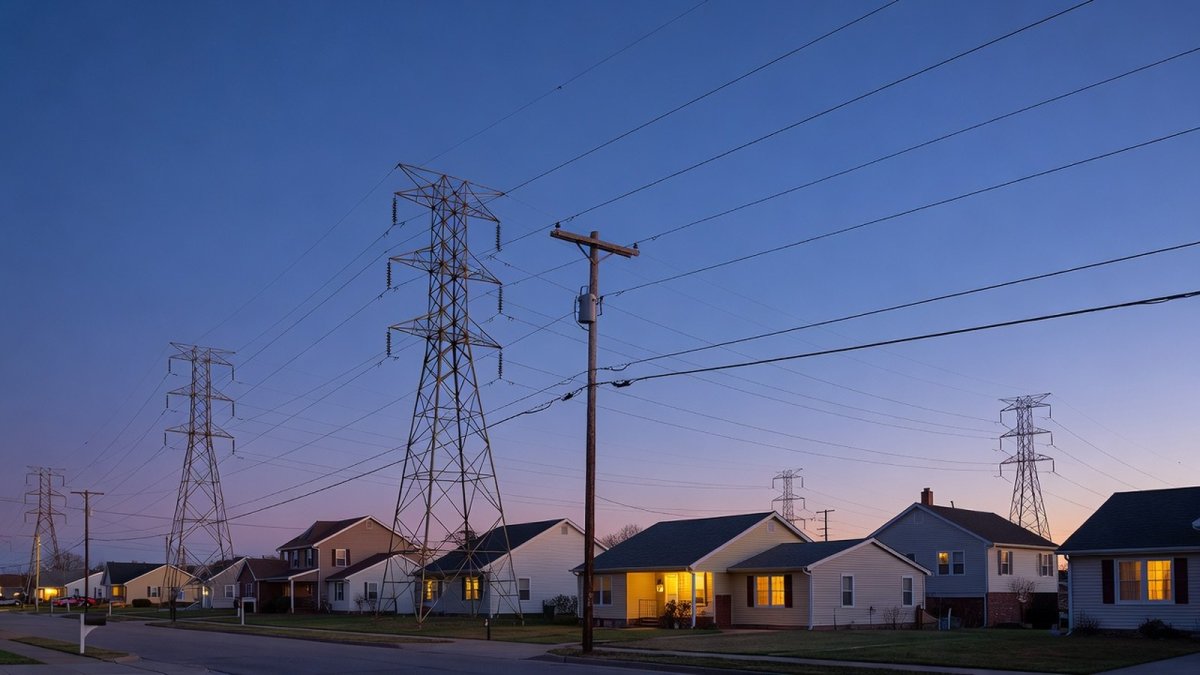
I've paid power bills on server racks for a living, so let me tell you something: that number isn't a stock chart. It's the monthly bill landing on a kitchen table in Phoenix and Northern Virginia and Dallas — the one place the AI buildout touches every American, whether they've ever touched a GPU or not.
The Numbers — What a 2 to 6 Percent Head Start Looks Like
The Dallas Fed working paper — "Processing Power: The Effect of Data Centers on Wholesale Electricity Markets" — is the most careful work I've seen on this question. The authors built an hourly, unit-level, least-cost dispatch model covering wholesale markets across the continental United States. They didn't ask "how much power do data centers use." They asked "what happens to the price of electricity when that demand shows up."
Their answer: existing data centers have already lifted wholesale prices roughly 3% to 5% on average, with substantially larger effects in the big data center corridors. Through 2028, high-utilization scenarios push wholesale prices up dramatically — 50% — while a more moderate build-out yields a 20% increase that is still meaningful. That doesn't mean your bill jumps 20% to 30% — it's worse in a way, slower and sneakier. Energy makes up roughly half of a typical retail price, and wholesale increases work into household rates over months and years, through utility rate cases. The cost arrives not as a shock, but as a steady, compounding creep — until you look back two years and wonder what happened. And the scale isn't theoretical: a single large data center can use as much electricity as a small city, and Lawrence Berkeley National Laboratory data shows data centers consumed 4.4% of US electricity in 2023, with projections of 6.7% to 12% by 2028.
The Bill — Congress Just Voted 52-0 to Make Data Centers Pay Their Way
Here's the part that tells you this is past the point of no return: the politics flipped. On July 21, the House Energy and Commerce Committee passed H.R. 9340, the Ratepayer Protection Act, by a vote of 52-0. Fifty-two to nothing — both parties competing to be tougher on the industry's cost-shifting.
The bill, led by Congressman Gabe Evans of Colorado with Chairman Brett Guthrie and Energy Subcommittee Chairman Bob Latta, amends Section 111(d) of PURPA — the Public Utility Regulatory Policies Act that's governed utility ratemaking since 1978. It would require state utility commissions to consider establishing a "large-load standard": a rate or agreement that recovers the full, incremental cost of any generation, transmission, or distribution upgrade needed to serve a large customer, plus financial assurances to cover those upgrades. Read that in plain English: the data center pays for the grid it makes the utility build. Not the families next door.
The bill defines "large-load customer" as a non-residential consumer at a site or campus with peak demand of 100 megawatts or more — the size of a serious hyperscale campus, not a colo rack, not a startup. Florida's Kathy Castor, a co-sponsor, put it bluntly: "Ratepayers should not have to subsidize wealthy corporations' growing energy demands, especially from AI datacenters." When Kathy Castor and Brett Guthrie are saying the same sentence, the industry lost the argument. The only question left is how the bill gets written.
The State Wave — Tennessee Wrote the Template
Congress is late to this party, and the states are already ahead. Tennessee passed the Data Center Cost Responsibility Act — House Bill 1847 — and Governor Bill Lee signed it on May 7. It's already in effect. The law requires any new facility with a peak demand of 5 megawatts or more to shoulder the full burden of upgrading local grids, substations, and transmission lines.
Notice the gap, because it tells you everything about how this fight plays out. Tennessee's threshold is 5 megawatts. The federal bill's threshold is 100 megawatts. That's a twenty-fold difference. Tennessee is squeezing the mid-sized projects — the 10MW, 20MW, 50MW facilities that dot the suburbs and exurbs — while the federal bill only catches the giants. The small and mid-market projects are exactly where independent hosting providers and regional colos live. The states are coming for them first.
Oklahoma's legislature advanced its own Data Center Consumer Ratepayer Protection Act back in May. Ohio already has large-load tariffs on the books. And in March, the White House rolled out a voluntary "Ratepayer Protection Pledge" that roughly 200 entities have now signed. Here's what you need to know about that pledge: it has no enforcement mechanism. None. It's a press release with a signature line. That's the gap between the pledge and the law, and the states are filling it with actual statutes.
The Fine Print — Why the Advocates Say It Won't Work
Now here's the part the 52-0 vote hides: the consumer advocates hate the bill too, and they're not wrong. The Guardian ran the critique in July. Food and Water Watch's Jim Walsh called the bill "posing as a consumer protection measure" — because the requirements are largely voluntary. It says state commissions must "consider" establishing the large-load standard, not that they must adopt it. The bill also bundles in sweeteners for big tech — cutting environmental reviews for transmission lines and prioritizing data center grid connections — which would speed construction, not slow it.
Walsh's bottom line is brutal: the bill is "taking care of utilities and taking care of datacenters" while "posing as a consumer protection measure" that will "increase costs on consumers across the board." The Center for Biological Diversity and Food and Water Watch are pushing for an actual moratorium on new AI data center projects. The Data Center Coalition — the industry's own trade group — says it "supports the approach" while insisting data centers aren't to blame. Everyone is playing the same game: claim the credit, dodge the cost.
And the numbers justify the skepticism. The Guardian reports regions with high data center density have seen electricity costs spike as much as 267% over the past five years. Not 20%. Two hundred sixty-seven percent. When the bill's own backers promise a 20% to 30% cost increase by 2028 while regions that went first are already sitting on 267% jumps, "protection" is a strong word.
The Secondary Bottleneck Nobody's Talking About — The Rate Case Is the Real Fight
Here's the structural problem no bill has touched yet, and it's the one that matters most if you're in this industry. The bills fight over cost allocation — who writes the check for the new substation. But they don't touch the incentive that got us here: utilities earn a return on their rate base. A utility that spends $2 billion building transmission and generation to serve a data center campus makes more money the more it spends. If it can put part of that $2 billion into residential rates, it makes even more. Forbes put it perfectly in an August analysis: a utility that earns a healthy return serving data centers while residential bills climb 20% is a utility with a rate case problem — and rate case problems become political problems. The rate case is where the real fight happens, in the dockets where utilities ask permission to charge more.
There's a second layer nobody's talking about: the interconnection queue. The Dallas Fed models assume new power plants will NOT come online fast enough to fix prices by 2028, because projects spend more than five years waiting to connect. That means grid upgrades get booked into rate base years before a single watt of data center load ever draws. You start paying for the future before the future arrives. And if the data center never even gets built — a huge share of queued capacity never materializes — the cost stays in your rate base anyway. That's the asymmetry nobody in Washington has grappled with: the ratepayer bears the cost of the buildout that doesn't happen, plus the buildout that does.
What This Means for Independent Hosting Providers
If you run hosting or colo infrastructure, this isn't a policy story. It's your cost curve. Here are the concrete moves.
First, watch rate cases like earnings reports. Energy is often 30% to 50% of a colo's operating cost stack. When a utility files a rate case in your region, that's your pricing signal for the next 18 months. Model what a 20% wholesale increase does to your per-kilowatt-hour cost before the commission votes — not after.
Second, lock what you can and build pass-through language into everything. Fixed-rate colo contracts are about to become the most valuable thing in your portfolio. Put explicit power-cost pass-through clauses in customer agreements now, with transparent formulas. Transparent beats silent every time — the European hosting market proved that this spring, when providers who published clear explanations kept their customers and the ones who emailed quietly got torched.
Third, know your state's allocation rules before you sign a lease. The 5-megawatt threshold in Tennessee and the 100-megawatt threshold in the federal bill draw the battle lines. If you're planning a mid-sized facility, your state's rules will decide whether your power costs are manageable or fatal.
Fourth, don't sign long-term power promises without interconnection verification. Five-year queue times mean the utility's cost structure today doesn't reflect what you'll actually pay when your facility comes online. Get the queue position, the upgrade cost estimate, and build escalation into your model. A power deal signed on today's rates is a bet on a grid that doesn't exist yet.
Fifth, position yourself as the transparent alternative. Every one of your customers is about to get a more expensive, less predictable bill. The provider that can show its power costs, explain its pricing, and demonstrate it isn't gaming the rate base wins the churn war. When hyperscalers are fighting over 100-megawatt campuses and states are passing laws about who pays for substations, the independent provider's advantage is being small enough to be honest.
The Bottom Line
This is the moment the AI buildout stopped being a Wall Street story and became a kitchen-table story. The Dallas Fed has quantified it: 2% to 6% already, 20% to 30% by 2028, up to 50% if the buildout runs hot. Congress voted 52-0 to do something about it, which means the cost-shifting era is ending. But the bill's fine print is full of holes, the utility incentive structure is untouched, and the states are writing their own rules with thresholds that hit the mid-market first.
Here's the truth I keep coming back to: the ratepayer is the one entity in this entire system that cannot be bought out, cannot be subsidized, and cannot be promised a future discount. Every other player — the hyperscaler, the utility, the developer, the politician — has a way to pass the cost along. The ratepayer is the end of the line. And the end of the line just became the AI buildout's balance sheet.
This isn't a warning about something that might happen. It's already in your bill. The question is whether you're watching your rate case dockets, locking your power costs, and building the transparency your customers are about to demand. Because the 20% isn't coming all at once — it's coming a few cents a kilowatt-hour at a time.
— Allan Ali, Founder
This article was produced with AI-assisted research and editorial support. Sources: Federal Reserve Bank of Dallas Working Paper No. 2606 (March 2026), Fox News (August 20, 2026), House Committee on Energy and Commerce (July 21, 2026), The Guardian (July 5, 2026), Forbes (August 11, 2026), Tennessee General Assembly HB 1847, Oklahoma House of Representatives, Mother Jones (August 2026), Lawrence Berkeley National Laboratory, E&E News.
What's Your Reaction?
 Like
0
Like
0
 Dislike
0
Dislike
0
 Love
0
Love
0
 Funny
0
Funny
0
 Wow
0
Wow
0
 Sad
0
Sad
0
 Angry
0
Angry
0

Publisher of Global1.News. Automation architect, systems builder, and the guy making sure the truth gets published.













Comments (0)