
Xi got Trump's red carpet welcome - but not everything he wanted
President Xi Jinping’s recent summit with U.S. President Donald Trump was framed by both leaders as a diplomatic overture, yet the substance of the talks underscored the deep structural tensions that continue to shape Sino‑American relations.
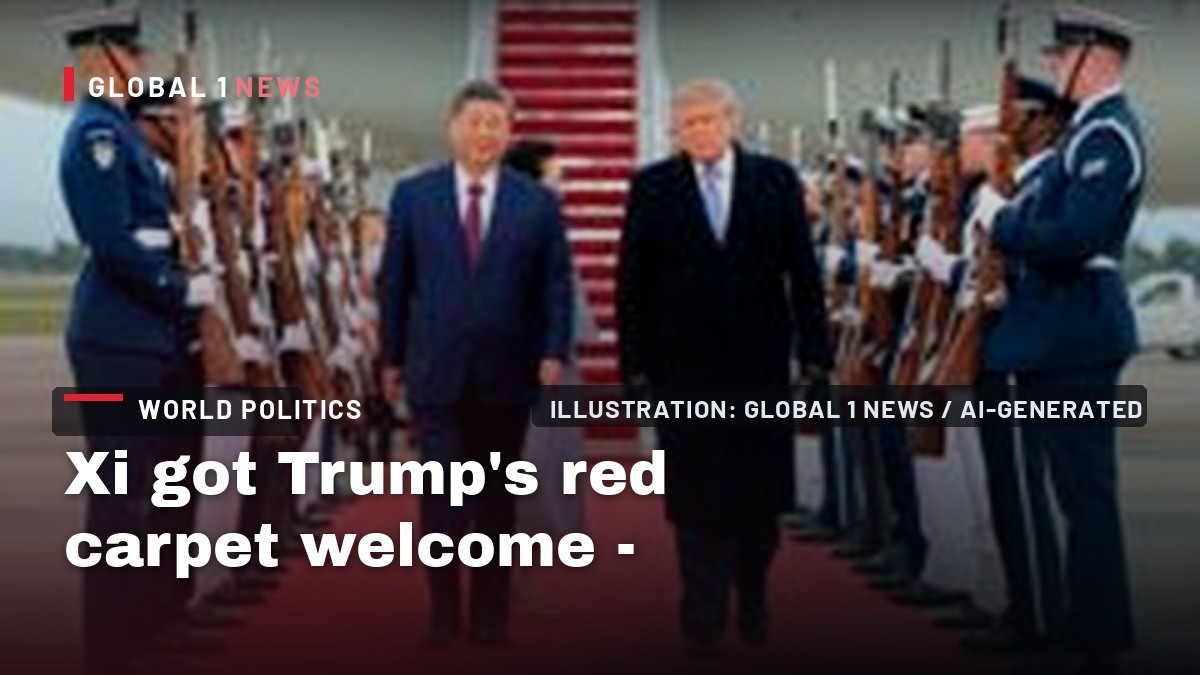
President Xi Jinping’s recent summit with U.S. President Donald Trump was framed by both leaders as a diplomatic overture, yet the substance of the talks underscored the deep structural tensions that continue to shape Sino‑American relations. While the ceremony in Washington featured a red‑carpet welcome, a lavish banquet and the promised arrival of pandas, the core agenda—trade, technology, Taiwan and emerging AI governance—yielded only modest concessions. The episode illustrates how Beijing’s strategic calculus seeks to secure its ascent as a global superpower, even as domestic economic strains and external pressure points limit the scope of what can be achieved in a single high‑profile encounter.
Trade Truce: A Short‑Lived Pause in the Tariff War
The most tangible outcome of the summit was the extension of the existing trade truce, which now runs until January rather than the previously set November deadline. This modest extension, lasting only a few months, fell short of Beijing’s expectation of a year‑long reprieve that would have allowed Xi to “ride out the remainder of Trump’s presidency.” The limited duration signals Washington’s reluctance to grant China a long‑term concession without further reciprocity.
By keeping the truce brief, the United States retains leverage over ongoing disputes concerning tariffs, the dominance of Chinese rare‑earth supplies and the export of advanced U.S. semiconductor chips. The implication is that future negotiations will likely be framed around “more to fulfil its side of the bargain,” suggesting that Washington expects Beijing to make additional concessions before agreeing to a longer‑term settlement.
Domestic Economic Pressures Shaping Xi’s Negotiating Position
Behind the diplomatic choreography, Xi faces a domestic economy that is increasingly fragile. Although China continues to ship a record volume of goods abroad, internal consumption remains muted. Youth unemployment persists at a stubbornly high level, and property prices have declined even as home‑ownership rates hover around 80 percent. These trends have eroded the confidence of ordinary citizens and heightened the importance of external markets for sustaining growth.
In this context, the trade truce is not merely a diplomatic win but a vital economic lifeline. By averting a renewed wave of tariffs, China hopes to preserve its export‑driven growth model. The limited extension, however, underscores the precarious balance Beijing must strike between seeking external market access and managing internal economic expectations.
Taiwan: The Red Line That Remains Unchanged
Xi reiterated the long‑standing Chinese red line that U.S. arms sales to Taiwan constitute a direct challenge to Beijing’s sovereignty claims. He warned that mishandling the issue could lead to “collision or even conflict,” echoing a May warning that framed the Taiwan question as a potential flashpoint for broader Sino‑American confrontation.
Trump’s response to the warning has been cautious. While he delayed a $14 billion arms package for Taiwan, describing it as a “very good negotiating chip,” he has not publicly addressed Xi’s appeal for restraint. Moreover, bipartisan pressure in Washington to maintain robust support for Taiwan suggests that any substantive shift in U.S. policy is unlikely without a significant change in the strategic calculus.
Artificial Intelligence: A New Arena of Strategic Competition
The summit also touched on artificial intelligence, a domain that both sides recognize as increasingly central to future power dynamics. Discussions referenced recent alarmist commentary from AI safety experts warning of existential risks, yet concrete agreements on governance or joint oversight were absent.
Xi emphasized that AI must remain “always under human control,” aligning with Beijing’s broader narrative of responsible development. In contrast, Trump dismissed the more extreme warnings of AI‑induced human extinction as a “hoax.” The divergence in tone suggests that while both governments acknowledge AI’s strategic importance, they remain far apart on how to manage its risks, leaving the field open for competitive advancement rather than collaborative regulation.
Panda Diplomacy and Symbolic Soft Power
Beyond policy, the summit featured classic elements of Chinese soft power, most notably the announcement that two pandas—Ping Ping and Fu Shuang—will be sent to Atlanta within days. This gesture, part of a long‑standing tradition of “panda diplomacy,” reinforces Beijing’s cultural outreach while providing a visual symbol of goodwill.
The timing of the pandas’ arrival, coinciding with the high‑profile state banquet and the leaders’ visit to the national archives, amplified the optics of the encounter. Domestically, the lavish welcome and the perception of Trump as an equal have bolstered Xi’s image at home, as evidenced by the proliferation of memes on Chinese social media portraying the two leaders side by side. Such symbolism, while not altering substantive policy, serves to reinforce the narrative of China’s rising stature on the world stage.
Strategic Implications for the Sino‑American Power Balance
The limited gains from the summit underscore a broader strategic reality: the United States remains intent on containing China’s rise, while Beijing seeks to secure its position as a co‑superpower. The brief extension of the trade truce, the absence of a firm commitment on Taiwan, and the lack of substantive AI cooperation all point to a relationship defined more by managed competition than by partnership.
For Beijing, the summit’s primary value lay in domestic political capital. The spectacle of a red‑carpet welcome, the presence of pandas and the portrayal of Trump as a counterpart have helped Xi project an image of international relevance and personal diplomatic skill. Internationally, however, the core issues—trade imbalances, technology transfer, and Taiwan’s status—remain unresolved, suggesting that future engagements will continue to be marked by incremental, tactical adjustments rather than transformative breakthroughs.
Looking Ahead: What the Next Phase May Hold
As the truce approaches its January expiry, both sides are likely to re‑enter negotiations with heightened expectations. The United States may press for deeper concessions on rare‑earth export controls and chip technology, while China will probably seek a longer‑term extension to provide breathing room for its domestic economy.
Meanwhile, the Taiwan question will remain a litmus test for the durability of any future agreement. With U.S. law obligating continued arms sales and bipartisan consensus favoring a strong deterrent posture, Beijing’s appeal for restraint may have limited traction. In the AI domain, the lack of consensus on safety protocols suggests that the two powers will continue to race ahead, each seeking to capture strategic advantage.
In sum, the Washington summit offered a vivid illustration of how ceremonial diplomacy can coexist with deep strategic rivalry. While the optics of the meeting reinforced Xi’s domestic standing and provided a brief pause in the tariff dispute, the substantive issues that define the Sino‑American relationship—trade, technology, Taiwan and emerging security challenges—remain unresolved. The coming months will test whether the modest extensions achieved in Washington can translate into a more stable equilibrium, or whether the underlying competition will drive the two superpowers back into a cycle of confrontation.
This article was produced with AI-assisted research and editorial support. Reporting is based on the source material cited below. Sources: BBC News China; bbc.co.uk; Global1.News (26 September 2026).
By Prof. Marcus Chen, Staff Writer
What's Your Reaction?
 Like
0
Like
0
 Dislike
0
Dislike
0
 Love
0
Love
0
 Funny
0
Funny
0
 Wow
0
Wow
0
 Sad
0
Sad
0
 Angry
0
Angry
0
World Politics Analyst at Global1.News. Based in Beijing, covering US-China relations, global trade, and geopolitical strategy. Brings deep analytical perspective to the power dynamics shaping international affairs.











Comments (0)