
2027 presidency: Tinubu lacks energy, should go back home - Peter Obi
In a fiery town‑hall gathering in Calabar, Cross River State, Peter Obi, the presidential hopeful of the Nigeria Democratic Congress (NDC), delivered a stark verdict on President Bola Tinubu’s capacity to lead the nation into 2027.
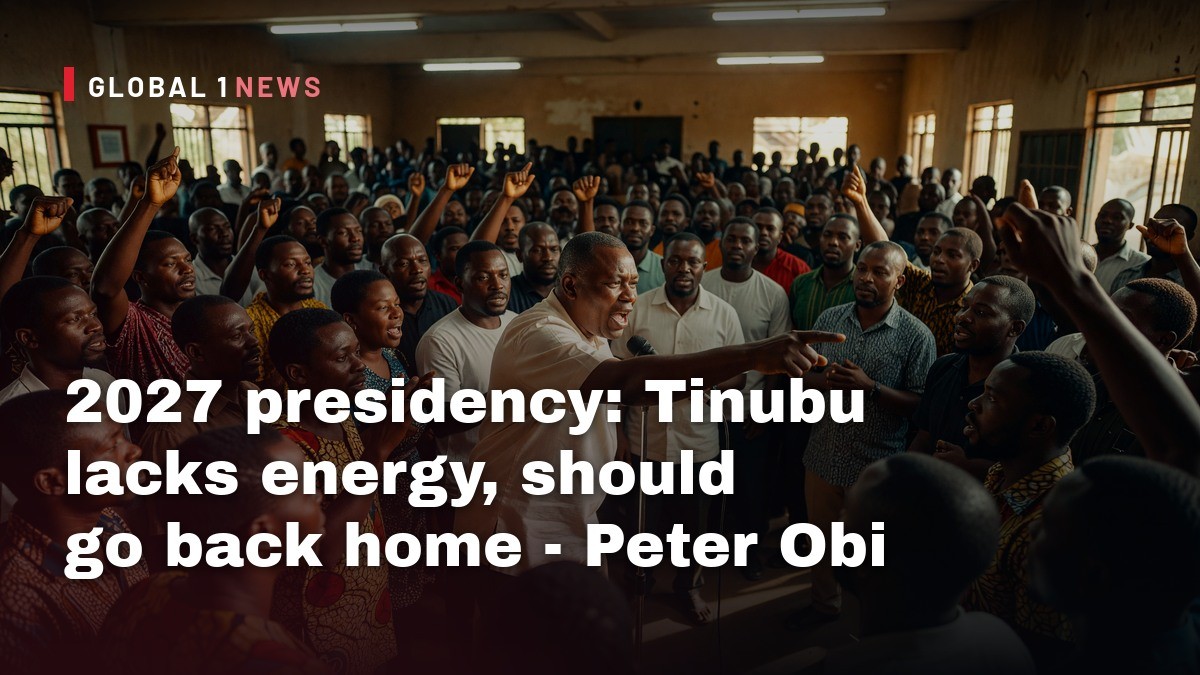
In a fiery town‑hall gathering in Calabar, Cross River State, Peter Obi, the presidential hopeful of the Nigeria Democratic Congress (NDC), delivered a stark verdict on President Bola Tinubu’s capacity to lead the nation into 2027. Obi’s remarks, captured by the Daily Post Nigeria on 5 November 2026, framed the incumbent’s tenure as one marked by fatigue, urging the electorate to consider a leader with fresh energy, competence and a genuine commitment to rebuilding Nigeria.
Obi’s Direct Challenge to Tinubu’s Tenure
Obi’s central claim was unequivocal: President Tinubu “lacks the energy for the job” and should “go home” after the upcoming 2027 election. The language was deliberately blunt, positioning Tinubu’s perceived exhaustion as a matter of national concern rather than a personal critique. By urging Tinubu to step aside, Obi framed the election as a pivotal moment for Nigerians to decide whether they wanted a continuation of the current administration or a new direction under fresh leadership.
The emphasis on “energy” resonated beyond mere physical stamina. In the Nigerian political context, it implied the ability to drive policy, inspire the bureaucracy, and manage the complex tapestry of regional interests. Obi’s assertion suggested that Tinubu’s current state compromised his capacity to meet these demands, thereby jeopardising the nation’s progress.
The Call for a Competent, Compassionate Leader
Obi’s appeal to voters centered on the qualities he believes are essential for Nigeria’s next president: competence, capacity, compassion and a steadfast commitment to nation‑building. He urged Nigerians to “go out and help us, elect somebody who is competent, somebody who has capacity, with compassion and commitment to building another Nigeria.” This phrasing positioned the upcoming election as a collective responsibility, inviting citizens to actively shape the country’s future.
By highlighting “competence” and “capacity,” Obi signaled a desire for a leader who can navigate Nigeria’s economic challenges, security concerns and governance reforms. The addition of “compassion” underscored a moral dimension, suggesting that technical ability must be paired with an empathetic approach to the everyday struggles of ordinary Nigerians.
Vision of Social Mobility and Equality
Obi painted a vision of a Nigeria where “a child of a nobody can be somebody without knowing anybody.” This statement tapped into the widespread yearning for merit‑based advancement, a sentiment that cuts across Nigeria’s diverse ethnic and regional lines. By invoking the idea of social mobility, Obi positioned his campaign as a promise of a more inclusive society where opportunities are not confined to entrenched networks.
The emphasis on breaking the “knowing anybody” barrier directly challenged the perception of patronage and nepotism that has long been a critique of Nigerian politics. Obi’s narrative suggested that a new leader could dismantle these barriers, fostering a climate where talent and hard work are the primary currencies for success.
Political Context of the 2027 Election
While the source material does not detail the broader electoral landscape, Obi’s remarks implicitly acknowledge the competitive nature of the 2027 race. By urging Tinubu to “go home,” he not only critiques the incumbent but also signals confidence in the NDC’s ability to present a viable alternative. The town‑hall setting in Calabar, a city known for its vibrant civil society, provided a platform for Obi to directly engage with voters, reinforcing the grassroots dimension of his campaign.
The timing of the statement—just weeks before the 2027 presidential election—underscores its strategic importance. Obi’s message sought to crystallize voter sentiment, turning perceived fatigue in the current administration into a rallying point for change.
Implications for Tinubu’s Campaign Strategy
Obi’s direct challenge forces the Tinubu campaign to confront the narrative of fatigue head‑on. The incumbent’s team will likely need to counter the “energy” critique by showcasing achievements, policy initiatives, and a forward‑looking agenda that reassures voters of Tinubu’s continued vigor. The public demand for a “competent” and “compassionate” leader may push Tinubu’s campaign to highlight specific programs aimed at social welfare and economic development.
Moreover, the call for a leader who can enable a child of a nobody to rise may pressure the incumbent to address concerns about patronage and elite capture. Failure to respond convincingly could amplify Obi’s message, especially among younger voters and those disillusioned with the status quo.
Regional Resonance of Obi’s Message
Delivering his remarks in Calabar, a city in the South‑South region, Obi tapped into regional dynamics that often shape Nigerian politics. While the source does not elaborate on regional reactions, the choice of venue suggests an effort to reach audiences beyond the traditional political strongholds of the South‑West and North. By speaking in Cross River State, Obi signaled an inclusive national outreach, aligning his vision of a “another Nigeria” with the aspirations of diverse communities.
The emphasis on competence and compassion resonates across regions that have experienced varying degrees of development and security challenges. By framing his message in universal terms, Obi positioned his campaign as a unifying force capable of bridging regional divides.
Looking Ahead: Voter Sentiment and the Road to 2027
Obi’s stark assessment of Tinubu’s energy levels and his call for a competent, compassionate leader provide a clear lens through which voters may evaluate the upcoming election. As Nigerians head to the polls, the electorate will weigh the incumbent’s track record against the promise of renewal articulated by the NDC.
The narrative that a child of a nobody can become somebody without “knowing anybody” offers a powerful emotional appeal, especially for a youthful population eager for change. Whether this vision translates into electoral momentum will depend on how effectively the NDC can mobilise support, articulate concrete policy proposals and demonstrate that it can deliver on the promise of competence and compassion.
This article was produced with AI-assisted research and editorial support. Reporting is based on the source material cited below. Sources: Daily Post Nigeria; dailypost.ng; Global1.News (05 November 2026).
By Sarah Okafor, Staff Writer
What's Your Reaction?
 Like
0
 Dislike
0
 Love
0
 Funny
0
 Wow
0
 Sad
0
 Angry
0

Africa Correspondent at Global1.News. Based in Lagos, covering politics, business, technology, and culture across the continent. Focused on telling African stories beyond the headlines — the innovation, entrepreneurs, and communities shaping the region's future.














Comments (0)