
Supajee orders provincial commerce offices to keep flood-hit areas supplied and prices in check
Deputy Prime Minister and Commerce Minister Supajee Suthumpun has taken swift action to protect Thai households from the twin threats of flood‑driven shortages and price spikes.
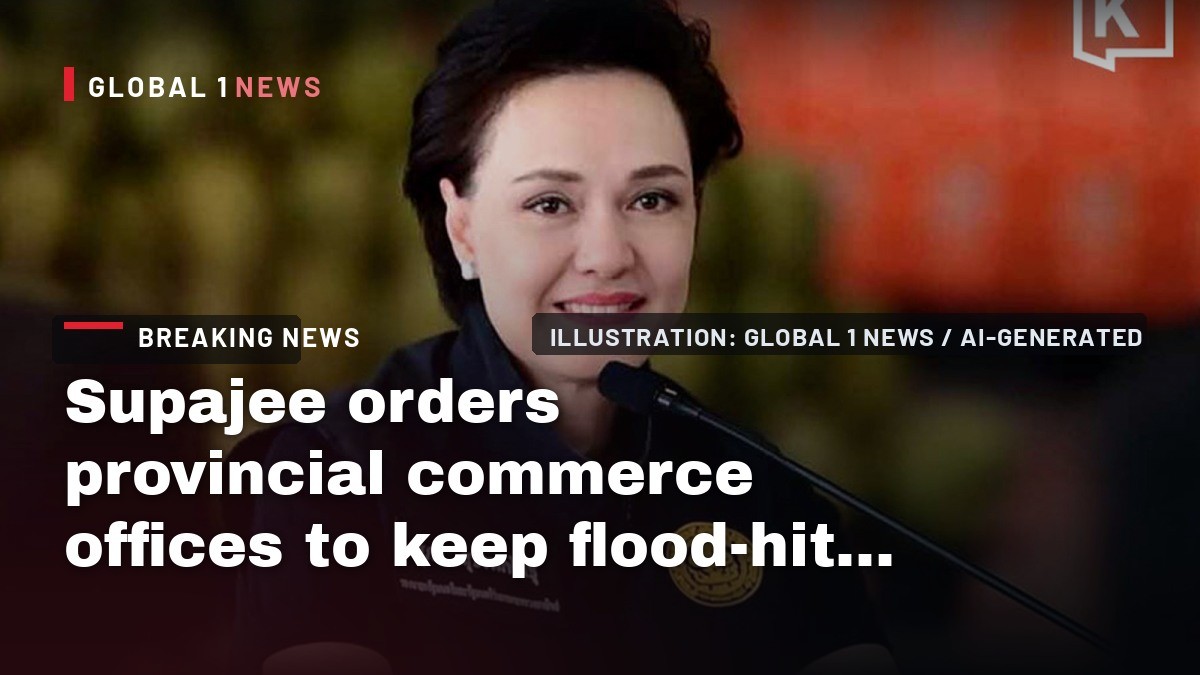
Deputy Prime Minister and Commerce Minister Supajee Suthumpun has taken swift action to protect Thai households from the twin threats of flood‑driven shortages and price spikes. In a statement issued on 26 September 2026, Supajee ordered provincial commerce offices across the kingdom to monitor the flow of essential goods and keep prices in check in the areas most affected by recent heavy rains. The move reflects a long‑standing practice of using Thailand’s extensive network of local commerce offices to coordinate relief, a system that has become a familiar part of the country’s response to natural disasters.
Why the ministry’s vigilance matters now
The monsoon season has brought unusually heavy rainfall this year, leading to flooding in several provinces. Such conditions can quickly disrupt supply chains, especially for staple items like rice, cooking oil, and fresh produce that form the backbone of Thai daily life. Supajee emphasized that the Commerce Ministry is “closely monitoring heavy rainfall and flooding across the country,” underscoring the urgency of preventing shortages before they become acute.
In Thai culture, the concept of *suk*—the pursuit of well‑being for the community—guides governmental actions in times of crisis. By keeping a watchful eye on market conditions, the ministry aims to uphold this principle, ensuring that families can continue their daily rituals of cooking and sharing meals even as rivers swell and roads become impassable.
The role of provincial commerce offices
Provincial commerce offices serve as the ministry’s eyes and ears on the ground. Supajee’s directive instructs these offices to “closely monitor the supply and prices of essential goods” and to report on residents’ needs. This reporting structure allows the central ministry to “quickly coordinate assistance and direct supplies to areas where they are needed,” creating a feedback loop that can adapt to rapidly changing conditions.
These offices have a history of working hand‑in‑hand with local wholesalers, retailers, and community leaders. During previous flood events, they have helped replenish stocks by mobilising nearby markets and arranging transport routes that bypass flooded zones. Their familiarity with local trade patterns makes them uniquely positioned to spot early signs of hoarding or price gouging, issues that can quickly erode public trust.
Coordinating with businesses and logistics partners
The ministry’s approach also involves direct coordination with private sector partners. Supajee noted that the Commerce Ministry is “coordinating with businesses to deliver essential goods and supplies to affected areas.” By engaging manufacturers, distributors, and local traders, the government seeks to keep market shelves stocked without resorting to heavy-handed interventions.
This collaborative model reflects Thailand’s broader economic philosophy of “public‑private partnership,” a principle that resonates with the Buddhist teaching of interdependence. When businesses understand the humanitarian stakes, they are more likely to prioritize delivery over profit, ensuring that the flow of rice, fish, and other staples continues even as floodwaters rise.
How citizens can protect themselves
Supajee’s announcement also empowers ordinary Thais to act as watchdogs. The public is encouraged to report “unfair prices, shortages, hoarding or businesses failing to display prices” through the Department of Internal Trade hotline at 1569 or by contacting their provincial commerce office. This channel offers a direct line for complaints, enabling officials to investigate and, where necessary, take legal action.
Such citizen participation aligns with the Thai value of *sangat*—community solidarity. By alerting authorities to market abuses, individuals help safeguard the collective well‑being, reinforcing a culture where neighbors look out for one another, especially in times of hardship.
Legal safeguards and enforcement
When complaints are lodged, officials are tasked with investigating and, if warranted, pursuing legal action. While the source material does not detail specific penalties, the mention of “legal action where appropriate” signals that the ministry is prepared to enforce regulations against price gouging and hoarding. This deterrent is crucial in maintaining market stability, as unchecked profiteering can quickly exacerbate the suffering caused by natural disasters.
Thailand’s legal framework already includes provisions against unfair trade practices, and the ministry’s readiness to invoke these measures reinforces the message that protecting the public interest is a priority. In Buddhist terms, this reflects the principle of *right livelihood*, encouraging businesses to act ethically even under pressure.
Historical context of flood response
The current directive builds on a pattern of flood response that the Commerce Ministry has refined over years of dealing with monsoon‑related disruptions. Past incidents saw provincial commerce offices “coordinating with wholesalers, retailers and local businesses to replenish stocks,” a strategy that proved effective in restoring market balance after initial shocks.
These experiences have taught Thai officials that rapid, localized coordination can prevent the cascade of shortages that often follows a flood. By learning from each event, the ministry continually improves its ability to respond, embodying the Thai spirit of resilience and adaptability that is often celebrated in local folklore and communal rituals.
Looking ahead: strengthening resilience
Supajee’s orders are a reminder that flood preparedness extends beyond physical infrastructure to include market vigilance. As climate patterns evolve, the frequency and intensity of flooding may increase, making the role of provincial commerce offices even more critical. Strengthening these networks, improving data collection on price movements, and fostering deeper partnerships with the private sector will be essential steps toward a more resilient supply chain.
In the meantime, the ministry’s immediate focus remains on ensuring that every Thai household can access the foods and supplies that sustain daily life. By combining governmental oversight, community reporting, and business cooperation, Thailand aims to uphold the Buddhist ideal of *metta*—loving‑kindness—by protecting the most vulnerable during the season’s toughest moments.
This article was produced with AI-assisted research and editorial support. Reporting is based on the source material cited below. Sources: Khaosod English; khaosodenglish.com; Global1.News (26 September 2026).
By Ann Srisawat, Staff Writer
What's Your Reaction?
 Like
0
Like
0
 Dislike
0
Dislike
0
 Love
0
Love
0
 Funny
0
Funny
0
 Wow
0
Wow
0
 Sad
0
Sad
0
 Angry
0
Angry
0

Southeast Asia Correspondent at Global1.News. Based in Bangkok, covering Thai and Southeast Asian politics, economy, technology, and culture. Deep regional perspective on one of the world's most dynamic regions.












Comments (0)