
Will Taiwan Fight? We Need Better Evidence.
In the wake of Simon Shuster’s provocative piece in The Atlantic questioning whether Taiwan might “give up” under mounting Chinese pressure, a vigorous debate has erupted across Taipei’s political and academic circles.
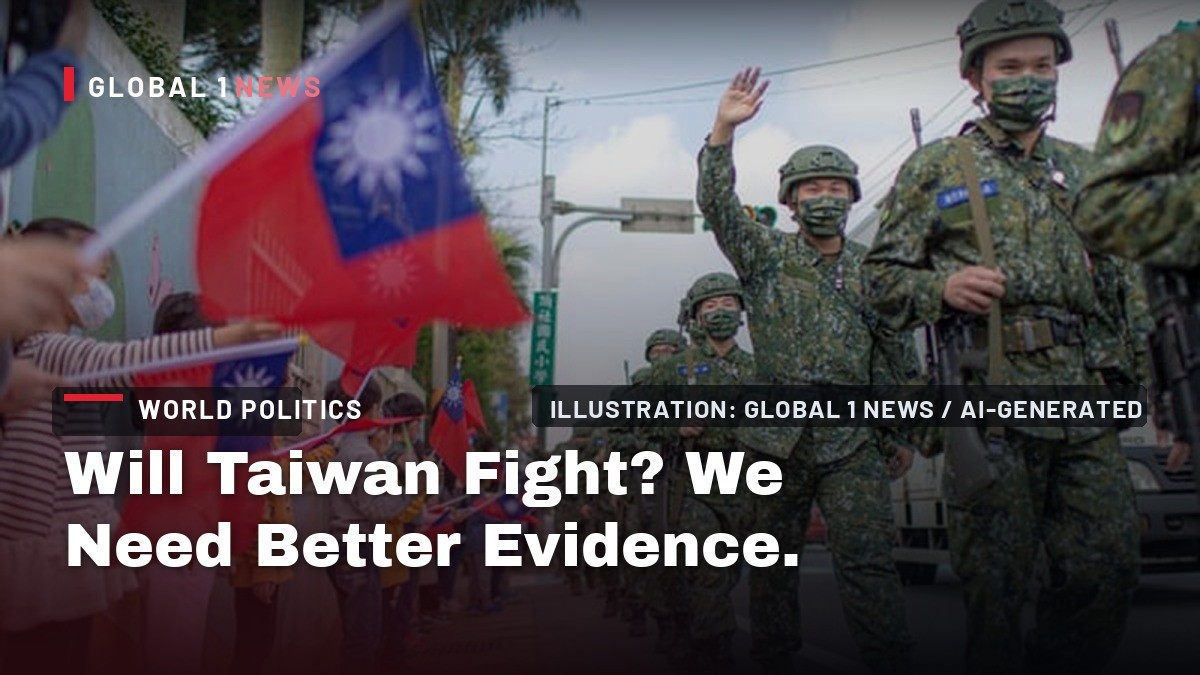
In the wake of Simon Shuster’s provocative piece in The Atlantic questioning whether Taiwan might “give up” under mounting Chinese pressure, a vigorous debate has erupted across Taipei’s political and academic circles. The controversy underscores a broader methodological dilemma for scholars of security: how to translate public opinion, historical analogy, and limited empirical data into reliable forecasts of national resolve. This article examines the evidentiary landscape surrounding Taiwan’s prospective response to a PLA invasion, drawing on the recent critique articulated in The Diplomat and situating it within the island’s evolving defense posture, civil‑society mobilization, and political dynamics.
Contextualizing the Critique of Shuster’s Argument
The Atlantic essay sparked swift rebuttals from Taiwanese legislators, media, and the National Security Council. Legislator Puma Shen, interviewed for the original article, publicly accused Shuster of extracting comments out of context, while Secretary General Joseph Wu of the National Security Council dismissed the central premise that Taiwan might capitulate. The Taipei Times editorial similarly challenged the piece’s factual accuracy and its portrayal of Taiwanese society. These reactions highlight a core concern: foreign analysts with limited on‑the‑ground exposure may overlook nuances of Taiwan’s democratic evolution, civil‑defense culture, and the complex interplay of domestic politics.
Critics also pointed to a perceived deficit in Shuster’s engagement with Taiwanese voices and opinion polls that indicate a “considerable willingness to defend Taiwan.” They invoked Taiwan’s democratization, the Sunflower Movement, and its effective COVID‑19 response as evidence of a populace capable of rapid mobilization when threatened. While compelling, these arguments remain insufficient to answer the decisive question of how Taiwan would act under actual PLA fire.
The Limits of Public Opinion Polls
Opinion polls, as noted in the Diplomat analysis, capture expressed preferences but cannot reliably predict behavior under duress. Respondents may affirm willingness to defend the island in abstract terms, yet the reality of missile strikes, disrupted communications, and uncertain external support could reshape those intentions dramatically. The article emphasizes that “questions involving actual costs, such as longer military service, higher taxes, or greater personal obligations, can tell us more,” suggesting that willingness to bear tangible sacrifices is a more robust indicator of resolve.
Nevertheless, the source material cautions against dismissing polls entirely. They remain valuable for gauging overall sentiment, especially when calibrated against concrete trade‑offs. The key methodological insight is that expressed support must be triangulated with observable actions—recruitment trends, civil‑defense participation, and institutional reforms—to approximate a credible assessment of Taiwan’s defensive posture.
Historical Analogies and Their Constraints
Comparisons to Finland’s Winter War, Ukraine’s resistance to Russia, and Israel’s mobilization after the October 7 attacks are frequently invoked to illustrate how societies can exceed external expectations. The Diplomat piece acknowledges the illustrative power of these cases but stresses that “historical experience and comparisons can give us useful clues. But they cannot tell us what Taiwanese will do when confronted by the People’s Liberation Army.” The divergent Israeli experience—high mobilization for war but waning compliance during a pandemic—demonstrates how threat perception, public trust, and personal costs shape societal responses differently across contexts.
Thus, while historical analogues enrich analytical frameworks, they must be applied with caution. Taiwan’s unique political culture, its hybrid civil‑military institutions, and the specific nature of the cross‑strait threat require a tailored assessment rather than reliance on broad historical patterns.
Structural Challenges in Taiwan’s Defense Apparatus
The source material outlines several persistent deficiencies that constrain Taiwan’s capacity to mount a credible defense. Recruitment and retention have historically lagged, leading to personnel shortages and an under‑trained reserve component. Political polarization between the Democratic Progressive Party (DPP) and the Kuomintang (KMT) has repeatedly turned defense budgeting into a partisan battlefield, impeding consistent long‑term investment. Moreover, institutional coordination remains problematic, with “deeply rooted institutional and military cultures” slowing necessary reforms and adaptation.
Compounding these issues is the limited ability of Taiwan’s defense‑industrial base to scale production rapidly. The article notes that “Taiwan faces serious constraints in expanding its defense‑industrial capacity quickly enough to meet its growing needs,” suggesting that even if political will aligns, logistical bottlenecks could hamper the acquisition of critical systems. These structural challenges provide a sobering counterpoint to optimistic narratives about societal resilience.
Emerging Positive Trends in Military and Civil Defense
Despite longstanding obstacles, recent developments hint at a modest upward trajectory. The Diplomat report observes that “military recruitment and retention have recently improved,” though it cautions that it is “too early to know whether this represents a lasting reversal.” Civil‑society initiatives such as Kuma Academy and Forward Alliance have attracted “thousands of people” willing to engage in civil‑defense training, reflecting a growing grassroots commitment to preparedness.
On the institutional side, Taiwan’s annual Han Kuang exercises have become “significantly more realistic and comprehensive.” The latest iteration, Han Kuang 42, featured extended, less scripted training that involved a broader spectrum of military, government, and civilian actors, emphasizing a whole‑of‑society defense concept. Defense spending, according to the source, has also “increased substantially,” indicating a policy shift toward bolstering deterrence capabilities.
Assessing the Evidence: What Should Observers Watch?
Given the mixed picture of constraints and incremental improvements, the most prudent analytical approach is to monitor concrete indicators rather than rely on speculative analogies. Key metrics include: the sustainability of recruitment gains, the depth and frequency of reserve training, the scale and effectiveness of civil‑defense programs, and the trajectory of defense procurement and industrial capacity. Observers should also track how partisan dynamics influence defense budgeting and whether cross‑party consensus emerges around security reforms.
Equally important is the evolution of public trust in institutions. As the Israeli example illustrates, high mobilization can coexist with declining compliance under prolonged crises. Taiwan’s experience during COVID‑19, while praised for its effectiveness, also offers a lens to gauge how citizens respond to sustained governmental directives. The interplay between trust, perceived threat seriousness, and personal cost will remain central to any future assessment of Taiwan’s resolve.
Forward‑Looking Analysis: Scenarios and Policy Implications
Projecting forward, two broad scenarios emerge from the evidence. In a “resilient” scenario, continued recruitment gains, expanded civil‑defense participation, and sustained defense spending coalesce into a credible deterrent, reinforcing public confidence and deterring PLA coercion. In a “constrained” scenario, persistent personnel shortages, fragmented political support, and limited industrial scaling undermine readiness, potentially eroding public willingness to endure prolonged conflict.
Policymakers, both within Taiwan and among its allies, should prioritize measures that convert the modest positive trends into durable capacities: institutionalizing reserve training, diversifying defense‑industrial supply chains, and fostering bipartisan consensus on security funding. International partners can reinforce these efforts through targeted capacity‑building, joint exercises, and transparent security assurances that mitigate the uncertainty surrounding external support—a factor that, as the source material underscores, heavily influences public willingness to resist.
In sum, the debate sparked by Shuster’s article reveals the perils of over‑reliance on thin evidence and the necessity of grounding forecasts in observable, measurable developments. Taiwan’s future response to a PLA offensive will be shaped not merely by abstract willingness but by the concrete evolution of its military institutions, civil‑society preparedness, and the political environment that sustains them. Continuous, rigorous monitoring of these variables will provide the most reliable gauge of whether Taiwan will fight, adapt, or falter when the next crisis unfolds.
This article was produced with AI-assisted research and editorial support. Reporting is based on the source material cited below. Sources: The Diplomat; thediplomat.com; Global1.News (18 September 2026).
By Prof. David Park, Staff Writer
What's Your Reaction?
 Like
0
Like
0
 Dislike
0
Dislike
0
 Love
0
Love
0
 Funny
0
Funny
0
 Wow
0
Wow
0
 Sad
0
Sad
0
 Angry
0
Angry
0
East Asia/Technology Correspondent at Global1.News. Seoul-based voice covering Korean politics, technology, business, and culture. Analyzes how technology and geopolitics intersect across East Asia.










Comments (0)