
ASEAN ministers sign Manila declaration on disaster management
Manila—In a historic gathering at the ASEAN Ministerial Conference on Disaster Resilience (AMCDR), all ten member states signed the Manila Declaration, a pledge to speed up the ASEAN Agreement on Disaster Management and Emergency Response (AADMER) Work Programme for 2026‑2030.
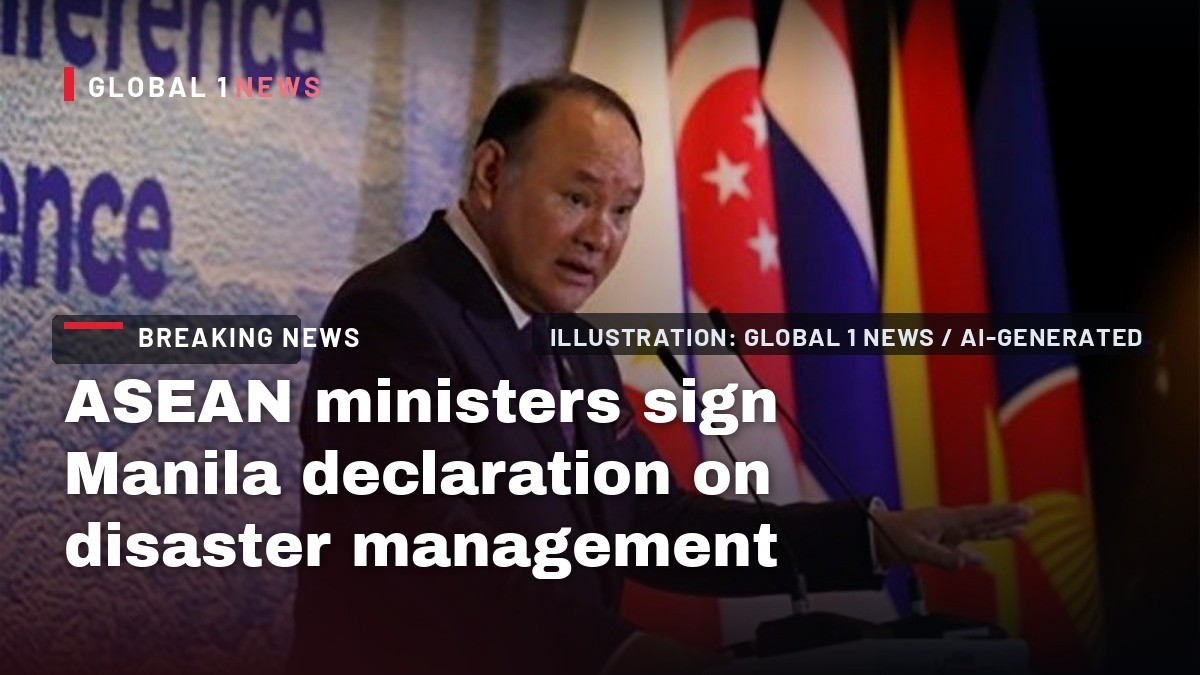
Manila—In a historic gathering at the ASEAN Ministerial Conference on Disaster Resilience (AMCDR), all ten member states signed the Manila Declaration, a pledge to speed up the ASEAN Agreement on Disaster Management and Emergency Response (AADMER) Work Programme for 2026‑2030. The declaration, unveiled on September 15‑16, 2026, underscores a shared resolve to strengthen accountability, monitoring and learning across the region, while charting a disaster‑resilience agenda that looks beyond 2030. For ordinary Filipinos—from barangay captains in remote provinces to sari‑sari store owners in bustling cities—the commitment promises more coordinated aid, faster response times, and a future where the safety of our communities is a regional priority.
What the Manila Declaration Means for ASEAN
The Manila Declaration is more than a ceremonial document; it is a concrete affirmation that ASEAN will accelerate the implementation of the AADMER Work Programme for the next four years. By agreeing to a unified framework, member states signal a collective willingness to share knowledge, best practices and lessons learned—key ingredients for building resilient societies. The declaration also calls for stronger mechanisms of accountability and monitoring, ensuring that each country’s progress can be tracked and evaluated.
Defense Secretary Gilbert Teodoro Jr., who chairs the National Disaster Risk Reduction and Management Council (NDRRMC), highlighted that the agreement “takes place against a backdrop of complex and dynamic risk landscapes.” In his words, the declaration is a pathway to “enhance the safety and well‑being of our communities” and to “build the resilience and prosperity of the region.” For the Philippines, this means aligning our national disaster‑risk reduction strategies more closely with ASEAN partners, creating a seamless flow of assistance when calamities strike.
Philippines’ Leadership in the 2026 ASEAN Chairmanship
The AMCDR, held under the Philippines’ 2026 ASEAN chairmanship, served as a flagship activity showcasing the country’s commitment to disaster resilience. With the theme “Twenty Years of AADMER: Advancing Global Commitments Toward a Resilient ASEAN Beyond 2030,” the two‑day conference gathered ministers, disaster‑management officials, and civil‑society representatives from across the region and beyond. Secretary Teodoro’s role as host underscored the Marcos administration’s focus on positioning the Philippines as a convener and leader in regional disaster response.
During his closing remarks, Teodoro urged faster, more frequent collaboration not only within ASEAN but also with the broader international community. He emphasized that such cooperation is “indispensable” for securing a safer, more prosperous future for our people—a sentiment that resonates deeply in barangays that have repeatedly faced the wrath of typhoons, earthquakes and volcanic eruptions.
The Resilient, Innovative, Sustainable, and Empowered ASEAN Vision
Alongside the Manila Declaration, the Philippines will seek endorsement of the ASEAN Leaders’ Statement on the Resilient, Innovative, Sustainable, and Empowered ASEAN Vision. This statement envisions a region that can “anticipate, withstand, adapt, recover, and thrive” amid complex and systemic risks, while ensuring that “no one is left behind.” The language reflects a holistic approach that blends disaster preparedness with sustainable development and social inclusion.
For Filipino communities, the promise of an “empowered” ASEAN translates into tangible benefits: better early‑warning systems for coastal barangays, more resilient infrastructure for schools and health centers, and greater access to resources for marginalized OFWs and their families who often send remittances that fund local recovery efforts.
Strengthening Accountability and Learning
A key pillar of the Manila Declaration is the push for stronger accountability and learning mechanisms. By establishing clearer monitoring frameworks, ASEAN aims to ensure that each member’s commitments are not merely symbolic. The declaration calls for systematic data sharing, joint exercises, and post‑disaster reviews that can inform future policies.
Such mechanisms are crucial for the Philippines, where the NDRRMC has long advocated for evidence‑based planning. Enhanced data exchange with neighboring countries can improve our own hazard mapping, especially in flood‑prone provinces like Leyte and in volcanic zones such as Albay. Moreover, joint training exercises can help local disaster responders—often volunteers from barangay disaster risk reduction committees—gain exposure to best practices from across the archipelago.
Implications for Local Communities and Civil Society
The Manila Declaration’s emphasis on “sharing lessons, innovations, and good practices with the international community” opens doors for civil‑society groups to play a more active role. NGOs, community‑based organizations, and even private sector partners can now align their initiatives with a regional framework, amplifying impact. For example, a sari‑sari store owner in a typhoon‑hit town could benefit from ASEAN‑standardized emergency kits, while community volunteers could receive training that meets regional standards.
Moreover, the declaration’s focus on “leaving no one behind” resonates with the Filipino value of bayanihan. It encourages inclusive disaster planning that accounts for vulnerable groups—elderly residents in remote barangays, children in overcrowded classrooms, and migrant workers abroad who depend on timely information to support their families during crises.
Looking Ahead: From Declaration to Action
Signing the Manila Declaration marks a pivotal step, but the true test lies in implementation. The Department of National Defense noted that the declaration will be presented for notation by state leaders at the 49th ASEAN Summit in November. This upcoming summit will be a litmus test for regional solidarity, as leaders assess progress on the AADMER Work Programme and the broader ASEAN Vision.
For the Philippines, the next months will involve translating high‑level commitments into ground‑level actions: integrating ASEAN‑aligned protocols into local disaster risk reduction plans, securing funding for resilient infrastructure, and fostering partnerships with international agencies that can supply technical expertise and resources.
Why It Matters to Every Filipino
Disasters are a shared reality for the Philippines, a nation of over 7,000 islands constantly exposed to typhoons, earthquakes and volcanic eruptions. The Manila Declaration, backed by the collective will of all ASEAN members, offers a promise of stronger, faster, and more coordinated response when calamities strike. It also signals a shift toward a proactive, rather than reactive, approach—one that invests in preparedness, innovation and community empowerment.
As Secretary Teodoro reminded us, the pathway to resilience is “indispensable” not just for today but for generations yet to come. By embedding the Manila Declaration into our national and local disaster‑risk strategies, we can ensure that the safety of our barangays, the stability of our sari‑sari stores, and the well‑being of our OFWs are protected by a united ASEAN front. In the spirit of bayanihan, let us welcome this regional commitment and hold our leaders accountable, so that when the next storm approaches, we stand together—stronger, safer, and more resilient.
This article was produced with AI-assisted research and editorial support. Reporting is based on the source material cited below. Sources: Philstar.com; Global1.News (18 September 2026).
By Bella Reyes, Staff Writer
What's Your Reaction?
 Like
0
Like
0
 Dislike
0
Dislike
0
 Love
0
Love
0
 Funny
0
Funny
0
 Wow
0
Wow
0
 Sad
0
Sad
0
 Angry
0
Angry
0

Philippines/Southeast Asia Correspondent at Global1.News. Manila-based journalist covering Philippine politics, environment, maritime security, and social issues. Passionate about marine conservation and the communities protecting the Philippines' natural heritage.














Comments (0)