
Wife of assassinated ex-Haitian leader registers for presidential election
In the wake of Haiti’s longest electoral hiatus, the nation’s political landscape has taken another dramatic turn. Martine Moïse, the widow of the assassinated former president Jovenel Moïse, has officially entered the race for the presidential election slated for next year.
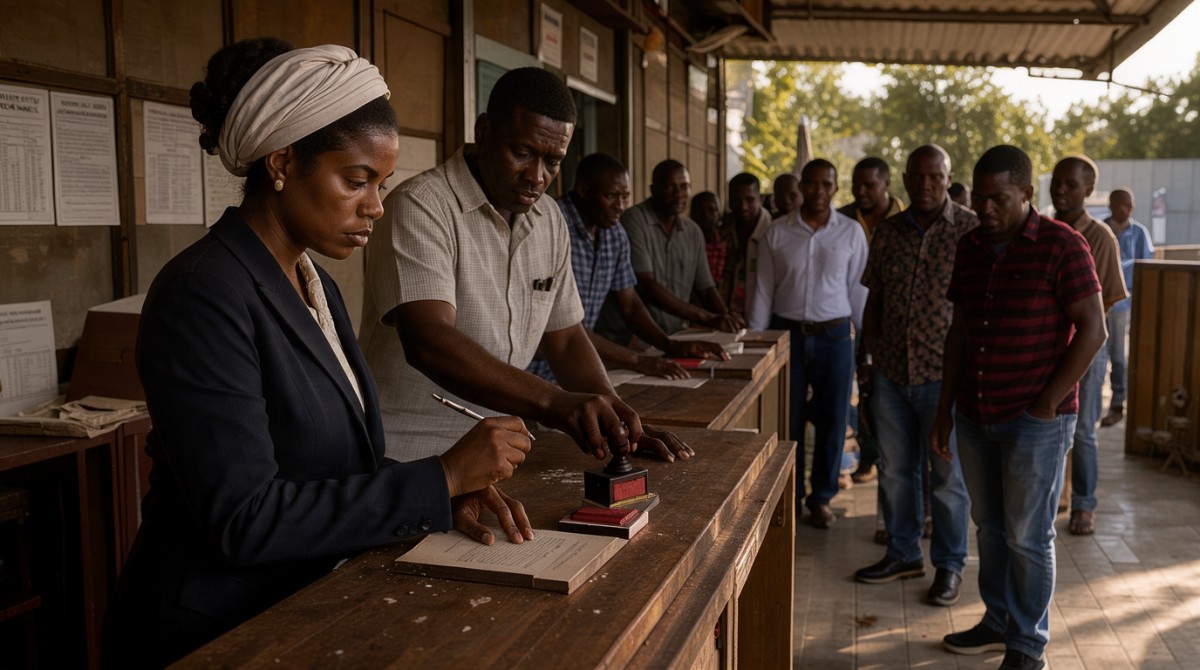
In the wake of Haiti’s longest electoral hiatus, the nation’s political landscape has taken another dramatic turn. Martine Moïse, the widow of the assassinated former president Jovenel Moïse, has officially entered the race for the presidential election slated for next year. Her candidacy, announced amid a backdrop of chronic gang violence and a fragile security situation, has sparked both hope and skepticism across the Caribbean and the broader Latin American region.
From tragedy to candidacy: Martine Moïse’s political emergence
The personal trauma that Martine Moïse endured on that fateful July night in 2021 has become a public narrative of resilience. She was seriously wounded when gunmen stormed the presidential residence in Port‑au‑Prince, an attack that also claimed the life of her husband. After being air‑lifted to a hospital in Florida for treatment, she faced a further legal ordeal when she was charged in connection with the assassination in 2024. That indictment was overturned the following year, clearing the path for her return to public life.
Her brief statement on the social‑media platform X—“Haiti will rise again on its own two feet, because politics needs to be done differently”—captures a promise of renewal. While the electoral council’s website confirmed her registration on Sunday, Martine Moïse has yet to elaborate on her platform, leaving the electorate to wonder how her personal loss will translate into concrete policy proposals.
The broader field: A crowded and contested ballot
The upcoming election will feature a total of thirty‑three registered candidates, a number that underscores the fragmented nature of Haitian politics. Among the contenders are familiar faces: former presidents Michel Martelly and Jocelerme Privert, former prime minister Claude Joseph, and former foreign minister Dominique Dupuy. Their presence reflects a political class that has repeatedly cycled through power, often amid accusations of corruption and mismanagement.
Martine Moïse’s entry adds a new dimension to this crowded field. As the widow of a president whose tenure was abruptly ended by violence, her candidacy may attract voters yearning for a break from the familiar faces of the past. Yet it also raises questions about the role of personal tragedy in political legitimacy—a dynamic that has long resonated throughout Latin America, where widows and family members of slain leaders have occasionally stepped into the political arena.
Security and the specter of gang violence
Haiti’s electoral timetable has already been reshaped by insecurity. Elections originally slated for December were postponed to July after the country’s security situation deteriorated further. The United Nations Integrated Office in Haiti reported that from April through June of this year alone, at least 1,408 people were killed and 656 injured—a stark illustration of the daily reality for many Haitians.
This wave of violence traces its roots to the power vacuum created by the 2021 assassination. The ensuing chaos allowed armed groups, many linked to Colombian mercenaries, to expand their influence over neighborhoods, ports, and even the informal economy. Any candidate, including Martine Moïse, will have to confront the daunting task of restoring order while navigating the entrenched interests of these gangs.
Justice delayed: The ongoing hunt for the assassins
The hunt for those responsible for the July 2021 attack remains incomplete. Thirty suspects have been indicted to date, and in September, eighteen individuals were transferred from Haiti to Florida to stand trial. While these legal steps signal a commitment to accountability, the sheer number of alleged participants—reported as a group of mainly Colombian mercenaries—highlights the transnational dimension of the crime.
For many Haitians, the unresolved nature of the case fuels a broader sense of impunity. The fact that the indictment against Martine Moïse was overturned only last year adds another layer of complexity, suggesting that the judicial process is still navigating uncharted waters. How the upcoming election addresses this lingering demand for justice could become a decisive factor in voter sentiment.
Economic desperation and the promise of renewal
Beyond security, Haiti’s economy continues to flounder under the weight of instability. The chronic disruption of commerce, agriculture, and public services has left a large portion of the population in precarious conditions. While the source material does not provide specific economic figures, the scale of violence—over a thousand deaths in a three‑month span—implies a deepening humanitarian crisis.
Martine Moïse’s pledge that Haiti will “rise again on its own two feet” taps into a widespread yearning for self‑reliance. In a region where foreign aid often comes with strings attached, her rhetoric resonates with a broader Latin American skepticism toward external intervention. Whether her campaign can translate that sentiment into actionable economic policies remains to be seen.
The role of foreign actors and regional implications
The involvement of Colombian mercenaries in the 2021 assassination underscores the porous nature of borders in the Caribbean and the wider Latin American context. Such transnational criminal networks complicate Haiti’s internal security challenges and draw attention from neighboring states concerned about spillover effects.
Moreover, the United Nations’ presence in Haiti, as reflected in the casualty statistics, signals ongoing international engagement. Yet the region’s historical wariness of foreign interference suggests that any solution will need to balance external support with domestic ownership. Martine Moïse’s emphasis on “politics needs to be done differently” may appeal to voters who view foreign‑led security initiatives with suspicion.
Looking ahead: What Martine Moïse’s candidacy means for Haiti’s future
Martine Moïse’s entry into the presidential race marks a poignant chapter in Haiti’s turbulent political saga. Her personal narrative—surviving a brutal attack, confronting legal battles, and now stepping onto the national stage—mirrors the country’s own struggle for stability and dignity.
As the election approaches, the Haitian electorate faces a stark choice: to entrust the future to a familiar cadre of seasoned politicians or to gamble on a figure whose very existence embodies the trauma of recent years. The outcome will not only shape Haiti’s internal trajectory but also send a signal to the broader Latin American region about the power of personal resilience in the face of systemic violence.
This article was produced with AI-assisted research and editorial support. Reporting is based on the source material cited below. Sources: BBC News Latin America; bbc.co.uk; Global1.News (17 November 2026).
By Elena Vasquez, Staff Writer
What's Your Reaction?
 Like
0
 Dislike
0
 Love
0
 Funny
0
 Wow
0
 Sad
0
 Angry
0

Latin America Correspondent at Global1.News. Based in Mexico City, covering politics, economics, energy, and culture across the region. Brings an on-the-ground perspective to stories spanning from the Rio Grande to Patagonia.














Comments (0)