
SDXL 1.0 vs Midjourney: The 2026 Scorecard
Three years after Aitrepreneur's "RIP Midjourney" hype, SDXL 1.0 won the local workhorse lane but Midjourney kept the aesthetic crown. Flux and GPT Image now lead quality. Market split into cloud vs local camps. Choose tools based on volume and hardware.
Three years ago, a YouTuber looked into the camera and declared Midjourney dead, buried by a free, open-source model you could run on your own gaming PC. The video was pure hype, the kind of clickbait that fuels the AI content machine. But here's the thing about hype: sometimes it points at a real shift, even if it gets the obituary wrong. So let's pull up the scorecard for July 2026 and ask the only question that matters: who actually won?
SDXL 1.0 vs Midjourney: The 2026 Scorecard
Atlanta, Georgia - Aug 15, 2026 — Back in July 2023, Aitrepreneur's video "RIP Midjourney! FREE & LOCAL SDXL 1.0 is TAKING OVER!" hit 387,200 views with a simple promise: Stability AI's SDXL 1.0 was so good, so free, and so local that Midjourney's paid subscription was obsolete. The video, premiered July 27, 2023, showed viewers how to download the model and run it on their own computers, pointing to HuggingFace links, a Google Colab, and the Stability AI blog. Three years later, the landscape has split in ways neither the hype nor the doom-sayers predicted. Midjourney didn't die. But the ground shifted underneath it, and a new king has arrived to claim the throne that SDXL was supposed to take.
The July 2023 Promise: A Technical Earthquake
When SDXL 1.0 dropped on July 26, 2023, it wasn't just an incremental update; it was a generational leap for open-source image generation. The specs were staggering compared to its predecessor, SD 1.5. We're talking native 1024x1024 output, up from the cramped 512x512 that had defined the open-source scene. The U-Net architecture ballooned to 3.5 billion parameters, roughly four times the size of SD 1.5's 860 million. It deployed dual text encoders—OpenCLIP ViT-bigG and OpenCLIP ViT-L—to better understand your prompts, and it introduced a separate refiner model for a second-stage detail pass that added a layer of polish previously unseen in local generation.
This wasn't just a bigger model; it was a smarter one. Trained on the massive LAION-5B dataset, the reported compute cost was around 150,000 GPU-hours on 256 A100s, a roughly $600,000 investment that Stability AI made and then gave away. The OpenRAIL-M license permitted commercial use, meaning you could generate images for your business, your clients, or your art store without paying a dime in royalties. And crucially, it ran locally on an 8GB VRAM card like the RTX 3060. With optimizations like fp16, xFormers, and tiled VAE, even 6GB cards could join the party. The dominant interfaces—AUTOMATIC1111 webui and ComfyUI—made it accessible to anyone willing to tinker. The promise was clear: the means of production were now in your hands.
What SDXL 1.0 Actually Delivered: The Workhorse
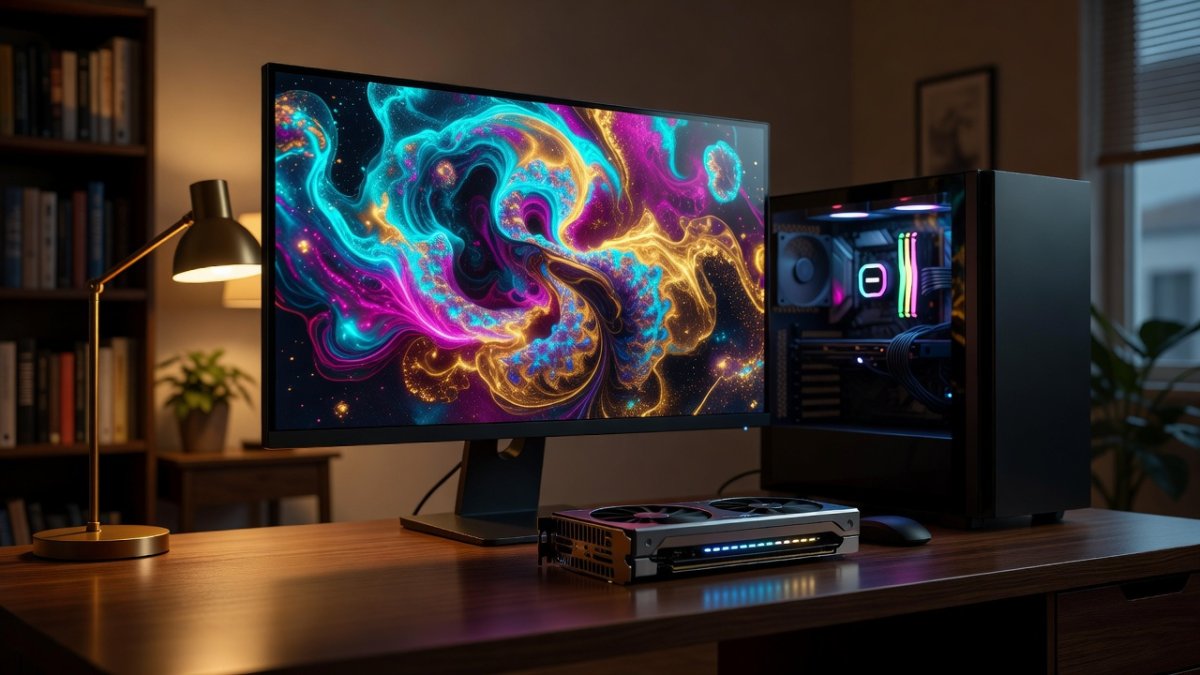
Fast forward to 2026, and SDXL 1.0 has not only survived; it has become the undisputed workhorse of the open-source ecosystem. According to ToolHalla's March 2026 market analysis, which we've cross-checked against community data, SDXL remains the most widely used open-source image model on the planet. Its superpower isn't raw quality anymore; it's the ecosystem. CivitAI hosts thousands of community fine-tunes, LoRAs, ControlNets, and IP-Adapters, creating a level of customization that no closed model can touch.
The economics are the real story. After the initial hardware cost, the marginal cost of generating an image is effectively zero. We're talking 10,000 images a day with no API bills, no subscription fees, no content policy gatekeepers. The distilled variants—SDXL Turbo and Lightning—revolutionized speed, doing 1-4 steps instead of the original 20-50, producing sub-2-second images on consumer GPUs. On an RTX 3060, you can still generate a 1024x1024 image in 15-30 seconds. The limitations are real: base quality still lags behind the top-tier commercial models on photorealism, hands, and complex compositions, and text-in-image rendering remains poor. Its Elo rating sits around 1,100, a solid but not spectacular score. But for volume, customization, and brand-specific LoRAs on modest hardware, nothing else comes close.
Midjourney Didn't Die: The Aesthetic King Survives
Here's where the "RIP Midjourney" headline gets embarrassing. Midjourney is not dead. In fact, by 2026, it has cemented its position as the aesthetic leader for creative and non-technical users. Version 7, released in 2026, leads on "vibes not benchmarks," which is a fancy way of saying its output just looks better to the human eye. The web app is now the primary interface, making Discord optional, and it has dramatically improved its handling of hands, text, and photorealism. Its estimated Elo of 1,240 puts it in the top tier for pure image quality.
But here's the catch that keeps it from total dominance: Midjourney is a walled garden. There is no API, a dealbreaker for developers who want to integrate image generation into their products. There is no local option, no fine-tuning, no way to own your workflow. You are locked into a subscription model ranging from $10 to $120 per month—Basic gets you ~200 images, Standard $30 for 15 hours of Fast mode, Pro $60 for 30 hours, and Mega $120 for 60 hours plus unlimited Relax mode. For a hobbyist, that's fine. For a business generating 100,000 images a month, that's a non-starter. Midjourney won the battle for the creative soul, but it lost the war for the developer's heart.
The New King Arrived Anyway: Flux and GPT Image
While SDXL and Midjourney were duking it out, a third force emerged from the shadows. Black Forest Labs, founded by the original creators of Stable Diffusion, launched Flux. And in 2026, Flux 2 Pro v1.1 sits at the top of the Elo charts with a score of 1,265, tying GPT Image for the crown. It's API-only at $0.055 per image, but the quality is undeniable. For those who want local control, Flux 2 Dev, with an Elo of 1,245, is available under the permissive Apache 2.0 license, free to run locally or via API at $0.025 per image. Flux 2 Schnell, the speed demon, hits 1-4 steps with an Elo of 1,232 and a rock-bottom API price of $0.015.
The catch? Flux needs serious hardware. We're talking 16+ GB of VRAM, with an RTX 4090 being the ideal card. 8GB cards can't run it without heavy quantization, which degrades quality. Its text rendering is far superior to SDXL, and its ecosystem is growing, with thousands of Flux LoRAs now on CivitAI. Meanwhile, OpenAI's GPT Image 1.5, with an Elo of 1,264, offers the best API and the best text rendering, but it's cloud-only, has no fine-tuning, and enforces a restrictive content policy. The market has split into two clear camps: cloud-only services like Midjourney and GPT Image, and locally runnable open-weight models like SDXL and Flux.
What This Means: The Great Divide
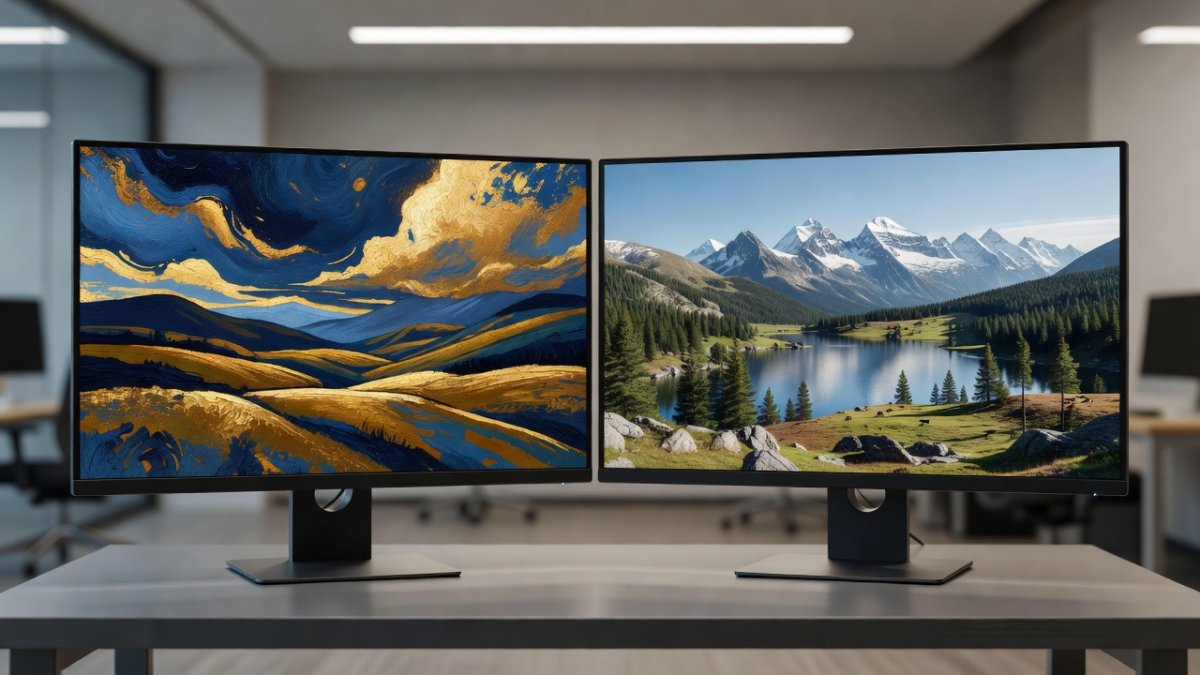
Let's cut through the noise and talk about what this actually means for you. The AI image generation market has bifurcated into two distinct lanes, and choosing the wrong one will cost you time and money. On one side, you have cloud-only services—Midjourney for aesthetics, GPT Image for developers who need the best API. On the other, you have local, open-weight models—SDXL for volume and customization on modest hardware, Flux for quality and control if you've got a beefy GPU. The economics are stark. The crossover point is around 5,000 images per month. If you're generating less than that, a subscription or API might make sense. If you're generating more, buying a GPU pays for itself in 3-6 months.
Consider the math: an RTX 4090 costs about $1,600. If you're generating 10,000 images a month via Flux Schnell's API, that's $150 a month. The GPU pays for itself in under 11 months. At 100,000 images a month, the gap becomes a chasm: GPT Image 1.5 Medium would cost you $4,000 a month, while Flux 2 Dev on your own RTX 4090 costs $0 after the hardware.
The Verdict on "RIP Midjourney": Hype vs. Reality
So, was Aitrepreneur right? Did SDXL 1.0 kill Midjourney? The answer is a resounding no, but with a massive asterisk. SDXL won the local and workhorse lane decisively. It democratized image generation, created the largest ecosystem of fine-tunes and LoRAs in existence, and proved that open-source could compete with commercial giants. But Midjourney kept the aesthetic crown. It didn't die; it adapted, improved, and retained its loyal user base of creatives who value vibes over benchmarks. The real lesson of the past three years is that the "one model to rule them all" narrative was always a fantasy.
The hype in that July 2023 video was premature, but it wasn't wrong about the underlying trend. Open-source, local AI was a force to be reckoned with, and it has only grown stronger. The "RIP" was premature, but the revolution was real. The future isn't about picking a single winner; it's about picking the right tool for the job. And in 2026, you have more powerful, more accessible, and more diverse tools than ever before.
What You Can Do: Own Your Workflow
Stop watching the hype videos and start testing the tools. If you have an 8GB GPU, download SDXL 1.0 today and see what the workhorse can do. It's free, it's local, and it's the most customizable option on the market. If you're lucky enough to have a 16GB+ card, give Flux 2 Dev a spin; the quality difference is noticeable, and the Apache 2.0 license means you own your output. If you're a creative who doesn't want to touch code, Midjourney v7 is still the gold standard for pure aesthetics—just be aware of the subscription lock-in. And if you're a developer, GPT Image's API is the most seamless integration, but you'll pay for it at scale.
The power is in your hands. You don't have to be a prisoner of a single platform or a slave to a monthly bill. You can own your workflow, control your costs, and generate unlimited images without asking permission. The tools are free, the hardware is affordable, and the knowledge is out there. Don't let the hype dictate your choices; let the results. Test, compare, and build a pipeline that works for you. The future of AI image generation isn't a single winner—it's a toolbox, and you're the one holding the wrench. — Jessica Ali, Global 1 News — cutting through the BS, one story at a time.
By Jessica Ali, Staff Writer
This story was produced with AI-assisted research and analysis. Sources: Stability AI, ToolHalla, YouTube (Aitrepreneur), CivitAI.
What's Your Reaction?
 Like
0
Like
0
 Dislike
0
Dislike
0
 Love
0
Love
0
 Funny
0
Funny
0
 Wow
0
Wow
0
 Sad
0
Sad
0
 Angry
0
Angry
0

Editor-in-Chief at Global1.News. Atlanta-based journalist who cuts through the BS and tells it like it is. Lead anchor, host, and the voice you hear when the spin stops and the truth starts.









Comments (0)