
King calls slave trade a 'shameful chapter' during Commonwealth address
King Charles III’s recent address to Commonwealth leaders in the Caribbean has reignited a long‑standing debate across Latin America about Britain’s colonial past and the lingering shadows of the trans‑Atlantic slave trade.
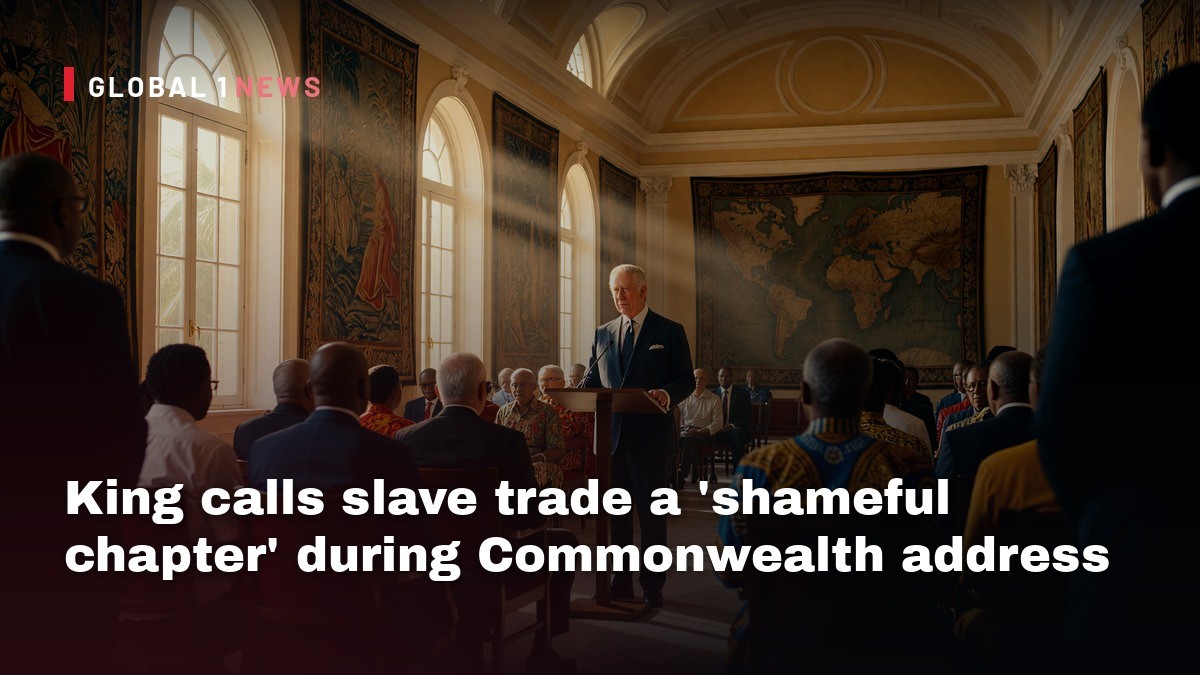
King Charles III’s recent address to Commonwealth leaders in the Caribbean has reignited a long‑standing debate across Latin America about Britain’s colonial past and the lingering shadows of the trans‑Atlantic slave trade. While the monarch described the trade as a “shameful chapter of history” that fills him with “profound sorrow,” he stopped short of a formal apology, leaving the region’s leaders and civil‑society groups to grapple with what words of contrition mean when concrete reparations are dismissed.
Royal rhetoric and the weight of history
Speaking at the Commonwealth Heads of Government Meeting (CHOGM) in Antigua and Barbuda, the King framed the slave trade as a moral wound that still “casts a shadow” over the islands and the broader Commonwealth. He emphasized personal learning, noting that his growing understanding of the issue had deepened his commitment to “finding ways for us to work in modern partnership to address the wrongs of the past with action for the future.” The language was unmistakably solemn, yet it remained symbolic, lacking the direct acknowledgment many activists have demanded.
In the same breath, the King reminded listeners that “history is not ours to choose or to change,” underscoring a view that the past is an inherited burden rather than a negotiable narrative. This framing resonates with a broader British tendency to treat historical injustices as moral lessons rather than legal liabilities—a stance that has long frustrated Caribbean and Latin American voices calling for accountability.
Prime Minister Burnham’s stance on apology and reparations
Prime Minister Andy Burnham, present at the summit, signaled a willingness to consider a formal apology but drew a clear line at financial reparations. He stated unequivocally that “we do not support reparations,” while simultaneously pledging continued development assistance, debt relief, and green finance for Commonwealth nations. This dual message reflects a pragmatic approach: offering aid without the political and fiscal baggage of reparations.
Burnham’s position mirrors a broader UK governmental trend of acknowledging historical wrongs in rhetoric while avoiding the legal and economic implications of compensation. For many Latin American observers, this stance feels like a half‑measure, especially as the region continues to confront the socioeconomic legacies of slavery and colonial extraction.
Caribbean tour and the symbolism of royal visits
The King’s Caribbean tour, which includes stops in the Bahamas and Guyana, has turned the region’s colonial history into a live‑stage drama. In the Bahamas, he spoke of “the suffering of the past,” while in Guyana he visited a historic slave rebellion site where “hundreds of enslaved people were killed.” These gestures, though largely ceremonial, have sparked renewed public discourse about the relevance of the monarchy in post‑colonial societies.
For many locals, the royal presence is a reminder of an era when British authority dictated economic and social structures that still shape contemporary inequalities. The tour’s timing—coinciding with CHOGM’s focus on “Accelerating Partnerships and Investment for a Prosperous Commonwealth”—highlights the tension between symbolic solidarity and the material realities of development.
Latin America’s response to the royal apology
Across Latin America, civil‑society groups and scholars have taken the King’s words as both a sign of progress and a reminder of unfinished business. The description of the slave trade as a “shameful chapter” aligns with longstanding regional narratives that view British colonialism as a source of enduring trauma. Yet, the absence of a formal apology or concrete reparative measures fuels frustration, especially in nations where the slave trade’s demographic and economic impacts are still evident.
In countries like Brazil and Colombia, where the legacy of slavery intertwines with contemporary racial inequities, the King’s emotional appeal may be seen as a diplomatic gesture rather than a catalyst for policy change. Activists argue that true acknowledgment must be paired with tangible support for education, heritage preservation, and economic redress.
The Commonwealth’s evolving theme and its relevance to Latin America
This year’s CHOGM theme—“Accelerating Partnerships and Investment for a Prosperous Commonwealth”—positions the organization as a platform for economic collaboration. Yet, the theme’s emphasis on partnership clashes with the lingering perception of the Commonwealth as a relic of empire. For Latin American observers, the theme raises questions about the balance between mutual benefit and the power dynamics inherited from colonial rule.
The King’s address, which linked historical shame to contemporary challenges such as “the brutal conflicts” and the “catastrophic reality” of climate change, attempts to pivot the Commonwealth toward a forward‑looking agenda. However, the region’s leaders remain wary, noting that climate and technology issues cannot be divorced from the historical extraction of resources that underpinned the slave trade and colonial economies.
Economic aid versus reparations: a contested calculus
Burnham’s promise of continued development assistance, debt relief, and green finance reflects a strategy of “soft” support that sidesteps reparations. While such aid can address immediate development needs, critics argue it does not compensate for the centuries‑long exploitation that underwrote many of today’s socioeconomic disparities. The distinction between aid and reparations is more than semantic; it reflects divergent views on responsibility and justice.
In the Caribbean, where tourism and agriculture remain tied to colonial‑era land ownership patterns, the call for reparations is intertwined with demands for land restitution and wealth redistribution. The King’s acknowledgment of “the wrongs of the past” without a commitment to financial redress leaves these demands in a diplomatic limbo, prompting activists to intensify calls for concrete policy shifts.
Looking ahead: what the royal address means for the region
As the CHOGM concludes, the King’s emotional appeal will likely be remembered more for its symbolism than its policy impact. Yet, the speech has sharpened the spotlight on Britain’s colonial legacy at a moment when Latin America and the Caribbean are redefining their post‑colonial identities. The region’s leaders will watch closely how the UK translates words of sorrow into action, especially as climate crises and economic challenges intensify.
For now, the royal tour has opened a new chapter of dialogue—one that blends historical reckoning with contemporary partnership. Whether this dialogue evolves into meaningful reparative measures or remains a series of well‑intentioned speeches will depend on the political will of both the UK and the Commonwealth nations. In the meantime, the shadow of the slave trade continues to loom, reminding us that history’s wounds are not easily soothed by rhetoric alone.
This article was produced with AI-assisted research and editorial support. Reporting is based on the source material cited below. Sources: BBC News Latin America; bbc.co.uk; Global1.News (04 November 2026).
By Elena Vasquez, Staff Writer
What's Your Reaction?
 Like
0
 Dislike
0
 Love
0
 Funny
0
 Wow
0
 Sad
0
 Angry
0

Latin America Correspondent at Global1.News. Based in Mexico City, covering politics, economics, energy, and culture across the region. Brings an on-the-ground perspective to stories spanning from the Rio Grande to Patagonia.










Comments (0)