
Who pays for Washington’s war?
As the United States presses its military campaign against Iran, the financial toll is spilling over far beyond the Pentagon’s budget sheets. The figures released by U.S.
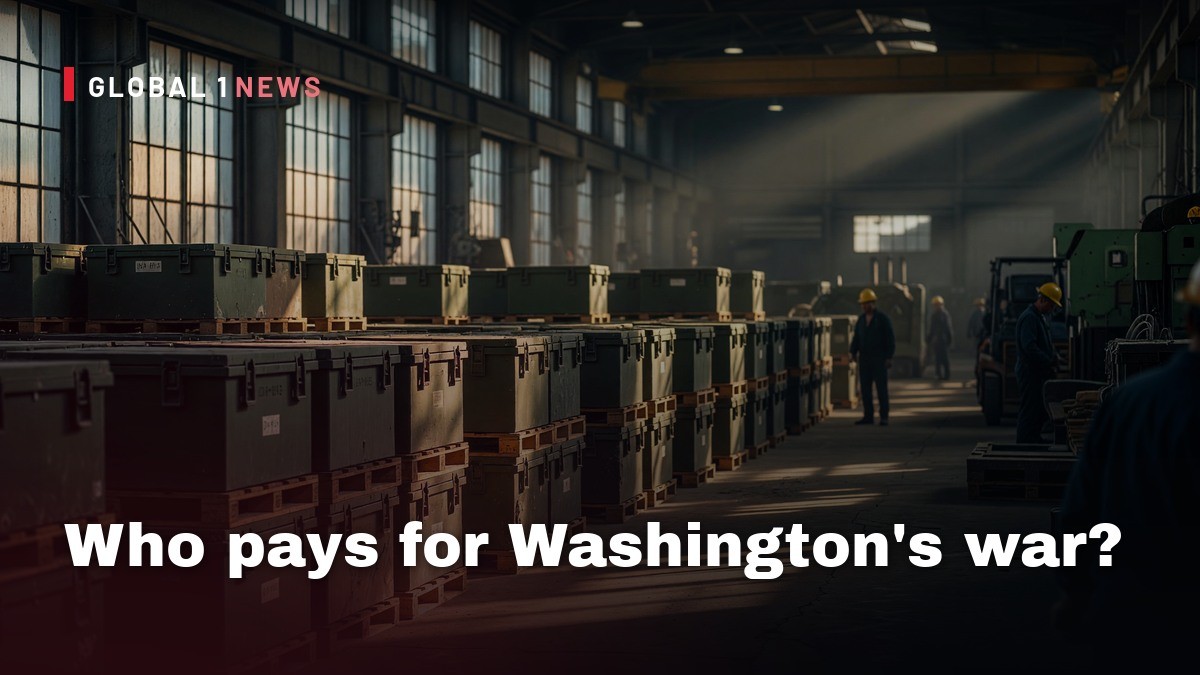
As the United States presses its military campaign against Iran, the financial toll is spilling over far beyond the Pentagon’s budget sheets. German Chancellor Friedrich Merz’s recent declaration that soaring energy prices have cost Europe more than €100 billion in just eight months has turned the war into a trans‑Atlantic accounting problem, exposing the hidden expenses that ordinary citizens and allied governments are forced to shoulder. The figures released by U.S. military officials and independent analysts reveal a war that is less an investment in security than a massive repair bill, with consequences that reverberate across households, European capitals, and Gulf states.
Direct military spending: the $47.1 billion tally
The Pentagon’s own unclassified estimate, sent to Congress by CENTCOM, shows that by mid‑October the direct cost of the U.S. operation in Iran had already reached $47.1 billion. This sum, however, tells only part of the story. Nearly $30 billion of the amount is not new capability but replacement costs – the price of munitions fired, interceptors expended and equipment rendered scrap. In other words, the United States is paying to rebuild what the conflict has already consumed, a pattern that underscores the war’s character as a repair bill rather than a strategic investment.
Beyond the $47.1 billion, the CENTCOM figure omits the expense of reconstructing American bases and facilities throughout the region. Satellite analysis identified 274 damaged structures at 24 sites during the first six months of fighting, with repair estimates ranging from $5 billion to $15 billion. Moreover, more than 115 drone and missile strikes hit structures at 26 bases by August, targeting radar arrays, air‑defence batteries, hangars and fuel depots – the very infrastructure that sustains U.S. power projection. These reconstruction costs have not yet been added to the public tally, meaning the true fiscal burden is larger still.
Monthly operating costs and the risk of escalation
The Congressional Budget Office has projected that continued operations cost roughly $2 billion a month when fighting is limited, rising to $3 billion if the intensity returns to July‑level levels. These estimates sit on top of the regular costs of maintaining forces already accounted for in the defense budget. Each new round of strikes adds to a cumulative total that remains incompletely counted, creating a fiscal treadmill that expands with every escalation.
What makes this treadmill especially troubling is the lack of a clear political end‑state. The war’s architects originally predicted a short, sharp operation, yet eight months later the bill has grown by more than 25 percent over the Pentagon’s July estimate. With the U.S. midterm elections only days away, the administration is already preparing for possible renewed strikes, meaning the monthly cost stream could continue unabated while political leaders grapple with an ever‑expanding balance sheet.
Europe’s energy shock and political backlash
Merz’s €100 billion figure is not a request for reimbursement but a stark indictment of a decision‑making process that treated allied consultation as optional. European leaders have echoed his concerns. European Council President António Costa warned that Washington has become an “unpredictable ally,” while Spanish Prime Minister Pedro Sánchez cited similar energy‑cost estimates and called for an end to the fighting. These statements are not anti‑American; they reflect a growing realization that the alliance leash runs both ways, and that protection comes with exposure.
The energy price surge has translated into tangible household burdens across Europe. An analysis of eight competitive states found that electricity and gasoline expenses rose by 13 to 17 percent in the first seven months of the year, adding roughly $42 to $62 a month to average household costs. Gasoline alone climbed by 19 to 23 percent. While grid expansion and demand also play roles, the disruption to energy routes and global market instability caused by the war have compounded the pressure on European consumers, turning abstract geopolitical calculations into daily financial strain.
Gulf states’ reluctant accommodation
Even traditional U.S. partners in the Gulf are feeling the strain. Saudi Arabia, the United Arab Emirates and Qatar have reportedly refused to allow their territory or airspace to be used for strikes on Iran, and are working through diplomatic channels to prevent a new round of fighting. For decades, hosting American forces was seen as a security guarantee; in a regional war, however, those bases have become targeting criteria, turning allies into potential liabilities.
This shift does not signal a rupture with Washington but a hedging strategy born of the realization that the alliance leash can drag Gulf states into a conflict they neither chose nor can control. Their diplomatic maneuvering aims to protect national interests while preserving the broader security partnership, a delicate balance that underscores the war’s widening ripple effects.
The domestic cost to American households
Back in the United States, the war’s financial imprint is also appearing on household bills. While the source material does not provide precise American figures, the broader pattern of rising energy costs in Europe suggests a parallel impact on U.S. consumers, especially as global oil markets react to instability in the Strait of Hormuz. The war’s indirect costs—higher fuel prices, increased insurance premiums for shipping and potential inflationary pressures—are likely to be felt by ordinary Americans, adding another layer of public scrutiny to the conflict.
The political calculus is shifting as voters confront a war whose costs are diffuse, delayed and only partially disclosed. The midterm elections, occurring just three days after the latest cost disclosures, serve as a “blunt instrument for auditing a war.” While citizens can punish incumbents at the ballot box, they cannot itemize the bill, leaving a gap between democratic accountability and the opaque financial mechanisms that sustain the campaign.
Congressional demands and the quest for transparency
Facing mounting pressure, the administration will soon be required to justify the war’s achievements before seeking another supplemental appropriation. Congress is expected to demand a full accounting of base damage, weapons shortfalls and the industrial timeline for replenishment. Allies will also press for credible assurances that future decisions of this magnitude will not arrive as a fait accompli.
Both sets of demands are reasonable, yet the likelihood of fully satisfying them is low. The Pentagon has spent months trying to keep many line items off the books, and the very nature of the conflict—fought without allied consent, financed without transparent accounting and sustained without a clear political end‑state—means that many costs will remain hidden or contested. The structural dilemma persists: a war that generates a bill outlasting the fighting itself.
What the growing ledger means for the future
The €100 billion cost to Europe is not a one‑time charge; it is a down‑payment on a longer season of energy insecurity and alliance distrust. Similarly, the $47.1 billion reported by Washington represents only the minimum, with additional reconstruction and monthly operating costs set to push the total higher. As the war drags on, the invoice is already in the mail, and the question is no longer whether it will be paid, but who will be left holding it when the next round of strikes is ordered.
For the people of the region, the human cost remains the most pressing metric. Every damaged base, every intercepted missile and every rising electricity bill reflects a deeper erosion of stability and security. The international‑law dimension is equally stark: the war proceeds without a clear mandate from the United Nations Security Council, raising questions about the legality of unilateral force. As the fiscal and human burdens mount, the imperative for transparent, accountable decision‑making becomes ever more urgent, lest the price of war be shouldered by those who never consented to it.
This article was produced with AI-assisted research and editorial support. Reporting is based on the source material cited below. Sources: Middle East Monitor; middleeastmonitor.com; Global1.News (04 November 2026).
By Fatima Al-Rashid, Staff Writer
What's Your Reaction?
 Like
0
 Dislike
0
 Love
0
 Funny
0
 Wow
0
 Sad
0
 Angry
0

Gulf/MENA Correspondent at Global1.News. Based in Doha, covering Gulf politics, energy markets, diplomacy, and development across the Middle East and North Africa. Tracks the economic transformation of the Gulf states.









Comments (0)