
Week 5 of Sara Duterte Trial: COA Auditor Details P612.5M Fund Use
The ANC 24/7 video recap of Week 5 captured state auditor Roderick Wamil walking senator-judges through the exact paperwork gaps in the Office of the Vice President's PHP500 million confidential fund liquidation and the Department of Education's PHP112.5 million share. The testimony, delivered inside the Senate building in Pasay City, laid bare how the combined PHP612.5 million was spent and documented. Filipino taxpayers watching the broadcast saw their money traced line...
The ANC 24/7 video recap of Week 5 captured state auditor Roderick Wamil walking senator-judges through the exact paperwork gaps in the Office of the Vice President's PHP500 million confidential fund liquidation and the Department of Education's PHP112.5 million share. The testimony, delivered inside the Senate building in Pasay City, laid bare how the combined PHP612.5 million was spent and documented. Filipino taxpayers watching the broadcast saw their money traced line by line.

The Money Trail: PHP612.5 Million in Confidential Funds
The Office of the Vice President received PHP500 million while the Department of Education received PHP112.5 million under the same confidential fund allocation. Joint Circular 2015-01 governs these amounts and requires agencies to list specific intelligence or surveillance activities in their physical and financial plans before any cash advance is released. Confidential funds exist solely for intelligence gathering, not for medicines, furniture, or travel incentives.
In the Philippine budget process, confidential funds are carved out as a distinct line item precisely because they support operations that cannot be disclosed publicly. The split between the Office of the Vice President and the Department of Education shows how these allocations can be distributed across agencies with very different mandates, yet still fall under one set of spending rules. When the Commission on Audit examined whether the Office of the Vice President followed those rules when it liquidated the PHP500 million, auditors checked the December 2022 plan, the December 20 disbursement voucher, and the liquidation report that covered only the final eleven days of the year. No documents showed completed intelligence operations or surveillance results that justified the expenditures.
Week 5 Shifts to COA Evidence at the Senate
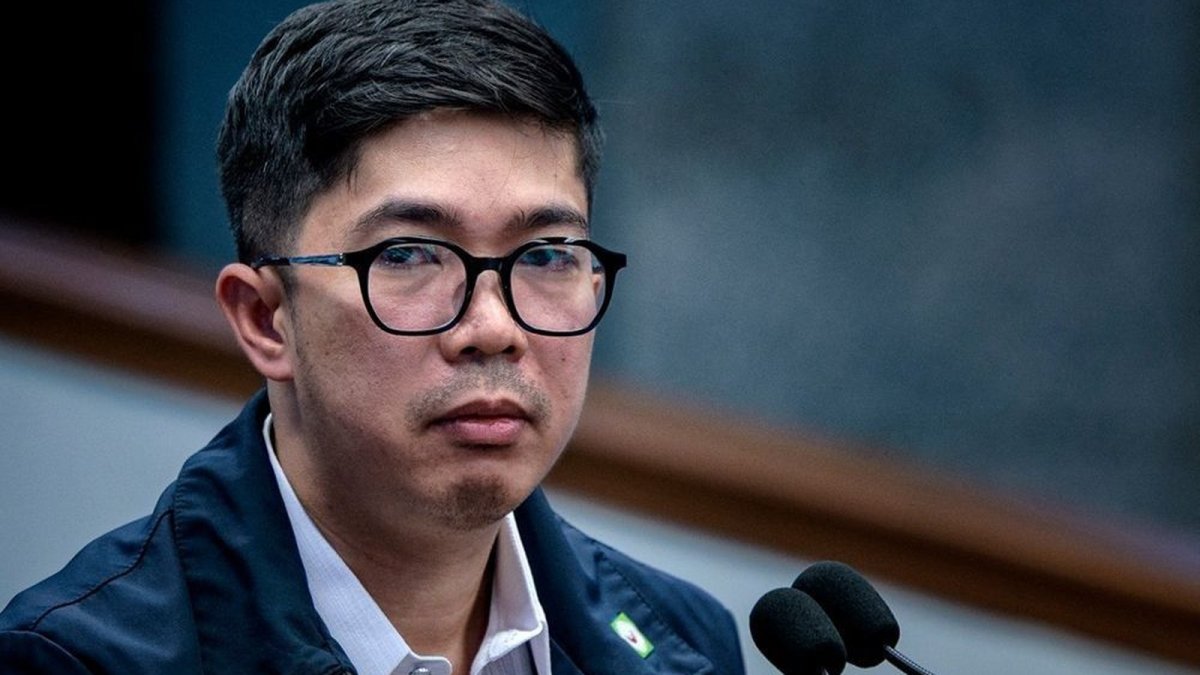
The trial, held at the Senate building in Pasay City and presided over by Senate President Francis Escudero, covered Days 11 through 13 from August 3 to 5, 2026. Wamil, former auditor at COA's Intelligence and Confidential Funds Audit Office, served as the prosecution's third witness on Article I, which charges misuse of the funds.
Duterte is the first Philippine public official impeached twice by the House of Representatives, and the proceedings that began on July 6 have moved in phases: first, bank managers detailed the withdrawal patterns behind the PHP612.5 million; now, the audit phase is testing whether the paper trail could justify how the money was actually spent. The shift matters because the prosecution's Article I case does not rest on a single smoking gun. It rests on the accumulation of documentation gaps, unreported activities, and expenditures that the joint circular does not allow.
Day 11 Testimony Flags OVP Violations
On August 3, Wamil testified that the OVP did not comply with Joint Circular 2015-01 when liquidating PHP500 million. He noted the December 2022 physical and financial plan lacked specific confidential activities required under item 4.2. A December 20, 2022 disbursement voucher listed the cash advance for calendar year 2022, yet the liquidation report covered only December 21-31. No documents showed successful information gathering or surveillance results.
Wamil flagged PHP70,000 in medicine given as a reward to a recipient listed as Mary Grace Piattos. He also cited PHP40 million in medical and food aid, PHP10 million in incentives and travel, and furniture bought without official receipts, none of which qualify as allowable confidential fund uses under the joint circular.
The pattern Wamil described is one that auditors say they rarely see in a single agency: a confidential fund liquidation built almost entirely on acknowledgment receipts, with expenditures that straddle the line between intelligence work and welfare assistance. Under the rules, paying an informant may be documented with an acknowledgment receipt, but purchasing supplies or extending aid requires official receipts and a direct connection to an authorized confidential activity. When those distinctions blur, the audit trail itself becomes the issue at trial.
Day 12 Cross-Examination ("Don't Answer, Huy")
On August 4, defense lawyer Michael Poa asked Wamil if any evidence showed even one centavo of the funds went to personal use. Private prosecutor Atty. Lorna Kapunan objected, stating the question had been asked and answered. When Wamil did not reply directly, Escudero rephrased the question. The defense also suggested no rule prevents spending confidential funds within 11 days.
845 Acknowledgment Receipts Examined on Day 13
On August 5, Wamil told senator-judges that the OVP submitted 845 acknowledgment receipts for its PHP125 million fourth-quarter 2022 expenditures. He said this marked the first time he saw an agency rely entirely on such receipts. PHP75 million of that amount drew COA observations or requests for more documents via notice of suspension.
Senator Sherwin Gatchalian asked whether auditors validated the names on the receipts. Wamil replied that validation fell outside the compliance audit scope. Senator Risa Hontiveros questioned the listing of medicines as rewards for informants. Wamil stated this practice was not normal and that the OVP was the first agency where he encountered it. COA could not confirm whether the rewards reached actual informants or produced usable intelligence.
What the Rules Actually Require
Escudero walked Wamil through Item 8.3 of the joint circular. An audit observation memorandum alone does not prove failure to liquidate. Failure arises at the notice of suspension stage, and restitution follows a notice of disallowance. A COA finding becomes final only after a commission proper decision. A Supreme Court challenge does not suspend the duty to return funds unless the court issues a temporary restraining order.
Senator Imee Marcos disputed the accountability reading, noting the joint circular uses "or" between agency head and designated officer and that Duterte was not listed as payee on the vouchers. Wamil maintained that the agency head remains responsible once COA issues a notice of suspension or disallowance, regardless of who signed the voucher.
Reactions and Defense Arguments
The defense floated the 11-day spending point during cross-examination and accepted some documents while refusing to stipulate on at least eight other items, including certain notices of disallowance and OVP letters. Senator-judges allied with Duterte pressed Wamil on whether any personal use had been proven, shifting focus from documentation gaps to the absence of direct evidence of misuse.
These exchanges revealed the political dynamics inside the Senate chamber, where allies of the Vice President used procedural objections to limit the record. The prosecution maintained that the joint circular violations themselves constituted the core charge under Article I.
For observers, the defense strategy has been consistent since the trial opened: argue that the confidential fund rules are being read too strictly, that the spending was authorized under the broad discretion given to the Office of the Vice President, and that documentation gaps are administrative lapses rather than proof of criminal misuse. The prosecution counters that the rules exist precisely to prevent exactly this kind of ambiguity, and that when an agency cannot show what its intelligence money bought, the public is entitled to answers. That clash of interpretations, more than any single receipt, is what the Senate court will have to weigh.
Why This Matters for Filipino Taxpayers
Confidential funds come from taxes paid by families in barangays across Manila, Cebu, and Davao. Proper liquidation under Joint Circular 2015-01 ensures that money reaches actual intelligence work rather than unverified rewards or unallowed purchases. When agencies skip required documentation, ordinary citizens lose the ability to verify that public resources serve national security instead of other purposes.
At the barangay level, liquidation is not an abstract accounting step. It is the moment when a community can see whether a peso spent on confidential activities produced the intended result or simply disappeared into unverified receipts. The principle of bayanihan demands that government officials practice pananagutan with every peso. When COA issues notices of suspension or disallowance, the process protects taxpayers by requiring restitution if funds cannot be justified. Weak compliance erodes trust in institutions such as the Commission on Audit and the Senate itself, because citizens begin to doubt whether the system can still hold anyone accountable once the money leaves the national treasury.
What to Watch For
BDO Unibank and Security Bank asked for 10 more banking days, until August 13, to deliver subpoenaed records on accounts held by Duterte, her husband Mans Carpio, and the firms Gen. Corp. Industries and Kalye 88 Foods Corp. After Wamil finished, the prosecution called COA auditor Xylene Del Campo as its fourth witness on Article I. The defense accepted some notices of disallowance and OVP letters but declined to stipulate on at least eight other documents. The Supreme Court ruling on the House impeachment process and upcoming rulings on document admissibility will shape how much evidence reaches the full Senate record.
The August 13 bank deadline carries weight because the records could either close gaps in the existing audit trail or open new lines of inquiry that the current testimony has only hinted at. Once those documents arrive, the Senate will have a clearer picture of whether the pattern of documentation shortfalls extends beyond the Office of the Vice President's own ledgers. The trial trajectory now points toward a verdict once bank documents arrive and remaining witnesses complete their testimony, yet the pace will depend on how quickly the banks comply and how the senator-judges rule on the remaining evidentiary disputes.
The coming weeks will test whether the Senate can convert detailed audit findings into a clear record that either restores or further damages public confidence in how confidential funds are spent. For communities that rely on the principle that every government peso serves a stated purpose, the outcome will signal whether accountability mechanisms still function when large sums move quickly and with limited paperwork. The stakes extend beyond any single agency to the broader expectation that public officials answer for the resources entrusted to them.
By Bella Reyes, Staff WriterThis article was produced with AI-assisted research and editorial support. Reporting is based on sources cited in the article.
What's Your Reaction?
 Like
0
Like
0
 Dislike
0
Dislike
0
 Love
0
Love
0
 Funny
0
Funny
0
 Wow
0
Wow
0
 Sad
0
Sad
0
 Angry
0
Angry
0

Philippines/Southeast Asia Correspondent at Global1.News. Manila-based journalist covering Philippine politics, environment, maritime security, and social issues. Passionate about marine conservation and the communities protecting the Philippines' natural heritage.














Comments (0)