
Was the Iran War Worth It? Five Months In, Washington's Reckoning
The 2026 US-Iran war has now stretched into its fifth month, testing the original promise of a short campaign against the realities of depleted munitions, disrupted energy routes and shifting alliances across the Middle East. Great power competition with Russia and China, Gulf diversification goals and the need for stable energy markets frame the central question raised by former Clinton speechwriter David Kusnet: why did the United States enter this conflict and what has it achieved.
The 2026 US-Iran war has now stretched into its fifth month, testing the original promise of a short campaign against the realities of depleted munitions, disrupted energy routes and shifting alliances across the Middle East. Great power competition with Russia and China, Gulf diversification goals and the need for stable energy markets frame the central question raised by former Clinton speechwriter David Kusnet: why did the United States enter this conflict and what has it achieved.
Iran War 2026: Strategic Costs Mount as Original Aims Fade
Dubai, UAE - August 7, 2026 - The war that began on February 28 with American and Israeli airstrikes under Operation Epic Fury has now reached roughly day 160, far beyond the short timeline President Donald Trump predicted when he launched the operation jointly with Israel. Stated goals centered on nuclear rollback and regime pressure, yet the conflict has produced a temporary ceasefire in April, the assassination of Supreme Leader Ali Khamenei, the killing of Ali Larijani on March 17, and a fragile truce that continues to fray through Omani channels.
Origins of Operation Epic Fury and Early Objectives
The decision to launch surprise airstrikes on February 28 reflected a calculation that rapid military pressure could force Iranian concessions on its nuclear program without prolonged engagement. President Trump framed the operation as a decisive move to roll back enrichment capabilities and weaken regime cohesion. Israeli forces joined the initial strikes, aiming to neutralize key sites before Iran could mount a coordinated response. Iran's True Promise IV counterattacks demonstrated resilience and forced Washington to adjust expectations quickly. The original timeline assumed limited resistance and swift political outcomes, yet five months later the United States faces questions about whether those assumptions held. Regional observers note that the war's expansion into multiple theaters exposed gaps between stated aims and operational realities. Gulf capitals watched the early phase closely, concerned that any miscalculation could draw them into direct confrontation. The involvement of great power actors added another layer, as Russia and China signaled support for Iranian operations from the outset. This early phase set the stage for later diplomatic efforts that would prove equally difficult to sustain.
The February 28 launch of Operation Epic Fury rested on assessments that US and Israeli strikes could neutralize Iranian air defenses and disrupt command structures within days while advancing parallel Israeli goals of halting enrichment activities. This outlook aligned with expectations of a brief campaign that would pressure the regime without requiring extended commitments. The absence of a defined political endgame followed directly from those assumptions, leaving objectives centered on nuclear rollback exposed once initial strikes failed to produce rapid collapse.
Assassinations, Ceasefire and the Path to Islamabad
The assassination of Supreme Leader Ali Khamenei during the fighting marked a dramatic escalation that altered Iran's internal dynamics and removed a central figure from negotiations. Ali Larijani's death on March 17 further complicated command structures. A temporary ceasefire took hold on April 7, creating space for talks that produced the Islamabad Memorandum on June 17. That 14-point draft included provisions for HEU dilution, reopening of the Strait of Hormuz and a 60-day period of no-charge passage under Article 5, along with sanctions waivers signed remotely by President Trump. Implementation collapsed over vague language on strait control, leading Iranian forces to target vessels using the Omani coast without approval. The breakdown illustrated how quickly battlefield gains could be lost when diplomatic wording lacked precision. Omani mediation channels, previously used by US special envoy Steve Witkoff and Iranian Foreign Minister Abbas Araghchi in 2025 rounds in Muscat and Rome, now carry renewed weight. The episode showed that military pressure alone could not guarantee lasting agreements without clear enforcement mechanisms.
Khamenei's assassination created immediate succession uncertainty that elevated the IRGC's influence over decision processes and fragmented authority across remaining structures. This disarray complicated efforts to finalize enforcement provisions in the Islamabad Memorandum, particularly clauses addressing strait control and sanctions relief. The resulting lack of unified command contributed to the breakdown over precise wording on Hormuz access, as Iranian forces proceeded with unauthorized vessel attacks along the Omani coast.
US Munitions Shortage and Operational Limits
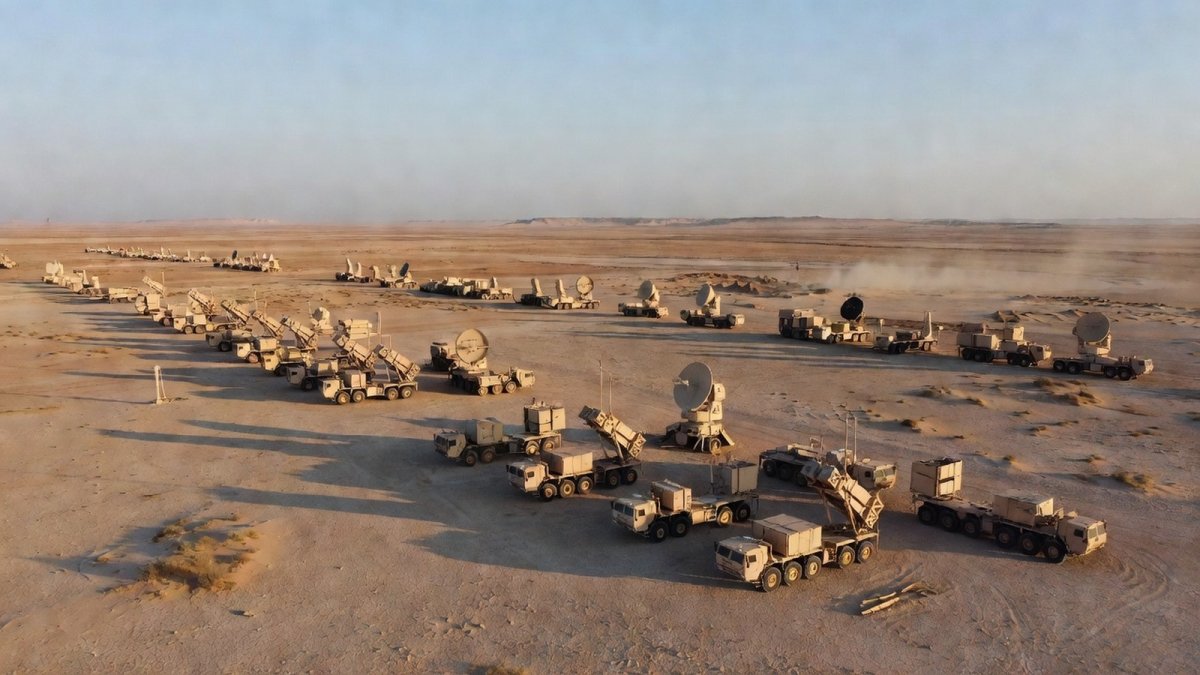
Five months of sustained operations have left US Army precision munitions nearly exhausted, particularly ATACMS and Precision Strike Missiles that each cost more than one million dollars. Stockpiles built for shorter contingencies have been virtually depleted, forcing planners to consider riskier piloted bombing missions if large-scale attacks resume. This reality directly challenges the assumption that air power could achieve objectives without significant follow-on costs. The Treasury's OFAC GL X authorized oil sales from June 21 through August 21 but was revoked on July 7, while GL X1 required wind-down by July 17 and banned new transactions. These shifting sanctions reflected the difficulty of maintaining economic leverage amid battlefield demands. Washington now confronts a situation where further escalation carries higher risks and fewer tools. Regional partners have noted the strain, recognizing that American staying power depends on replenishment timelines that extend well beyond current fighting.
US stockpiles of ATACMS and PrSM systems, each exceeding one million dollars per unit, have reached near exhaustion with production lines for successors still scaling up. Israel and Gulf partners continue drawing from the same Western reserves, extending replenishment periods into many months. These industrial constraints limit options for renewed operations and compel reliance on higher-risk piloted missions, thereby extending Tehran's room to maneuver during ongoing truce discussions.
Strait of Hormuz Disruptions and Global Energy Impact
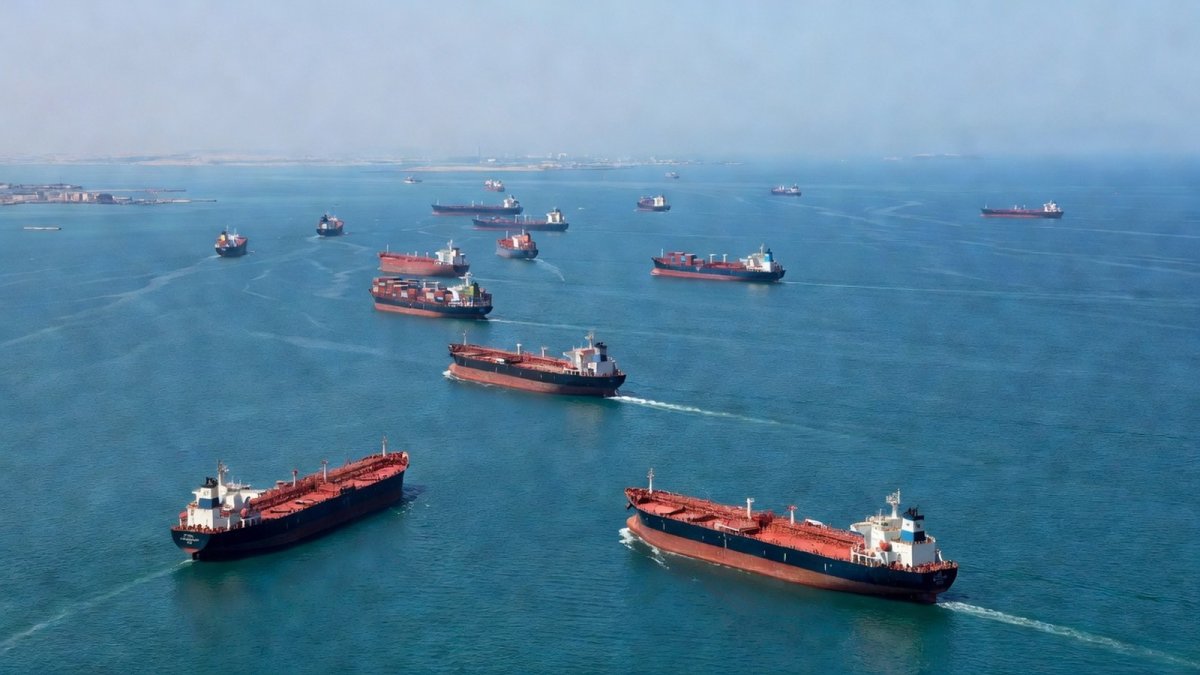
Disruptions in the Strait of Hormuz have threatened China's crude import routes and broader global energy markets, turning a regional conflict into a worldwide concern. Attacks on shipping and the collapse of the Islamabad Memorandum's passage provisions have raised insurance costs and forced rerouting. Gulf states holding roughly three trillion dollars in sovereign wealth funds face direct pressure on their diversification plans under Vision 2030 and similar programs. Energy security remains central to their economic strategies, making prolonged instability especially costly. Russia and China have supported Iranian operations, layering great power competition onto the conflict and complicating any US effort to isolate Tehran. The economic ripple effects extend to European and Asian consumers who depend on stable Gulf supplies. This dimension underscores why Gulf capitals have pursued parallel security arrangements rather than relying solely on American guarantees.
Hormuz disruptions have driven up war-risk insurance costs and forced tankers into longer routes around the Arabian Peninsula, directly affecting China's crude import pathways. Asian importers have turned to strategic reserves while Gulf producers assess output levels against OPEC+ coordination. These commercial pressures tie energy price stability to the pace of truce negotiations, as states holding roughly three trillion dollars in sovereign wealth funds balance diversification plans with immediate market responses.
Regional Expansion and Cross-Border Strikes
The war expanded beyond initial targets with a drone strike on Kuwait's Ahmad al-Jaber Air Base, strikes on Egyptian LNG vessels and missile barrages into Jordan. These incidents widened the theater and increased the number of states with direct stakes in the outcome. Jordan and Egypt, both important US partners, faced domestic pressures from the spillover. The involvement of additional fronts demonstrated Iran's ability to project force despite leadership losses and sanctions. Washington has had to manage alliances carefully to prevent further escalation while maintaining pressure on Tehran. The expansion also highlighted limits to the original strategy of containing the fight to Iranian territory. Each new incident raised the potential for miscalculation among multiple actors operating in close proximity.
Washington faces mounting escalation-management challenges as strikes expand to Kuwait's Ahmad al-Jaber Air Base, Egyptian LNG vessels, and Jordanian territory. Each additional front strains coalition cohesion and increases the chance that host nations will restrict US force access. Iran's simultaneous targeting across multiple borders raises the overall regional cost of continued involvement, complicating efforts to contain the conflict through existing diplomatic channels.
Mecca Joint Defence Agreement and Gulf Realignment
On August 7, Saudi Arabia, Turkey and Pakistan signed the Mecca Joint Defence Agreement at al-Safa Palace in Mecca, committing Crown Prince Mohammed bin Salman, President Recep Tayyip Erdogan and Prime Minister Shehbaz Sharif to treat an armed attack on one as an attack on all. The pact includes intelligence sharing, joint training and technology cooperation, creating what observers describe as an Islamic NATO forged amid direct missile and drone threats to Saudi Arabia. This development reflects Gulf states' assessment that the Iran war has exposed gaps in existing security arrangements. The agreement signals a determination to build independent capabilities while the US-Iran conflict continues. It also positions these three powers to coordinate responses to future instability without waiting for external approval. The timing, coinciding with the war's fifth month, underscores how regional actors are adapting to prolonged uncertainty.
The August 7 Mecca Joint Defence Agreement, signed by MBS, Erdogan, and Shehbaz Sharif, conveys that Gulf states no longer view US security guarantees as assured. Turkey's NATO ties provide a link to alliance structures, while Pakistan contributes nuclear status and missile capabilities for added depth. Technology cooperation provisions within the pact are positioned to speed development of shared missile defense and drone systems among the participants.
Strategic Retrospective and Forward Implications
David Kusnet's question about why the United States entered the Iran war now serves as a frame for weighing stated objectives against measurable outcomes after five months. The original aims of nuclear rollback and regime pressure have produced leadership changes and a temporary ceasefire, yet implementation failures, munitions shortages and expanded regional threats have raised the overall cost. Fragile truce talks through Omani channels continue, but the risk of renewed fighting remains high if enforcement issues persist. For Gulf states, the Mecca agreement represents a hedge that could reshape alliance patterns regardless of how the US-Iran conflict concludes. Energy markets face ongoing volatility that affects diversification timelines across the region. The war has demonstrated both the reach of American and Israeli power and the limits of sustaining operations without broader diplomatic and logistical support. Future stability will depend on whether renewed negotiations can address the gaps that caused the Islamabad Memorandum to unravel, while new regional pacts like the one signed in Mecca provide additional layers of deterrence. The coming months will test whether the conflict's costs ultimately align with its initial strategic rationale.
By Malik Hassan, Staff Writer
This article was produced with AI-assisted research and editorial support. Reporting is based on sources cited in the article.
What's Your Reaction?
 Like
0
Like
0
 Dislike
0
Dislike
0
 Love
0
Love
0
 Funny
0
Funny
0
 Wow
0
Wow
0
 Sad
0
Sad
0
 Angry
0
Angry
0

Middle East Correspondent at Global1.News. Based in Beirut, covering politics, conflict, energy, and society across the Middle East. Brings context and depth to a region often reduced to headlines.













Comments (0)