
Yemen Truce Shatters as Houthis Kill 58 Troops in Coordinated Strikes
Houthi missile and drone strikes killed at least 58 Yemeni government troops on August 6, the deadliest day in Yemen's civil war in four years. The attack shattered the 2022 truce, dragging Yemen's frozen front into the widening U.S.-Iran conflict.
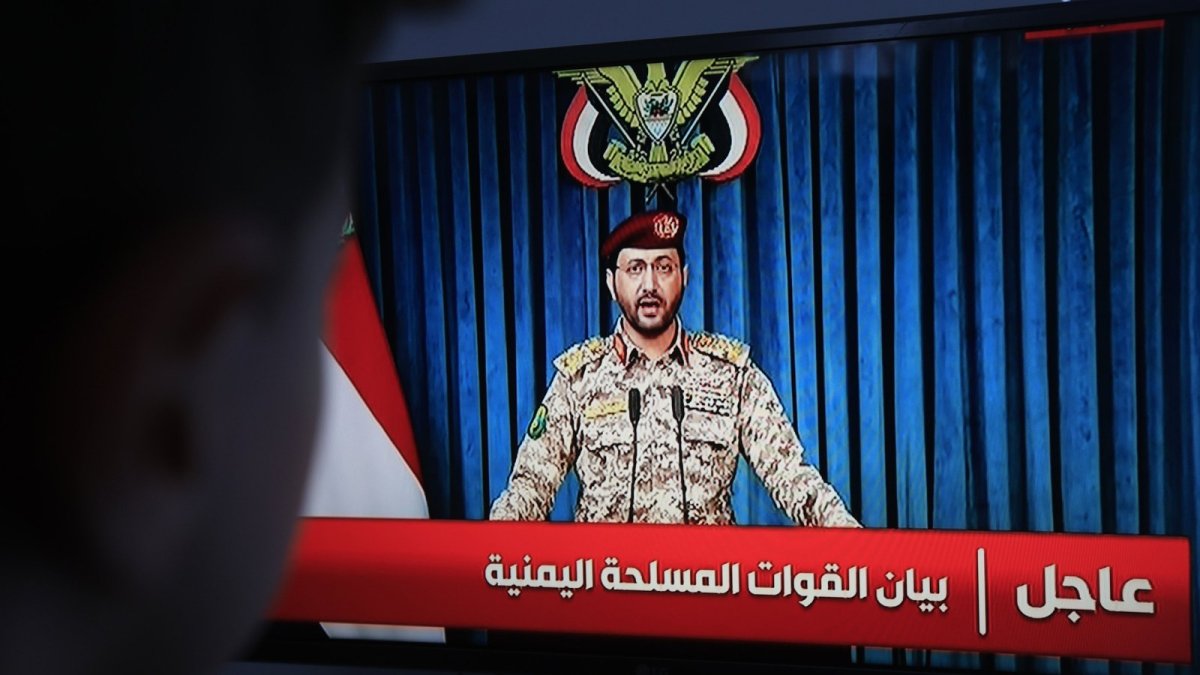
Yemen's fragile calm has shattered. Houthi missile and drone strikes killed at least 58 government troops on Thursday, the deadliest day in the country's civil war in four years — and a signal that the frozen front that held since 2022 has been pulled into the widening U.S.-Iran conflict.
Yemen Truce Shatters as Houthis Kill 58 Troops in Coordinated Strikes
Beirut, Lebanon – August 7, 2026 — Yemen's Iran-backed Houthi rebels killed at least 58 government troops in coordinated missile and drone attacks on Thursday, according to a military source, marking one of the deadliest days in the country's civil war in the past four years. The assault came as Yemen became increasingly entangled in the U.S.-Iran conflict, with the Houthis intensifying attacks on government forces and neighboring Saudi Arabia, a key U.S. ally and backer of Yemen's internationally recognized government.
The Deadliest Day in Four Years
The attacks targeted camps in Marib and Hadramawt provinces, with a missile striking troops during morning formation at a camp in the Al-Ruwaik area of Marib, killing and wounding at least 45 personnel, a military source told Agence France-Presse (AFP). Positions in Al-Abr and Al-Wadiah in Hadramawt province, near the Saudi border, were also hit. A military official, speaking on condition of anonymity, said Thursday's attacks on troop camps were Yemen's deadliest since 2022.
Houthi military spokesman Yahya Saree named Al-Ruwaik, Al-Thaniyah and Al-Abr among the targeted areas and said the rebels attacked in response to what he described as a military buildup backed by neighboring Saudi Arabia. He warned that the Houthis were "prepared to confront any escalation." Yemen's Defense Ministry said in a statement that its armed forces would respond to the attacks "at the appropriate place and time."
End of the Frozen Front
The strikes ended the informal truce that had largely held since a U.N.-brokered ceasefire took effect in 2022. Although that agreement formally expired, both sides had mostly observed it — until last month, when the Houthis abandoned restraint after receiving an Iranian aircraft in the capital, Sanaa, and facing Saudi-backed government strikes on ports and Sanaa airport. In mid-July, the Houthis struck Abha International Airport in southern Saudi Arabia in a direct exchange over the blocked Iranian flight.
On July 20, the rebels announced a maritime embargo on Saudi Arabia, threatening Red Sea shipping, and began targeting Saudi tankers and energy infrastructure. Last month they killed 16 troops in an attack on government-aligned forces south of the port city of Hodeida, two medical officials told AFP. This shift turns Yemen from a contained civil war into an active second front in the U.S.-Iran conflict that erupted on February 28, 2026, after U.S.-Israeli airstrikes killed several Iranian officials, including Supreme Leader Ali Khamenei.
Houthis as Iran's Red Sea Proxy
The Houthis function as Tehran's most effective maritime proxy, extending Iran's reach over critical shipping corridors without requiring direct Iranian naval deployments. Their actions target the Bab el-Mandeb chokepoint that carries a substantial share of global energy transit, raising insurance and rerouting costs that ripple through economies dependent on Red Sea access.
Saree framed Thursday's attacks as retaliation for a Saudi-backed military buildup, mirroring the language the rebels have used to justify the maritime campaign against Saudi ports since late July. The pattern is consistent: territorial depth in the north supports operations that outlast short-term coalition countermeasures, and the Houthis' control of Sanaa and much of northern Yemen gives them a base from which to sustain pressure on both the government and the kingdom.
Saudi Security Calculus Under Pressure
Saudi Arabia has led a military coalition backing Yemen's government against the Houthis since 2015, and Thursday's escalation spilled across its southern border. Houthi attacks wounded 11 civilians in the Najran region — seven Saudis, one Yemeni, two Egyptians and one Pakistani, according to coalition spokesman Maj. Gen. Turki al-Malki, in a statement carried by the state-run Saudi Press Agency. Al-Malki accused the rebels of "indiscriminate shelling against civilian objects" and said coalition forces would continue taking measures to protect civilians.
Riyadh now faces simultaneous pressure on its southern border, Red Sea shipping lanes, and the energy exports and investor confidence on which Vision 2030 diversification projects depend. The kingdom has spent years trying to extricate itself from the Yemen quagmire while normalizing relations with Tehran; instead, the Iran war has dragged the Houthi front back to the center of its security calculus. The war, now in its sixth month, has also pushed crude prices higher, adding an economic dimension to Riyadh's strategic exposure.
The kingdom has already signaled a harder line. When the Houthis declared their maritime embargo in late July, the Saudi-led coalition said it would respond with force to any threats against shipping, and al-Malki's latest statement reaffirmed that coalition forces would continue taking measures to protect civilians. The Najran casualties, however, illustrate the difficulty of shielding border communities from missile and drone fire that has repeatedly slipped through in recent weeks.
Impact on Regional Peace Efforts
The escalation undermines any near-term diplomatic track in Yemen. Direct talks between Riyadh and the Houthis have stalled, and the rebels' territorial depth in the north is leverage that coalition airstrikes have failed to eliminate. With the U.S.-Iran confrontation absorbing the region's diplomatic bandwidth, Saudi Arabia's room to maneuver is limited, and the government's vow to respond "at the appropriate place and time" carries the risk of a cycle of retaliation.
For the United Nations and regional mediators, the collapse of the 2022 truce framework leaves few instruments short of renewed shuttle diplomacy — which the wider war makes hard to sustain. The humanitarian stakes are severe: a conflict that has already killed hundreds of thousands and triggered one of the world's worst humanitarian crises, with millions displaced and basic services disrupted, risks further deterioration as fighting widens beyond its previous frozen lines.
Broader Strategic Implications
The renewed fighting deepens Sunni-Shia geopolitical competition and complicates Arab-Israeli normalization under the Abraham Accords, whose logic assumes a de-escalating region. Turkey and Qatar may seek mediation roles, yet neither holds decisive influence over Houthi decision-making, which remains closely aligned with Tehran's wartime priorities.
For global energy markets already strained by OPEC+ diplomacy and the U.S.-Iran confrontation, the Red Sea theater adds another layer of risk premium. The U.N. Food and Agriculture Organization reported on Friday that world food prices rose in July to their highest in more than three years, citing war escalation in the Gulf and Black Sea alongside adverse weather — a reminder that disruptions near the Bab el-Mandeb strait carry costs far beyond the region's borders. And for the people of Yemen, the unravelling of the truce means a return to the grinding violence that defined the decade before 2022 — with the added danger that this time, the front is no longer isolated from the wider regional war.
By Malik Hassan, Staff Writer
This article was produced with AI-assisted research and editorial support. Reporting is based on sources cited in the article.
What's Your Reaction?
 Like
0
Like
0
 Dislike
0
Dislike
0
 Love
0
Love
0
 Funny
0
Funny
0
 Wow
0
Wow
0
 Sad
0
Sad
0
 Angry
0
Angry
0

Middle East Correspondent at Global1.News. Based in Beirut, covering politics, conflict, energy, and society across the Middle East. Brings context and depth to a region often reduced to headlines.











Comments (0)