
Don’t target all students for possible OSAP misuse at a few schools, association says
Ontario’s student financial aid system is at the centre of a heated debate that pits the provincial government against the province’s own career‑college sector.
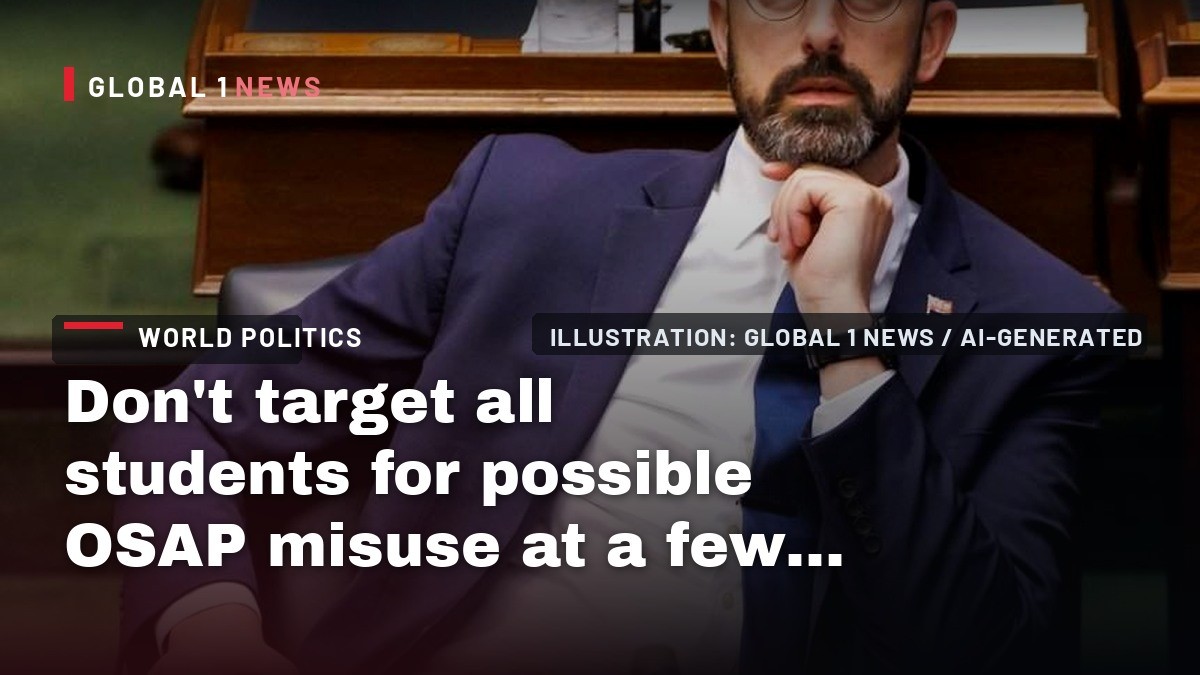
Ontario’s student financial aid system is at the centre of a heated debate that pits the provincial government against the province’s own career‑college sector. On Tuesday, Colleges and Universities Minister Nolan Quinn announced a province‑wide pause on Ontario Student Assistance Program (OSAP) payments for students attending private career colleges, citing concerns about possible criminal activity at a handful of institutions. The move follows an audit that revealed a sharp concentration of OSAP funds at a small group of schools, prompting the government to propose new legislation that would bar online‑only programs at private career colleges from receiving OSAP support. The announcement has sparked a swift response from Career Colleges Ontario, which warns that the blanket suspension threatens the education of thousands of students who are complying with the rules.
Government’s rationale for the pause
Minister Quinn framed the decision as a precautionary measure while an audit investigates alleged misuse of OSAP funds. He described the activity as “possible criminal activity” at some career colleges, suggesting that the integrity of the public‑funded assistance program is at risk. The minister also signalled forthcoming legislation that would make online‑only programs at private career colleges ineligible for OSAP, a policy shift that builds on the province’s earlier pandemic‑era changes.
During the COVID‑19 pandemic, the Ford government temporarily extended OSAP eligibility to online‑only career‑college programs to accommodate students unable to attend in person. That temporary measure was later made permanent, a decision that now faces scrutiny as the audit shows a disproportionate flow of funds to a limited number of institutions.
Audit findings that triggered the response
Data obtained by The Canadian Press through a freedom‑of‑information request revealed that, shortly after online‑only programs became OSAP‑eligible, usage of the program at a small number of career colleges surged dramatically. The audit highlights that just seven career colleges received an amount of OSAP funding comparable to the total allocated to all publicly funded colleges in the province. This concentration of funds raised red flags for the Ministry, prompting the decision to pause payments while the investigation proceeds.
The findings underscore a broader concern about the oversight of private post‑secondary institutions that receive public money. While the audit does not name the schools involved, the scale of the funding concentration suggests that the issue is not isolated but rather indicative of systemic vulnerabilities in how OSAP eligibility is applied to private career‑college programmes.
Impact on students currently enrolled
For the roughly 30,000 students enrolled in career colleges across Ontario, the pause in OSAP payments creates immediate financial uncertainty. Many of these learners rely on the assistance to cover tuition, textbooks and living costs, especially as the province grapples with a high cost of living and housing affordability challenges. The suspension, even if temporary, threatens to disrupt their studies and could force some to withdraw or seek alternative, potentially more expensive, education pathways.
Career Colleges Ontario stresses that the students affected by the pause are those who have already been approved for funds and are actively attending in‑person classes. The association argues that these learners have complied with the rules and should not be penalised for the alleged misconduct of a few institutions. It calls for a more targeted approach that addresses the specific schools under investigation rather than a blanket suspension that harms compliant students.
Career Colleges Ontario’s call for targeted action
Since 2023, Career Colleges Ontario has warned the government about potential misuse of OSAP at career colleges. The association now urges the province to reinstate financial aid for students who were already approved and are attending classes, while directing enforcement efforts at the schools flagged by the audit. It contends that a focused response would protect the integrity of the OSAP programme without disrupting the education of law‑abiding students.
The group also points out that the career‑college sector plays a vital role in Ontario’s labour market, providing training for high‑growth fields such as health‑care support, information technology and skilled trades. By ensuring that eligible students can continue receiving aid, the sector can maintain its contribution to the province’s economic recovery and address skill shortages that are already affecting many Canadian workplaces.
Political context and provincial policy shifts
The decision to pause OSAP payments and propose new legislation arrives against a backdrop of ongoing tension between the Ford government and post‑secondary stakeholders. Premier Doug Ford’s administration has repeatedly positioned itself as a fiscal watchdog, scrutinising public spending programmes and seeking to tighten eligibility criteria for student aid. The move to bar online‑only career‑college programmes from OSAP aligns with this broader agenda of tightening fiscal controls.
However, critics argue that such policy shifts risk undermining access to education for students from lower‑income backgrounds, particularly in a province where the cost of living continues to rise. The balance between safeguarding public funds and preserving equitable access to post‑secondary training remains a contentious point in Ontario’s political discourse.
Potential ramifications for the private career‑college sector
If the proposed legislation passes, private career colleges that rely heavily on online delivery models could face a significant reduction in enrolments. Many institutions expanded their online offerings during the pandemic to meet demand and to accommodate students in remote or underserved regions. Excluding these programmes from OSAP eligibility could force schools to redesign curricula, increase tuition fees or cut services, thereby reshaping the sector’s landscape.
Moreover, the sector may see increased regulatory scrutiny as the government seeks to prevent future misuse of public funds. Enhanced reporting requirements, stricter eligibility checks and more frequent audits could become standard practice, adding administrative burdens to colleges already navigating a competitive education market.
Looking ahead: what students and institutions can expect
In the short term, students awaiting OSAP disbursements for career‑college programmes will likely experience delays as the Ministry finalises its audit and determines the scope of any targeted actions. Career Colleges Ontario has pledged to continue lobbying for the reinstatement of aid for compliant students, urging the government to adopt a measured response that isolates the problem schools rather than penalising the broader student body.
Long‑term, the sector may need to adapt to a new policy environment that favours in‑person delivery or requires alternative funding mechanisms for online learners. Stakeholders, including student advocacy groups, will be watching closely to ensure that any regulatory changes do not erode the accessibility of vocational training that many Canadians rely on to secure stable employment.
This article was produced with AI-assisted research and editorial support. Reporting is based on the source material cited below. Sources: Global News Canada; globalnews.ca; Global1.News (07 October 2026).
By Alex Thompson, Staff Writer
What's Your Reaction?
 Like
0
Like
0
 Dislike
0
Dislike
0
 Love
0
Love
0
 Funny
0
Funny
0
 Wow
0
Wow
0
 Sad
0
Sad
0
 Angry
0
Angry
0

Canada Correspondent at Global1.News. Based in Toronto, covering Canadian politics, energy, trade, and US-Canada relations. Provides the Canadian perspective on North American and global affairs.














Comments (0)