
Warming Himalayas: Nepal’s Climate Justice Test
In the wake of the August 26, 2026, glacier collapse in Nepal’s Langtang/Lirung region, the scale of loss has forced the nation to confront a stark question: will climate finance be framed as a matter of justice or remain a charitable gesture?
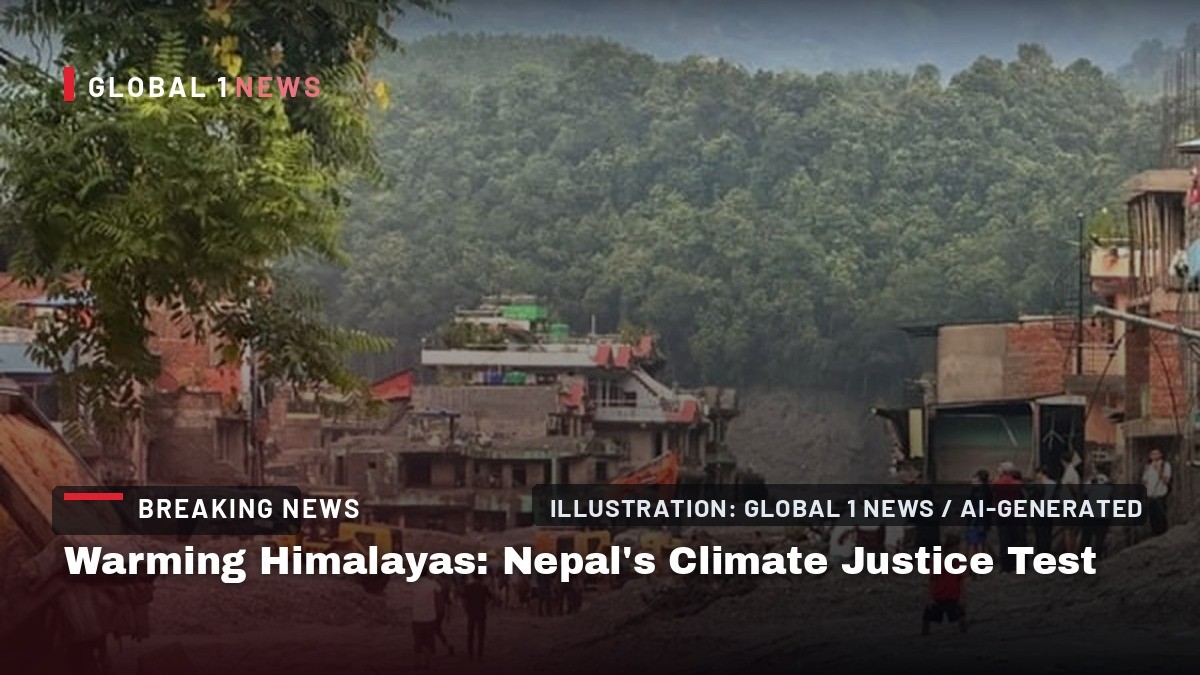
In the wake of the August 26, 2026, glacier collapse in Nepal’s Langtang/Lirung region, the scale of loss has forced the nation to confront a stark question: will climate finance be framed as a matter of justice or remain a charitable gesture? The disaster, which turned a high‑altitude rock‑ice avalanche into a devastating Himalayan tsunami, has left more than 1,451 dead, 5,786 missing and roughly 1.6 million people affected across five districts, according to the government’s situation report. The human toll is matched by a staggering economic burden, with damage assessments now exceeding $2.66 billion and reconstruction needs projected at $4.72 billion.
Immediate Impact and Humanitarian Response
The Nepali government’s emergency response has rescued 13,784 individuals and deployed security forces for ongoing rescue operations. Yet civil‑society groups have criticised delays, particularly in the rescue of people trapped in a hydropower tunnel, where the government reportedly limited access for international experts during the early phase. The criticism underscores a broader tension between rapid humanitarian action and the need for transparent, inclusive coordination.
Displaced families have been accommodated in 27 holding centres in Rasuwa, Nuwakot and Dhading, sheltering 1,743 people. The state has offered a modest stipend of $98 (15,000 rupees) per family member for those willing to stay outside the centres for four months, a measure that reflects both the urgency of relief and the limited fiscal space available for large‑scale aid.
Scale of Physical Damage
The Rapid Damage and Need Assessment (RDNA) catalogues damage to 41 motorable bridges, 3,702 private houses, roads and 12 hydropower projects. In total, 7,570 private houses, 48 public buildings, 18 schools, seven health facilities and 30 cultural heritage sites have been affected. The assessment also flags a $685 million requirement to rehabilitate the social sector, highlighting the breadth of infrastructure that must be rebuilt before normal life can resume.
While the RDNA quantifies material loss, it acknowledges that the true social cost extends beyond bricks and mortar. Children, women and senior citizens have endured severe psychosocial trauma, and already‑marginalised groups have been pushed further to the periphery. These intangible impacts, though harder to monetize, are central to the emerging debate on climate justice.
Climate Attribution and the Growing Threat
Scientists collaborating with World Weather Attribution (WWA) have identified the disaster as a “catastrophic rock‑ice avalanche that transitioned into a debris flood” along the Nepal‑China border. Their analysis links the event directly to rising temperatures in the Himalayas, noting that floods in the region have become both more frequent and more devastating in recent years. The Himalayas, often termed the “Third Pole,” serve as a critical water source for millions downstream, making the accelerating glacier melt a concern that transcends national borders.
The attribution of the flood to climate change is reshaping the discourse from one of disaster response to one of responsibility. As the scientific consensus strengthens, affected communities are increasingly framing their losses as a breach of human‑rights norms, arguing that the right to life and a sustainable environment obliges polluting nations to compensate those who have contributed little to the problem.
International Climate Finance: Justice or Charity?
Nepal has formally appealed to the UN‑established Loss and Damage Fund, seeking reparations for climate‑related impacts. The Fund’s board has indicated it may allocate up to $20 million, a sum that pales in comparison to the $4.72 billion reconstruction estimate. The disparity has fueled civil‑society demands for grants rather than concessional loans, emphasizing that climate finance should be rooted in justice rather than charity.
The World Bank has offered concessional loans, yet activists argue that loans perpetuate debt cycles for a nation already grappling with massive reconstruction costs. Youth hunger‑strike participants at Mount Manaslu’s base camp, beginning on September 18, 2026, have called for transparent assessments of future glacial‑lake outburst flood risks and for joint monitoring mechanisms with China, underscoring a desire for proactive, not reactive, solutions.
Diplomatic Mobilisation at the UN General Assembly
Prime Minister Balendra Shah is slated to raise Nepal’s plight at the 81st United Nations General Assembly in New York, while Foreign Minister Sisir Khanal will attend side events and appeal for broader international support. Their diplomatic outreach aims to position Nepal’s disaster within the larger narrative of climate‑induced loss, seeking to galvanise both financial assistance and political commitment to a regional framework for early‑warning systems.
Beyond immediate aid, Nepal’s representatives are urging the creation of a Hindu Kush Himalaya regional platform to share data, develop joint monitoring of glacial lakes, and establish institutional mechanisms for rapid response. Such a framework would address the transboundary nature of Himalayan climate risks, aligning the interests of Nepal, China and India in preserving the fragile mountain ecosystem.
Pathways to Resilient Reconstruction
Rebuilding efforts must integrate people‑centred development, according to the source material. Emphasising community‑led initiatives, respect for indigenous knowledge and resilient infrastructure can reduce future vulnerability. Investment in digital technology—such as real‑time monitoring sensors and community‑managed early‑warning networks—offers a cost‑effective avenue to enhance preparedness.
Moreover, the disaster highlights the need for infrastructure capable of withstanding harsh Himalayan conditions. International partners can contribute technical expertise, while regional cooperation can mitigate activities that degrade the mountain environment. Prioritising community reconstruction over commercial interests aligns with the call for equitable recovery, ensuring that the most affected households receive the support they need to rebuild livelihoods.
Long‑Term Implications for Climate Justice
The Nepal floods have crystallised the gap between the scale of climate‑induced loss and the modest financial mechanisms currently available. While the Loss and Damage Fund’s potential $20 million contribution offers symbolic recognition, the disparity underscores the urgency of expanding climate finance beyond token gestures.
As Nepal navigates the twin challenges of immediate recovery and future risk reduction, its experience may serve as a litmus test for the global community’s commitment to climate justice. The nation’s appeal for compensation, coupled with grassroots demands for grants, signals a shift toward viewing climate finance as a legal and moral obligation rather than discretionary aid. How the UN, donor nations and multilateral institutions respond will shape the precedent for other vulnerable small states confronting similar climate‑driven catastrophes.
This article was produced with AI-assisted research and editorial support. Reporting is based on the source material cited below. Sources: The Diplomat; thediplomat.com; Global1.News (24 September 2026).
By Kenji Tanaka, Staff Writer
What's Your Reaction?
 Like
0
Like
0
 Dislike
0
Dislike
0
 Love
0
Love
0
 Funny
0
Funny
0
 Wow
0
Wow
0
 Sad
0
Sad
0
 Angry
0
Angry
0

Japan Correspondent at Global1.News. Tokyo-based voice covering Japanese politics, technology, economy, and culture. Tracks the intersection of tradition and innovation in one of the world's most dynamic societies.













Comments (0)