
Vancouver Elects Its First Green Mayor as Pete Fry Topples Ken Sim
Pete Fry of the Green Party of Vancouver has unseated one-term incumbent Ken Sim to become the city's first Green mayor, and the first Green candidate elected to lead a major Canadian city. The count stays unofficial until the City of Vancouver declares results on 21 October.
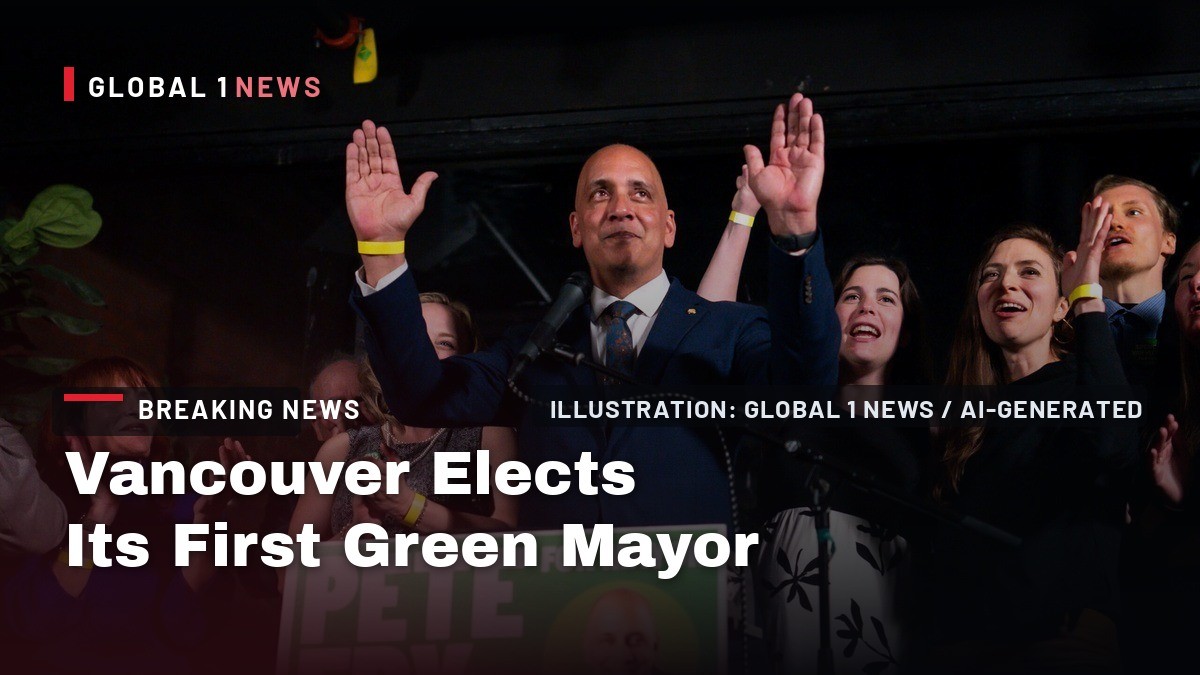
Vancouver has elected Pete Fry of the Green Party of Vancouver as its next mayor, unseating one-term incumbent Ken Sim of ABC Vancouver. Fry becomes the first Green mayor in Vancouver's history and, by the Globe and Mail's account, the first Green candidate elected to lead a major Canadian city. The count remains unofficial until the city declares results.
Vancouver Elects Its First Green Mayor as Pete Fry Topples Ken Sim
Vancouver, Canada — Vancouver voters handed the city's top job to a two-term councillor from a party that had never before run a mayoral candidate, ending Ken Sim's single term at the head of an ABC Vancouver council majority.
A City Swings Left
British Columbia held its general local elections on Saturday, 17 October 2026, with polls open from 8 a.m. to 8 p.m. PT. CBC News describes the night as 161 municipal elections across the province. Global News lists what was on the ballot: mayors, municipal councillors, regional district directors, school board trustees, park boards in Vancouver and Cultus Lake, and the Islands Trust.
In Vancouver, five established-party hopefuls ran for mayor. Sim carried the ABC Vancouver banner, Fry the Greens, Colleen Hardwick TEAM for a Livable Vancouver, Kareem Allam the Vancouver Liberals, and Rebecca Bligh Vote Vancouver. The Vancouver Sun notes seven established parties ran slates of council candidates. The Tyee lists a further new left-wing party, Bright Future, running Muhammad Ahmad.
The result is not Vancouver's first brush with Green politics. The Globe and Mail notes the city was the first major city to elect a Green candidate to council, in 2011. What changed on Saturday was the mayor's chair.
What the Numbers Said
The tallies were published at different stages of counting, and each one carries that stage with it. The Vancouver Sun, with 66 of 149 voting places reporting, had Fry on 51,922 votes and Sim on 36,787. Business in Vancouver, with 84 of 149 polls reporting late Saturday and citing the City of Vancouver's website, had Fry on 59,897 and Sim on 42,705. CityNews, with 80 per cent of polls reporting, had Fry ahead by some 23,000 votes.
The city did not release the plebiscite question results on the night. CTV News reports it is unclear whether a majority answered yes to either question, because those results were not shared on Saturday.
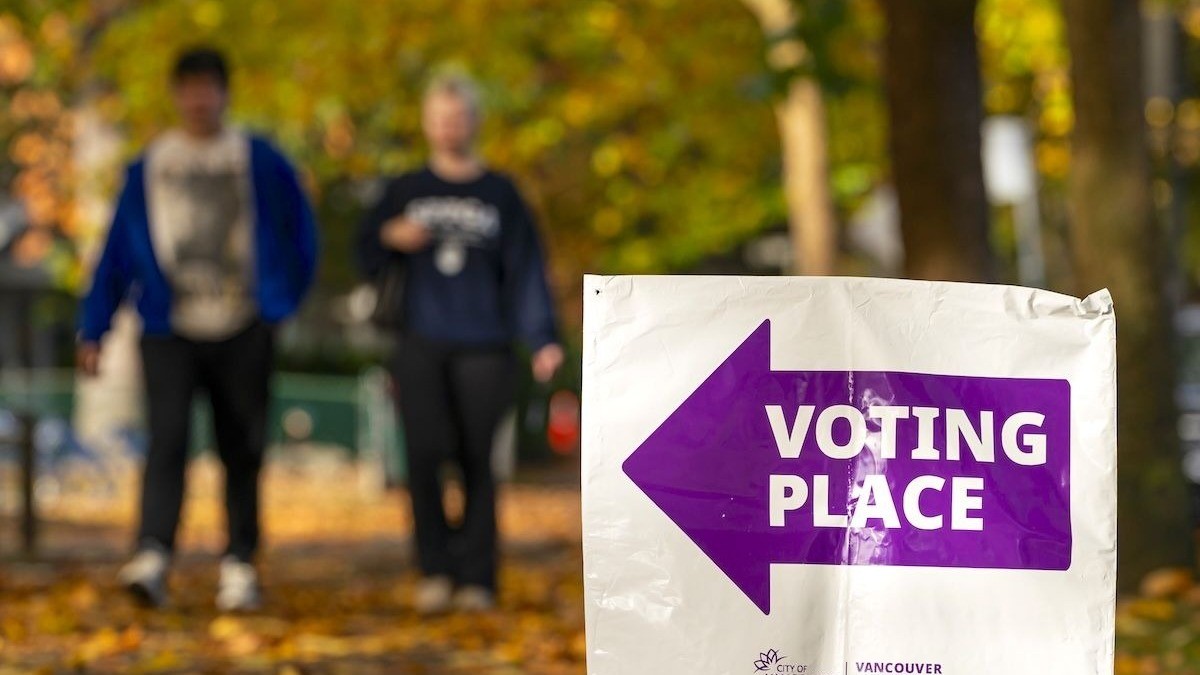
Turnout drew attention before a single result landed. More than 103,000 voters cast a ballot over four advance voting days, the city reported, a 59 per cent increase over 2022. More than 21,000 voters requested vote-by-mail packages, more than double the last election. In 2022, 171,494 ballots were cast in total, equating to 36.3 per cent of registered voters.
The Man Who Beat the Machine
Fry was first elected to Vancouver council in 2018 with the second-highest vote count and narrowly re-elected in 2022, CityNews reports. Before that he lost the 2014 municipal election and a 2016 B.C. provincial byelection in Vancouver-Mount Pleasant, running then as a member of the Green Party of British Columbia.
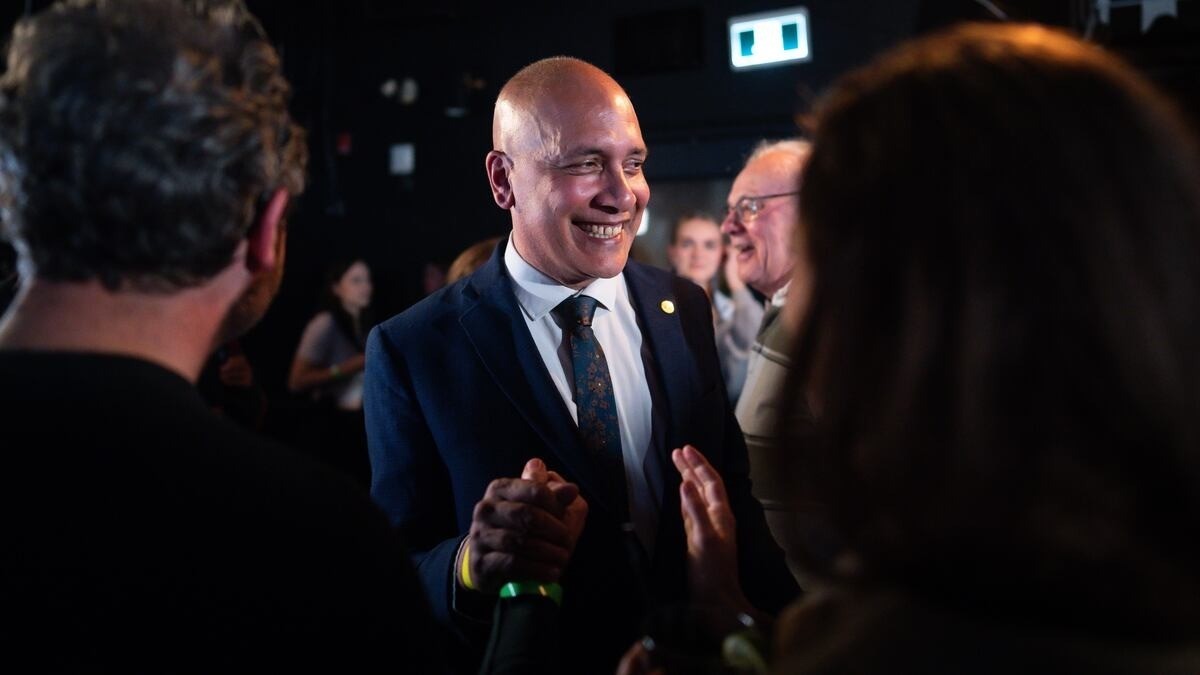
He was born in Dublin to Anglo-Trinidadian parents and moved to Vancouver at the age of two, according to the Globe and Mail. His mother is long-time Vancouver Liberal MP Hedy Fry. He studied arts and business at Simon Fraser University, ran a publishing house and a clothing import business, then moved into computer design and spent more than 30 years self-employed as a graphic artist.
He is a longtime Strathcona resident who has said he still lives in the Downtown Eastside. He says he first got involved in local politics in 2006 on a dog strategy task force, and became active in the community after a friend was killed while walking on a local street. He has said he is most proud of creating Vancouver's first renters' office, its animal welfare policies, and the ban on the sale and discharge of consumer fireworks.
An Underdog With a Small Budget
Money was lopsided. ABC Vancouver raised more than $2 million for its campaign, while Fry told Business in Vancouver the Greens were in the low triple digits.
He did not run from the long odds. In an 8 October interview with Business in Vancouver, conducted from a Chinatown pub, he said: "I'm an underdog, but I'm a good, loyal dog that has fight in him."
Business in Vancouver notes that in the Greens' relatively short history in Vancouver politics, the party had never run a mayoral candidate before this race.
How the Progressive Vote United
The progressive field narrowed well before voting day. CBC reports that William Azaroff of OneCity Vancouver and Stephanie Allen of COPE ended their mayoral campaigns to avoid splitting the vote. Azaroff said last month: "In order to get Ken Sim out, we have to unite behind a single progressive mayoral candidate."
The Vancouver Sun reports the Greens, COPE and OneCity struck a three-way agreement earlier in the year to limit the number of candidates between them. COPE's and OneCity's mayoral candidates withdrew in early September, clearing the way for Fry as a unity candidate. CTV News and CBC report he was judged the likeliest to beat Sim.
What the Greens Promised
CityNews reports the campaign themes were affordable homes and transportation, sustainable growth and building green, and community safety.
On public safety the Greens promised a team of outreach workers to handle non-emergency calls involving the city's homeless population or people with addiction, plus funding for crisis intervention and de-escalation. The party committed to safe and appropriate places for homeless people to gather and access support and health care, where drug use would be permitted. Fry said the aim was to stop people being "completely untethered or lost on our streets." He told CityNews: "So the key is for us to find somewhere better for them to go and say, 'You know what, you can't do this here in the doorway of this person's business, but you can go over there, which is a more appropriate space.'"
He called the non-binding plebiscite question on strengthening the city's health bylaw to ban open-air use of fentanyl, methamphetamine and heroin in public spaces "a very bad idea."
Other promises included using city land for affordable housing, completing the major bikeway network, renewing the Vancouver Aquatic Centre and introducing ranked ballot voting for mayoral races. In a response to the Vancouver Sun, the Greens said they would reintroduce the renters' office and create an Office of Community Safety to coordinate police, fire, community services and land use. They pledged to lift the moratorium on new supportive housing projects that Sim introduced, and to audit the Vancouver Police Department.
The Concession
Sim phoned Fry to concede around the time the 66-of-149 count was reported. Fry then gave a victory speech to supporters at the Green event in downtown Vancouver, the Vancouver Sun reports.
Sim struck a conciliatory note. He told CBC: "Contrary to what's portrayed out in the media there, we actually do like each other. We get along." He went on: "It isn't the decision we wanted but it's one we have to respect, and that's democracy. I think we all are here because we want to see what's best for the city." And: "Make no mistake about it: Pete has my unwavering support. I will help him any which way I can so he can succeed — so Vancouver can succeed."
The Globe and Mail reports Sim referred to Fry as "my mayor." CBC describes the tone as a shift from the campaign, which saw Sim release an attack ad aimed at Fry and positioning him as having to partner with COPE Coun. Sean Orr. Orr filed a lawsuit in March alleging Sim defamed him at a February event with Chinese-language media by saying the councillor distributed illegal drugs. Sim later apologized and acknowledged the remarks were untrue, while his legal filings deny they harmed Orr's reputation.
Fry, in his victory speech, said: "We've got a lot of work and a lot of exciting stuff we're going to do together." And: "I am so stoked about it."
The New Council
Business in Vancouver reports unofficial results show Fry will lead a council of three incumbents and seven rookies, including three of his Green Party colleagues.
The incumbents expected back are Sean Orr of COPE, Lucy Maloney of OneCity and Mike Klassen of ABC Vancouver. The Green colleagues leading are Annette Reilly, Stephanie Smith and Camil Dumont, with COPE's Solomon Yi-Kieran, Devyani Singh and Chloe Leslie also holding in the council race.
Business in Vancouver reports Joyce Gillespie looked to be the only other ABC member with enough votes to be re-elected, with incumbents Peter Meiszner, Lisa Dominato and Sarah Kirby-Yung following behind. Sim lost his ABC majority, and the Greens, COPE and OneCity also won all the seats on school board and park board. CityNews, with half the polls reporting, had the Greens on track for at least two city councillors and two Park Board commissioners.
Surrey Turns Back to McCallum
The biggest reversal outside Vancouver came in Surrey, where four-time former mayor Doug McCallum secured another term by defeating incumbent Brenda Locke in a rematch.
Four years ago Locke beat McCallum after public dissatisfaction at how he handled a pledge to replace the RCMP with a municipal police force. She campaigned in 2022 on keeping the RCMP, but the provincial government eventually forced the city to continue on the path to the new force. The Globe and Mail reports McCallum defeated her again on Saturday.
Change at the Margins Across British Columbia
CBC's own summary of the night was that it told "the story of change — but for the most part, measured change." Incumbent mayors fell in several major cities, and where they survived, they won by smaller margins than four years ago.
In Delta, Melissa Granum unseated George Harvie, beating former councillor Dylan Kruger in the process; Granum spent more than a decade with the Delta Police Department. In Richmond, Rob Howard won the race to replace Malcolm Brodie, who left after 25 years and endorsed him, holding off incumbent councillor Alexa Loo by 880 votes. In Kelowna, incumbent Tom Dyas was re-elected 19,451 to Ron Cannan's 18,482.
CBC projects Marianne Alto re-elected in Victoria over Bruce McGuigan for a second term, and Mike Hurley re-elected in Burnaby with almost 29,000 votes, nearly triple his nearest rival. Stew Young returned as Langford's mayor, a rematch of the election in which newcomer Scott Goodmanson had beaten him; Young had held the office since the city was incorporated in 1992. In Penticton, Dan Ashton beat incumbent Julius Bloomfield and four others, returning to a chair he held from 2008 to 2013.
CBC reports challengers also won in West Vancouver, New Westminster, Prince George, Kamloops and Fort St. John, among others. Victoria voters appear to have overwhelmingly endorsed amalgamating with nearby Saanich in a non-binding referendum, while Saanich voters appear to have rejected the same idea.
What Comes Next
The City of Vancouver declares official results on 21 October by 4 p.m., including the plebiscite results. Until that declaration, every tally stands as unofficial.
Fry is sworn in on 2 November 2026, Business in Vancouver reports, inheriting a council rebuilt around him.
Business in Vancouver notes he did what Sim himself had done to then-mayor Kennedy Stewart four years earlier: knock a sitting mayor out of office. Sim's own feat in 2022 had not been managed since Mike Harcourt beat Jack Volrich in 1980.
By Jessica Ali, Staff Writer
This article was produced with AI-assisted research and editorial support. Sources: CBC News, CTV News Vancouver, The Globe and Mail, Vancouver Sun, CityNews Vancouver, Business in Vancouver, The Tyee and the City of Vancouver.
What's Your Reaction?
 Like
0
Like
0
 Dislike
0
Dislike
0
 Love
0
Love
0
 Funny
0
Funny
0
 Wow
0
Wow
0
 Sad
0
Sad
0
 Angry
0
Angry
0

Editor-in-Chief at Global1.News. Atlanta-based journalist who cuts through the BS and tells it like it is. Lead anchor, host, and the voice you hear when the spin stops and the truth starts.









Comments (0)