
US Treasury Vows Unprecedented Economic Pressure on Iran Amid Hormuz Blockade
The Trump administration is preparing to unleash an unprecedented wave of economic sanctions against Tehran, according to Treasury Secretary Scott Bessent, signaling a dramatic escalation in the nearly six-month-old confrontation that has already closed the Strait of Hormuz to commercial shipping and sent global energy markets into turmoil.
The Trump administration is preparing to unleash an unprecedented wave of economic sanctions against Tehran, according to Treasury Secretary Scott Bessent, signaling a dramatic escalation in the nearly six-month-old confrontation that has already closed the Strait of Hormuz to commercial shipping and sent global energy markets into turmoil. The announcement marks a decisive shift toward economic warfare as the primary instrument of US policy, even as the military blockade continues to choke Iranian ports.
Washington's Economic Hammer: Bessent Vows Historic Isolation of Iran as Hormuz Blockade Enters New Phase
Washington, D.C. – August 14, 2026 — The United States is preparing to impose economic measures on Iran that Treasury Secretary Scott Bessent described as "like have never been seen in the history of economic isolation on a country," signaling a dramatic intensification of the maximum pressure campaign that has defined US policy toward Tehran for nearly a decade. The announcement, made during an interview on Newsmax's "Rob Schmitt Tonight," comes as the Strait of Hormuz remains effectively closed to commercial traffic and the Biden-era sanctions architecture gives way to a far more aggressive posture.
Unprecedented Economic Measures on the Horizon
Bessent's stark warning — that the administration will "apply measures like have never been seen in the history of economic isolation on a country" — signals a fundamental recalibration of US strategy. The Treasury Secretary outlined a dual-track approach: "a combination of economic isolation like the world has never seen before, and the continued blockade in the Strait of Hormuz that will keep anything from going in or out of the Iranian ports."
The comments, broadcast on August 13, 2026, represent the administration's most explicit acknowledgment yet that military pressure alone has failed to force Tehran's capitulation. After nearly six months of conflict, the US military campaign has not achieved its stated objectives, and Washington is now betting that suffocating economic pressure will accomplish what bombs and missiles could not. Bessent's promise of "more announcements coming next week" suggests a coordinated rollout of new sanctions targeting Iran's remaining financial lifelines.
The Treasury Secretary's tough rhetoric stands in stark contrast to his own remarks just ten days earlier. On August 4, speaking to CNBC, Bessent had suggested that an agreement with Tehran to reopen the Strait of Hormuz could be reached "within days" — comments that sent Wall Street higher and oil prices lower. The rapid shift from diplomatic optimism to maximalist threats reflects the collapse of back-channel negotiations and the hardening of positions on both sides.
The Blockade and Its Global Consequences
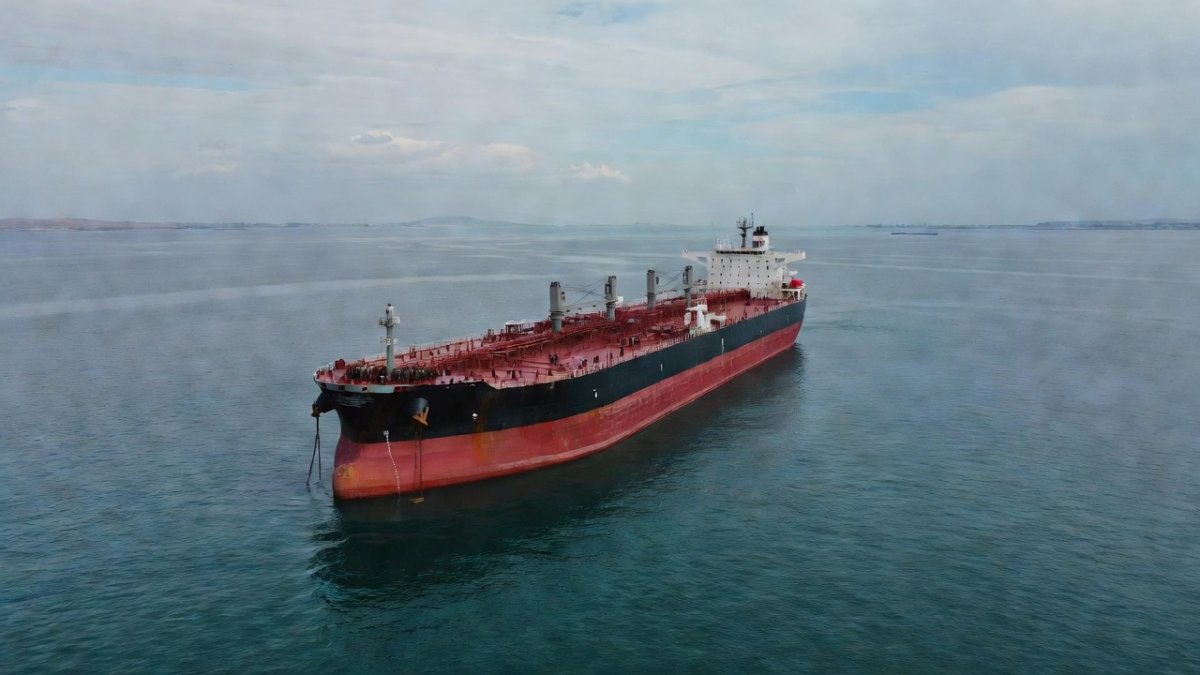
The Strait of Hormuz, through which roughly one-fifth of global oil consumption transits, has become the central battleground of this confrontation. Commercial shipping in the strait has dwindled dramatically, with only seven commodity vessels transiting on a recent Sunday — some reportedly going dark to avoid detection. The near-total halt of traffic through this critical chokepoint has sent shockwaves through global energy markets, with Brent crude touching approximately $90 per barrel in mid-August 2026, the first time in two weeks that prices have reached that level.
Defense Secretary Pete Hegseth has declared that the US can sustain its blockade against Iran "indefinitely," a statement that underscores Washington's commitment to this strategy despite its economic costs. However, Bessent acknowledged that the conflict has caused a "temporary spike in energy prices," while expressing confidence that "we're going to get to the other side of this and come down." The administration's calculus appears to be that short-term pain in global energy markets is an acceptable price for long-term strategic victory over Tehran.
The energy market impact has been severe. Oil surged to around $85 per barrel in early August as Iran-Oman negotiations to reopen the strait stalled, and the subsequent hardening of the stalemate has pushed prices toward the $90 mark. For Gulf states, many of which have diversified their economies away from hydrocarbon dependence, the closure represents both a strategic opportunity and a significant economic threat.
Sanctions Architecture: The Eighth Round of Maximum Pressure
The new measures build on an already extensive sanctions regime. In July 2026, the Treasury Department expanded sanctions targeting Iran's shipping and financial networks following renewed Iranian attacks on international vessels in the strait. The Office of Foreign Assets Control (OFAC) separately targeted individuals, exchange houses, and companies across several countries accused of helping Iran's Shahr Bank move hundreds of millions of dollars clandestinely.
This marked the eighth round of sanctions in 2026 targeting Iran's shadow-banking system under Washington's "maximum pressure" campaign — a strategy that traces its origins to President Trump's first term. The campaign, which was partially rolled back during the Biden administration before being reinstated and intensified, has progressively strangled Iran's access to international financial markets, forcing Tehran to rely on increasingly elaborate evasion networks.
The targeting of Shahr Bank and its associated exchange houses represents a sophisticated understanding of Iran's financial vulnerabilities. By cutting off the clandestine channels through which Tehran moves money, Washington aims to starve the Iranian regime of the resources needed to sustain its military operations and maintain domestic stability. The geographic spread of the sanctions — targeting entities across multiple countries — reflects the global nature of Iran's financial evasion networks and Washington's determination to pursue them wherever they operate.

Iran's Conditions and the Collapse of Diplomacy
Tehran has set conditions for reopening the waterway that the Trump administration is considered highly unlikely to accept. Iran demands an end to the war on all fronts, the lifting of the US blockade of Iranian ports, the termination of sanctions, the release of frozen assets, and compensation for wartime damage. These conditions echo the terms of a memorandum of understanding reached in June 2026 that later collapsed as fighting resumed, including a provision for a $300 billion reconstruction fund for Iran.
The June memorandum represented the high-water mark of diplomatic efforts to resolve the crisis. Its collapse, and the subsequent resumption of hostilities, has hardened positions on both sides. For Tehran, the demand for a $300 billion reconstruction fund reflects the enormous economic damage inflicted by the conflict and the regime's determination to secure compensation before making any concessions. For Washington, accepting such terms would represent a humiliating reversal and an acknowledgment that the military campaign had failed.
President Trump has stated that he would hold off on attacking Iran again only if an agreement were reached quickly to reopen the Strait of Hormuz. This ultimatum, combined with Iran's maximalist conditions, suggests that the diplomatic window has effectively closed — at least for now. The administration's pivot to economic warfare represents an acknowledgment that military pressure alone cannot achieve Washington's objectives, while also reflecting a calculation that economic pressure may ultimately prove more effective.
Strategic Calculus: Nuclear Program and Regional Dynamics
Vice President JD Vance has articulated the administration's dual objectives with characteristic clarity: "goal number one is to keep oil and gas cheap for the American people all across our country. Goal number two is to ensure that Iran never acquires a nuclear weapon." The emphasis on an economic approach to confronting Iran reflects a strategic judgment that military force has proven insufficient and that economic strangulation offers a more sustainable path to achieving US objectives.
The nuclear dimension looms large over this confrontation. Iran's nuclear program has been a central concern for US policymakers for over two decades, and the collapse of the 2015 JCPOA during Trump's first term set the stage for the current crisis. The administration's insistence that Iran "never acquires a nuclear weapon" suggests that Washington views the current conflict as an opportunity to permanently eliminate the Iranian nuclear threat — a goal that economic isolation alone may not achieve.
The regional dynamics are equally complex. CENTCOM Commander Adm. Brad Cooper recently visited Israel and spoke with senior IDF commanders about US-Israeli military relations and the war with Iran. While CENTCOM spokesperson Cpt. Tim Hawkins denied reports that Cooper pushed for renewed strikes against Iran, calling them "an outright fabrication," the visit underscores the deep military coordination between Washington and Jerusalem. Israel's interest in eliminating the Iranian nuclear threat is well-documented, and the current conflict provides an opportunity to achieve that objective.
The Gulf states find themselves in an increasingly difficult position. While many share Washington's concerns about Iran's nuclear program and regional ambitions, the closure of the Strait of Hormuz threatens their economic interests and regional stability. Saudi Arabia and the United Arab Emirates have invested heavily in diversifying their economies away from oil dependence, but the current crisis threatens to undo years of progress. The blockade also creates opportunities for these states to increase their own oil exports and gain market share at Iran's expense — a dynamic that adds another layer of complexity to the regional calculus.
Great Power Competition: China and Russia in the Background
The confrontation with Iran unfolds against the backdrop of great power competition with China and Russia. Both countries have maintained economic relationships with Tehran despite US sanctions, and both have an interest in seeing Washington's maximum pressure campaign fail. China, as the world's largest oil importer, has a direct interest in the reopening of the Strait of Hormuz and the stabilization of global energy markets. Russia, facing its own sanctions regime from the West, has positioned itself as a potential partner for Iran in circumventing US restrictions.
The effectiveness of the new sanctions will depend in part on Washington's ability to secure cooperation from these powers — a task that has proven difficult in the past. The previous rounds of sanctions have been partially undermined by Chinese and Russian purchases of Iranian oil, and there is little indication that either country is prepared to abandon Tehran under the current circumstances. The administration's promise of "measures like have never been seen" may reflect an awareness that conventional sanctions have reached their limits and that new, more creative approaches are needed.
Regional Implications
The escalation of economic pressure on Iran carries profound implications for the Middle East and beyond. For the Gulf states, the continuation of the blockade and the intensification of sanctions create both risks and opportunities. The immediate risk is economic: the disruption of energy markets and the potential for regional instability. The opportunity lies in the possibility of a permanently weakened Iran, unable to project power or threaten its neighbors.
For Israel, the current confrontation represents an unprecedented opportunity to address the Iranian nuclear threat. The military coordination between Washington and Jerusalem, exemplified by Adm. Cooper's visit, suggests that the two allies are aligned in their objectives. However, the failure of the military campaign to force Iran's capitulation raises questions about whether economic pressure will succeed where military force has not.
The broader regional implications extend to the Sunni-Shia divide that has shaped Middle East politics for decades. Iran's Shia allies across the region — in Lebanon, Syria, Iraq, and Yemen — are watching the confrontation closely. A successful campaign to isolate and weaken Iran would have cascading effects on these networks, potentially reshaping the regional balance of power. Conversely, a failure would embolden Tehran and its allies, with consequences that would be felt for years to come.
The coming weeks will be critical. Bessent's promise of new announcements suggests that the administration is preparing a coordinated escalation of economic pressure, potentially targeting Iran's remaining sources of revenue and financial connectivity. The success of this strategy will depend on Washington's ability to maintain the blockade, secure international cooperation, and weather the economic consequences of sustained high energy prices. The stakes could not be higher — for the United States, for Iran, and for the entire Middle East region.
By Malik Hassan, Staff Writer
This article was produced with AI-assisted research and editorial support. Reporting is based on sources cited in the article.
What's Your Reaction?
 Like
0
Like
0
 Dislike
0
Dislike
0
 Love
0
Love
0
 Funny
0
Funny
0
 Wow
0
Wow
0
 Sad
0
Sad
0
 Angry
0
Angry
0

Middle East Correspondent at Global1.News. Based in Beirut, covering politics, conflict, energy, and society across the Middle East. Brings context and depth to a region often reduced to headlines.














Comments (0)