
US Task Force Dismantles Arizona Arms Trafficking Ring
The Announcement in Phoenix On Tuesday, August 4, 2026, U.S. Attorney Timothy Courchaine for the District of Arizona stood at a Phoenix news conference to share news that touched families on both sides of the border. A federal grand jury had returned a 158-count indictment charging 28 people with firearms offenses after a two-year investigation. The case grew from earlier probes and reached into communities in Arizona and Mexico.
The Announcement in Phoenix
On Tuesday, August 4, 2026, U.S. Attorney Timothy Courchaine for the District of Arizona stood at a Phoenix news conference to share news that touched families on both sides of the border. A federal grand jury had returned a 158-count indictment charging 28 people with firearms offenses after a two-year investigation. The case grew from earlier probes and reached into communities in Arizona and Mexico.
Courchaine described the effort as one that followed the full path of the trafficking ring. It started with straw purchasers in Phoenix and extended to buyers in Mexico. This approach showed how the network operated across every link in the chain.
The announcement brought together several agencies that worked side by side. Homeland Security Investigations, the Bureau of Alcohol, Tobacco, Firearms and Explosives, U.S. Border Patrol, and the Pinal County Sheriff's Office all played roles. Their combined work led to arrests in both countries.
How the Trafficking Ring Worked
The main case centered on 21 defendants, with Fernando Daniel Castro, 24, of Phoenix, named as the lead. He is accused of recruiting and paying others to serve as straw purchasers who bought guns legally with the intent to pass them along illegally. Several defendants made repeated purchases of multiple firearms at stores across Maricopa County and other parts of Arizona.
Federal agents say Castro sold some of the firearms knowing or having reason to believe they would be smuggled to Mexico. The charges include conspiracy to unlawfully buy firearms, illegal firearms dealing and trafficking, and making false statements during gun purchases. The investigation expanded from four earlier federal cases that involved seven additional defendants.
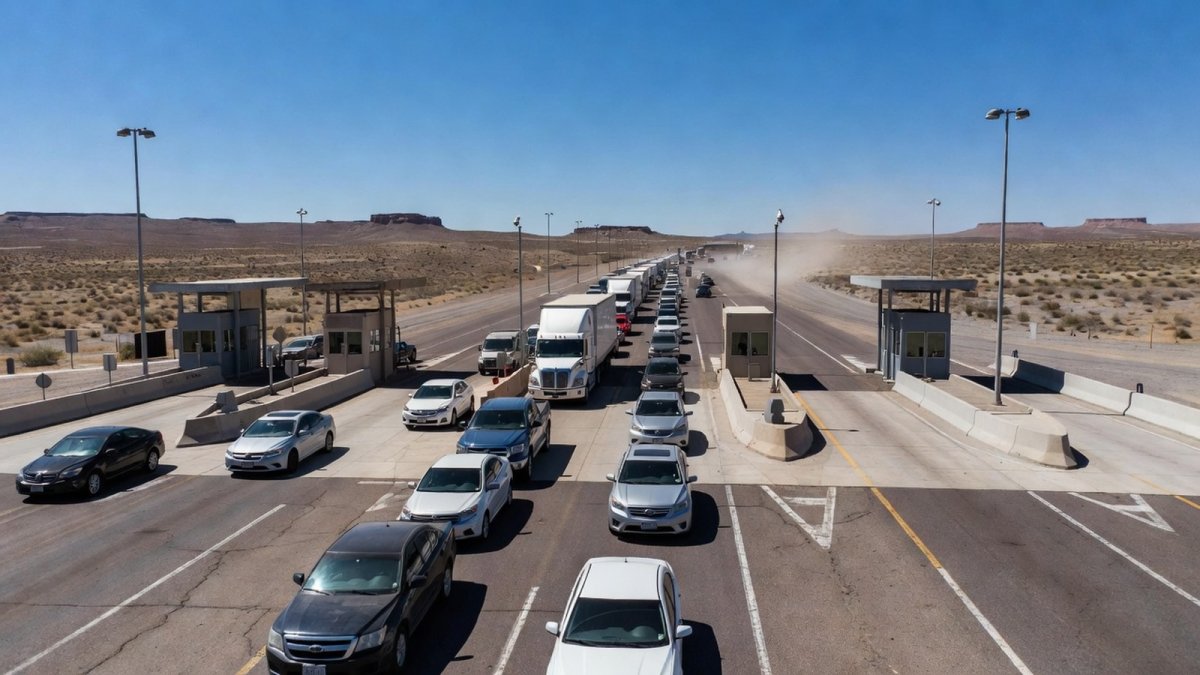
One related incident from February 2025 involved a man stopped at the Mariposa Port of Entry in Nogales while trying to cross into Mexico. Authorities found 42 AK-47-style rifles and 42 ammunition magazines in his van. That stop became part of the larger picture that led to the current indictment.
The Seizures: Weapons and Ammunition
Agents recovered more than 100 firearms and more than 125,000 rounds of ammunition in Arizona. Among the weapons were Glock 19 pistols and AK-style rifles, along with at least one .50 caliber rifle. The ammunition alone weighed nearly 5,000 pounds, or two and a half tons.
A.J. Gibes, special agent in charge of ATF Phoenix, spoke about the scale of what was taken off the streets. He noted that criminal organizations in Mexico are well-funded and that their reach extends into U.S. communities. It takes a network to defeat a network, he said.
Jason T. Stevens, special agent in charge for Homeland Security Investigations in Arizona, added that every illegal firearm and round removed represents potential lives saved in Arizona and in Mexico. Disrupting the supply chain denies cartels the tools they use to control and intimidate people.
What This Means for Mexico
The operation directly addresses long-standing concerns from the Sheinbaum administration about weapons flowing north to south. Mexico has pressed Washington for stronger federal action against straw purchasing and trafficking. This case shows one concrete step in that direction.
Timothy Courchaine highlighted how the investigation covered the entire ring, from fraudulent buyers in Phoenix to the firearms buyer in Mexico. Such efforts matter because nearly 80 percent of weapons seized by Mexico's current administration come from the United States. The numbers reflect a steady stream that reaches cartels and affects daily life in many regions.
Arrests took place in both the United States and Mexico, though no one from Mexico has been extradited yet. The indictment names individuals in Mexico, showing the cross-border nature of the network. Families in Mexican communities feel the weight of these flows every day.
A Long History of Demands
The Sheinbaum administration has continued to call for more U.S. enforcement at the federal level. Mexico has asked for concrete steps against straw purchasing that feeds the illegal market. This latest case arrives amid those ongoing conversations.
ATF data from 2019 to 2024 show that roughly two-thirds of firearms recovered in Mexico and submitted for tracing were sourced to a sale in the United States. In 2025, the Mexican military recovered 10,689 firearms, yet estimates suggest around 135,000 firearms are trafficked from the U.S. to Mexico each year. The gap between recovered and trafficked weapons remains wide.
Since January 20, 2025, the ATF has seized 36,277 illegal crime guns and 2,317,999 rounds of ammunition nationwide. Of those, 4,359 seized firearms were bound for Mexico. These figures illustrate the volume that continues to move despite enforcement efforts.
The Legal Landscape After the Supreme Court Ruling
In June 2025, the United States Supreme Court dismissed Mexico's $10 billion lawsuit against U.S. gun manufacturers. The ruling held that domestic firearm manufacturers cannot be sued by foreign states under the Protection of Lawful Commerce in Arms Act. Mexico had filed the suit in 2021 in a federal court in Boston.
The decision left Mexico seeking other avenues to address the flow of weapons. The current indictment focuses on individual actors rather than manufacturers. It targets the straw purchasers and traffickers who move the guns across the border.
Officials note that the case represents a direct response to Mexico's calls for action on trafficking networks. By charging 28 people with 158 counts, authorities aim to break one ring that supplied military-grade firearms. The work continues through task forces that connect agencies on both sides.

Impact on Mexican Communities
People in Mexican colonias and rural areas live with the consequences of these weapons reaching cartels. Teachers, healthcare workers, and small business owners see how violence disrupts daily routines and family life. The seizures in Arizona offer a measure of relief for those communities.
Jason T. Stevens pointed out that removing illegal firearms and ammunition saves lives both in Arizona and abroad in Mexico. The two and a half tons of ammunition alone could have fueled many more incidents. Ordinary families feel the difference when such tools are taken out of circulation.
The case also highlights connections between communities in Phoenix and towns across the border. Many Mexican families have relatives in Arizona, and news of the arrests travels quickly through those networks. It reminds everyone that safety on one side affects safety on the other.
What to Watch For
Further developments will depend on extraditions from Mexico and additional arrests tied to the indictment. Timothy Courchaine noted that the investigation captured the full trafficking ring, which may lead to more charges. Agencies involved will continue to monitor related activity in Maricopa County and beyond.
The Sheinbaum administration is expected to keep pressing for stronger U.S. measures against straw purchasing. This case provides one example of enforcement that Mexico has sought. Observers will look at how many of the 28 defendants face trial and what sentences follow.
Communities on both sides of the border will follow updates from the task force. The work of Homeland Security Investigations, ATF, and local partners shows how coordinated efforts can reach across the smuggling links. Families hope these steps lead to fewer weapons reaching the streets where they live and work.
Tags: Arizona arms trafficking, US Mexico border guns, straw purchasers Phoenix, Timothy Courchaine, ATF seizures Arizona, weapons to Mexican cartels, Sheinbaum administration, cross border firearms
By Rosa Martinez, Staff Writer
This article was produced with AI-assisted research and editorial support. Reporting is based on sources cited in the article.
What's Your Reaction?
 Like
0
Like
0
 Dislike
0
Dislike
0
 Love
0
Love
0
 Funny
0
Funny
0
 Wow
0
Wow
0
 Sad
0
Sad
0
 Angry
0
Angry
0

Latin America/Andes Correspondent at Global1.News. Based in Bogota, covering politics, environment, energy, and social movements across the Andean region. Passionate about environmental journalism and communities protecting their land.















Comments (0)