
I Left My Wife and Twins Behind: Why This Nigerian Man Fled South Africa
Nigerian Richard Itoro left his wife and twins behind in Johannesburg as anti-migrant protests swept South Africa, joining tens of thousands of Africans who have departed. The exodus is straining ties with Nigeria and Ghana, exposing tensions over jobs, legal status, and continental solidarity.
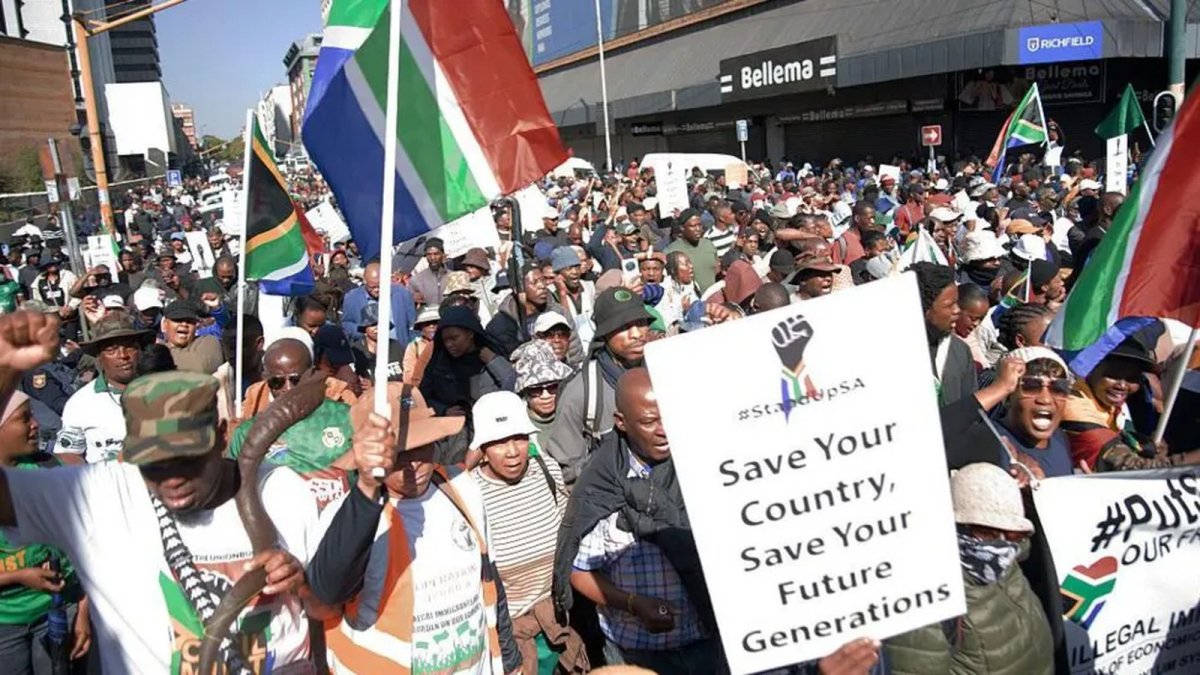
Tens of thousands of African migrants have departed South Africa in recent months after waves of anti-migrant protests, leaving behind homes, businesses and families built over many years. One Nigerian trader's forced separation from his South African wife and twin children captures the human cost of the unrest that has strained relations across the continent.
I Left My Wife and Twins Behind: Why This Nigerian Man Fled South Africa
Johannesburg, South Africa — Article continues...
A Father's Heartbreaking Departure from Johannesburg
Richard Itoro, a 47-year-old Nigerian businessman, boarded a voluntary repatriation flight to Nigeria in June this year, leaving behind his South African wife and twin children in Johannesburg. Over 15 years he had built a car dealership, bought a home and started a family, only to see it all slip away amid rising hostility toward foreigners.
Leaving Johannesburg meant Richard Itoro walked away from the daily rhythms of family life that had taken root over fifteen years. His South African wife had become his closest confidante, and the twin children represented the future he had imagined on African soil. The decision to board the voluntary repatriation flight carried the weight of irreversible separation, turning a routine airport departure into a moment of profound personal fracture.
"It was painful for me to leave the person who's my best friend," Itoro told the BBC, tears welling as he recalled the goodbye. His wife faced direct intimidation from neighbours who told her she should be arrested for marrying a Nigerian and urged her to leave the country with him.
Itoro held legal documents proving his right to stay, yet harassment made daily life unbearable. "If I go home and start all over again, it's better than being here, being harassed, being scared for my life," he said, describing the departure like the last helicopter out of a besieged city.
The image of that flight as the last helicopter out of a besieged city captures the sense of siege many long-term residents felt. Itoro had arrived with ambitions common among West African traders who cross borders seeking markets, yet the accumulation of harassment eroded any remaining sense of security. Rebuilding in Nigeria now requires starting from scratch in a country where economic conditions remain challenging, without the home, business, or immediate family network he had established in South Africa.
Tens of Thousands Leave as Diplomatic Strains Grow
Itoro's story reflects a wider exodus. Over the past two months, tens of thousands of foreigners have departed South Africa amid anti-migrant protests. The Nigerian high commission could not allow his wife and children to travel with him, deepening the personal cost of the crisis.
Nigeria's Minister of State for Foreign Affairs Sola Enikanolaiye directly raised the contradiction between documented status and continued attacks with his South African counterpart. Ghana's Foreign Minister Samuel Okudzeto Ablakwa framed the treatment of citizens as a departure from the shared history of African countries that supported the anti-apartheid movement until 1994. These exchanges reveal how individual expulsions have escalated into state-level friction.
This wave of departures has fuelled diplomatic tension across the continent, threatening relations between South Africa and several African nations. Images and videos shared on social media have further damaged the country's reputation, even when some footage proved misleading.
The independent investigation into the death of a Nigerian man during a police arrest over suspected drug offences has become a focal point in these talks. Such incidents test the practical meaning of continental integration under frameworks like ECOWAS and the African Continental Free Trade Area, where free movement ideals clash with rising national restrictions. The fallout risks weakening the very solidarity that once defined post-apartheid relations across the continent.
A Ghanaian Hairstylist's Ordeal in Soweto
Emmanuel Asamoah, a 37-year-old Ghanaian, arrived in South Africa in 2023 and settled in Soweto, building a life as a hairstylist. Three months ago a group confronted him on camera, demanding he leave and accusing migrants of taking jobs and girlfriends.
Emmanuel Asamoah's confrontation in Soweto was captured on video and quickly circulated, showing the moment a group accused him of taking local jobs and relationships. The physical pushing and verbal demands to leave left him with the same fear that prompted many others to depart, even though his passport carried a valid stamp. Returning to Accra three months later marked the end of a brief chapter that had begun with hopes of building a stable livelihood.
"They came to me and started pushing me," Asamoah recalled. "They said that I should go home, that we are spoiling their country." He held a valid stamp in his passport yet still faced the same pressure that drove many others out. He returned to Accra in May and has since opened a cement business with local support.
In Ghana, Asamoah has redirected his energy into a cement business supported by local networks. His public message urging fellow Ghanaians still in South Africa to focus on home reflects a shift from seeking opportunity abroad to investing in domestic recovery. This personal pivot mirrors broader conversations among returnees about whether the risks of staying outweigh the economic possibilities that once drew them across borders.
South African Officials Draw the Line on Papers
Culture Minister Gayton McKenzie, whose party sits in the coalition government, has stressed that South Africa welcomes brothers from the continent provided they arrive with proper documents. "We say South Africa is open to our brothers on the continent but come here legitimately," he said.
Foreign Minister Ronald Lamola noted that President Cyril Ramaphosa remains firm on enforcing immigration laws while promising action against those who take the law into their own hands. An independent body is investigating the recent death of a Nigerian man during a police arrest over suspected drug offences.
Nigeria Raises Cases of Documented Citizens Under Attack
Nigeria's Minister of State for Foreign Affairs Sola Enikanolaiye told his South African counterpart that records show Nigerians with legitimate papers have still faced attacks. The exchange highlights how legal status has offered little protection during the recent unrest.
Itoro's experience matches this pattern. Despite showing his documents to the BBC, he felt forced to abandon everything he had built over more than a decade.
Ghana Voices Continental Solidarity Concerns
Ghana's Foreign Minister Samuel Okudzeto Ablakwa has expressed anger at how citizens are being treated, viewing it as a break from the spirit of African unity. He pointed to the role many African countries played in the anti-apartheid struggle that ended in 1994.
Asamoah, now back in Accra, echoed that sentiment by urging fellow Ghanaians still in South Africa to focus on building at home. "My brother and sisters in South Africa. I'm in Ghana now. I'm fixing my country," he said.
High Unemployment and Old Grievances Feed the Tension
South Africa's unemployment rate, standing above 30 percent, remains a key driver of the friction. Minister McKenzie captured the local sentiment: "No man can feed another man's children while his children are starving."
South Africa's unemployment rate above 30 percent continues to intensify competition for scarce opportunities, feeding resentment that coalition partners like Culture Minister Gayton McKenzie have voiced through statements about feeding local children first. The presence of McKenzie's party in government has given these sentiments official expression while still affirming the need for documented entry. Yet the pattern of documented migrants facing pressure suggests enforcement alone may not contain the unrest.
Anti-migrant groups insist their actions target only undocumented foreigners, yet many with papers have still been targeted. The protests echo earlier waves of xenophobic violence in 2008, 2015 and 2019 that also hit foreign-owned businesses.
The danger that similar tensions could affect other African nationals beyond Nigerians and Ghanaians remains real, given the history of violence in 2008, 2015 and 2019 that repeatedly targeted foreign-owned businesses. Easing the crisis would require coordinated action between South African authorities and sending countries to protect legal residents while addressing local economic grievances. Without such steps, the current wave of departures could further strain the continental ties that many families across West Africa still rely upon for trade and opportunity.
Senegalese Traders Watch With Familiar Concern
Senegalese street traders and shopkeepers, part of the well-known Modou-Modou informal economy, have faced similar pressures during past outbreaks of anti-foreigner violence in South Africa. Many travel long routes for trade or join the diaspora in search of opportunity, carrying the same hopes that brought Itoro and Asamoah to Johannesburg.
The current crisis tests the ideals of continental integration promoted by the African Union and bodies such as ECOWAS, reminding families across West Africa how quickly economic hopes can turn into painful separations.
By Amara Diop, Staff Writer
This article was produced with AI-assisted research and editorial support. Reporting is based on sources cited in the article.
What's Your Reaction?
 Like
0
Like
0
 Dislike
0
Dislike
0
 Love
0
Love
0
 Funny
0
Funny
0
 Wow
0
Wow
0
 Sad
0
Sad
0
 Angry
0
Angry
0

West Africa/Sahel Correspondent at Global1.News. Dakar-based journalist covering politics, security, climate, and development across Francophone and Anglophone West Africa. Tells the stories of a region undergoing profound transformation.










Comments (0)