
US Says Partner Troops Scheduled for Gaza as Ceasefire Hangs by a Thread
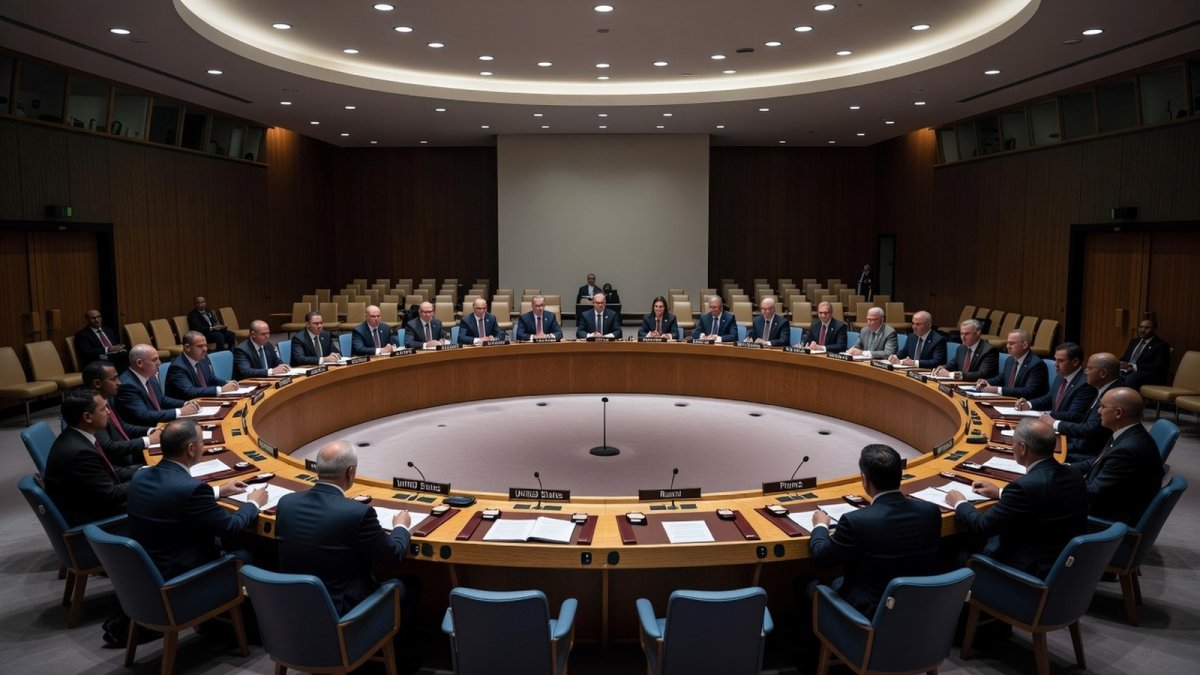
In a recent Middle East Eye report, US Ambassador to the United Nations Mike Waltz told the UN Security Council that troops from partner countries were "scheduled to arrive to keep the peace" in Gaza. The statement, delivered on Wednesday, marks the most concrete timeline yet for the deployment of an international force envisioned under the US-brokered ceasefire that took effect in October 2025.
In a recent Middle East Eye report, US Ambassador to the United Nations Mike Waltz told the UN Security Council that troops from partner countries were "scheduled to arrive to keep the peace" in Gaza. The statement, delivered on Wednesday, marks the most concrete timeline yet for the deployment of an international force envisioned under the US-brokered ceasefire that took effect in October 2025. But nearly a year into that fragile truce, the gap between diplomatic scheduling and on-the-ground reality remains vast, with Palestinians continuing to bear the cost of a peace that has yet to deliver security or stability.
US Says Partner Troops Scheduled for Gaza as Ceasefire Hangs by a Thread
Gaza City, Occupied Palestinian Territories – 27 August 2026 — The United States announced on Wednesday that troops from partner countries are scheduled to arrive in Gaza to keep the peace, even as the enclave's fragile ceasefire shows fresh signs of unraveling. Ambassador Waltz's remarks to the UN Security Council come amid mounting criticism that the US-backed Board of Peace has failed to protect civilians or curb continued Israeli military operations.
A Ceasefire Under Strain
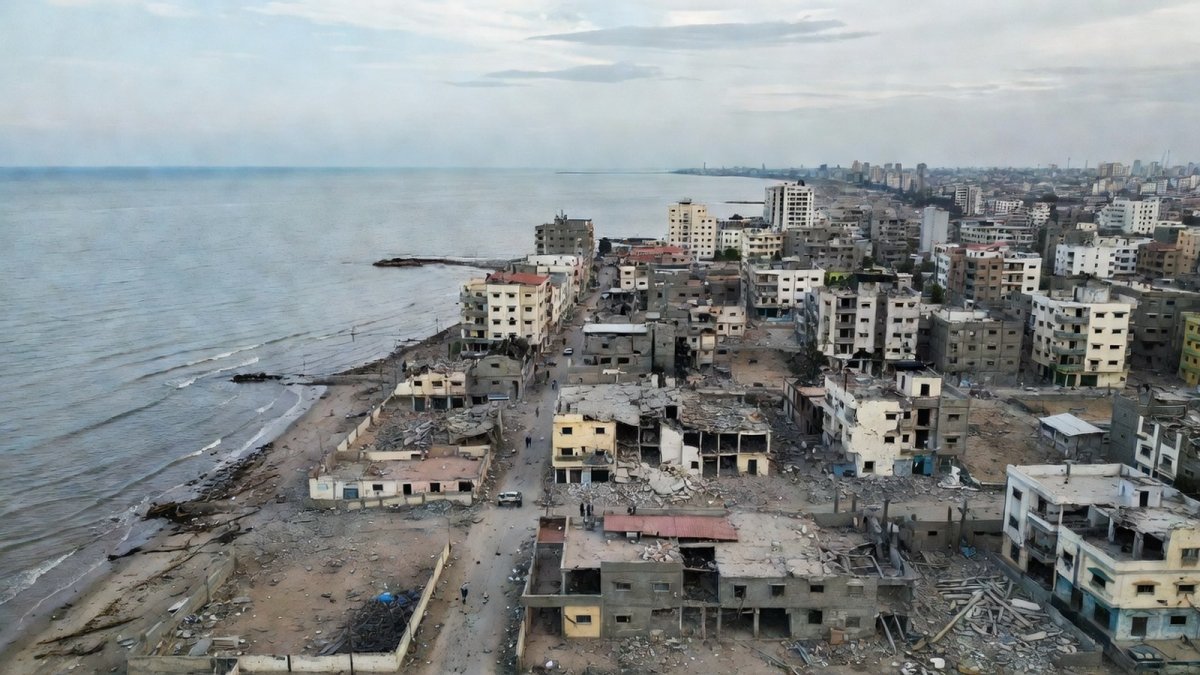
The ceasefire that came into effect in October 2025 was hailed as a breakthrough after 15 months of devastating war. Yet the truce has been punctuated by continued Israeli strikes on what Israel calls Hamas targets. According to Gaza's Ministry of Health, at least 1,288 Palestinians have been killed and 4,290 wounded since the ceasefire began — a toll that underscores the precariousness of the current arrangement.
Nickolay Mladenov, the Board of Peace's high representative for Gaza, delivered a stark warning to the Security Council on 26 August. Failure of the Israel-Hamas truce, he said, would be a "point of no return for everyone": "no roadmap to return to, there will be no administration to deploy, and there will be nothing left on the ground to rebuild." His words painted a grim picture of an enclave where nearly every school, hospital, and home has been damaged or destroyed, and where the promise of reconstruction remains distant.
The Board of Peace and Its Critics
The Board of Peace, established under UN Security Council Resolution 2803 adopted on 17 November 2025, was designed to provide institutional context for the "Comprehensive Plan to End the Gaza Conflict" — an initiative championed by former US President Donald Trump. The resolution endorsed the plan and created a framework for international involvement in Gaza's governance and security.
But the Board has faced sharp criticism from humanitarian leaders. An aid chief told the UN that the Board of Peace is "failing" in Gaza and has "functioned to further entrench Israel's unlawful presence" in the territory. The criticism highlights a fundamental tension: while the Board was meant to be a neutral arbiter, its close association with US policy and its perceived deference to Israeli security concerns have eroded its credibility among Palestinians and international observers alike.
The Proposed International Security Force
At the heart of the Board's plan is the creation of an international security force envisioned at around 20,000 troops. Ambassador Waltz's announcement that partner troops are "scheduled to arrive" suggests the plan is moving forward, though significant questions remain about composition, mandate, and rules of engagement.
Uganda has emerged as a key contributor, pledging 1,200 troops with its parliament approving deployment earlier in August 2026. Military officials from Uganda and Burundi visited Israel in mid-August to discuss deployment details. Uganda is finalising its participation following parliamentary approval, while Burundi is still weighing its contribution. The involvement of African nations reflects a broader effort to internationalise the peacekeeping mission, though it also raises questions about the capacity and experience of these forces in such a complex and volatile environment.
Disarmament Deadlock and Israeli Expansion
The central obstacle to a lasting peace remains the issue of Hamas disarmament. Hamas has said it will not disarm before an Israeli withdrawal, a position that reflects both strategic calculation and popular sentiment. A poll cited in Middle East Eye reporting found that Palestinians reject Hamas disarmament before full Israeli withdrawal, underscoring the deep distrust of Israeli intentions.
Israel, for its part, has rejected a plan to disarm Hamas and continues to expand its control over the enclave. Prime Minister Benjamin Netanyahu said earlier in August that Israel currently controls more than 60 percent of Gaza, with the aim of increasing that to around 70 percent. This territorial expansion, coupled with ongoing strikes, has led Mladenov to criticise Israel's actions, even as he also noted that "Hamas has committed to cease all military activities. That commitment is still to be met in full."
Diplomatic Efforts and Deadlocked Talks
Efforts to break the impasse have yielded limited results. Trump announced a Gaza disarmament deal on 30 July 2026, and Hamas signalled acceptance in principle on 1 August. However, talks have been deadlocked over next steps, with both sides accusing the other of bad faith. The lack of progress has left the ceasefire in a precarious state, with each passing day bringing new risks of escalation.
The international community remains divided on how to proceed. Some nations advocate for a more robust peacekeeping mandate that could protect civilians and enforce disarmament, while others caution against deepening foreign involvement without a clear political horizon. The United States continues to press for the deployment of the international force, framing it as essential to stabilising Gaza and paving the way for reconstruction.
Analysis and Implications
The scheduled arrival of partner troops represents a significant moment in the Gaza conflict, but it is fraught with risk. A peacekeeping force without a clear mandate to protect civilians or address the root causes of the conflict risks becoming a fig leaf for continued occupation and violence. The Board of Peace's failure to curb Israeli strikes or secure meaningful progress on disarmament suggests that the international community's approach may be fundamentally flawed.
For Palestinians in Gaza, the stakes could not be higher. The ceasefire has brought a reprieve from the full-scale bombing of the war, but daily life remains a struggle for survival amid shortages of food, water, and medicine. The continued Israeli strikes and territorial expansion have made clear that the truce is not peace, merely a pause in hostilities. In the West Bank, too, there is growing anxiety that the international focus on Gaza may come at the expense of addressing settlement expansion and the broader occupation.
As the international force prepares to deploy, the question is whether it will genuinely protect Palestinian civilians or simply entrench the status quo. Mladenov's warning of a "point of no return" is not hyperbole; the window for a just and lasting peace is closing. The international community must decide whether it is willing to hold all parties accountable, including Israel, and to support a political process that addresses the legitimate aspirations of the Palestinian people. Without that commitment, the scheduled arrival of troops may be little more than a prelude to further tragedy.
By Fatima Al-Rashid, Staff Writer
This article was produced with AI-assisted research and editorial support. Reporting is based on sources cited in the article.
What's Your Reaction?
 Like
0
Like
0
 Dislike
0
Dislike
0
 Love
0
Love
0
 Funny
0
Funny
0
 Wow
0
Wow
0
 Sad
0
Sad
0
 Angry
0
Angry
0
Gulf/MENA Correspondent at Global1.News. Based in Doha, covering Gulf politics, energy markets, diplomacy, and development across the Middle East and North Africa. Tracks the economic transformation of the Gulf states.












Comments (0)