
Indonesia's vice-president resigns amid signs ruling alliance is fraying
Indonesia’s political landscape entered a new phase of uncertainty on 14 November 2026 when Vice‑President Gibran Rakabuming Raka submitted his resignation to the parliament.
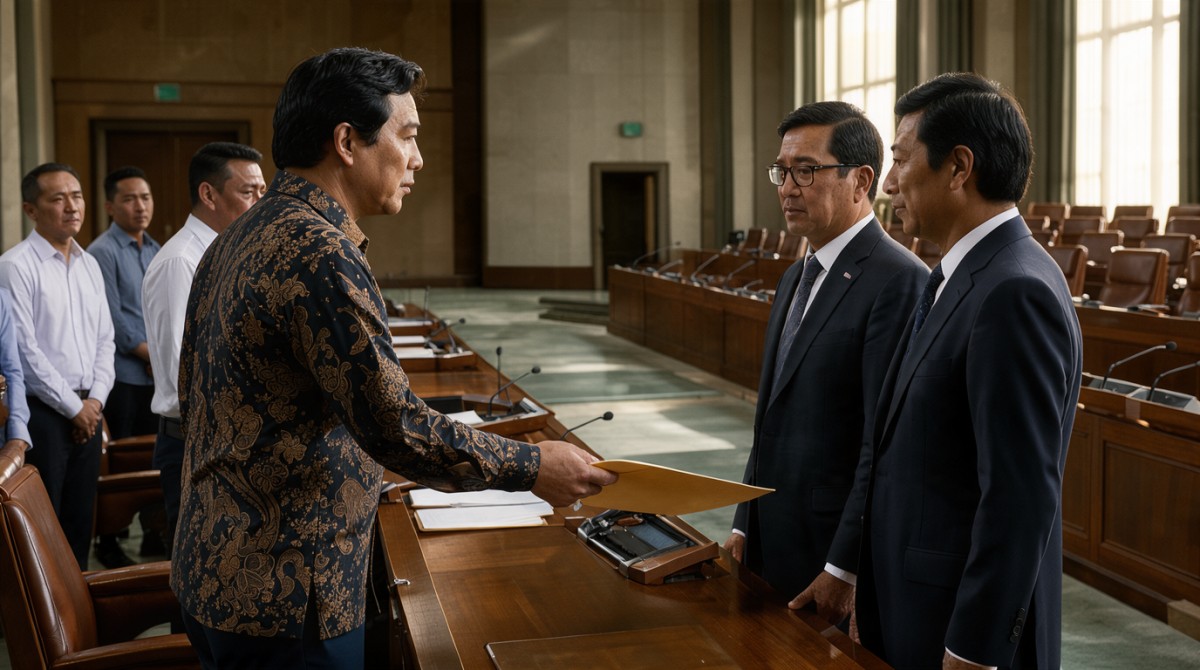
Indonesia’s political landscape entered a new phase of uncertainty on 14 November 2026 when Vice‑President Gibran Rakabuming Raka submitted his resignation to the parliament. The move, prompted by a Supreme Court ruling that questioned the validity of his high‑school credentials, has amplified existing tensions within the ruling coalition and raised questions about the stability of President Prabodu Subianto’s administration.
Legal challenges that forced Gibran’s exit
The Supreme Court’s decision centered on a document Gibran used during his 2024 election campaign to prove he had completed senior secondary education. Although he had studied abroad in Singapore and Australia, he relied on an Indonesian equivalence certificate to satisfy the constitutional requirement that vice‑presidents possess a senior secondary school qualification or its equivalent. The court found “no evidence … to show Gibran had a foreign diploma or certificate that could serve as the basis for equivalency,” and cited a recent Constitutional Court ruling that reached the same conclusion.
Following the judgment, more than one hundred lawmakers backed a parliamentary initiative that could have led to impeachment proceedings. Gibran sought a chance to contest the ruling, arguing that his university studies demonstrated he had completed the necessary secondary education. State Secretariat official Prasetyo Hadi confirmed his request for a review, but the legal impasse proved insurmountable, culminating in his resignation.
Impact on the Prabowo‑Jokowi alliance
Gibran’s departure underscores a broader fraying of the alliance that brought President Prabowo to power. The partnership originated in the 2024 election when Prabowo selected the 36‑year‑old Gibran as his running mate, a move designed to cement a coalition between Prabowo and outgoing President Joko Widodo, known as Jokowi. The alliance was already fragile, having required a Constitutional Court exemption to waive the minimum age requirement of 40 for the vice‑presidential slot.
Since assuming the presidency, Prabowo has shifted focus away from Jokowi’s flagship project of building the new capital, Nusantara, and toward his own priority of a nationwide free school‑meal programme. Concurrently, he has repositioned several Jokowi loyalists, including finance minister Sri Mulyani Indrawati, into new roles. The recent arrest and dismissal of Listyo Sigit Prabowo, a former national police chief and long‑time ally of Jokowi, further signaled a realignment of power within the administration.
Political dynamics within the ruling party
Internal party shifts have added another layer of complexity. On the Monday preceding Gibran’s resignation, three cabinet members resigned from the party led by Kaesang Pangarep, Jokowi’s youngest son, citing a desire to concentrate on their duties in Prabowo’s government. While neither Prabowo nor Jokowi confirmed a rift, Jokowi publicly reiterated his support for Prabowo’s leadership and described Gibran’s resignation as part of “political dynamics,” noting that his son had been told the vice‑presidential post was temporary.
The resignations illustrate a growing divergence between factions loyal to Jokowi and those aligning with Prabowo’s agenda. This split is reflected in the broader parliamentary environment, where lawmakers have shown willingness to pursue impeachment measures against Gibran, indicating that the coalition’s cohesion is now being tested by both legal and political pressures.
Policy priorities under strain
President Prabowo’s flagship free school‑meal programme, intended to address child nutrition and bolster electoral support, is now confronting funding shortfalls. The programme’s financial sustainability has become a point of contention, especially as the government redirects resources toward other pressing concerns, such as the nation’s worsening environmental crises.
Indonesia has recently endured its worst wildfires in a decade, producing toxic haze that has spread across the region. The environmental emergency has diverted attention and resources, while also fueling public protests. Demonstrations by students and activists have targeted a range of issues, from the handling of the haze to allegations of corruption and market manipulation that have rattled the national stock exchange.
Economic turbulence and market concerns
The stock market has entered a period of heightened volatility, with allegations of widespread market manipulation casting a shadow over investor confidence. While the source material does not provide specific figures, the description of a “crisis” suggests significant pressure on Indonesia’s financial stability. This economic strain compounds the challenges faced by the free school‑meal initiative, which relies on sustained fiscal capacity to deliver meals nationwide.
Combined with the environmental disaster and the political fallout from the vice‑presidential resignation, the market’s instability could have broader implications for foreign investment and Indonesia’s growth trajectory. The government’s ability to navigate these intersecting crises will be a key test of Prabowo’s leadership in the months ahead.
Regional implications of Indonesia’s internal turmoil
Indonesia’s internal instability reverberates beyond its borders. The toxic haze generated by the Borneo wildfires has already become a diplomatic headache for neighboring countries, prompting regional discussions on cross‑border pollution control. As the haze persists, Indonesia faces pressure to implement more effective fire‑management policies, a task complicated by the current political distractions.
Moreover, the arrest of senior officials on wire‑tapping allegations—most notably the dismissal of Listyo Sigit Prabowo—has raised concerns about governance standards and the rule of law. Such scandals can affect Indonesia’s standing in regional forums, where transparency and institutional integrity are increasingly valued by partners in ASEAN and beyond.
Outlook: stability, succession and the road ahead
With Gibran’s resignation, the parliament now has a 60‑day window to appoint a new vice‑president from two presidential nominees. The selection process will be closely watched as an indicator of how much influence Prabowo retains over the coalition and whether Jokowi’s camp can secure a favorable candidate.
In the short term, the administration must address immediate crises: stabilising the stock market, securing funding for the free school‑meal programme, and managing the ongoing haze emergency. Long‑term, the episode underscores the fragility of political alliances built on expedient electoral calculations rather than deep policy alignment. How Prabowo navigates these challenges will shape Indonesia’s domestic trajectory and its role in the broader Asia‑Pacific arena.
This article was produced with AI-assisted research and editorial support. Reporting is based on the source material cited below. Sources: BBC News Asia; bbc.co.uk; Global1.News (15 November 2026).
By Kenji Tanaka, Staff Writer
What's Your Reaction?
 Like
0
 Dislike
0
 Love
0
 Funny
0
 Wow
0
 Sad
0
 Angry
0

Japan Correspondent at Global1.News. Tokyo-based voice covering Japanese politics, technology, economy, and culture. Tracks the intersection of tradition and innovation in one of the world's most dynamic societies.














Comments (0)