
Oil Shock Puts US Midterms at Risk as China Watches
In a recent episode of CGTN's The Heat, Quincy Institute scholar Trita Parsi outlined how the US-Iran conflict has left Washington with limited options as oil market volatility threatens the November 2026 midterms.
In a recent episode of CGTN's The Heat, Quincy Institute scholar Trita Parsi outlined how the US-Iran conflict has left Washington with limited options as oil market volatility threatens the November 2026 midterms. The discussion highlighted the Strait of Hormuz disruption and its ripple effects on global energy prices. These developments carry direct implications for China's energy imports and broader regional stability goals.
Oil Shock Puts US Midterms at Risk as China Watches
Washington, D.C. — August 5, 2026 — The 2026 US-Iran war, triggered by February airstrikes, continues to drive energy market turbulence with Brent crude at $90.12 per barrel as of July 31. Parsi argued that the conflict has constrained US policy choices while exposing vulnerabilities in global supply chains. China, reliant on Hormuz for 40-45 percent of its oil imports, faces heightened risks to energy security amid calls for de-escalation.
Video Insights from CGTN's The Heat
The August 4-5 broadcast featured Parsi, executive vice president of the Quincy Institute for Responsible Statecraft, examining how the war's energy fallout intersects with domestic US politics. The Quincy Institute is a transpartisan "action tank" established to challenge what it describes as the decades-long obsession of US foreign policy decision makers with global military dominance and war; its research program has produced analyses including "Iran War Costs: What We Know and Where We Might Be Headed" and Hadi Kahalzadeh's July 7 brief "Containment, Resistance, and the MOU: The US-Iran Negotiations in Historical Context." The segment underscored that sustained high prices could influence voter sentiment ahead of the midterms, with Parsi framing the administration's escalating threats and abrupt pullbacks as evidence that Washington is working through increasingly unappealing options.
Strait of Hormuz Disruption and Price Trends
Iran's closure of the Strait of Hormuz, which previously handled roughly 20 million barrels per day, followed the February 28 strikes that killed several Iranian officials including Supreme Leader Ali Khamenei. Brent crude rose 65 percent in March to $126 per barrel before settling at $90.12 by July 31, with WTI at $84.67. July saw Brent gain 24 percent and WTI 21 percent, marking the largest monthly increases since March. A Reuters poll of 31 economists projects Brent averaging $85.22 for 2026.
The physical market tells the same story as the futures curve. US crude stockpiles sit at multi-year lows, crude output fell about 2 percent in May from a record high in April, and demand for crude and petroleum products dropped more than 3.5 percent in May to roughly 20.07 million barrels per day, the lowest level since March 2025. Analysts at Gelber & Associates noted that the "geopolitical risk premium remains firmly in place near chokepoints like the Strait of Hormuz," reinforced by depleted domestic inventories. Iran's Revolutionary Guards were reported in late July to have stopped two tankers from transiting the strait while four others changed course, a reminder that the blockade is enforced with discretion rather than a formal closure order.
US Gasoline Prices and Consumer Impact
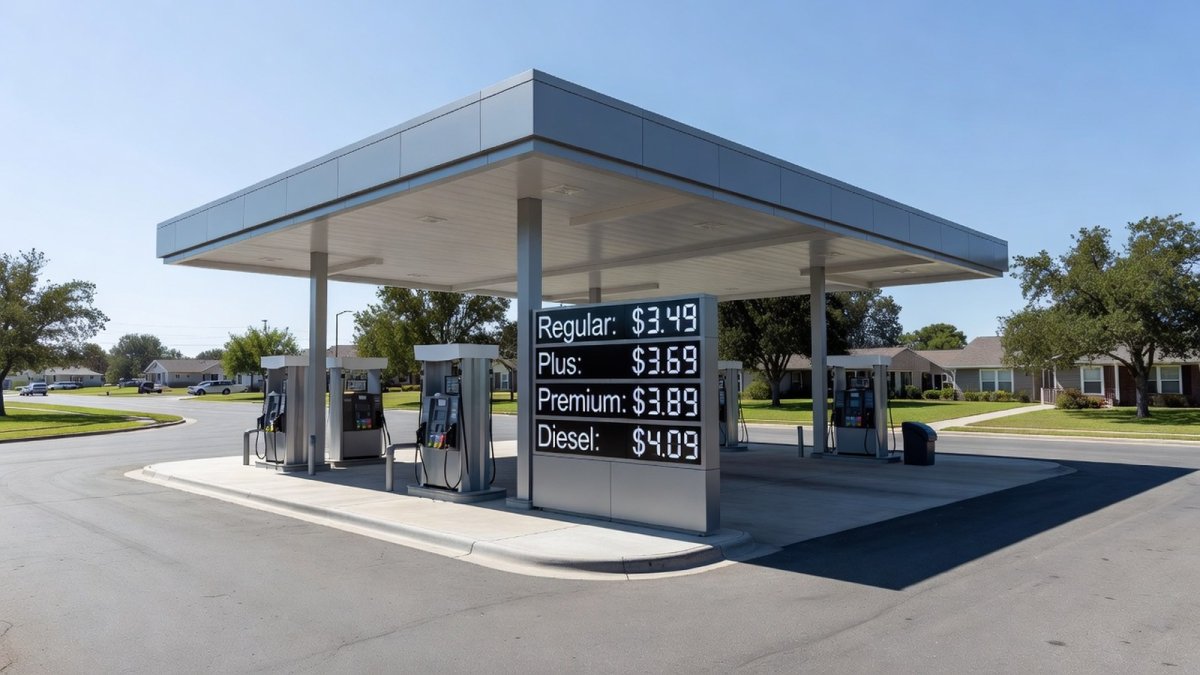
US gasoline now averages $4.11 per gallon according to AAA data. Trump stated that earlier oil price declines during June peace talks should have lowered pump prices to $2.25: "Oil prices have come down so much and we are not seeing anything at the pump by comparison the way they should be." Nearly seven in ten Americans view rising gas costs as extremely or very concerning. A Trump administration report indicates pre-war price levels will not return until after 2027, while the demand data suggest that higher prices are already curbing consumption. The political stakes are direct: with fewer than 100 days until the November elections when Macquarie published its July 27 assessment, the administration is under mounting pressure to end the conflict before the pump becomes the dominant campaign issue.
Oil Company Profits and Policy Response
ExxonMobil posted Q2 2026 profit of $14.5 billion, double the prior-year figure and its highest quarterly result since Russia's 2022 invasion of Ukraine, while Chevron recorded its highest-ever quarterly profit at $12.2 billion, a fivefold increase year on year. Combined profits exceeded $26 billion for the three months to the end of June. Trump, who last week threatened Iran with a massive military strike before pulling back over the weekend, directed the Justice Department to investigate potential retail price gouging and told reporters that the companies would "give some of that back to the public and they better cut the retail price, the consumer price." BP chief executive Meg O'Neill told CNBC that "we produce a global commodity, and the product we sell hangs off that global commodity price," while 350.org's Clémence Dubois condemned the windfall: "Chevron and Exxon are profiteering from a model of distraction, leaving ordinary people to pay the price... These profits feel almost criminal."
Beijing's Strategic Energy Interests
China's dependence on Hormuz transit for 40-45 percent of oil imports contrasts with lower US exposure of 2-5 percent, but the asymmetry is regional, not bilateral: Japan relies on the strait for roughly 73 percent of its oil imports, South Korea about 70 percent, and India around 42 percent. Iran has continued shipments to China, with 12 million barrels moved through the strait since the war began according to CNBC reporting from March. The IISD Trade and Sustainability Review notes varying Asian exposure based on reserves, supply chains, and renewables capacity. Beijing has maintained its position favoring political settlement to stabilize prices, aligning with its objectives of energy security and multilateral engagement. For Chinese refiners, the war premium raises import costs and complicates supply planning, while the continued flow of Iranian crude underscores the tension between Washington's sanctions architecture and the practical realities of Asian demand. China's policy response has been to diversify supply sources, expand strategic reserves, and press for de-escalation — a posture consistent with its broader buyer-state strategy in global energy markets.
US Midterm Dynamics and Polling Shifts
Republicans have controlled Congress for two years ahead of the November vote. A Reuters/Ipsos poll from August 3 showed Democrats at 42 percent versus 37 percent for Republicans on the generic ballot, and for the first time in nearly a decade of that polling series, voters perceived the Democratic Party as having a better plan for the economy. Decision Desk HQ averages indicate a 6.7-point Democratic lead, with CNN/SSRS reporting an 8-point margin in late July (up from 5 in January) and Emerson College surveys showing Democrats at 53 percent against 42 percent among likely voters by July. Trump's approval has reached historic lows, and he has dismissed unfavorable polls as "Crooked and Corrupt" in a Truth Social post, insisting his "REAL" numbers are the "best they have ever been," even as he traveled to the West Coast to discuss the economy. The New York Times reported August 4 that Republicans in Congress are being forced to fund and defend an unpopular war they never voted to approve, with polls showing cratering support for a conflict that has no end in sight.
Geopolitical Leverage and Second-Order Effects
Each side seeks to limit escalation costs: the US faces $88 billion in requested supplemental funding and $58 billion in regional infrastructure damage by mid-April, while Iran bears $19 billion in repair expenses and has halted all petrochemical exports. Macquarie analysts project possible oil oversupply by year-end under pressure to resolve the conflict before the midterms, and the Chicago Fed has published scenario modeling of the oil shock's macroeconomic effects on the US economy. For China, sustained volatility risks higher import costs and complicates trade flows, prompting emphasis on de-escalation to protect broader Asian supply stability and Global South economic resilience.
What to Watch
Three developments bear close monitoring in the coming weeks. First, whether Washington's threats and pullbacks converge on a negotiated framework before the election calendar hardens — Macquarie's oversupply scenario depends on a deal materializing in the third quarter. Second, how the price at the pump moves relative to crude: if retail gasoline fails to track any decline in Brent, the political pressure on the administration will intensify regardless of headline inflation data. Third, whether Beijing's quiet diplomacy — including its calls for a political settlement and its continued energy commerce with Tehran — translates into a more visible role in Gulf crisis management. For the Asia-Pacific, the lesson of the 2026 oil shock is that energy security remains the region's most binding strategic constraint, and the United States' domestic political calendar is now inseparable from the stability of the world's most critical maritime chokepoint.
By Prof. Marcus Chen, Staff WriterThis article was produced with AI-assisted research and editorial support. Reporting is based on sources cited in the article.
What's Your Reaction?
 Like
0
Like
0
 Dislike
0
Dislike
0
 Love
0
Love
0
 Funny
0
Funny
0
 Wow
0
Wow
0
 Sad
0
Sad
0
 Angry
0
Angry
0

World Politics Analyst at Global1.News. Based in Beijing, covering US-China relations, global trade, and geopolitical strategy. Brings deep analytical perspective to the power dynamics shaping international affairs.














Comments (0)