
Reported Chinese MANPADS Transfers to Iran Test Xi Assurance to Trump
A Reuters investigation has reported that a Chinese company agreed to supply Iran with 300 to 400 QW-12 and FN-16 man-portable air-defense systems in a deal valued at US$60-70 million, with the first shipment expected within weeks.
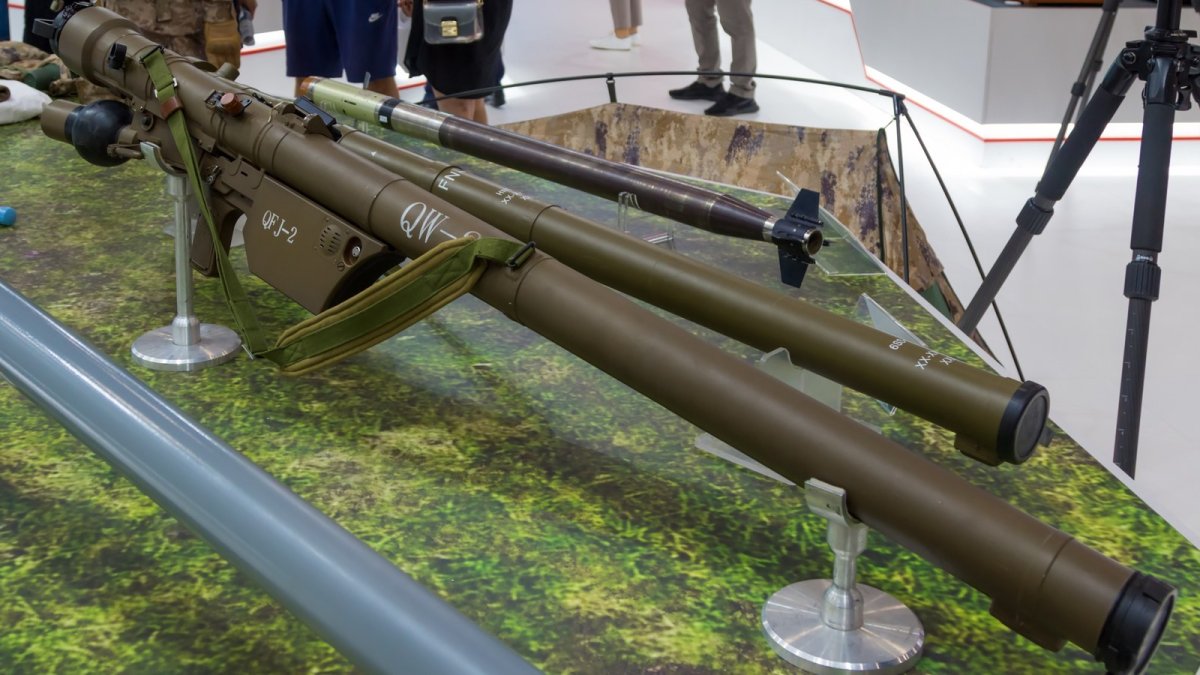
A Reuters investigation has reported that a Chinese company agreed to supply Iran with 300 to 400 QW-12 and FN-16 man-portable air-defense systems in a deal valued at US$60-70 million, with the first shipment expected within weeks. The reported transfer directly contradicts a personal assurance given by Chinese President Xi Jinping to President Donald Trump at their mid-May 2026 Beijing summit that China would not, under any circumstances, provide weapons to Iran, including through Chinese companies.
China Iran Arms Deal Contradicts Xi Trump Pledge
Beijing, China — The reported procurement, brokered through the Hong Kong-registered Zhongqing Baoshang International Investment, is said to route air freight from Urumqi through Pakistan before overland movement into Iran, supplemented by Central Asian rail links. This pathway exploits land corridors beyond the reach of the reimposed US naval blockade of Iranian ports.
The Reported Deal and the Route to Tehran
The agreement involves China's QW-12 and FN-16 infrared-guided MANPADS, according to two Western intelligence sources and a senior Iranian official cited by Reuters. The intermediary's Beijing-based parent, Zhong Qing Bao Shang Group, has not been directly linked in public statements to the transaction. Pakistan's ISPR has denied any involvement, describing the speculation as false, while China's Foreign Ministry called the entire report groundless.
A Personal Assurance, Publicly Contradicted
At their mid-May 2026 Beijing summit, Xi Jinping assured President Trump that China would not, under any circumstances, give or sell weapons to Iran — including through Chinese companies — and Trump publicized the commitment on Truth Social around July 24, framing it as a diplomatic breakthrough. The reported agreement for 300 to 400 QW-12 and FN-16 systems, brokered through the Hong Kong-registered Zhongqing Baoshang International Investment, now places that pledge under immediate strain, highlighting a gap between summit rhetoric and alleged commercial activity.
China's Foreign Ministry labeled the Reuters account completely groundless, while Pakistan's ISPR dismissed involvement as absolutely concocted and false. These denials coincide with earlier US Treasury sanctions in May 2026 targeting a Hong Kong-Belarus-Dubai network accused of channeling Chinese shoulder-fired missiles to Iran. The friction tests the Trump administration's ability to convert private assurances into verifiable restraint amid ongoing land-corridor movements that evade naval enforcement.
Five Months of War and the Erosion of Iran's Air Defenses
Operation Epic Fury began on February 28, 2026, and five months of strikes have systematically degraded Iran's centralized radar networks along with long-range systems such as the Russian S-300 PMU2 and domestic Bavar-373 batteries. An American F-15 was reportedly shot down in April 2026, likely by a Chinese-made shoulder-fired missile, according to NBC News reporting, underscoring the vulnerability of low-altitude operations. The naval blockade reimposed on July 14 after the June 17 collapse of the Versailles Memorandum has produced daily oil revenue losses near $500 million, with US forces intercepting 85 vessels and seizing three ships.
Iran's resulting pivot toward decentralized defenses reflects the cumulative pressure of these losses. The Foundation for Defense of Democracies estimated combined daily economic damage around $435 million, accelerating interest in mobile, passive systems that can be dispersed beyond fixed sites. This shift aligns with the reported procurement of short-range infrared-guided launchers capable of operating without emitting detectable radar signatures.
QW-12 and FN-16: What the Systems Bring to the Battlefield
The QW-12, developed by CASIC, employs a mid-infrared dual-band digital filtering seeker with an engagement range of 0.5 to 6 kilometers and an altitude ceiling of 4,000 meters, according to open-source assessments compiled by the US Army's ODIN database and Army Recognition, while the FN-16 from CASC uses a dual-color IR/UV rosette-scan quasi-imaging seeker reaching speeds up to Mach 2.8 and maneuvers exceeding 18G. Both systems incorporate proximity fuzes and are designed to resist infrared countermeasures such as flares. Their passive operation emits no radar signals, rendering them invisible to anti-radiation missiles and allowing infantry teams to engage aircraft with minimal warning.
Beijing's reported decision to limit transfers to these short-range defensive weapons rather than heavier systems such as the HQ-9B preserves a framing of plausible deniability. Iran has reportedly integrated the new units into its Mosaic Air Defense doctrine alongside the domestic Majid AD-08, emphasizing autonomous cells that operate independently of centralized command. This approach exploits the systems' mobility and low signature to create dispersed coverage around critical sites.
The Low-Altitude Threat to American Airpower
Deployment of 300 to 400 launchers could establish roughly 50 to 100 dispersed firing positions around airfields, missile bases, and logistics corridors, forcing US aircraft into higher-altitude profiles. ABC News reported that Iran has shot down roughly 30 MQ-9 Reaper drones since the start of Operation Epic Fury, while the Washington Times noted the loss of one-third of the pre-war fleet of 135 aircraft, each valued at approximately $56 million with the production line closed in 2025. Recorded incidents include an HH-60W rescue helicopter struck in April 2026 and damage to an A-10 and an F/A-18 during low-altitude missions.
The historical precedent of CIA-supplied Stinger missiles in Afghanistan after 1986 illustrates how MANPADS can impose sustained costs without halting air operations. Reliance on standoff munitions such as JSOW and Small Diameter Bombs creates an expensive asymmetry, while CSIS has warned that restoring prewar Patriot and THAAD interceptor inventories would require three or more years. Combat search-and-rescue missions further expose crews to capture risks in contested terrain.
The Land-Blockade Debate: Seven Neighbors, 5,440 Kilometers
Iran shares approximately 5,440 kilometers of land borders with seven nations. Pakistan's April 2026 transit order has already facilitated thousands of Iran-bound containers, creating a legal corridor now reportedly used for the Chinese systems. Turkey maintains export controls imposed under US pressure, yet enforcement questions persist given past sanctions-evasion patterns.
The enforcement challenge is compounded by the political economy of Iran's seven land neighbours. Iraq, which shares the longest border at roughly 1,599 kilometres, depends on Iranian electricity and natural gas, and the IMF projected its gross domestic product would contract by about 7 percent in 2026 because of Hormuz disruption. Afghanistan's Taliban government has deepened cross-border commerce, with Afghan-Iranian trade reaching US$1.626 billion over a six-month period in 2025, while analysts at the Middle East Forum caution that Turkey's April 2026 export controls, adopted under American pressure, may function as a legal facade given Ankara's history as a hub for sanctions evasion. Robert Harward, a former US national security adviser, acknowledged on July 31 that without neighbour cooperation, Washington would face having to use military force, and the Center for Strategic and International Studies warned in June that the window for engaging third countries before new transshipment networks take root is narrowing.
Beijing's Strategic Calculus: Deniability, BRI, and the Indo-Pacific
By confining reported transfers to short-range defensive systems, Beijing maintains plausible deniability while preserving Iran's role as a Belt and Road anchor and supplier of non-petrodollar crude. A complete Iranian collapse would threaten Chinese energy security and Central Asian trade corridors, prompting a calculated approach that avoids heavy SAM deliveries such as the HQ-9B. Sustained US military engagement in the Middle East simultaneously diverts attention and resources from the Indo-Pacific theater, serving China's broader interest in technological self-sufficiency and regional influence without direct confrontation.
The conflict zone also functions as a proving ground for Chinese defense technology, yielding telemetry on how IIR/UV seekers perform against Western electronic warfare and directed infrared countermeasures. China has publicly urged the United States and Iran to cease hostilities and resume dialogue, yet the risk of secondary sanctions on Chinese financial institutions remains a persistent constraint on the scale of any reported support.
Proliferation Risks and the Wider Regional Fallout
Iran's past accusations of supplying MANPADS to groups such as the Houthis and Hezbollah raise concerns that some units could migrate beyond its borders. CSIS has identified a narrow window for third-country engagement before new transshipment networks solidify. The reported Chinese supply thus carries second-order effects for global chokepoints and civil aviation security across the region and beyond.
By Prof. Marcus Chen, Staff Writer
This article was produced with AI-assisted research and editorial support. Reporting is based on sources cited in the article.
What's Your Reaction?
 Like
0
Like
0
 Dislike
0
Dislike
0
 Love
0
Love
0
 Funny
0
Funny
0
 Wow
0
Wow
0
 Sad
0
Sad
0
 Angry
0
Angry
0

World Politics Analyst at Global1.News. Based in Beijing, covering US-China relations, global trade, and geopolitical strategy. Brings deep analytical perspective to the power dynamics shaping international affairs.













Comments (0)