
US-China Summit Chaos: Xi's Washington Visit at Risk
Beijing is unsettled by disorganisation inside the Trump administration less than six weeks before Xi Jinping's first state visit to Washington since 2015, with only a 30-billion-dollar US tariff cut on the table and Japan watching closely.
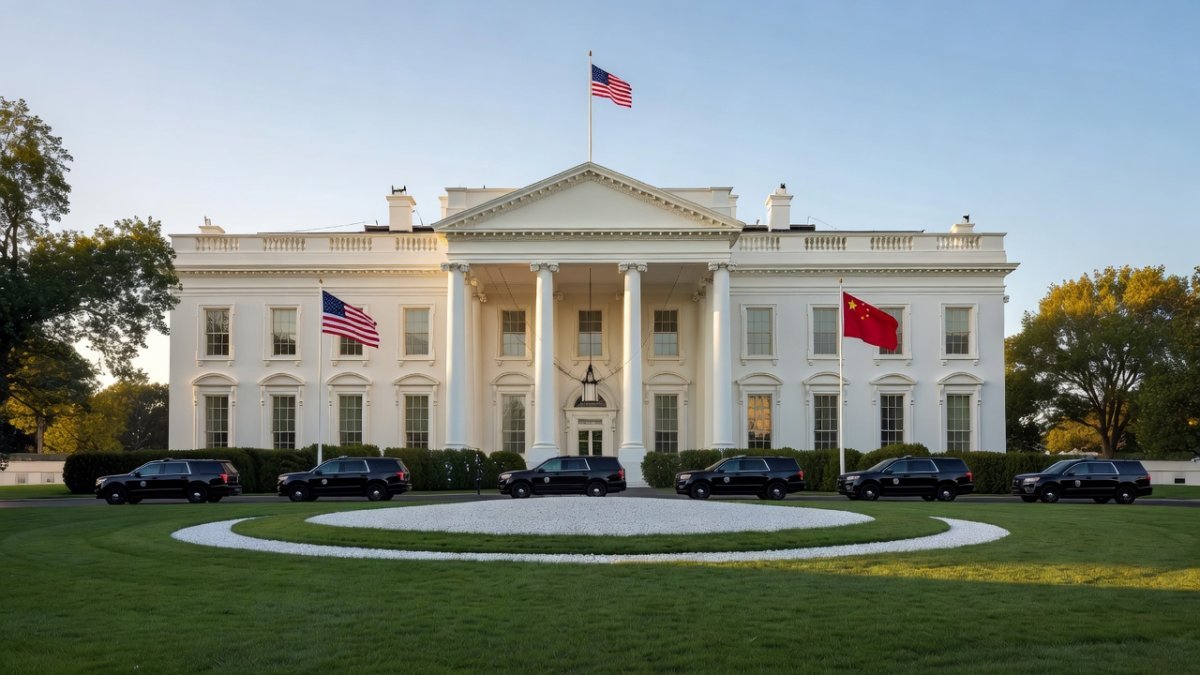
Beijing — A Familiar Disarray, Higher Stakes
Beijing, August 2026 — For Chinese diplomats, the scene is uncomfortably familiar. Less than six weeks before President Xi Jinping is scheduled to make his first state visit to Washington since 2015, officials in Beijing are watching what the South China Morning Post reported as a disorganised Trump administration, lacking planning and coordination, with little progress on summit deliverables. The anxiety, according to people familiar with the preparations, runs deeper this time: the summit will take place on foreign soil, where protocol, venue, and public messaging will be largely controlled by the White House.
The South China Morning Post reported that no US official or agency has clearly assumed responsibility for organising the visit. One person with knowledge of the preparations said officials on both sides are engaged in routine preparations without clear leadership. The State Department, as was the case during Trump's own trip to Beijing, has remained largely uninvolved, with the Treasury Department and US Trade Representative expected to play central roles. A late-July trip to Washington by China's Vice-Foreign Minister Ma Zhaoxu produced only a brief improvement in the atmosphere, according to sources, with the official Chinese read-out noting only "in-depth exchanges" with senior US officials.
A Pattern Repeated: Washington's Organisational Vacuum
The current situation mirrors, almost exactly, the run-up to Trump's own visit to Beijing earlier this year, when Chinese officials were frustrated by a lack of coordination from the American side. The Treasury Department and the US Trade Representative took the lead, while the State Department was sidelined. Sources told the SCMP that the same dynamic is playing out in reverse, with no single US agency or official taking ownership of the Xi visit's logistics.
Two people familiar with Chinese thinking suggested the issues are operational, logistical, and optics-related. Neither side, they said, holds high expectations of achieving anything substantive from the September summit. This is a notable shift from the carefully choreographed treatment Trump received during his Beijing visit in May. The asymmetry is not lost on Chinese officials, who are acutely sensitive to the fact that the White House will control every visual and public statement from the visit, leaving Beijing with less ability to manage the narrative or limit surprises.
The slow practical planning is attributed to internal deliberations within Trump's inner circle. According to the SCMP's sources, disagreements persist over the tone and framing of the visit. White House advisers Stephen Miller and Steven Cheung are pushing Trump to project superiority over Xi, while others expect the US leader to ease tensions. This internal battle over optics is precisely what unsettles Beijing, which prefers predictable, managed summits with clear deliverables.
The Only Item on the Table: A US$30 Billion Tariff Cut
The only concrete item being discussed for the summit, according to the SCMP, is a roughly US$30 billion tariff reduction for Chinese goods. This is a targeted concession, not a comprehensive trade deal. It signals that expectations on both sides are remarkably low. For Beijing, a tariff cut of this size would be a modest but tangible win, offering some relief to Chinese exporters who have been battered by US tariffs on Chinese goods. For Washington, it would be a manageable concession that does not require congressional approval.
However, the fact that this is the sole deliverable under discussion is telling. It suggests that the broader agenda — from technology export controls to Taiwan and the South China Sea — is either being deferred or is too contentious to address. The US-China Board of Investment, a key outcome of the May summit in Beijing, is unlikely to be among the deliverables, the SCMP reported this week, noting that neither side has yet initiated the consultation process. This is a significant gap between the rhetoric of "strategic stability" agreed in May and the reality of a summit that may produce little more than a handshake and a tariff announcement.
The Japan/Asia-Pacific Dimension: Watching From the Sidelines
For Japan, the stakes of a thin or chaotic US-China summit are considerable. Tokyo has long navigated a delicate balance between its security alliance with Washington and its deep economic interdependence with Beijing. A summit that produces only a tariff cut, without addressing structural issues, leaves Japan in a precarious position. Japanese companies, particularly in the automotive, electronics, and robotics sectors, are watching closely. The recent US bans on foreign-made robotic devices and power inverters — sectors where China is a global leader — have direct implications for Japanese supply chains that rely on Chinese components.
The Asia-Pacific region, more broadly, is watching for signals of US reliability. A chaotic summit undermines the perception of American leadership, which Japan and other allies rely on for regional stability. The May summit's promise of a "constructive relationship of strategic stability" now looks fragile, and Japan's policymakers are likely preparing for a range of scenarios, from a modest tariff deal to a complete breakdown in US-China communications.
Why the Stakes Are Higher This Time
The stakes are higher for several reasons. First, the summit is on US soil, giving the White House complete control over optics. Chinese officials are particularly sensitive to this, as they cannot manage the venue, the seating arrangements, or the public messaging. Second, the timing is fraught. Trump floated September 24 as the date for Xi's visit, and Secretary of State Marco Rubio has indicated the visit remains on track. But the US is "bogged down in a war with Iran that is increasingly unpopular with his base," as Wyne noted, and the Republican Party is bracing for a painful midterm election cycle in just under three months.
Wyne, a senior research and advocacy adviser on US-China relations at the International Crisis Group, warned that Chinese officials might be anxious about the apparent lack of planning because Xi is meeting Trump at a "sensitive juncture" in the US president's term. "Trump bristles at the perception that he is losing control of events at home and abroad," Wyne said. "Xi's advisers may fear that, in an attempt to restore US leverage vis-a-vis China, he will consider making a surprise policy announcement that catches Xi off guard on Trump's home turf."
This is a real concern. A surprise announcement on Taiwan, technology export controls, or even a new round of tariffs could destabilise the carefully managed narrative Beijing hopes to project. For Xi, who has not visited Washington since 2015, the trip is a significant diplomatic milestone. A chaotic or humiliating summit would be a domestic and international embarrassment.
Tit-for-Tat Backdrop: Escalation Since May
The summit comes against a backdrop of renewed tit-for-tat measures that have tested the stabilisation agreed at the May summit. Last month, Washington added dozens of Chinese companies to its Uyghur Forced Labour Prevention Act entity list, a move that effectively bans their goods from the US market. The US also banned the import and sale of new foreign-made robotic devices and power inverters — sectors in which China is a global leader. Beijing retaliated by sanctioning seven US entities and tightening export controls on drones and related technology.
What to Watch For: September 24 and Beyond
The floated date of September 24 remains the key marker. If the visit proceeds, the world will be watching for three things. First, whether the US$30 billion tariff reduction materialises as a concrete deliverable. Second, whether any surprise announcements emerge from Trump, particularly on Taiwan, technology, or trade. Third, whether the summit produces a joint statement or communiqué that can serve as a foundation for future engagement.
For Japan and the region, the watchwords are caution and preparation: a thin summit is preferable to a chaotic one, but neither is good for regional stability. Japanese companies should monitor tariff announcements closely, as any US-China trade deal will have ripple effects on supply chains. Japanese diplomats should also be prepared for a possible US-China rapprochement that could shift the regional balance, or, conversely, a breakdown that could increase tensions in the East China Sea and beyond.
The midterm pressure on Trump adds another layer of unpredictability. With the Republican Party bracing for losses, Trump may be tempted to use the summit to project strength, either through a tough stance on China or a surprise announcement. Beijing, for its part, will be hoping for a managed, predictable event. But as the SCMP's reporting makes clear, the planning is far from assured. The next six weeks will be critical, not just for US-China relations, but for the entire Asia-Pacific region.
By Kenji Tanaka, Staff Writer
This article was produced with AI-assisted research and editorial support. Sources: South China Morning Post.
What's Your Reaction?
 Like
0
Like
0
 Dislike
0
Dislike
0
 Love
0
Love
0
 Funny
0
Funny
0
 Wow
0
Wow
0
 Sad
0
Sad
0
 Angry
0
Angry
0

Japan Correspondent at Global1.News. Tokyo-based voice covering Japanese politics, technology, economy, and culture. Tracks the intersection of tradition and innovation in one of the world's most dynamic societies.














Comments (0)