
US-Canada Trade Talks Collapse: What It Means for Mexico
In a recent DW News report, the collapse of US-Canada trade talks sent shockwaves through North American markets, with Washington imposing 50% tariffs on roughly $20 billion worth of Canadian products just before a midnight deadline. For Mexican families in Monterrey's industrial corridors, Guadalajara's tech parks, and the maquiladora zones of Ciudad Juárez, this is not distant diplomacy — it is the sound of supply chains shifting beneath their feet.
In a recent DW News report, the collapse of US-Canada trade talks sent shockwaves through North American markets, with Washington imposing 50% tariffs on roughly $20 billion worth of Canadian products just before a midnight deadline. For Mexican families in Monterrey's industrial corridors, Guadalajara's tech parks, and the maquiladora zones of Ciudad Juárez, this is not distant diplomacy — it is the sound of supply chains shifting beneath their feet.
US-Canada Trade Talks Collapse: What It Means for Mexico's Economy and the USMCA Future
Mexico City, Mexico — The collapse of US-Canada trade negotiations on Friday night has placed Mexico in a precarious position, as Economy Secretary Marcelo Ebrard now navigates a trilateral relationship where two of its partners are locked in a tariff war. The United States imposed 50% tariffs on approximately $20 billion (€17 billion) worth of Canadian products on Saturday, August 22, targeting wine, furniture, dairy products, cement, clothing, fishing rods, and hockey equipment — a list that reads like a catalog of Canadian daily life.

The Breakdown: What Happened in the Final Hours
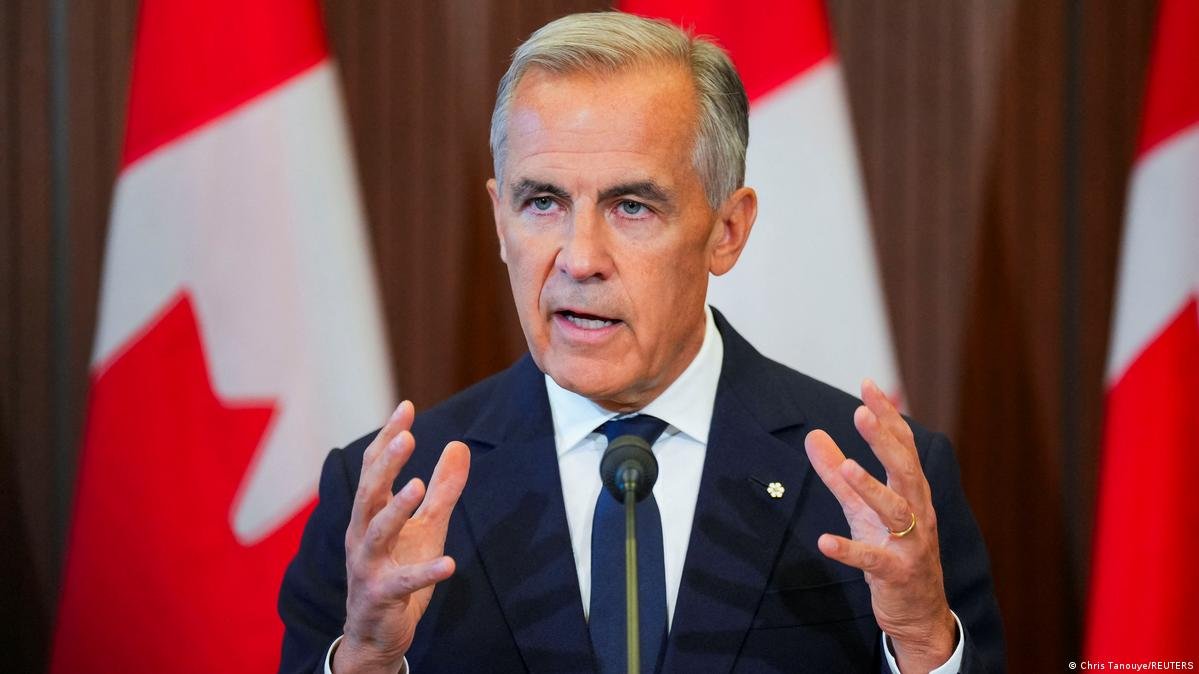
US Trade Representative Jamieson Greer delivered the blunt assessment: "Canada declined to finalize the trade deal under the terms agreed earlier this week." The proposed agreement would have reduced US tariffs on Canadian steel and aluminum to 25%, lowered automotive duties to 15%, and eliminated a 10% levy on lumber — concessions that Canadian Prime Minister Mark Carney rejected as "uneconomic, unfair and undermined the net benefits for Canada."
Carney's response was equally direct: "We cannot accept what they have offered, and we will not give what they have asked." Canada will match Washington's tariffs "dollar for dollar" to protect "Canadian workers, farmers, families, and businesses," with details to be released in the coming days and tariffs set to take effect the Tuesday after Labor Day. Canada's retaliatory measures target steel, dairy, appliances, agricultural equipment, pulp and paper, and electronics.
The prime minister did not mince words about the stakes: "You're at war when you get attacked. We got attacked." Ontario Premier Doug Ford echoed that sentiment, saying, "I'm glad he didn't sign that deal because it was a bad deal. It was a bad deal for Ontario. It was a bad deal for the auto sector, the steel sector and manufacturing sector." Conservative opposition leader Pierre Poilievre urged Canadians to "stand united to defend our country against these unfair attacks on our jobs and businesses."
The Mexican Context: Ebrard's Delicate Dance
For Mexico, this breakdown arrives at a critical juncture. Mexico is the United States' largest trading partner, with 2025 exports reaching US$534.3 billion and an effective tariff rate of just 3.66% on total exports. Approximately 85% of Mexican exports pay no effective duty; on the taxable slice — roughly 15% covering autos, auto parts, and steel — the average tariff stands at 23.84%. Total US-Mexico trade hovers around $800 billion annually, with nearly half being intra-firm trade between multinational corporations operating on both sides of the border.
Economy Secretary Marcelo Ebrard has been leading the USMCA/T-MEC review negotiations with what observers describe as a "persistent, perseverant, patient" approach. He has repeatedly stated that his obligation is to remain close to where decisions are made to promote Mexico's viewpoints. The collapse of US-Canada talks complicates his position: Mexico had expected to land trade terms comparable to those in the parallel US-Canada negotiations, a prospect now thrown into uncertainty.
Ebrard has already raised alarms about US Section 232 tariffs of 50% on steel and aluminum, citing a 36.6% drop in Mexico's steel exports to the US in 2025 and a 5.1% decline in automotive exports in early 2026. Mexico's steel capacity utilization has fallen to 55%, a figure that translates directly into layoffs and reduced hours for workers in Monclova, Coahuila, and other steel-producing regions.
Impact on Mexican Communities: From Maquiladoras to Family Remittances
The trade dispute's ripple effects reach far beyond corporate boardrooms. In Ciudad Juárez, where maquiladora workers assemble everything from car parts to medical devices, the uncertainty surrounding automotive tariffs threatens thousands of jobs. The peso has proven sensitive to tariff headlines, and the trade dispute adds volatility for Mexican exporters, maquiladora workers, and remittance-dependent families across the republic.
President Claudia Sheinbaum has warned that US tariffs would kill 400,000 US jobs, and her administration has proposed retaliatory tariffs targeting 1,371 product categories. "If there are U.S. tariffs, Mexico would also raise tariffs," Sheinbaum has said, a stance that resonates in the tortillerías and taquerías of working-class colonias where families track the peso's value as closely as they track their own household budgets.
For campesinos in Zacatecas and Jalisco who export avocados and berries, for auto workers in Puebla and Guanajuato, and for steelworkers in the northern industrial belt, the US-Canada breakdown signals that the era of frictionless North American trade is over. The question now is whether Mexico can secure terms that protect its workers while maintaining access to its most important market.
Reactions and Responses: Mexico's Political Landscape Weighs In
The collapse has galvanized Mexico's political class. Morena legislators in the Cámara de Diputados have expressed solidarity with Canada's position, while PAN and PRI senators have called for a more aggressive defense of Mexican industrial interests. The Sheinbaum administration has denied Trump's accusation that Mexico serves as a transshipment hub for Chinese goods, a charge that has complicated the review process.
New York Governor Kathy Hochul captured the broader sentiment: "Needlessly picking fights with our allies and raising prices here at home. That's Trump's economic policy in a nutshell." Michigan Congresswoman Haley Stevens slammed "Trump's reckless and unnecessary trade war." These voices from US border states matter to Mexico because they represent the political pressure points that Ebrard and his team can leverage in negotiations.
Carney's observation that "America has changed" and that the two countries would "not return to their old relationship" resonates deeply in Mexico City's Palacio Nacional, where officials have long understood that the United States under Trump views trade as a zero-sum game rather than a partnership.
What It Means for USMCA: The Trilateral Framework Under Strain
The USMCA, which entered into force on July 1, 2020, was designed as a modern trade agreement for the 21st century. But after the US rejected a USMCA renewal, the pact shifted to annual reviews — a mechanism that creates perpetual uncertainty for businesses planning long-term investments. Canada has proposed a 16-year extension, and Ebrard has reiterated Mexico's support for that timeline, but Canada's absence from parts of the USMCA review process creates trilateral uncertainty affecting automotive, steel, aluminum, and supply chains.
The US accounts for roughly 70% of Canadian exports, a dependency that mirrors Mexico's own reliance on the US market. Both countries face the same fundamental challenge: how to maintain access to the world's largest economy without surrendering sovereignty or accepting terms that undermine domestic industries. The difference is that Mexico has been negotiating from a position of relative strength, with Ebrard's team securing concessions that Canada was unwilling to accept.
Trump's stated goal of using tariffs to encourage companies to move manufacturing back to the US, combined with his controversial comments about making Canada the 51st US state, suggests that the administration views trade negotiations as a form of economic warfare rather than diplomacy. For Mexico, this means that the USMCA review process is not merely a technical exercise but a test of whether the trilateral framework can survive the current administration's aggressive posture.
What to Watch For
In the coming weeks, several developments will shape Mexico's path forward. First, Canada's retaliatory tariff details, expected after Labor Day, will reveal whether Ottawa targets products that compete directly with Mexican exports — a move that could create opportunities or threats for Mexican producers. Second, Ebrard's ongoing negotiations with US Trade Representative Jamieson Greer will determine whether Mexico can secure terms comparable to those offered to Canada, particularly on steel, aluminum, and automotive duties.
Mexico is pressing the US to lower the 25% tariff on cars manufactured in Mexico and exported outside the alliance, a demand that has gained urgency as Canadian negotiations collapsed. The peso's performance in the coming weeks will serve as a barometer of market confidence in Mexico's ability to navigate this turbulent period. And the annual USMCA review, expected later this year, will test whether the trilateral framework can accommodate the new realities of North American trade.
For Mexican families, the stakes are personal. Every percentage point of tariff on Mexican exports translates into jobs lost or wages stagnant in the industrial corridors of the north, the agricultural heartlands of the west, and the manufacturing centers of the Bajío. The collapse of US-Canada talks is not merely a diplomatic failure between two neighbors — it is a warning that the rules-based trading system that has underpinned North American prosperity for three decades is under threat.
As Ebrard continues his patient, persistent approach, the Sheinbaum administration's strategy appears clear: maintain dialogue, protect Mexican interests, and avoid being drawn into a trade war that would harm all three nations. But with no further talks planned between Washington and Ottawa, and with Trump's tariff policies showing no signs of moderation, Mexico must prepare for a future where North American trade is negotiated deal by deal, sector by sector, rather than through the comprehensive framework that has served the region since NAFTA's implementation in 1994.
The coming months will reveal whether Mexico can secure a stable trading relationship with the United States while Canada fights its own battle. For the workers in Ciudad Juárez's maquiladoras, the steel mills of Monclova, and the auto plants of Puebla, the outcome will determine not just the health of the economy but the stability of their communities and the futures of their families.
By Rosa Martinez, Staff Writer
This article was produced with AI-assisted research and editorial support. Reporting is based on sources cited in the article.
What's Your Reaction?
 Like
0
Like
0
 Dislike
0
Dislike
0
 Love
0
Love
0
 Funny
0
Funny
0
 Wow
0
Wow
0
 Sad
0
Sad
0
 Angry
0
Angry
0

Latin America/Andes Correspondent at Global1.News. Based in Bogota, covering politics, environment, energy, and social movements across the Andean region. Passionate about environmental journalism and communities protecting their land.














Comments (0)