
Hormuz Standoff: Economic Warfare and Diplomacy Replace Combat as Iran War Enters New Phase
Six months after the surprise U.S.-Israeli attack on Iran, the conflict has entered a new phase. With the Strait of Hormuz bottled up and Washington preparing its toughest sanctions in history, the war is now a standoff of economic attrition, diplomatic maneuvering, and regional brinkmanship.
Hormuz Standoff: Economic Warfare and Diplomacy Replace Combat as Iran War Enters New Phase
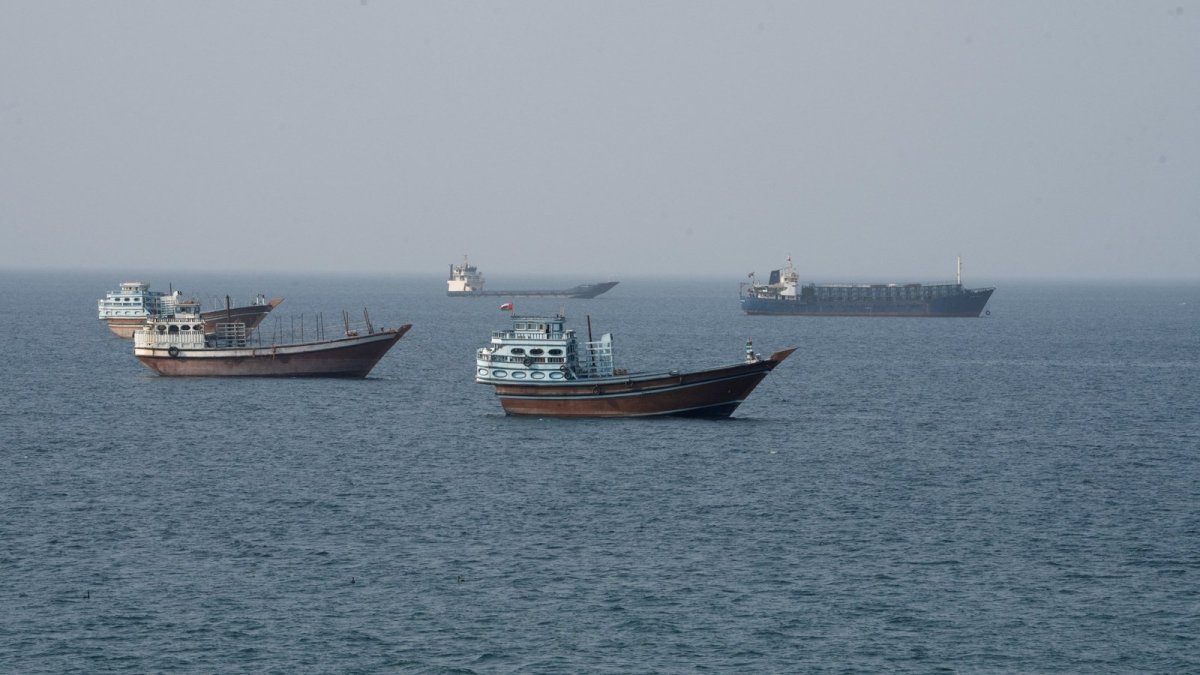
Six months after the surprise U.S.-Israeli attack on Iran, the conflict has entered a distinctly new and dangerous phase. The guns have largely fallen silent, but the battlefield has shifted to the world's most critical energy chokepoint and the global financial system. With the Strait of Hormuz effectively bottled up and Washington preparing what it calls "the toughest sanctions in history," the war is no longer a test of military might but a grinding standoff of economic attrition, diplomatic maneuvering, and regional brinkmanship.
The shift is palpable across the region. The United States has effectively blockaded Iranian vessels in their ports, while Tehran maintains just enough missile and drone capability to deter unauthorized tanker traffic through the strait. The result is a strategic paralysis: neither side can deliver a decisive blow, yet neither appears willing to make the concessions required for a genuine peace. As the standoff deepens, a complex web of actors—NATO allies, Gulf mediators, and energy markets—are all calculating their next moves in a crisis that shows no signs of resolving cleanly.
The Sanctions Escalation: Washington's New Leverage
U.S. Treasury Secretary Scott Bessent is scheduled to hold a news conference Monday at 2:00 p.m. EDT, where he is expected to unveil a new sanctions package targeting Iran and, critically, key trading partners such as China. The move represents Washington's acknowledgment that months of military strikes have not forced Tehran to capitulate. Instead, the Trump administration is now seeking to strangle the Iranian economy through financial pressure, hoping that economic pain will accomplish what bombs could not.
The sanctions are aimed squarely at China, which purchases more than 80% of Iran's seaborne oil exports, according to 2025 data from analytics firm Kpler. President Donald Trump has warned of economic consequences for any country providing "any type of lifeline to Iran," but Beijing has thus far called for diplomacy and a negotiated resolution rather than capitulating to U.S. demands. The tension between Washington and Beijing over Iranian oil is emerging as a central flashpoint of the crisis, with the potential to reshape global energy trade flows.
Iranian Foreign Ministry spokesman Esmaeil Baghaei dismissed the expected sanctions as an "assertion of extraterritorial sovereignty over every independent member state of the United Nations," arguing that "such secondary sanctions find no foundation in international law." The rhetoric underscores Tehran's strategy: frame the conflict as a battle between Iranian sovereignty and American overreach, hoping to rally international sympathy and complicate Washington's efforts to build a coalition.
NATO's Delicate Balancing Act
As Washington tightens the economic screws, NATO is navigating a treacherous diplomatic path. The alliance's top military commander, U.S. Air Force Gen. Alexus Grynkewich, convened senior defense officials from allied countries this week to discuss possible contributions to keeping the Strait of Hormuz open. Yet the alliance has been careful to stress that this is not a NATO military mission—a distinction that reflects deep anxiety among member states about being drawn into a direct confrontation with Iran.
"Given NATO's unique strengths in its ability to bring together Allies and understand the capabilities they bring to bear, it makes sense for NATO to facilitate in this way," a spokesperson said, emphasizing the effort's limited scope. The discussions come as France and Britain lead efforts to assemble a coalition of about a dozen countries to help guarantee safe passage through the strait once tensions ease. But any lasting arrangement would ultimately depend on Iran allowing international shipping to resume freely—a condition that remains far from assured.
The NATO calculus is complex. European allies are eager to restore the flow of energy and goods through the strait, but they are equally determined to avoid being seen as belligerents in a conflict that has already killed thousands, including 168 Iranian schoolchildren on the first day of the war. The alliance's approach reflects a broader regional reality: everyone wants the strait open, but no one wants to be the one to force it open.
Oman's Mediation: The Traditional Neutral Ground
In the midst of this standoff, Oman has re-emerged as the region's indispensable mediator. Omani Foreign Minister Badr Albusaidi and his Iranian counterpart, Abbas Araghchi, spoke by phone Friday, discussing "practical understandings" to ensure the free and uninterrupted flow of maritime traffic through the vital waterway. The conversation, reported by the state-run Oman News Agency, focused on "ways to create conditions conducive to resuming dialogue, with the aim of narrowing differences and reaching peaceful solutions."
Oman's role is deeply rooted in its traditional neutrality and its unique relationships with both Tehran and Washington. In early August, Tehran announced it had reached an understanding with Muscat on the geographic coordinates of a proposed maritime corridor for commercial vessels transiting the strait. While a joint statement outlining the main points of agreement remains to be finalized, the very existence of such discussions suggests that both sides see value in a mediated solution.
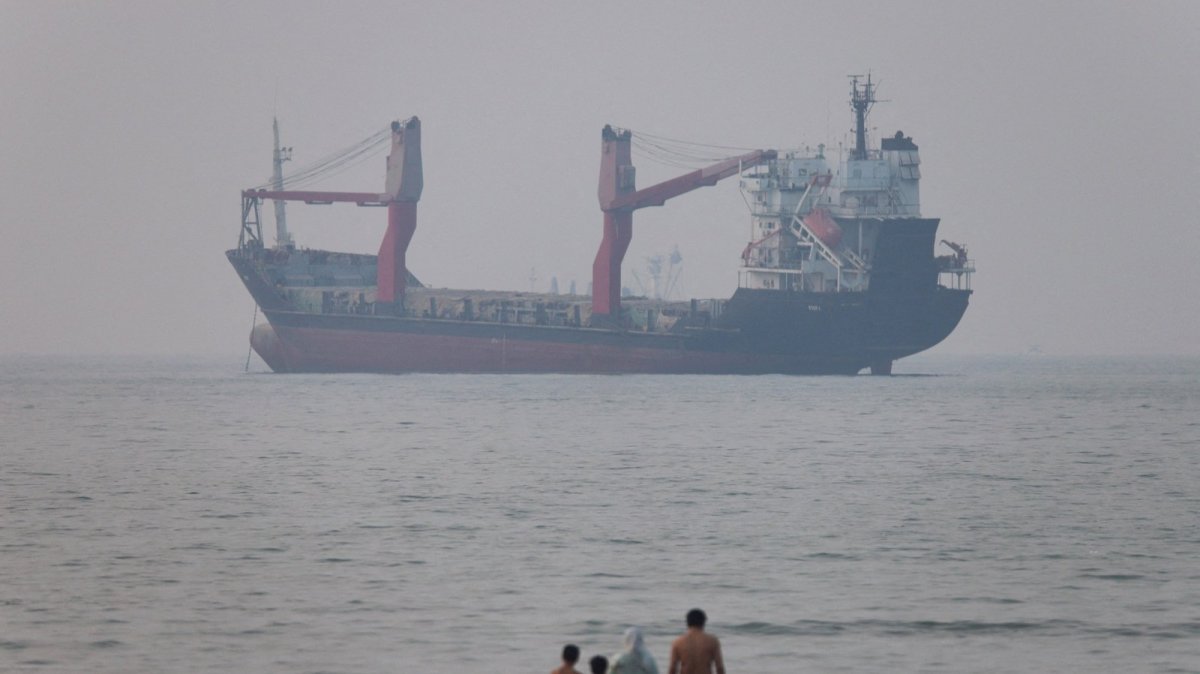
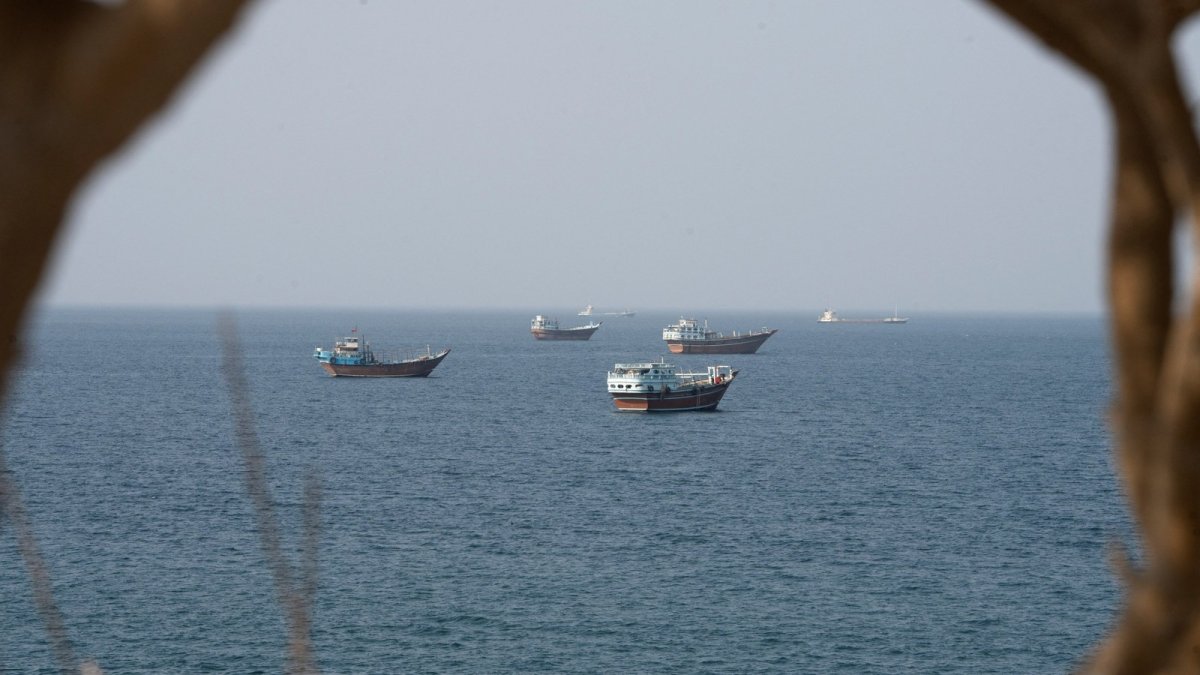
The stakes are enormous. Traffic through the strait remains about 90% below prewar levels, according to the U.K. Maritime Trade Operations (UKMTO). In mid-August, maritime traffic had reached just 17% of its prewar average after falling to 4% the previous week. The U.S. military has helped move a seven-day average of 8 million barrels of oil a day through the strait—down from more than 20 million barrels a day before the war, or roughly one of every five barrels consumed worldwide.
Iran's Strategic Calculus: Survival and Leverage
For Tehran, the standoff is a test of endurance. The U.S. attacks have severely damaged Iran's economy and devastated its navy and air force, but the regime retains enough missile and drone capability to impede oil tanker traffic and attack regional rivals. This residual capacity is Tehran's primary source of leverage—the ability to hold the global economy hostage even as its own people suffer.
Iranian leaders are publicly projecting confidence while privately acknowledging the strain. President Masoud Pezeshkian said it "would be better to end the war today, when we are powerful and have dignity, and the whole world acknowledges our victory." But parliament speaker Mohammad Baqer Qalibaf, the country's main negotiator in mediated talks with the U.S., was more candid in comments to Iranian and Iraqi businesspeople: "No matter how much military power we have, we won't survive if people are hungry and we don't have financial turnover, economic growth and national production."
The tension between these two messages reveals a regime caught between revolutionary ideology and pragmatic survival. Iran has granted permission for a number of Iraqi oil tankers to pass through the strait following repeated requests from Baghdad—a small but significant concession that suggests Tehran is willing to make exceptions when its interests require it. The question is whether such tactical flexibility can translate into a broader strategic accommodation.
Trump's Stalled Peacemaker Agenda
For President Trump, the Iran war has become a political liability. His approval rating has fallen to 33% in the latest Reuters/Ipsos poll, the lowest of his current term, as inflation persists and gasoline prices rise. The conflict has weighed "intensely" on the president, with no consensus inside the White House on how to resolve it, according to one Trump ally speaking on condition of anonymity.
Trump's promise to be a "peacemaker" has collided with the messy reality of a war he started but cannot easily end. He has called off talks with Tehran after pushing for weeks for a diplomatic solution and announced a new campaign of "economic warfare" against the Islamic Republic—an apparent acknowledgment that months of military attacks have not forced the concessions Washington wants. His negotiator and son-in-law, Jared Kushner, left empty-handed from talks aimed at advancing a Gaza peace deal, and an expected visit to Kyiv to revive Ukraine negotiations has yet to happen.
The political calendar adds urgency. Labor Day, which falls on Sept. 7 this year, traditionally marks the point when U.S. election campaigns accelerate. Republicans now face the prospect that unresolved conflicts abroad, along with their economic consequences at home, could threaten the party's hold on Congress in November's midterm elections. Trump's unorthodox diplomatic style—relying on America's economic and military might, including against U.S. allies—has yielded mixed results, and the Iran standoff is testing the limits of that approach.
Regional and Global Implications
The standoff over the Strait of Hormuz carries profound implications for regional stability and global energy markets. Oil prices rose Friday after Washington threatened sanctions against Iran's trading partners, raising concerns that tighter restrictions could further disrupt supply. The war has already contributed to higher gasoline prices in the United States, and any prolonged disruption to Hormuz traffic would have cascading effects on economies worldwide.
The strategic calculus of each actor is now clear. Washington wants to force Iranian capitulation through economic pressure while avoiding a wider war. Tehran wants to preserve its leverage and survive the sanctions onslaught while maintaining its nuclear program's ambiguity—U.N. inspectors have been shut out since 2025, leaving the program's status uncertain. NATO and European allies want to restore shipping without being drawn into direct conflict. Oman wants to mediate a solution that preserves its traditional role as a neutral broker. And China wants to protect its energy supplies without breaking with either Washington or Tehran.
The path forward remains uncertain. The June memorandum of understanding between Washington and Tehran, which called for a cessation of hostilities and the restoration of shipping, fell through amid chronic disputes over implementation. The current standoff could persist for months, with both sides testing each other's resolve through economic and diplomatic means rather than military force. For the region and the world, the stakes could not be higher: the free flow of energy, the stability of global markets, and the prospect of a broader conflagration all hang in the balance.
This article was produced with AI-assisted research and editorial support. Sources: Daily Sabah, Reuters, Oman News Agency, IRNA.
By Malik Hassan, Staff Writer
What's Your Reaction?
 Like
0
Like
0
 Dislike
0
Dislike
0
 Love
0
Love
0
 Funny
0
Funny
0
 Wow
0
Wow
0
 Sad
0
Sad
0
 Angry
0
Angry
0

Middle East Correspondent at Global1.News. Based in Beirut, covering politics, conflict, energy, and society across the Middle East. Brings context and depth to a region often reduced to headlines.










Comments (0)