
UPI To Remain Free For Consumers, Merchants May Face Small Fee: Centre
On August 8, 2026, the Indian government reaffirmed that UPI transactions will remain entirely free for consumers while opening the door to a modest merchant discount rate for larger businesses.
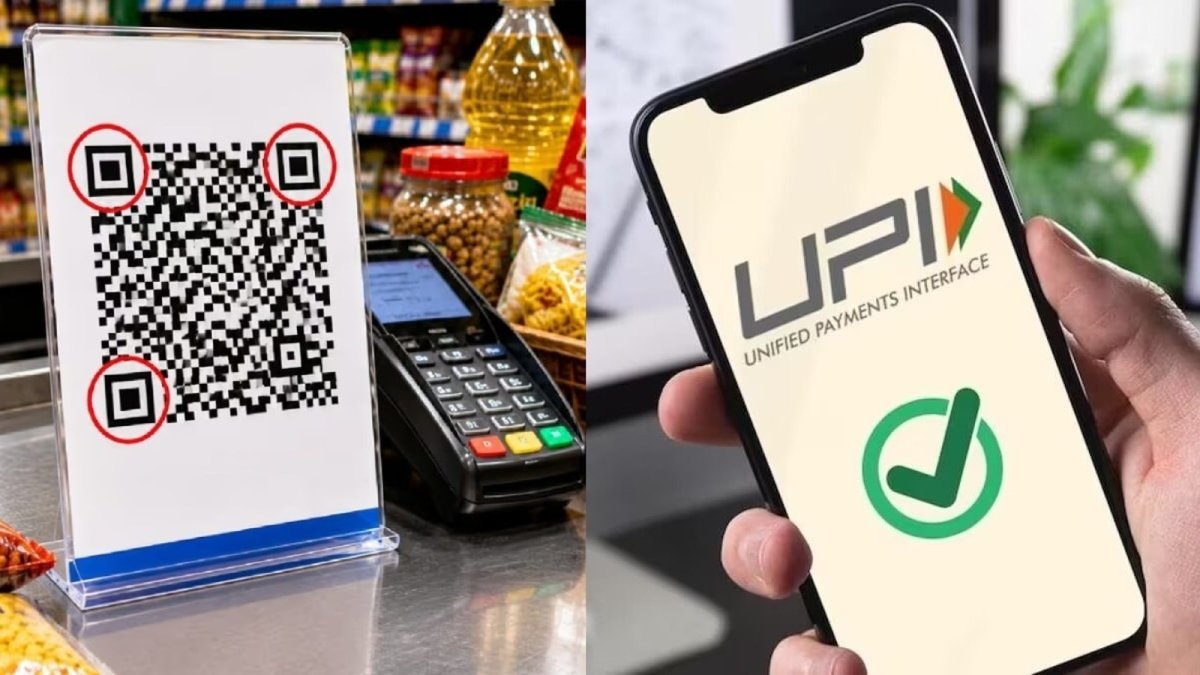
On August 8, 2026, the Indian government reaffirmed that UPI transactions will remain entirely free for consumers while opening the door to a modest merchant discount rate for larger businesses. The clarification follows the Lok Sabha's passage of the Payment and Settlement Systems (Amendment) Bill, 2026, which removes the legal bar on MDR for notified digital modes. Policymakers now face the challenge of funding the world's largest real-time payment network without eroding its mass adoption.
UPI MDR Debate: Sustaining India's Digital Payments
New Delhi – August 8, 2026 — The Ministry of Finance has confirmed that UPI will stay free for all consumers while exploring MDR options targeted at high-volume merchants.
The Announcement
The Ministry of Finance stated on August 8, 2026, that UPI will remain free for citizens. The Payments Council of India clarified on X the same day that no proposal exists to charge consumers for UPI transactions. Small merchants such as kirana stores will continue accepting UPI payments without paying merchant discount rate. UPI has stayed free for consumers since its launch in 2016.
What Exactly Changed in the Law
The debate follows the Lok Sabha's approval of changes to the Payment and Settlement Systems Act, 2007. Finance Minister Nirmala Sitharaman introduced the Taxation and Other Laws (Amendment) Bill, 2026 in the Lok Sabha on August 4. It seeks to amend Section 10A of the Act, which had barred charges on payment modes notified under Section 269SU of the Income Tax Act. Consequently, UPI and RuPay debit card transactions have remained free of MDR until now.
The amendment does not immediately impose charges. It removes the legal prohibition preventing banks and payment service providers from levying MDR on notified electronic payment modes, and empowers the Central Government to notify which digital payment modes may attract charges in future. The proposed change enables the Centre to notify the electronic modes of payment, the categories of people making or receiving payments (consumers, small merchants, large merchants), and transaction thresholds that would remain exempt from MDR.
The Numbers Behind UPI
UPI processed 22.72 billion transactions worth Rs 28.92 lakh crore in June 2026, according to NPCI data. That is year-on-year growth of 23 percent in volume and 20 percent in value. The daily average reached a record 75.7 crore transactions. UPI is the world's largest real-time payment system, processing billions of transactions every month.

Why the Zero-MDR Model Became Unsustainable
The zero-MDR policy dates to January 2020, when the Centre removed charges on UPI and RuPay debit card transactions to accelerate adoption after the 2016 demonetisation surge and the April 2016 NPCI launch of UPI. The Department of Financial Services told the Parliamentary Committee on Finance in a written submission that zero MDR makes the UPI ecosystem financially unsustainable. Under the policy, the government provides financial incentives, but incentive support constitutes only 11 percent of the cost incurred by the industry and 14 percent of the potential MDR collected by the industry. The rest is absorbed by banks, payment aggregators, fintech firms and NPCI itself.
The asymmetry is stark: UPI's monthly volume has climbed to 22.72 billion transactions, but the network generates no direct fee income to maintain the rails that carry them. Banks and payment companies argue that processing billions of transactions without MDR affects the commercial viability of the system.
India is not alone in facing this question. Brazil's Pix, launched in November 2020, is free to individuals and has become a global benchmark for instant payments, but it too relies on banks to absorb operating costs within a regulated framework. Many countries fund real-time payment rails through merchant fees or public subsidy. The difference in India is scale: no other system in the world processes that many transactions in a single month. The question is whether the infrastructure that made UPI a global success story can remain world-class when the funding model depends on subsidy and goodwill.
What the Regulators and Government Are Saying
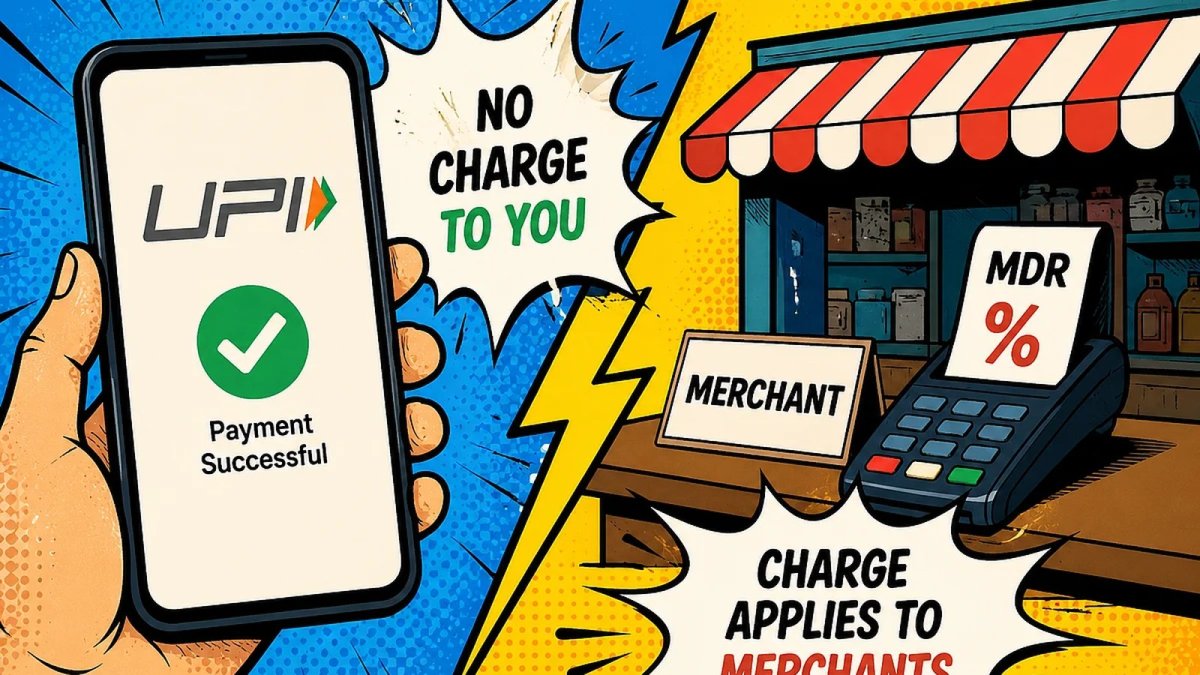
Finance Minister Nirmala Sitharaman, replying on X to Congress leader Jairam Ramesh, clarified that MDR is charged to merchants and not to end users. No decision has been taken yet on imposing MDR; the matter will be decided only after Parliament passes the proposed changes. The fee would help banks and fintech companies invest more in payment infrastructure, innovation and security. The UPI and Services Steering Committee, headed by NPCI, is yet to take a decision.
RBI Governor Sanjay Malhotra said after the Monetary Policy Committee meeting on August 6 that MDR talks are premature at this stage. 'It is very premature right now. The government is still carrying out the amendment. The costs have to be paid by someone,' he said. 'Ultimately, it is the consumer who pays, in one form or another, for digital transactions. So, it may not be the same consumer. It may be the general economy, which you don't directly get to see.'
Who Pays and Who Doesn't: The Merchant Math
Reuters reported the government is weighing two options: charging MDR on transactions above a certain limit, or levying fees based on a merchant's annual turnover. The likely framework is an MDR of 0.3-0.5 percent on UPI transactions above Rs 2,000 for merchants with an annual turnover of Rs 1.5 crore, a clear dividing line in the market. A kirana store processing small-ticket payments would continue paying nothing, exactly as PCI has promised. A large retail chain or e-commerce platform processing high-value transactions would, under the framework, become the payer. Thresholds and exemptions are not yet finalised.
According to Jefferies, transactions above Rs 2,000 accounted for only 4 percent of merchant payment volumes but about 67 percent of transaction value in FY26, meaning the fee would fall overwhelmingly on big-ticket commerce rather than everyday street purchases. If implemented, MDR could unlock a revenue pool of Rs 5,000-10,000 crore for the digital payments industry by FY28. Jefferies sees MDR on UPI adding $525 million to $1.05 billion to payment platforms' FY28 revenue. Google Pay, PhonePe and Paytm would benefit; banks are likely to benefit the most.
For payment apps, the stakes are enormous. Bernstein projects a merchant-funded MDR of 30-40 basis points as the most likely outcome, which would still leave consumers untouched. EY India believes P2P transfers and small-merchant payments will remain free because charging them would deter the very adoption UPI was built to encourage. The design, in other words, is calibrated to tax the top of the pyramid while protecting its base — a structure with obvious appeal to a government that has made financial inclusion a flagship achievement.
What It Means for India's Digital Economy
That revenue pool by FY28 would transform the economics of Indian payments. Google Pay, PhonePe and Paytm, which have spent years subsidising adoption, would gain a sustainable income stream, while banks — which Jefferies says stand to benefit the most — would finally see a return on the infrastructure they fund. The Payments Council of India emphasised that merchant service charges, where applicable, are commercial arrangements between merchants and payment service providers and do not imply that consumers would have to pay.
The debate also tests India's 'digital public infrastructure' philosophy. New Delhi has exported UPI to countries across Asia, Africa and the Middle East, presenting it as a model of publicly owned, low-cost payments. Introducing merchant fees at home does not contradict that narrative — most global systems are funded somehow — but it does force a conversation about who ultimately pays for the rails on which the digital economy runs. The political economy is equally significant: Congress leader Jairam Ramesh has warned that the burden would eventually fall on customers, while Finance Minister Sitharaman insists MDR applies to merchants, not end users. BharatPe founder Ashneer Grover called MDR on UPI 'a regressive step' that will 'kill mobile payments.'
The Road Ahead
The legislative path is now the critical variable. The amendment Bill has cleared the Lok Sabha and must pass the Rajya Sabha. Only then can the government notify which payment modes, merchant categories and transaction thresholds would attract charges. Any implementation would then require separate regulatory guidelines from the RBI, a process that typically takes months.
Consumers, for now, face no change: UPI remains free for person-to-person transfers and merchant payments alike. The groups to watch are large merchants and the payments industry — the former for how the threshold is set, the latter for how the revenue opportunity is distributed between banks and fintech platforms. The steering committee headed by NPCI will be the first forum where these choices take shape.
— By Dr. Raj Patel, Staff Writer
This article was produced with AI-assisted research and editorial support. Reporting is based on sources cited in the article.
What's Your Reaction?
 Like
0
Like
0
 Dislike
0
Dislike
0
 Love
0
Love
0
 Funny
0
Funny
0
 Wow
0
Wow
0
 Sad
0
Sad
0
 Angry
0
Angry
0

India/South Asia Correspondent at Global1.News. Analytical voice with a background in science and health journalism. Based in New Delhi, covering Indian politics, education, healthcare, technology, and policy. Breaks down complex data into clear, actionable reporting.














Comments (0)