
UNICEF: 300 Palestinian Children Killed in 300 Days of Gaza Ceasefire
In the 300 days since a ceasefire was announced in Gaza on 10 October 2025, at least 300 Palestinian children have been killed — one every single day.
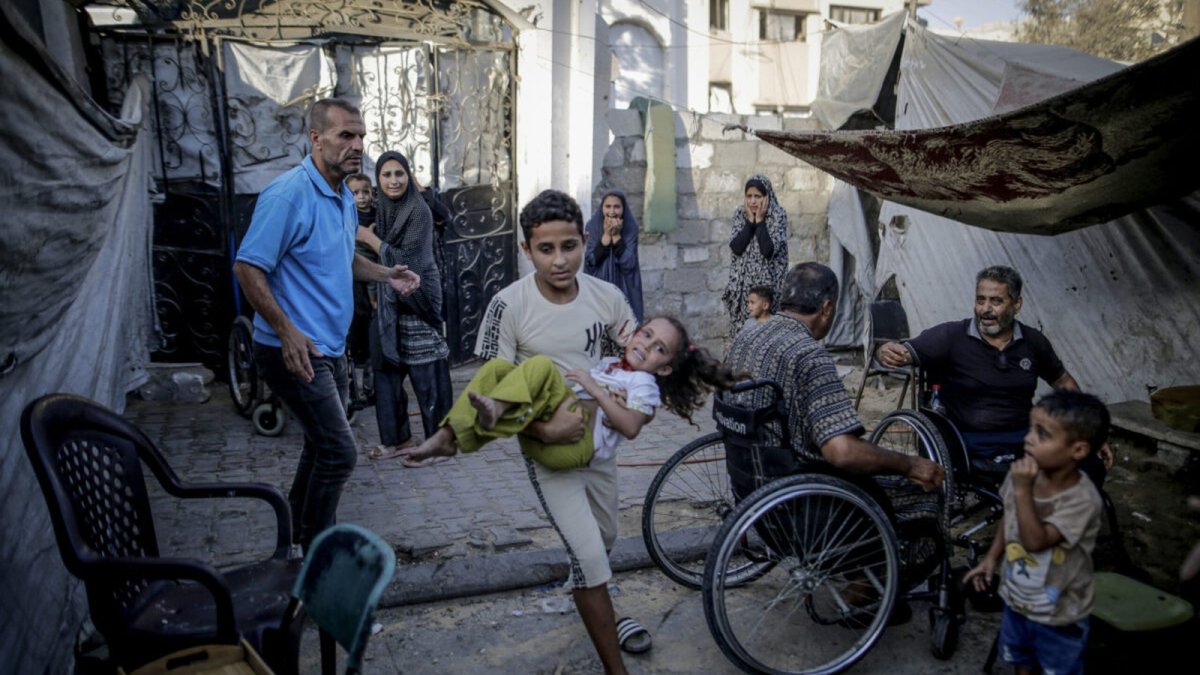
In the 300 days since a ceasefire was announced in Gaza on 10 October 2025, at least 300 Palestinian children have been killed — one every single day. The grim average persists despite an agreement for the suspension of military operations and the full entry of humanitarian aid and relief, and it has become a measure of how far the promised peace has fallen short. The figure lands as reports circulate of a new United States-led peace plan and as Israeli ministers publicly call for renewed attacks — a reminder of how fragile the truce remains for the civilians who were promised its protections.
One Child Killed Daily in Gaza Ceasefire
Gaza City, Occupied Palestinian Territories — At least 300 Palestinian children have been killed in Gaza in the 300 days since the ceasefire was announced on 10 October 2025, according to UNICEF. The UN Children's Fund said the deaths amount to an average of one child every day, despite an agreement for the suspension of military operations and the full entry of humanitarian aid and relief.
"A ceasefire that leaves an average of one child dead each and every day is failing children," said Edouard Beigbeder, UNICEF Regional Director for the Middle East and North Africa. "With hundreds more children injured, many severely, children in Gaza are still waiting for the end to the violence they were promised."
UNICEF Assessment of Ceasefire Failures
UNICEF highlighted that the announced ceasefire has not delivered the promised protections for children. Beigbeder noted recent announcements of steps toward ending hostilities and scaled-up aid, yet emphasized the simple test for children in Gaza: whether the killing stops, aid reaches them at scale, hospitals reopen, water flows, and children return to school safely in September. He added that children have heard promises before and that agreements must now translate into action.
The organization stressed obligations under international humanitarian law and international human rights law, urging all parties to protect children and ensure their access to healthcare, education, safe water and food, and to allow humanitarian aid to reach children in need safely, quickly and without obstruction.
"For children in Gaza, the test is simple," Beigbeder said. "Does the killing stop? Does aid reach them at scale? Do hospitals reopen and water flow? Will children return to school safely in September? Children have heard promises before. This time, agreements must translate into action."
Overall Casualty Toll Reported by OCHA
OCHA, citing Gaza health authorities, reported an overall casualty toll since the 10 October 2025 ceasefire announcement of 1,209 killed and 3,943 injured. Families remain confined to approximately one third of the Strip, sheltering among destroyed buildings, rubble and uncleared waste. Ongoing military operations near the so-called Yellow Line, a concrete-block separation line erected by Israeli soldiers, along with strikes in other parts of the Strip, continue to disrupt civilian life, damage shelters, drive renewed displacement and restrict access to life-saving services.
The figures reflect a continued toll on civilians under an agreement that promised the suspension of military operations and full humanitarian entry. Aid deliveries remain far below the scale required, and the pattern of repeated displacement shows how the ceasefire has failed to create stable conditions for the families squeezed into the limited areas available for shelter.
The UN and its partners continue to respond "wherever and whenever they can," OCHA said, including work to improve 3,000 makeshift shelters in Gaza City last week and the distribution of emergency shelter and essential items to 9,000 households — kitchen sets, tarpaulins, blankets, mattresses, solar lights and clothes. To scale up assistance, OCHA insisted it is critical that timber, ropes, more solar lights and tools are allowed to enter Gaza in a timely manner.
Attacks on Medical Infrastructure
WHO documented an attack on a medical storage facility next to Al-Aqsa Hospital in Deir al-Balah that destroyed essential medical supplies, including some delivered by the agency. The loss compounds the risks for children already facing acute malnutrition, disease, unsafe water and damaged sanitation systems — conditions that have turned routine medical care into a life-threatening challenge.
Exhausted and hungry mothers continue to arrive at health centres carrying severely malnourished children, while basic services remain severely limited across the Strip. In its latest update, OCHA noted that airstrikes in Gaza had reportedly resulted in civilian casualties and damage to critical medical supplies and civilian infrastructure. Each strike on civilian infrastructure narrows the already thin margin between survival and crisis for families sheltering in the enclave.
Conditions for Newborns and Malnutrition
Health workers report a worrying increase in premature births and newborns in critical condition. Louise Wateridge, UNICEF spokesperson, stated there are not enough incubators and that in some cases health workers see two or even three babies sharing a single machine. "In Gaza, children only days old are already fighting to stay alive," she said, describing babies "born into partially functioning hospitals lacking equipment and medicine."
"This is what the world has chosen to tolerate," Wateridge said, calling for the killing to stop, aid to enter at scale and children to be protected. "The world calls it a ceasefire but families in Gaza are still burying their children." These conditions are the daily reality for families who were promised an end to violence and instead continue to mourn the young.
Education and Aid Delivery Efforts
For the duration of the hostilities, the UN has not stopped working to help the people of Gaza, UNICEF said. The agency has delivered more than 600 pallets of recreational kits, school bags and soap into Gaza ahead of the new school year, expected to begin in about two weeks. More than 250,000 pre-school and school-aged children are participating in summer learning activities, helping to provide a sense of routine and stability while students recover some of the learning lost during the hostilities.
The deliveries come as hospitals struggle to reopen fully and water systems remain damaged. UNICEF has framed the return to school as part of the test Beigbeder set out — whether agreements translate into concrete protections for children in their daily lives.
Regional Context and Peace Developments
The ceasefire announced on 10 October 2025 was intended to suspend military operations between Hamas fighters and the Israel Defense Forces after more than two years of war that began with deadly Hamas-led attacks on Israel in October 2023. Nearly ten months later, Gaza health authorities put the overall death toll at more than 73,000 since October 2023, and the enclave's children remain the most exposed to the consequences of the ongoing humanitarian crisis.
Reports indicate a new United States-led peace plan for Gaza alongside a recent spike in Israeli airstrikes on alleged Hamas targets, while Israeli ministers have called for renewed Gaza attacks and rejection of the ceasefire roadmap.
Israel has raised reservations over an international force role, and Beigbeder said children have heard promises before — this time, agreements must translate into action. The coming weeks will determine whether the reported peace developments deliver the protections long promised to Palestinian communities, where access to basic needs remains obstructed and displacement persists. For families across the Strip, the distance between ceasefire and peace has been measured in the children they have buried — a reality that no announcement has yet changed.
By Fatima Al-Rashid, Staff Writer
This article was produced with AI-assisted research and editorial support. Reporting is based on sources cited in the article.
What's Your Reaction?
 Like
0
Like
0
 Dislike
0
Dislike
0
 Love
0
Love
0
 Funny
0
Funny
0
 Wow
0
Wow
0
 Sad
0
Sad
0
 Angry
0
Angry
0

Gulf/MENA Correspondent at Global1.News. Based in Doha, covering Gulf politics, energy markets, diplomacy, and development across the Middle East and North Africa. Tracks the economic transformation of the Gulf states.












Comments (0)