
UN Satellite Data Shows Gaza Destruction Deepening Despite Ceasefire
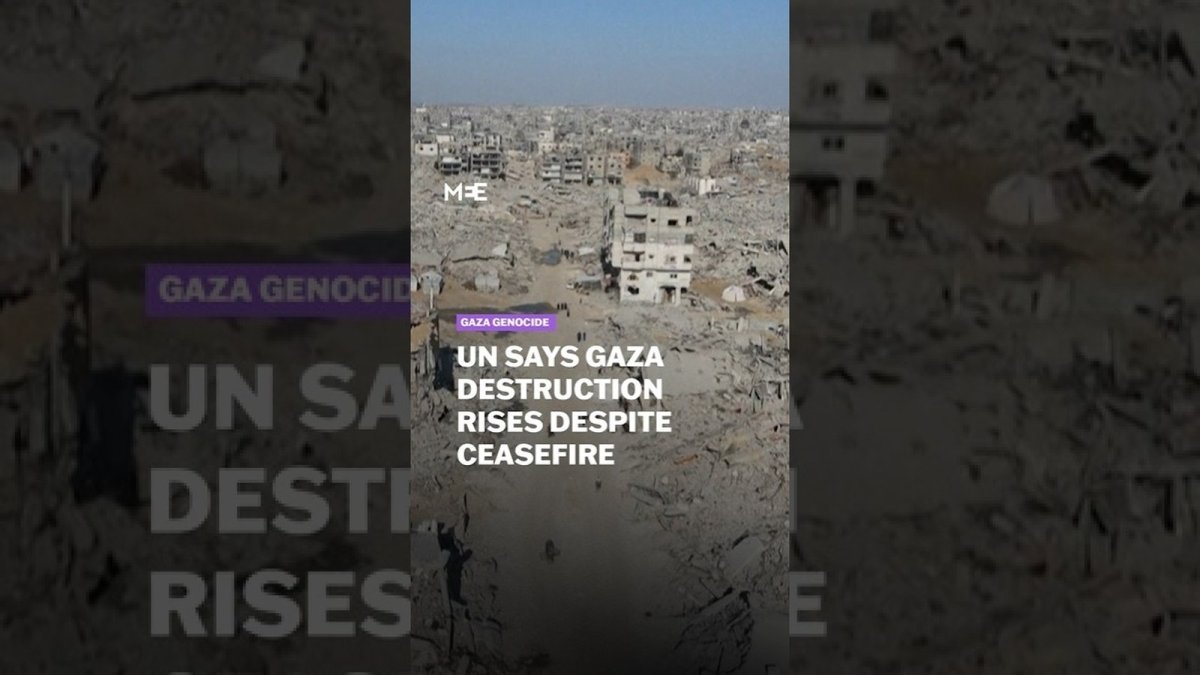
In a recent Middle East Eye report, UN officials detailed how the latest satellite assessment of Gaza shows destruction continuing to rise even after the October 2025 ceasefire. UN deputy spokesperson Farhan Haq told reporters on 7 August that the number of destroyed structures across the Strip has increased by 9 percent since the ceasefire was declared, with about 82 percent of all structures now damaged.
In a recent Middle East Eye report, UN officials detailed how the latest satellite assessment of Gaza shows destruction continuing to rise even after the October 2025 ceasefire. UN deputy spokesperson Farhan Haq told reporters on 7 August that the number of destroyed structures across the Strip has increased by 9 percent since the ceasefire was declared, with about 82 percent of all structures now damaged.
UN Satellite Data Shows Gaza Destruction Deepening Despite Ceasefire
Geneva, Switzerland – 8 August 2026 — The UN Satellite Centre's new analysis, presented by Haq at the daily press briefing, found that more than 200,000 structures across Gaza are damaged to some degree, two-thirds of them assessed as destroyed. The assessment updates an earlier UNOSAT analysis from early August that put the share of damaged structures at about 81 percent.
UN Assessment Shows Rising Structural Damage in Gaza
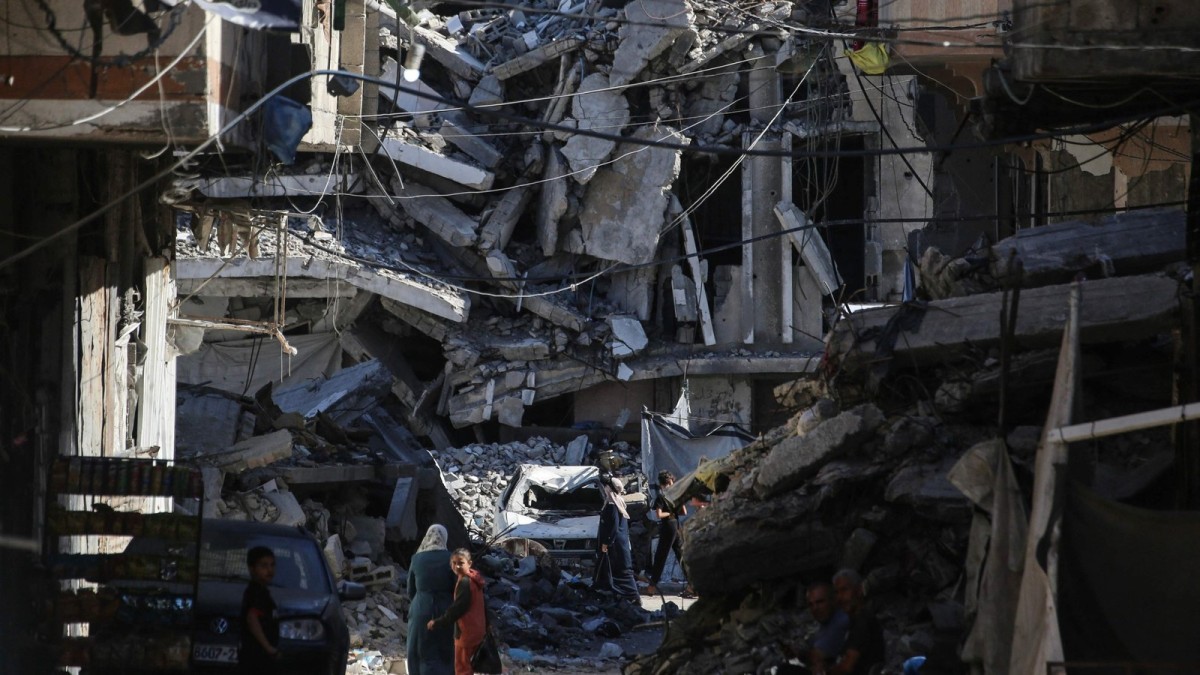
UN deputy spokesperson Farhan Haq told reporters during the 7 August 2026 daily press briefing that the new assessment by the UN Satellite Centre (UNOSAT) estimates the number of destroyed structures across Gaza has increased by 9 percent since the ceasefire declaration in October 2025. Overall about 82 percent of structures in Gaza are damaged, representing more than 200,000 structures affected to some degree, with two-thirds assessed as destroyed.
The latest figures update an earlier UNOSAT assessment from early August 2026 that placed damaged structures at about 81 percent, including more than 123,000 structures identified as destroyed, another 50,000 severely or moderately damaged, and 24,000 possibly damaged. Northern Gaza recorded the largest increases in damage since July 2025, with nearly 5,700 newly affected structures, according to Haq.
The satellite data reflects nearly three years of war in which entire neighbourhoods have been flattened. Schools, clinics, mosques and markets that once anchored community life now appear in the assessments of international agencies as damaged or destroyed structures rather than functioning institutions.
Millions Remain Displaced in Precarious Conditions
Haq stated that most of Gaza's 2.1 million people remain displaced in poor conditions. Humanitarian partners have mostly been allowed to bring in tents that do not last long, leaving families without durable protection from the elements. Restrictions on durable shelter materials remain one of the key supply constraints highlighted by the UN.
Displacement across Gaza means millions live in makeshift tent camps or crowded schools turned into shelters. As winter approaches with its cold winds and rains, children bear much of the burden, with disrupted schooling and limited protection from the elements. Many families who returned to their neighbourhoods after the ceasefire found homes reduced to rubble, with belongings buried under the debris.
For residents, the cycle of movement and loss has become a defining feature of life under the ceasefire: restricted shelter supplies prolong exposure to harsh conditions while the means to rebuild remain out of reach.
Restrictions Hinder Critical Humanitarian Supplies
Haq noted that more approvals are needed to bring engine oil and spare parts into the Strip. Humanitarian operations depend on vehicles and backup generators, yet repeated denials of engine-oil requests, combined with insufficient quality lubricant oil coming through the private sector, threaten to reduce or halt critical operations at hospitals, pumping stations and bakeries.
The knock-on effects reach everyday life: when hospital generators lack fuel or maintenance, life-saving equipment goes silent; when water pumps lose power, communities face longer waits for basic hydration and sanitation; when bakeries shut, bread lines grow longer. OCHA reports limited improvements in the flow of critical supplies into Gaza even as needs remain immense and people continue to depend heavily on aid.
Humanitarian monitors have repeatedly flagged the broader pattern of restrictions on what enters Gaza. The constraints, they warn, compound vulnerabilities at a moment when the regional escalation that began at the end of February 2026 has already stretched the response.
Aid Inflows See Notable Increase in July
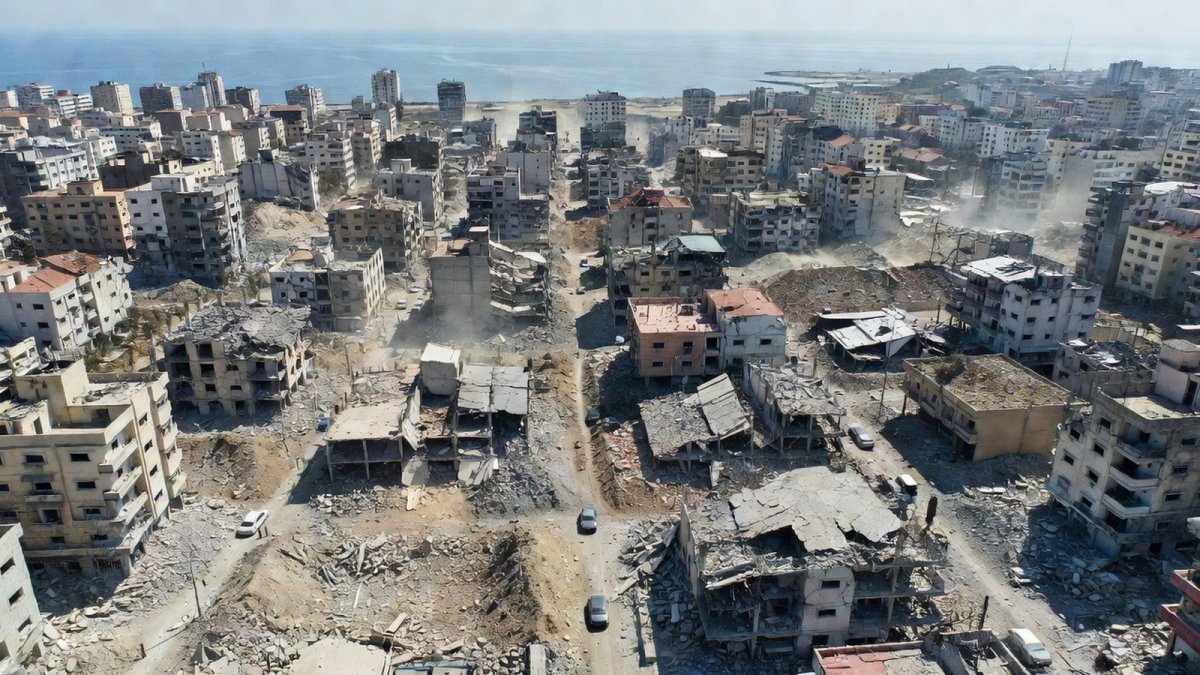
UN 2720 mechanism data recorded a 33 percent increase in the volume of supplies brought into Gaza in July 2026 compared with June 2026. More than 55,000 pallets of aid, roughly 35,000 metric tons or 26,000 truckloads, entered the territory, bringing levels closer to those recorded before the regional escalation began at the end of February 2026.
About 60 percent of supplies were food, followed by smaller volumes of shelter, water, sanitation, hygiene and health items. Additional supplies came through the private sector. Haq described the uptick as a limited improvement in the flow of critical supplies even as people continue to depend heavily on aid.
For families, the difference between an aid truck arriving and not arriving is measured in meals, medicine and the ability to keep a generator running through the night. The 33 percent increase is a modest step; on the ground, it remains far short of the scale of need across a territory where two-thirds of all structures are assessed as destroyed.
Operations in West Bank Camps Cause Extensive Harm
Humanitarian partners visited Qalandia Camp in Jerusalem after Israeli forces concluded a two-day operation, Haq said. Teams identified widespread damage to houses and businesses, with dozens of families reporting damage to doors, windows and furniture. Forces reportedly took over some homes, pushed families out and used properties as interrogation centers.
The Palestine Red Crescent Society says more than 50 people were injured during the operation. The UN and its partners said they are mobilizing support for those affected, in a West Bank where restricted movement and economic strain have deepened alongside the war in Gaza.
Ceasefire Holds Amid Ongoing Violations and Casualties
The ceasefire between Israel and Hamas took effect on 10 October 2025, based on a 20-point peace plan proposed by US President Donald Trump that included Hamas disarmament, Israeli withdrawal, deployment of an International Stabilisation Force, and an independent Palestinian administration to oversee governance and reconstruction. Israeli Prime Minister Benjamin Netanyahu said on 5 August 2026 that Israeli withdrawal depends on complete Hamas disarmament.
Disagreements over disarmament and withdrawal timelines keep the ceasefire's multi-phase framework fragile. Violations translate directly into lost lives on the ground, disrupting any emerging sense of safety for residents trying to resume daily existence.
UN-cited figures indicate that more than 68,000 people have been killed in Gaza in more than two years of attacks since October 2023. Gaza's Health Ministry says at least 1,252 people have been killed in Gaza since the ceasefire took effect as of 5 August 2026. UNICEF says at least 300 children have been killed in Gaza since the ceasefire, an average of approximately one child every day. The Gaza Government Media Office recorded 4,091 Israeli violations in 300 days, killing 1,254 Palestinians, wounding 4,121 and detaining 159. The war began with the Hamas-led attack on southern Israel on 7 October 2023, which killed around 1,200 people and saw 251 taken hostage.
Reconstruction Remains a Distant Prospect
The scale of damage documented by UNOSAT poses a reconstruction challenge without modern precedent. With two-thirds of Gaza's structures assessed as destroyed and durable shelter materials still restricted, the practical work of rebuilding — clearing rubble, restoring water and electricity networks, repairing roads — has barely begun more than nine months after the ceasefire took effect.
Haq's briefing underscored the gap between diplomatic frameworks and daily reality. The 20-point plan envisions an independent Palestinian administration overseeing governance and reconstruction, and an International Stabilisation Force supporting security. But the UN's own assessment of what is actually entering Gaza — mostly food, with shelter, water, sanitation and health items arriving in smaller volumes — shows how far the recovery is from the vision set out in October 2025.
Regional escalation has compounded the challenge. The wider conflict that intensified at the end of February 2026 drew in other fronts and diverted attention and resources from Gaza's humanitarian needs, even as the aid pipeline began to recover in July. For the families living among the ruins, reconstruction is not a political abstraction: it is the difference between sleeping in a tent that leaks in the winter rain and returning to a home with walls, a roof and running water.
Political Developments and International Condemnations
On 6 August 2026, Hamas welcomed a joint Arab-Islamic condemnation of Israeli ceasefire violations. Foreign ministers from eight Muslim and Arab countries warned that ongoing violations risk collapsing the ceasefire's second phase and undermining political negotiations.
The joint statement signals collective regional concern and the potential for coordinated advocacy on Palestinian rights as second-phase negotiations unfold. Gazans, meanwhile, await tangible steps toward reconstruction that could restore basic infrastructure and housing after years of destruction.
Human rights organizations continue to document violations, building evidence that could underpin accountability efforts under international law. For residents, the measure of progress will be practical: cleared rubble, restored services, and the entry of the materials needed to rebuild homes — so that families can plan beyond immediate survival.
By Fatima Al-Rashid, Staff Writer
This article was produced with AI-assisted research and editorial support. Reporting is based on sources cited in the article.
What's Your Reaction?
 Like
0
Like
0
 Dislike
0
Dislike
0
 Love
0
Love
0
 Funny
0
Funny
0
 Wow
0
Wow
0
 Sad
0
Sad
0
 Angry
0
Angry
0

Gulf/MENA Correspondent at Global1.News. Based in Doha, covering Gulf politics, energy markets, diplomacy, and development across the Middle East and North Africa. Tracks the economic transformation of the Gulf states.












Comments (0)