
US-Iran Deal Confusion Clouds Hormuz Reopening
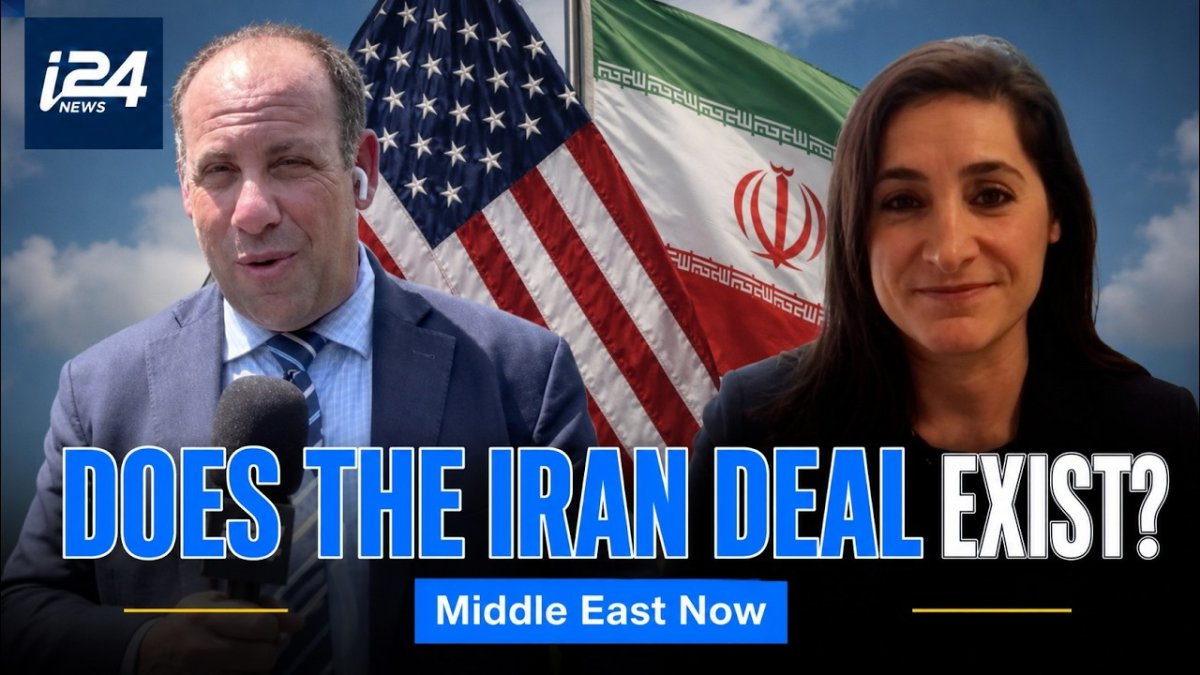
In a recent i24NEWS English report, the channel examined the confusion swirling around the status of a US-Iran deal, with Washington and Tehran sending mixed signals over whether negotiations are underway. Qatar's mediation push on Tuesday drove oil prices lower even as Tehran rejected claims that talks had begun. The report highlighted how these signals directly affect shipping lanes near Israel and the broader security environment in the Middle East.
In a recent i24NEWS English report, the channel examined the confusion swirling around the status of a US-Iran deal, with Washington and Tehran sending mixed signals over whether negotiations are underway. Qatar's mediation push on Tuesday drove oil prices lower even as Tehran rejected claims that talks had begun. The report highlighted how these signals directly affect shipping lanes near Israel and the broader security environment in the Middle East.
US-Iran Deal Confusion Clouds Hormuz Reopening
Jerusalem, Israel – this week — Qatar's mediation efforts produced fresh uncertainty this week over whether Washington and Tehran have reached any agreement on ending hostilities or reopening the Strait of Hormuz. Israeli officials in the Prime Minister's Office and the Foreign Ministry tracked the statements closely, viewing any arrangement through the lens of Iran's nuclear program and its support for proxies threatening Israel's borders.
Mixed Signals From Washington and Tehran
Qatar announced on Tuesday that mediators were advancing talks to end the US-Iran war, prompting benchmark Brent crude to drop more than 5 percent. Emir Sheikh Tamim bin Hamad Al Thani spoke by phone with President Donald Trump that day and stressed the need to uphold the US-Iran Memorandum of Understanding signed in mid-June. The emir's office said the call focused on narrowing differences between the two sides.
President Trump stated on Monday that talks with Tehran had already started and that Iran faced a last chance to reach a deal. Iranian officials immediately pushed back, with Foreign Ministry spokesperson Esmaeil Baghaei declaring that no negotiations with the United States were taking place. Baghaei added that separate talks with Oman over safe shipping lanes through the Strait of Hormuz remained positive and aimed at protecting the sovereign rights of both Iran and Oman.
These contradictory messages reached Jerusalem at a time when the IDF maintains heightened alert across multiple fronts. Israeli analysts noted that any perceived softening by Washington could affect the credibility of deterrence against Hezbollah in Lebanon and Iranian-backed groups in Syria.
The Strait of Hormuz Bottleneck
The Strait of Hormuz stayed virtually closed this week after another vessel came under attack while attempting passage. The waterway normally carries roughly one-fifth of global oil and liquefied natural gas shipments, and its continued disruption has raised shipping insurance costs for vessels heading toward the Mediterranean and the Red Sea.
Treasury Secretary Scott Bessent and Secretary of State Marco Rubio expressed optimism about progress in reopening the strait. Rubio said progress had been made but finality had not yet been reached, while Bessent indicated a deal could be finalized by Tuesday or Wednesday. Iranian officials separately announced on August 6 that coordinates for new routes had been agreed with Oman and that a deal was on the verge of being finalized.
Reopening the strait would ease immediate pressure on global energy markets, yet Israeli security officials emphasized that such a step would not address Iran's nuclear activities or its ongoing support for Houthi attacks on Red Sea shipping lanes that indirectly threaten Israeli interests.
Reopening the strait would directly ease pressure on energy markets that have been strained since the April 2026 outbreak of hostilities, allowing tankers to resume normal transit and reducing the premium that insurers now attach to voyages through the narrow waterway. Israeli officials monitoring these developments note that stable energy flows through Hormuz support broader regional security, even as the IDF maintains multi-front readiness drills amid heightened Houthi attacks on tankers. Any durable arrangement would also limit the leverage Iran currently holds over international shipping, a factor Jerusalem weighs when assessing threats to its own maritime access in adjacent waters.
From Twelve-Day War to Islamabad Memorandum
The 2026 Iran war began in April when Israel conducted large-scale strikes on Iranian targets, including the assassination of Supreme Leader Ali Khamenei and senior official Ali Larijani. On April 7, Iran and the United States announced a temporary two-week ceasefire that later extended into broader diplomatic efforts.
On June 17, President Trump and Iranian President Masoud Pezeshkian signed the 14-point Islamabad Memorandum remotely to end the war involving Iran, the United States, and Israel. Trump signed the document during a dinner with French President Emmanuel Macron at the Palace of Versailles after the G7 summit. The memorandum called for an immediate cessation of military operations and set the stage for follow-on talks.
Israeli officials participated indirectly through coordination with Washington, ensuring that any final arrangement would account for threats from Iranian proxies along Israel's northern and southern borders. The IDF has since conducted multi-front readiness drills to prepare for possible violations of the memorandum.
Under the Islamabad Memorandum Israel secured an immediate halt to direct Iranian missile and proxy activity while accepting the constraints of the 14-point framework that limited further escalation. The document's emphasis on ending military operations aligned with Israel's core interest in preventing a prolonged multi-front war, yet it left unresolved Iran's nuclear program, which remains outside the current Oman talks. Israeli defense planners therefore view the memorandum as a necessary but incomplete step that still requires follow-on measures to address long-term threats.
Israel's Security Calculus
Israeli leaders continue to insist that the ultimate objective remains the denuclearization of Iran, a position Secretary of State Marco Rubio has echoed publicly. Iran has refused to discuss its nuclear program until the current conflict fully ends, leaving a gap that Jerusalem views as unacceptable.
The IDF has maintained multi-front readiness drills amid an increase in Houthi attacks on commercial vessels. Israeli officials also monitor the northern border where Hezbollah remains positioned, and they have criticized alleged misleading leaks from the Lebanese side during ongoing border talks this week.
Any deal limited to shipping lanes would leave Israel's core security concerns unresolved, particularly the risk that Iran could reconstitute its nuclear infrastructure once sanctions pressure eases. Defense officials in Tel Aviv have stressed that military preparedness must continue regardless of diplomatic developments in Muscat or Doha.
Israeli red lines on Iran's nuclear program remain unchanged, with Treasury Secretary Scott Bessent and Secretary of State Marco Rubio both stressing that the ultimate deal must include denuclearization. The IDF continues multi-front readiness drills in response to the uptick in Houthi attacks on tankers, while Hezbollah maintains its posture along the northern border even as Israel-Lebanon border talks proceed under the same week's schedule. The Israeli delegation head has attributed recent setbacks to misleading leaks, underscoring the sensitivity of these parallel tracks within the Prime Minister's Office and the defense establishment.
Israeli political leaders treat the emerging Oman deal on Hormuz as a tactical opening rather than a strategic resolution, insisting that nuclear negotiations cannot begin until the conflict fully ends. The Knesset and security cabinet monitor how any Hormuz agreement might affect Hezbollah's calculations and Houthi operations, recognizing that a collapse in the current talks could quickly restore the pre-June 17 threat environment. Coordination with Washington therefore focuses on ensuring that progress on shipping lanes does not dilute pressure for denuclearization.
Regional and International Reactions
Gulf states welcomed the possibility of reopened shipping lanes while signing the Mecca Joint Defence Pact on August 7 to coordinate responses to Iranian threats. The pact reflects growing Arab concern over Houthi disruptions and Iranian influence across the region.
European Union and United Nations representatives called for swift implementation of any Hormuz agreement, yet they stopped short of endorsing broader nuclear talks. Israeli diplomats have urged these bodies to link any shipping relief to verifiable limits on Iran's nuclear and missile programs.
Analysis and What This Means
A limited Hormuz reopening would reduce immediate economic strain but would leave Iran's nuclear ambitions and proxy networks intact. Israeli policymakers therefore treat the current talks as a tactical pause rather than a strategic resolution.
Jerusalem will watch whether Washington maintains pressure on Tehran to address denuclearization or whether the focus narrows solely to maritime access. Any weakening of that red line could affect Israel's willingness to coordinate future operations with the United States.
The coming days will test whether the mixed signals from Washington and Tehran produce a durable shipping arrangement or simply prolong uncertainty along Israel's borders and in global energy markets.
In the coming weeks two main scenarios stand out: a finalized Hormuz deal that reopens the strait without addressing Iran's nuclear file, or a breakdown that returns the region to active confrontation. Israel would adjust its calculus if Oman-mediated talks on safe shipping lanes and sovereign rights stall, particularly if Houthi attacks intensify or Hezbollah exploits the pause. The risk of collapse remains high given Iran's repeated statements that it will not yield to coercion and its refusal to discuss nuclear issues until hostilities cease.
US-Israel coordination centers on the timeline set by Rubio and Bessent, who indicated a deal could be reached by Tuesday or Wednesday, while Jerusalem watches for any sign that Washington might accept a partial Hormuz arrangement without parallel nuclear commitments. A durable reopening would ease immediate energy pressures and support Gulf states' interests, yet Israeli officials continue to emphasize that only full denuclearization can prevent future rounds of conflict involving Iran and its proxies.
By Hannah Berg, Staff Writer
This article was produced with AI-assisted research and editorial support. Reporting is based on sources cited in the article.
What's Your Reaction?
 Like
0
Like
0
 Dislike
0
Dislike
0
 Love
0
Love
0
 Funny
0
Funny
0
 Wow
0
Wow
0
 Sad
0
Sad
0
 Angry
0
Angry
0

Israel Correspondent at Global1.News. Based in Tel Aviv, covering Israeli politics, security, technology, and society. Provides balanced, deeply-sourced reporting on one of the most closely-watched regions in the world.














Comments (0)