
UK MP Emily Thornberry Calls for Ban on Israeli Settlement Trade
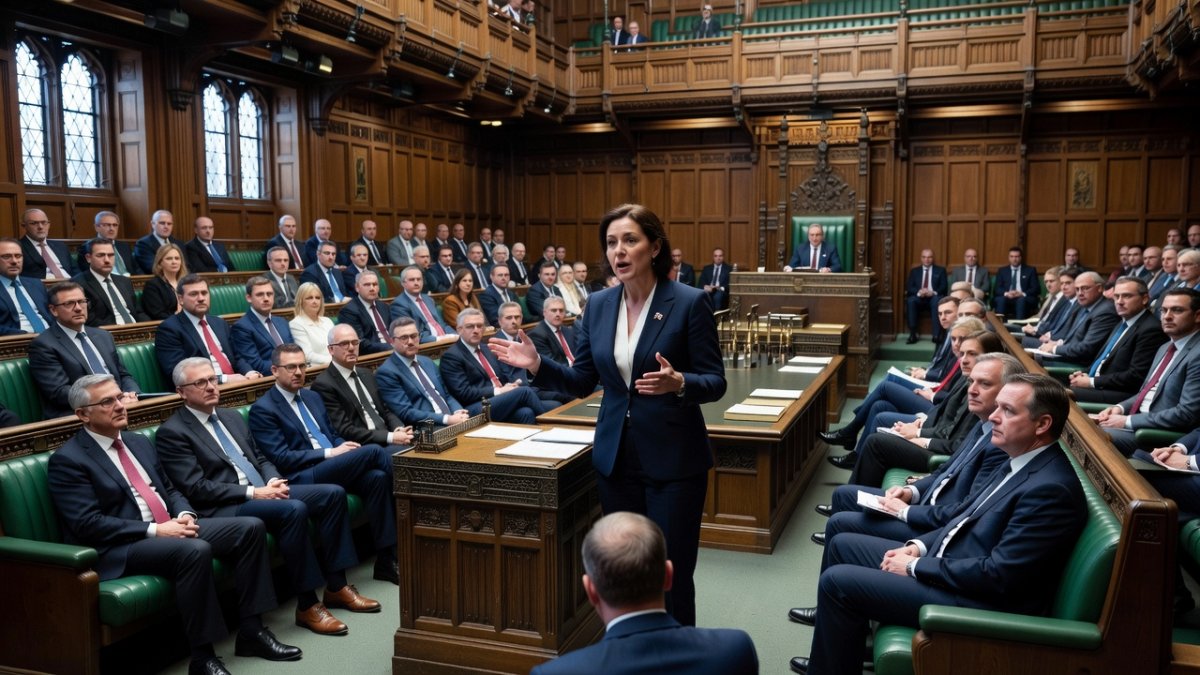
In a recent Middle East Eye report, UK Labour MP Emily Thornberry, chair of the House of Commons Foreign Affairs Select Committee, issued a stark call for Britain to ban all trade with illegal Israeli settlements in the occupied West Bank, describing settler violence there as "the worst we have ever seen." Speaking to Sky News on August 21, 2026, Thornberry reaffirmed her committee's long-standing demand for economic action, arguing that "it is Palestinian land, we have to do
In a recent Middle East Eye report, UK Labour MP Emily Thornberry, chair of the House of Commons Foreign Affairs Select Committee, issued a stark call for Britain to ban all trade with illegal Israeli settlements in the occupied West Bank, describing settler violence there as "the worst we have ever seen." Speaking to Sky News on August 21, 2026, Thornberry reaffirmed her committee's long-standing demand for economic action, arguing that "it is Palestinian land, we have to do something about this." Her intervention lands at a moment of acute crisis, with human rights organisations documenting record levels of settler attacks, forced displacement, and a creeping annexation that threatens to render a two-state solution physically impossible.
UK Committee Chair Demands Settlement Trade Ban as West Bank Violence Reaches Record Levels
London, United Kingdom – August 21, 2026 — The chair of the UK's Foreign Affairs Select Committee has intensified pressure on the new Labour government to sever economic ties with Israeli settlements, warning that Palestinians are being subjected to unprecedented violence and displacement on land internationally recognised as their own. Emily Thornberry's remarks, made in a televised interview and echoed in the committee's ongoing work, come as the United Nations and human rights groups document a surge in settler attacks that has already displaced thousands of Palestinians and killed at least 15 people this year alone.
A Call to Cut Ties
Thornberry's demand is not new — the Foreign Affairs Select Committee has been calling for a ban on settlement trade for over a year — but her latest public statements carry renewed weight given the political landscape in London. In July 2026 interviews, she urged the new prime minister to move "much faster" to sever economic links with settlements, insisting that the UK should put "no money, resources, insurance, finance, or goods toward settlement development and buy no goods from the West Bank." Her argument is rooted in international law: she pointed to the International Court of Justice's advisory opinion, which obliges states to "abstain from entering into economic or trade dealings with Israel concerning Occupied Palestinian Territory."
The political backdrop has shifted dramatically in recent weeks. Andy Burnham became UK Labour leader on July 17, 2026, and prime minister on July 20, succeeding Keir Starmer. Thornberry's committee has seized on the transition to press for concrete action, noting that the UK already distinguishes between Israel and the occupied territories in its trade arrangements — a deal gives preferential treatment to goods from Israel but not from the West Bank. The question, she argues, is why that distinction has not been translated into a full prohibition on settlement-linked commerce.
Record Settler Violence
The urgency of Thornberry's call is underscored by a devastating new report from Human Rights Watch, published on August 20, 2026. The organisation documented that Israel-backed settler violence has fully or partially displaced 107 Palestinian communities — approximately 5,900 people — since January 2023, and declared 2026 a record year for settler attacks. The violence spiked sharply in March and April 2026, with killings, including of children, alongside assaults, arson, and widespread property destruction.
Sarah Sanbar, acting Israel and Palestine researcher at Human Rights Watch, delivered a damning assessment: "The Israeli government and the settlers share the same goal of maximum land and minimum Palestinians, with the authorities not only failing to stop settler violence, but actively enabling it." The report's findings align with data from the UN Office for the Coordination of Humanitarian Affairs (OCHA), which recorded an average of 6.6 settler attacks per day — higher than any year on record. More Palestinians were forcibly displaced by settler attacks, demolitions, and evictions in the first four months of 2026 than in the whole of 2025.
Displacement and Daily Life
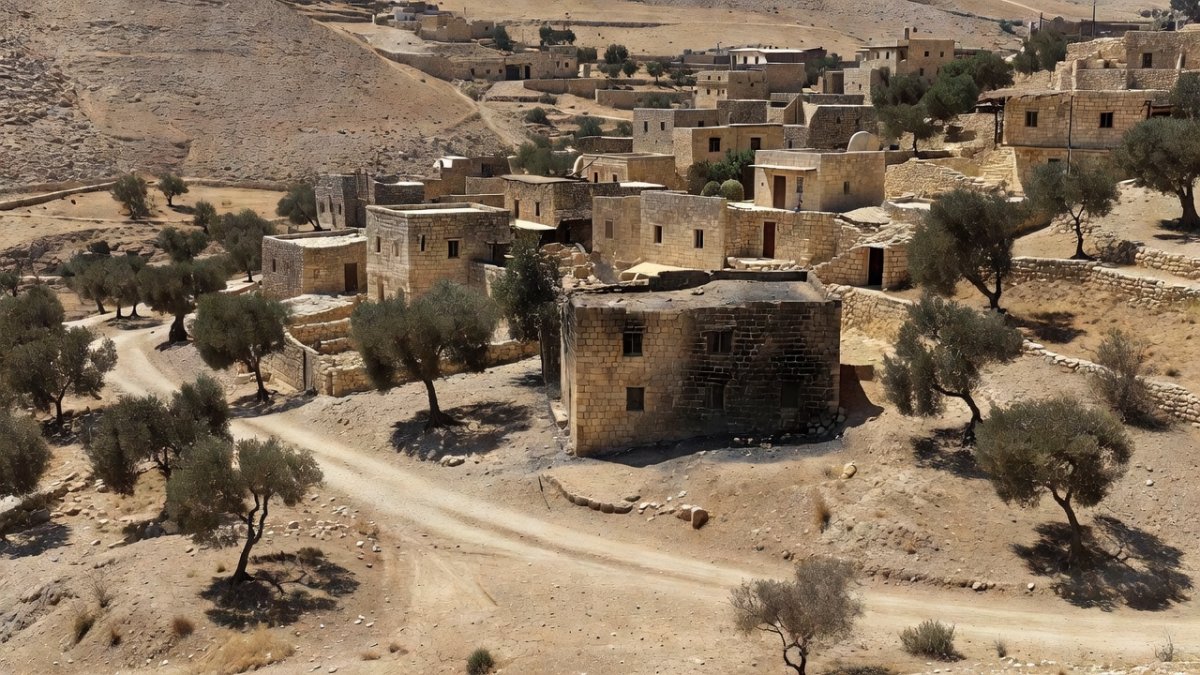
Behind the statistics are individual stories of loss that speak to the human cost of this violence. Um Muhammad Muammar, a 72-year-old resident of the village of Qaryut, told Human Rights Watch that her two sons were killed by settlers. "I have known war in this region for all my life, but never like this," she said. "My sons' children are now fatherless; their wives are now widows. What more can we say?" Her testimony reflects a broader pattern of terror that has become routine for Palestinian communities across the West Bank, where families live under the constant threat of armed raids, home invasions, and forced eviction.
OCHA has documented at least 15 Palestinians, including two children, killed by settlers as of July 24, 2026, putting this year on track to surpass the 2023 record of 16 such killings. The violence is no longer confined to remote hilltops or isolated outposts. A report by the Israeli human rights organisation Yesh Din, shared with the Guardian on August 21, 2026, found that almost two-thirds of settler violence incidents in 2026 took place in Areas A and B of the West Bank — territory nominally under Palestinian Authority governance under the 1995 Oslo accords. Attacks in Area B rose from 25% of incidents last year to 55% so far this year, while incidents in Area C — under full Israeli military control — fell from 67% to 37%. Yesh Din describes this as a deliberate shift as settlers pursue a self-proclaimed "great settlement revolution," moving from the periphery into the heart of Palestinian population centres.
The E1 Threat
Compounding the violence is the continued expansion of settlement infrastructure. On August 18, 2026, the Israeli government opened a new construction tender for the E1 settlement project east of Jerusalem — a development that Human Rights Watch warns would forcibly displace over 18 Bedouin communities. E1 has long been identified by international observers as a project that would effectively sever the West Bank from Jerusalem and make a contiguous, viable Palestinian state nearly impossible. The timing of the tender, coming amid record violence and international condemnation, signals that the Israeli government is pressing ahead with its annexation agenda regardless of diplomatic pressure.
For Palestinians in the affected areas, the threat is existential. Bedouin communities in the E1 corridor have already endured decades of displacement and dispossession; the new construction would uproot them once again, scattering families that have maintained their way of life for generations. The project also threatens to cut off East Jerusalem from its Palestinian hinterland, undermining any future peace agreement and further entrenching the reality of a single state with unequal rights for Palestinians and Israelis.
International Law and Momentum
Thornberry's call for a trade ban is part of a broader international shift. She noted that countries including the Netherlands, Ireland, Norway, Spain, and Belgium are pursuing tougher measures against settlement-linked trade, and she argued that the UK should not lag behind. The UK has already taken some steps: in June 2026, the government announced tougher action in response to settlement expansion, updating official guidance to advise businesses against economic and financial activity with settlements, according to a House of Commons Library briefing. The UK has also halted trade talks with Israel until an internationally recognised peace agreement is reached, per the committee's report. And Foreign Secretary Yvette Cooper has announced coordinated sanctions with international partners targeting networks that enable settler violence.
But Thornberry's committee argues these measures are insufficient. A ban on settlement trade would send a clear signal that the UK regards settlements as illegal under international law and refuses to profit from their expansion. It would also align British policy with the ICJ's advisory opinion, which has been widely endorsed by the international community. The question is whether the new Burnham government has the political will to act. Thornberry's public pressure campaign suggests she believes the prime minister needs to be pushed — and that the window for meaningful action is closing.
Analysis and Implications
The convergence of record settler violence, the E1 tender, and the UK's political transition creates a moment of both danger and possibility. On the ground, Palestinians are facing a level of violence and displacement not seen in decades, with the Israeli government's tacit — and often explicit — support for settler attacks making a mockery of international law. The Yesh Din report's finding that settler violence is now concentrated in Areas A and B is particularly alarming, as it suggests the Oslo framework — already moribund — has been fully abandoned in favour of a strategy of creeping annexation and demographic change.
For the UK, Thornberry's call represents a test of whether the new government will translate its stated commitment to international law and human rights into concrete policy. A trade ban on settlements would be a meaningful step, but it would also invite pushback from Israel and its allies, who argue that such measures are counterproductive and single out the Jewish state. Thornberry's response is straightforward: "It is Palestinian land, we have to do something about this." The question is whether the government agrees — and whether it is prepared to act before the two-state solution becomes a historical footnote rather than a viable future.
As the international community watches, Palestinians in the West Bank continue to live under the shadow of violence and displacement. The record numbers of attacks, the expansion of settlements, and the erosion of any prospect of a negotiated peace all point to a grim trajectory. But Thornberry's intervention, and the growing international momentum behind settlement trade bans, offers a glimmer of hope that the UK — and others — may finally be willing to take meaningful action. Whether that translates into real change on the ground remains to be seen, but for communities like Qaryut, where Um Muhammad Muammar mourns her sons, the stakes could not be higher. The world has been warned; the question now is whether it will listen.
By Fatima Al-Rashid, Staff Writer
This article was produced with AI-assisted research and editorial support. Reporting is based on sources cited in the article.
What's Your Reaction?
 Like
0
Like
0
 Dislike
0
Dislike
0
 Love
0
Love
0
 Funny
0
Funny
0
 Wow
0
Wow
0
 Sad
0
Sad
0
 Angry
0
Angry
0

Gulf/MENA Correspondent at Global1.News. Based in Doha, covering Gulf politics, energy markets, diplomacy, and development across the Middle East and North Africa. Tracks the economic transformation of the Gulf states.












Comments (0)