
Uganda Bids a Sombre Farewell to Its Youngest King, a Monarch Who Bridged Tradition and Tomorrow
Uganda bids farewell to King Oyo, the world's youngest reigning monarch, who died at 34. His legacy of modernizing the Tooro Kingdom while honoring tradition is remembered.
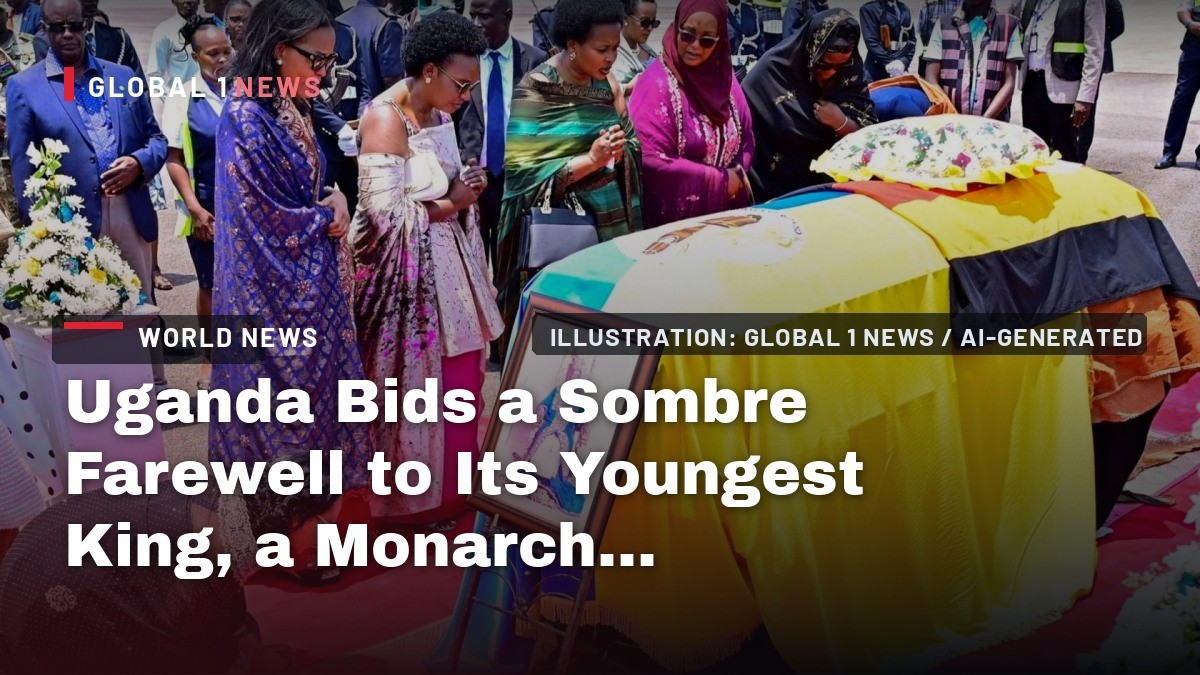
Uganda Bids a Sombre Farewell to Its Youngest King, a Monarch Who Bridged Tradition and Tomorrow
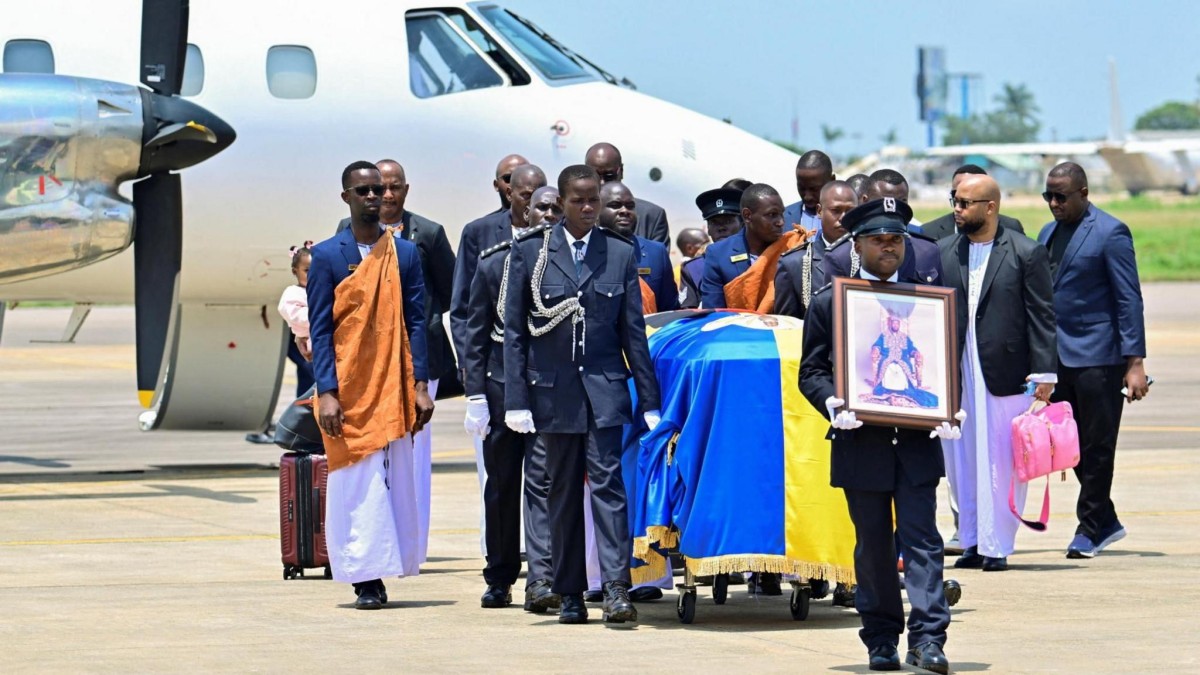
Fort Portal, Uganda — The air at Entebbe airport was heavy with grief and reverence as the body of King Oyo Nyimba Kabamba Iguru Rukidi IV, the world’s youngest reigning monarch, returned home. President Yoweri Museveni was among the first to pay his respects, laying a wreath on the coffin of the 34-year-old ruler who died in the United States last week after a battle with an aggressive form of cancer. For the people of the Tooro Kingdom, and for many across Uganda, this homecoming marks the beginning of a profound national mourning, tinged with both the celebration of a life dedicated to service and the uncertainty of a succession shrouded in dispute.
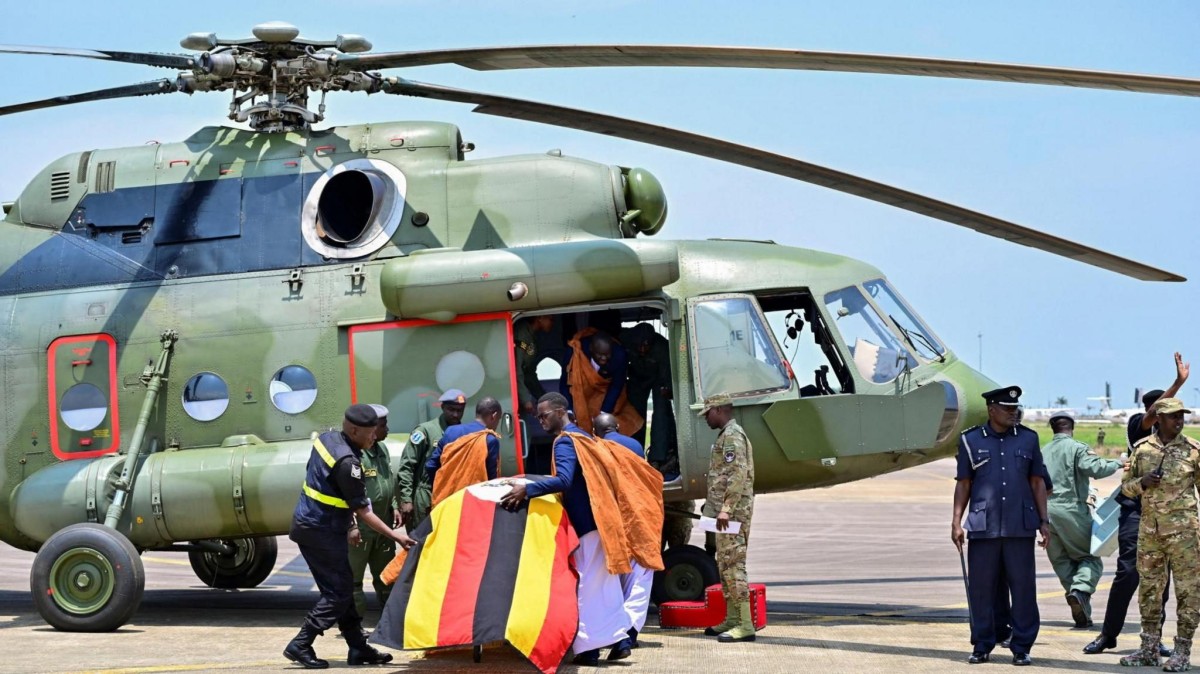
The return of the king’s body signals the official start of the Tooro kingdom’s nine-day mourning period. A brief, sombre ceremony was held at the airport, where family members, government officials, and royal mourners watched as the coffin was escorted from the plane by police. From there, the body was flown by military helicopter to Kyegegwa in western Uganda, the heartland of the Tooro Kingdom, before being taken by road to the royal palace in Fort Portal. The king will lie in state at Karuziika Palace, where members of the public will be allowed to pay their respects, and prayers will be held each evening until the burial.
A Monarch Crowned in Childhood, Remembered for a Modern Vision
King Oyo’s story has always been one of extraordinary beginnings. He ascended the throne in 1995 at the tender age of three, becoming an international curiosity and earning a place in the Guinness World Records as the world’s youngest reigning monarch. He was formally crowned in 2010 upon reaching adulthood at 18, taking on the full responsibilities of the 13th monarch of a kingdom founded in the early 19th Century. His rule extended over more than two million people, a significant constituency within Uganda’s complex cultural landscape.
While Uganda is governed by an elected president and parliament, its traditional kingdoms, including Tooro, hold no formal political power but exert immense cultural influence. King Oyo used this platform to champion a modernising agenda. On Thursday, Uganda’s parliament held a special tribute to the late king, with MPs from across the political divide remembering him as a leader who prioritised education, health, and opportunities for young people. Prime Minister Robinah Nabbanja described him as a “symbol of unity,” praising his work in raising awareness about HIV and Aids among the youth. Opposition MPs also joined the chorus of respect, with acting opposition leader Patrick Nsamba Oshabe offering a poignant summary of his legacy: “Heritage and development were never rivals in his hands.”
The Weight of a Secret: Illness and a Final Hope
In the days following his death, the kingdom’s leadership has revealed the depth of the king’s personal struggle. On Wednesday, the Tooro kingdom’s Prime Minister, Calvin Armstrong Rwomiire Akiiki, shared that King Oyo had asked officials not to disclose the seriousness of his illness. He held onto the belief that he would recover and return to his people. The monarch’s deepest hope, Akiiki said, was to be home for this year’s Empango, the annual celebration of his coronation, which was scheduled for 12 September. The date of his burial, next Saturday, falls on that very day—a poignant twist of fate that has intensified the sorrow for a king who so desperately wanted to celebrate his reign with his subjects.
This revelation paints a picture of a leader who was not only a public figure but a man who carried the weight of his kingdom’s expectations privately. His desire to shield his people from worry, even while facing a grave illness, speaks to a deep sense of duty that defined his time on the throne. The decision to bury him on the day of the Empango, a date he had so looked forward to, is a powerful and heartbreaking symbol of a life and a reign cut short.
A Kingdom in Question: The Dispute Over the Heir
As the kingdom mourns, a delicate and unusual public disagreement has emerged over the future of the monarchy. King Oyo was not officially married, and his death has triggered uncertainty about who will succeed him. Prime Minister Akiiki has stated that the king had a young son, whose identity would be revealed later in accordance with Tooro customs. President Museveni also added that the king’s mother, Queen Best Kemigisa, had informed him that her son had left an heir.
However, this assertion has been met with confusion and concern from within the royal clan. Charles Kamurasi, the head of the Babiito royal clan from which Tooro’s kings are chosen, has said he knew nothing about the reported child. This has led to an unusual public disagreement among senior figures in the kingdom. Others within the royal clan have questioned why they were apparently unaware of the child’s existence. “The prime minister is not supposed to talk about the king’s heir. It is a cultural process,” one royal clan member was quoted as saying by Uganda’s state-owned New Vision newspaper. “How can we, blood relatives, not know of the child, and the prime minister says he knows? That is totally out of order,” the clan member added.
This public airing of internal division is a rare departure from the usual discretion that surrounds royal matters in African kingdoms. In many of our traditions, the processes of succession are sacred, often conducted behind closed doors by elders and clan heads who are the custodians of custom. The public nature of this dispute highlights the immense pressure and grief the kingdom is under, as well as the complexities of navigating hereditary succession in a modern context.
A Call for Unity and Restraint
Prime Minister Akiiki has since appealed for the dispute to be dealt with privately, expressing a desire to meet with other elders to resolve their differences. His words carried a weight of wisdom, warning that “words spoken in moments of grief can deepen divisions that may take years to repair.” This sentiment resonates deeply across the continent, where we know that the loss of a leader can sometimes fray the social fabric if not handled with care and unity.
The Ugandan government has also stepped in to urge calm and discourage speculation on social media. Culture Minister Henry Tumukunde has asked Ugandans to rely on official information from the government and the Tooro Kingdom, adding that any dispute would be dealt with under the law governing traditional and cultural leaders. “The whole world is watching how Uganda mourns its king,” he said, urging people to show “restraint and respect.” This intervention underscores the national significance of the Tooro monarchy and the desire to ensure a dignified and orderly transition, free from the chaos of rumour and public infighting.
Preparing for a Traditional Farewell
As the mourning period continues, preparations are underway for a funeral that will honour both the king’s Christian faith and the deep traditions of the Tooro people. Before the burial, a church funeral service will be held at a local church. Following this, his body will be carried in a traditional procession to the Karambi Royal Tombs, the final resting place of Tooro’s kings. According to Tooro tradition, kings are not buried in the evening, so the burial is expected to be completed by 14:00 local time.
This blend of Christian and traditional rites is a familiar sight across Africa, where faith and ancestral customs often intertwine to create a rich tapestry of mourning. The procession will be a moment for the people to walk with their king one last time, to honour a life that began in childhood and ended in the prime of its promise. The image of a nation’s leaders, from the president to opposition MPs, standing together to pay tribute is a powerful reminder of the unifying role that traditional rulers can play, even in a modern republic.
For the people of Tooro, and for many across the continent who watched his journey from a young boy to a respected leader, this is a moment of deep loss. King Oyo was a symbol of continuity, a living link to a proud history, and a voice for a new generation. As the kingdom prepares to lay him to rest, the focus now shifts to the future—to the young son who may one day carry the mantle, and to the elders who must now guide the kingdom through its most challenging passage. The world watches, as Minister Tumukunde noted, not just to see how Uganda mourns, but how it honours the legacy of a king who, in his short life, sought to prove that heritage and development could indeed walk hand in hand.
By Amara Diop, Staff Writer
This article was produced with AI-assisted research and editorial support. Sources: BBC News Africa.
What's Your Reaction?
 Like
0
Like
0
 Dislike
0
Dislike
0
 Love
0
Love
0
 Funny
0
Funny
0
 Wow
0
Wow
0
 Sad
0
Sad
0
 Angry
0
Angry
0

West Africa/Sahel Correspondent at Global1.News. Dakar-based journalist covering politics, security, climate, and development across Francophone and Anglophone West Africa. Tells the stories of a region undergoing profound transformation.














Comments (0)